Sounder USV
Uncrewed surface vessel for hydrographic survey and persistent maritime monitoring, derivable to defence-roles.
Droneby Kongsberg MaritimeIntroduced 2020
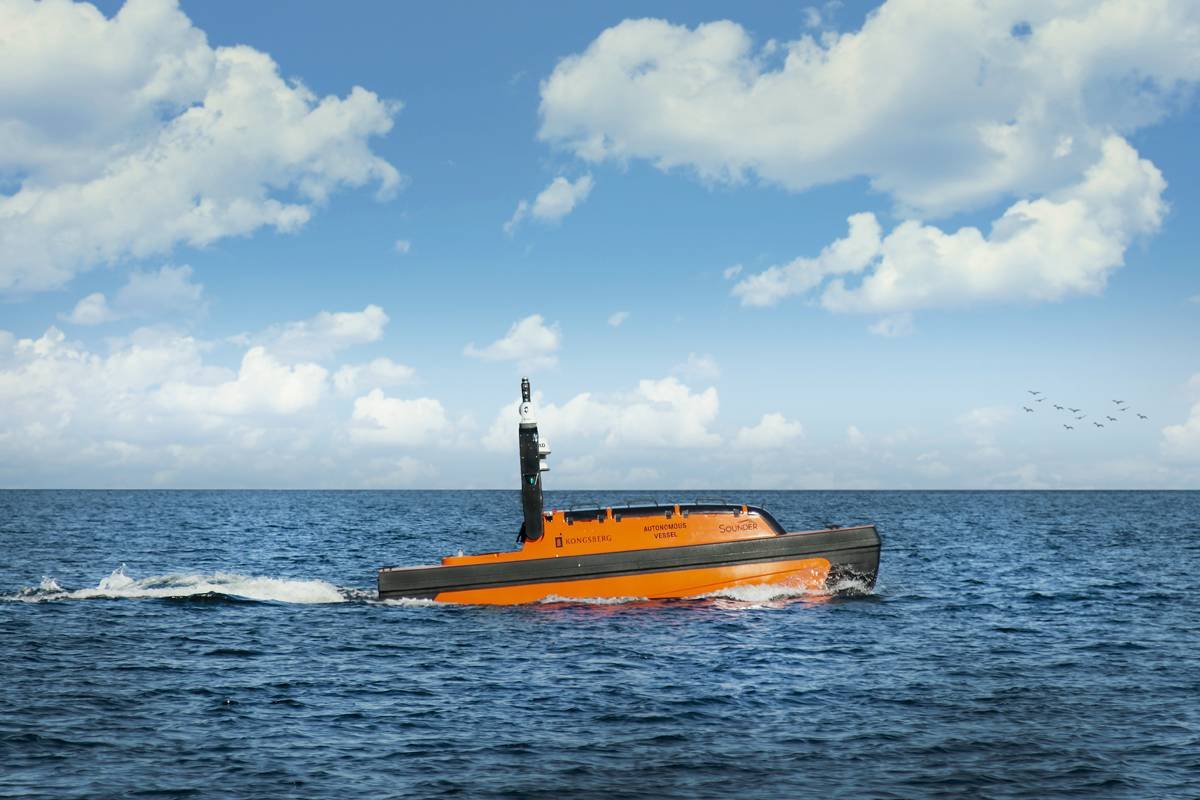
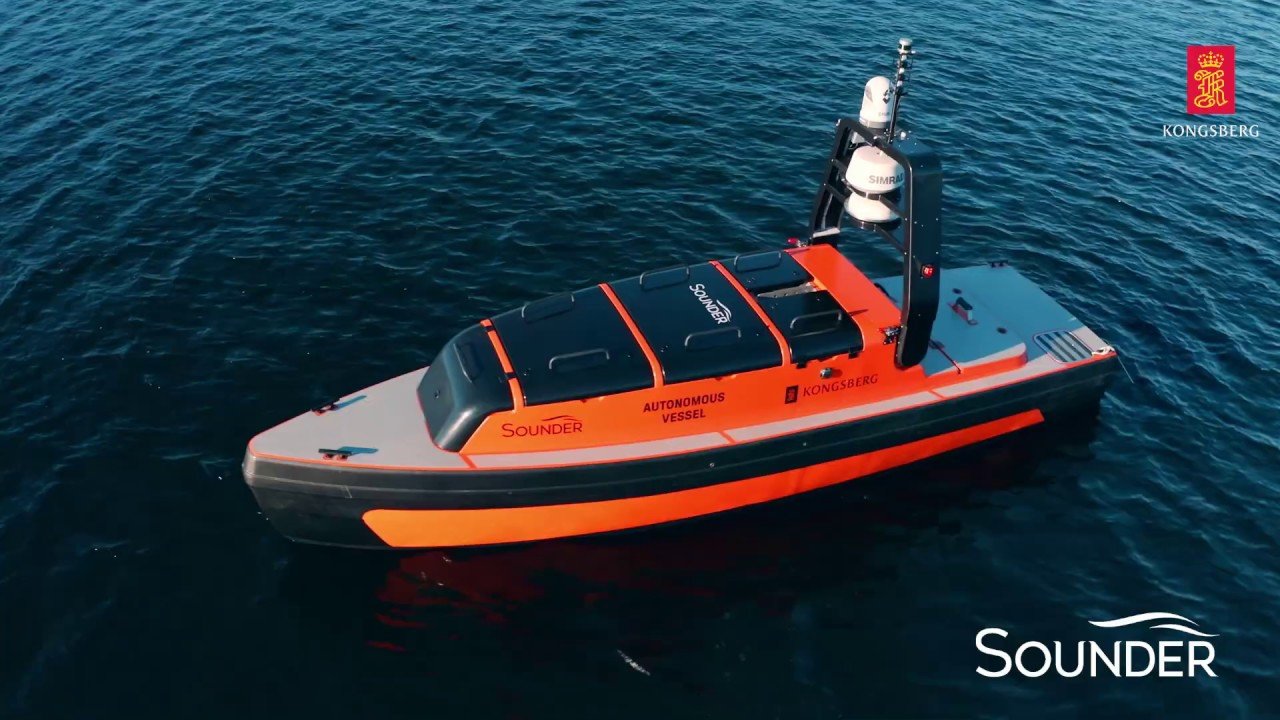
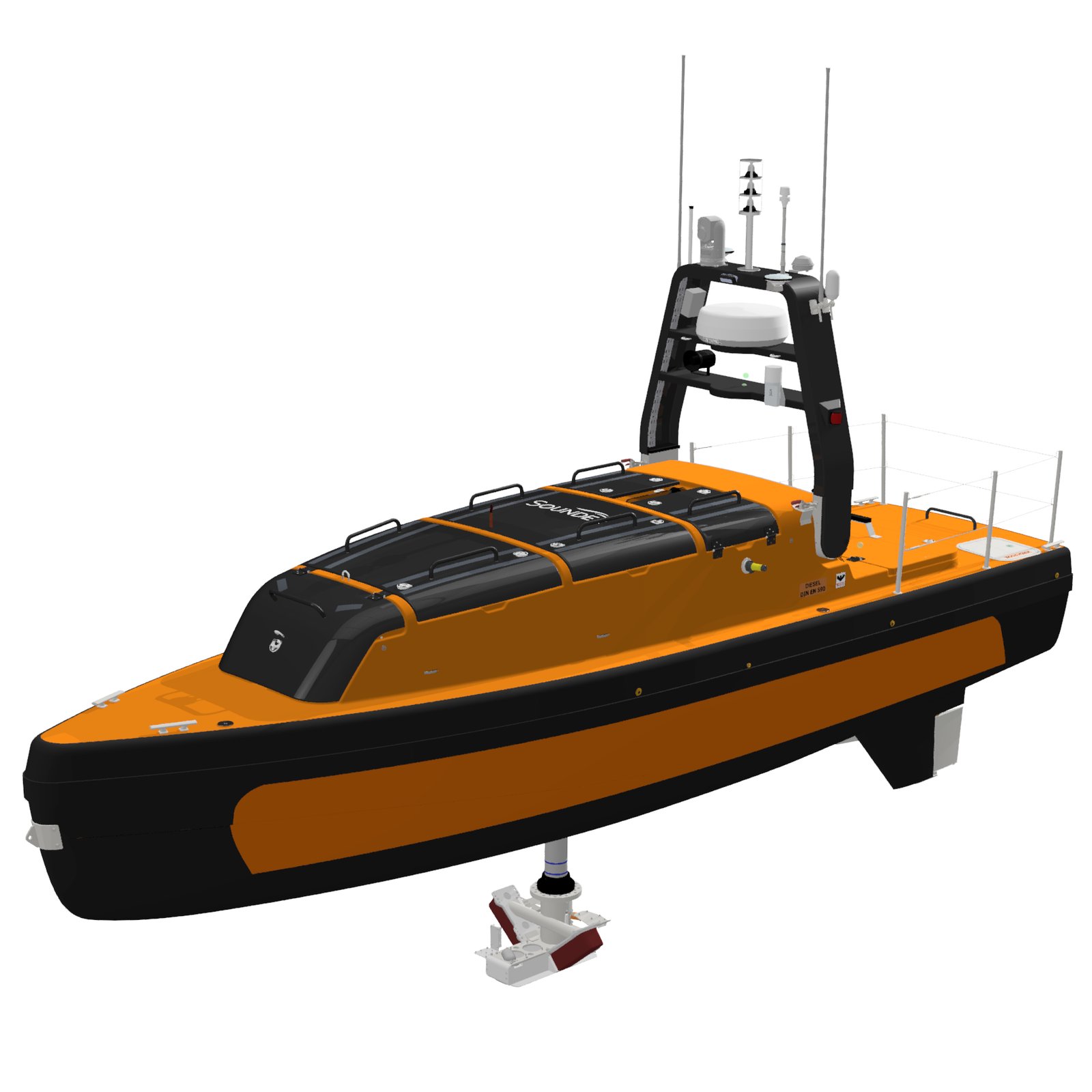
Photos: www.marinetechnologynews.com · Kongsberg Maritime · seawanderer.org · www.kongsberg.com
Sounder USV is an uncrewed surface vessel built by Kongsberg Maritime for long-endurance hydrographic survey and persistent maritime monitoring. The platform entered service in 2020 and is based on a roughly 12-metre monohull originally developed in partnership with the British uncrewed-vessel specialist SEA-KIT International. Where its early commercial niche was offshore charting and pipeline inspection, the same hull and autonomy stack carry directly into naval roles — route survey ahead of amphibious operations, environmental data collection for anti-submarine warfare, and persistent ISR in contested coastal waters.
The boat is built around Kongsberg’s K-MATE autonomous controller, which handles route execution, COLREGs-compliant collision avoidance, and dynamic re-tasking from a shore-based remote-operations centre. Sensor integration is the system’s distinguishing trait: a moonpool-mounted EM 304 MKII or EM 712 multibeam echo sounder gives full-ocean-depth or shelf-class bathymetric coverage, paired with a sub-bottom profiler, an ADCP, and a CTD for water-column work. Above the waterline, a Seapath INS, marine radar, and an electro-optical/infrared camera mast handle navigation and situational awareness, with satellite and 4G links carrying telemetry and high-bandwidth data ashore. Endurance is the other headline figure — Kongsberg cites continuous operations of several weeks on a single diesel fuelling, with the vessel running fully uncrewed and supervised from a control centre that can be on the same continent or another one entirely.
Ocean Infinity has been the most visible operator, integrating Sounder hulls into its Armada fleet for commercial deep-water survey. On the defence side, Kongsberg Maritime has positioned Sounder as a candidate for European mine-countermeasures and route-survey programmes, and the platform’s pedigree feeds directly into the company’s work on larger uncrewed surface combatants for the Royal Norwegian Navy. The Maritime Robotics partnership with Kongsberg’s wider maritime business has also opened doors with NATO survey customers; the United Kingdom Hydrographic Office and several Nordic navies have run trials with related Kongsberg autonomous-surface platforms.
Development has been incremental rather than discontinuous. Successive software releases have extended the autonomy controller’s mission profiles, added remote launch-and-recovery handling, and broadened the catalogue of payloads that can be slotted into the modular bay. Kongsberg has signalled that future variants will lean harder into defence-specific kits — towed-array sonars for ASW, magnetic-anomaly sensors for MCM, and encrypted command links to military standards.
In a maritime uncrewed market increasingly populated by purpose-built combat USVs from the United States, Israel, and Turkey, Sounder occupies a quieter niche: a sensor truck whose civilian-survey heritage gives it a deployment record that the newer combat platforms still lack.