REMUS 600
Mid-range AUV bridging coastal and deep-water ISR and mine countermeasures missions.
Droneby Kongsberg DiscoveryIntroduced 2004
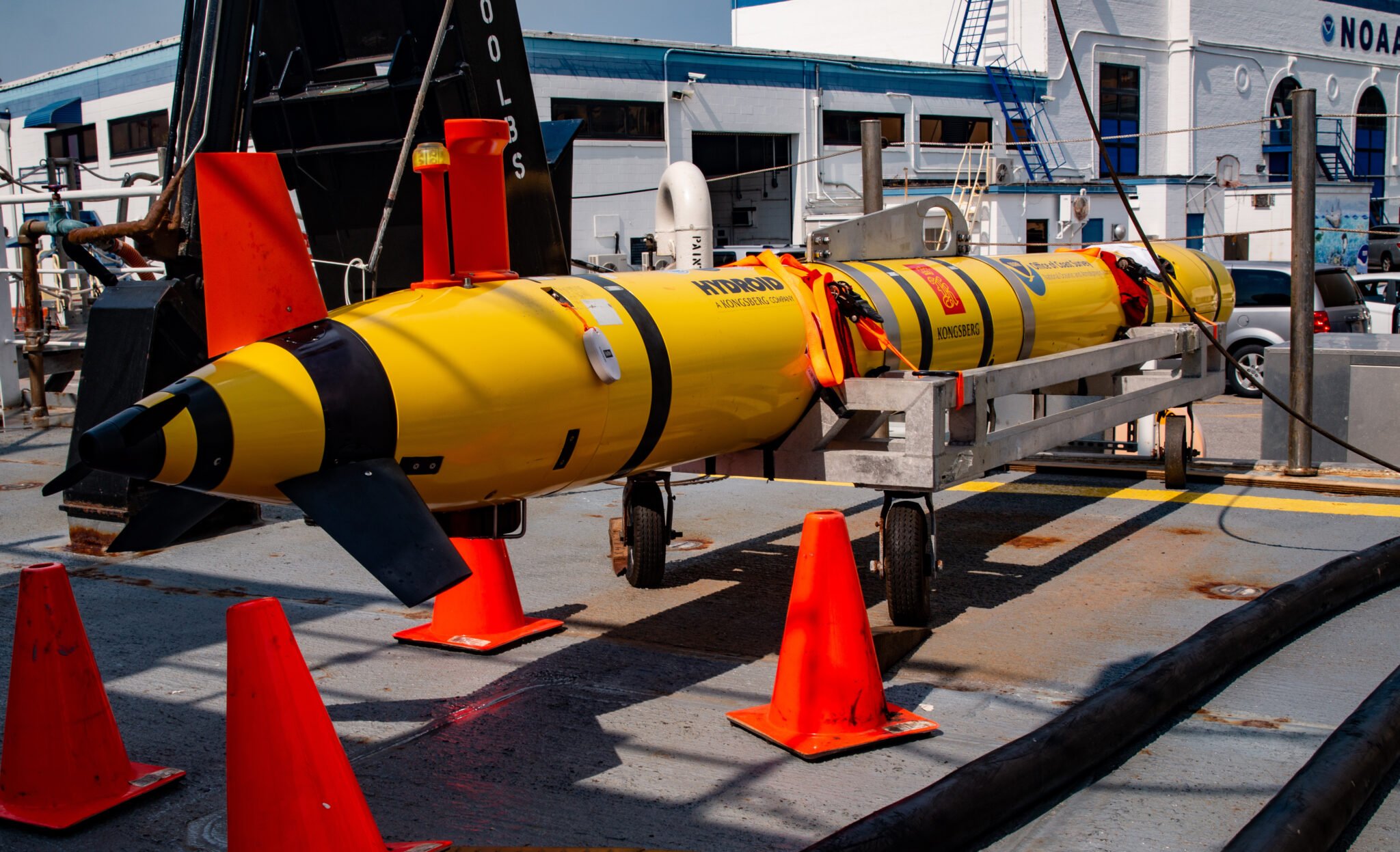
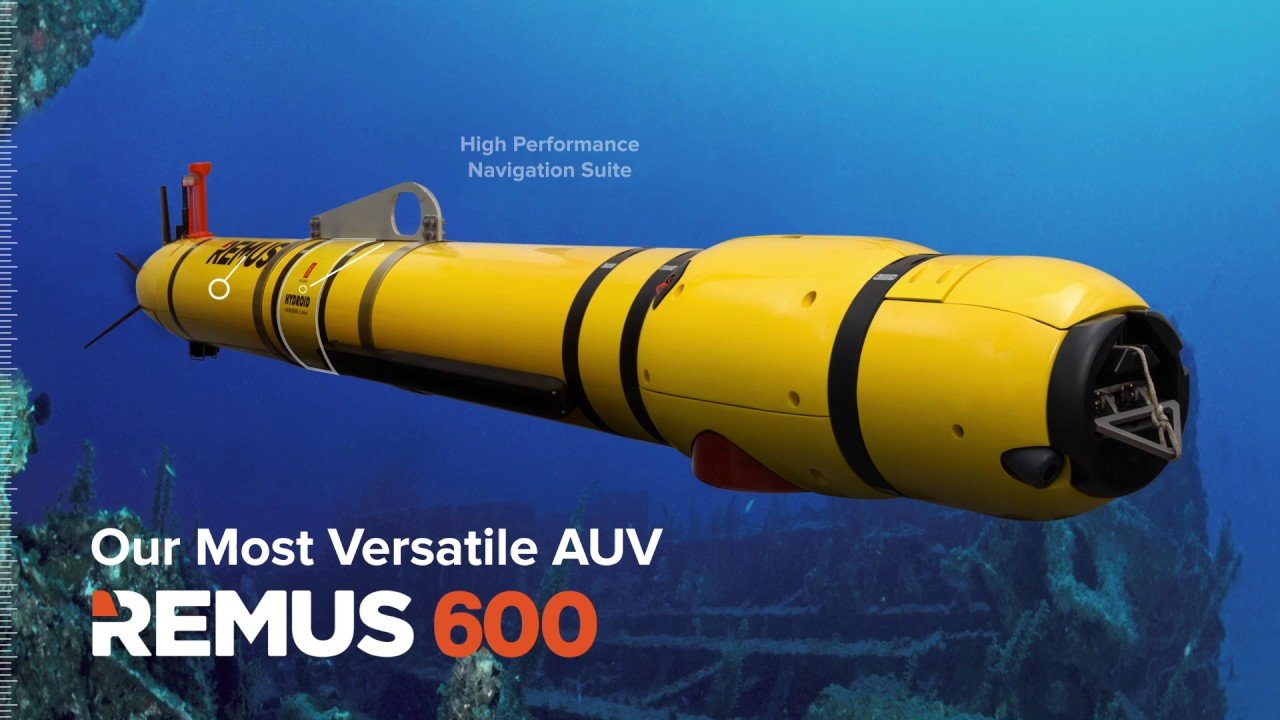
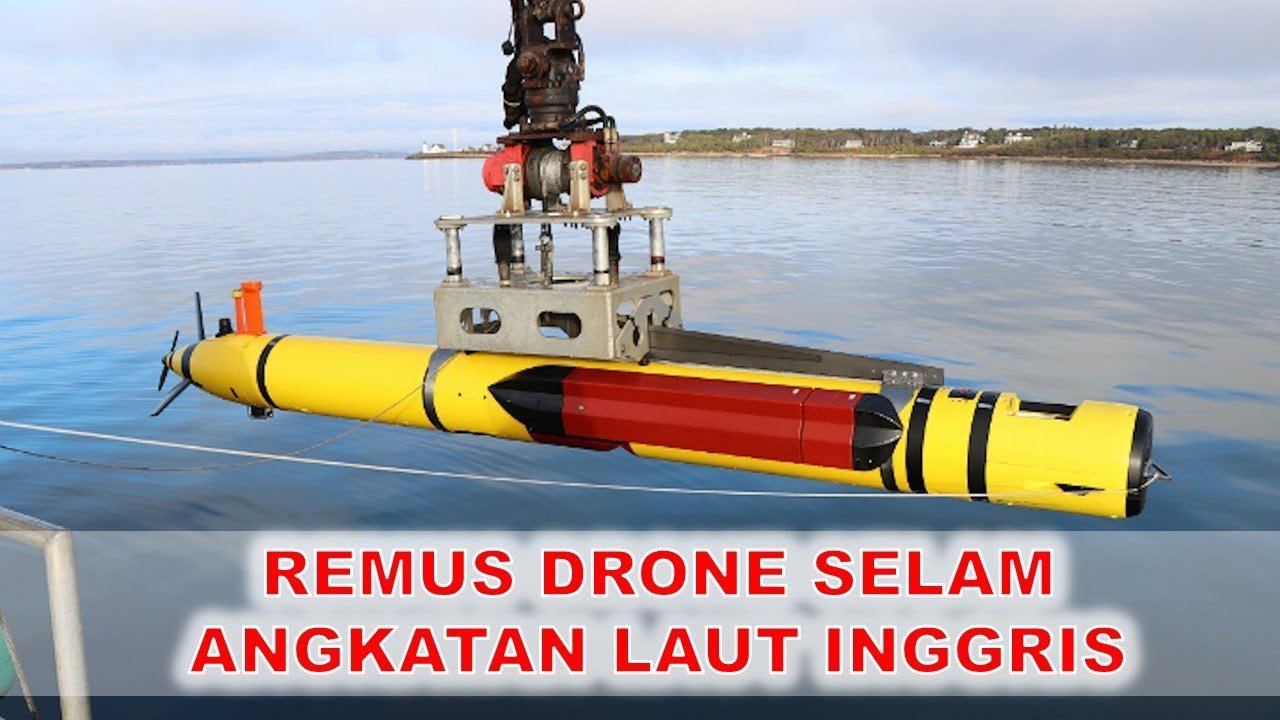
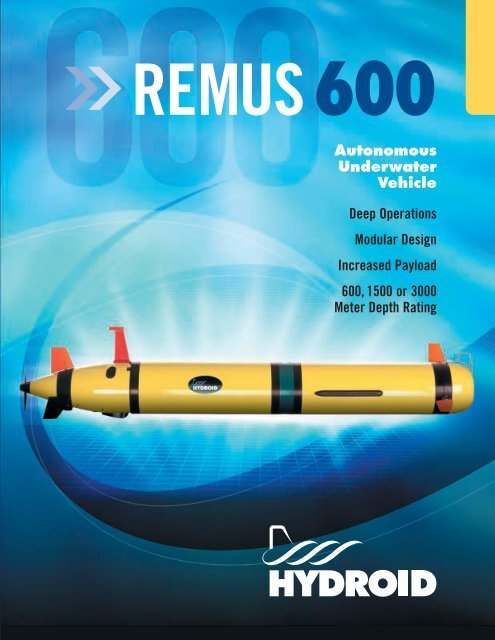
Photos: oceanexplorer.noaa.gov · www.youtube.com · www.yumpu.com
The REMUS 600 is a mid-class autonomous underwater vehicle built by Kongsberg Discovery, the underwater-robotics arm of the Norwegian Kongsberg group. It entered service in 2004 as the deeper-diving successor to the REMUS 100, designed to bridge the gap between shallow coastal work and the heavier, long-endurance missions handled by vehicles like HUGIN. Roughly three metres long and torpedo-shaped, the 600 fits inside a standard shipping container and can be hand-launched from a small boat, a quality that has shaped its career in mine countermeasures, hydrographic survey, and seabed intelligence work.
Inside the pressure hull, the REMUS 600 carries a modular payload bay that allows operators to swap sensors between missions. The standard fit pairs a Marine Sonic side-scan sonar with an acoustic Doppler current profiler, a conductivity-temperature-depth sensor, and a forward-looking obstacle-avoidance sonar; higher-end configurations add synthetic aperture sonar and EdgeTech sub-bottom profilers for buried-object detection. Navigation rides on an inertial measurement unit aided by Doppler velocity logging and acoustic positioning, with GPS fixes taken at the surface between dives. Lithium-ion battery packs give the vehicle a quoted endurance of around 70 hours at survey speed and a depth rating of 600 metres, deep enough to cover most continental-shelf and slope environments. Mission planning and autonomy are handled by the same software lineage that drives the Kongsberg HUGIN family, including automated target recognition routines that flag mine-like contacts before the data is offloaded.
The United States Navy has been the largest operator since the vehicle’s first procurement runs in the mid-2000s, fielding the type for explosive ordnance disposal teams and Naval Oceanographic Office survey work. The Royal Navy uses REMUS 600s within its mine-hunting capability programmes, and the Royal Norwegian Navy fields the type alongside HUGIN variants for combined mine countermeasures and seabed-warfare missions. Smaller fleets are in service with allied navies and several oceanographic institutions, including the Woods Hole Oceanographic Institution, which originated the REMUS line before the technology passed to Hydroid and then to Kongsberg through successive acquisitions.
A heavier derivative, the REMUS 620, was unveiled in 2022 with a longer hull, higher payload capacity, and a 110-hour endurance rating, and is being marketed for offensive payload integration as well as the traditional survey role. The 600 itself continues to receive software updates around autonomy, communications, and onboard processing, with recent work focused on swarm coordination and over-the-horizon command links via Iridium and acoustic modems.
In a market that has shifted toward larger extra-large UUVs for strike and persistent surveillance, the REMUS 600 occupies the middle ground that navies still need: small enough to deploy from almost any platform, capable enough to clear a minefield or map a seabed approach without a dedicated mothership.