REMUS 100
Man-portable shallow-water AUV for coastal mine countermeasures and harbour surveillance.
Droneby Kongsberg DiscoveryIntroduced 1997

Photos: defence24.pl · Kongsberg Discovery · www.fab.com · iz.ru · www.defensemirror.com
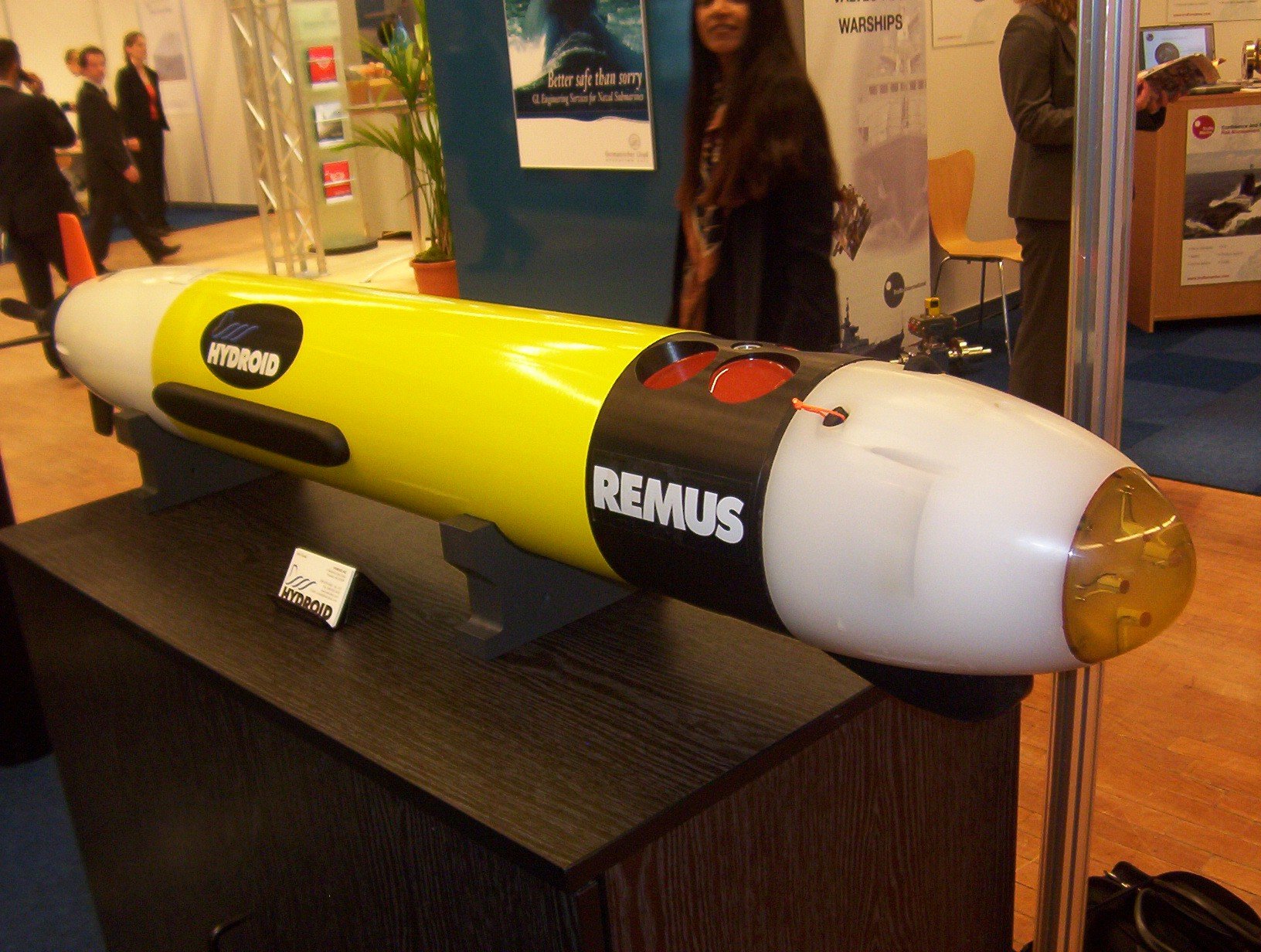
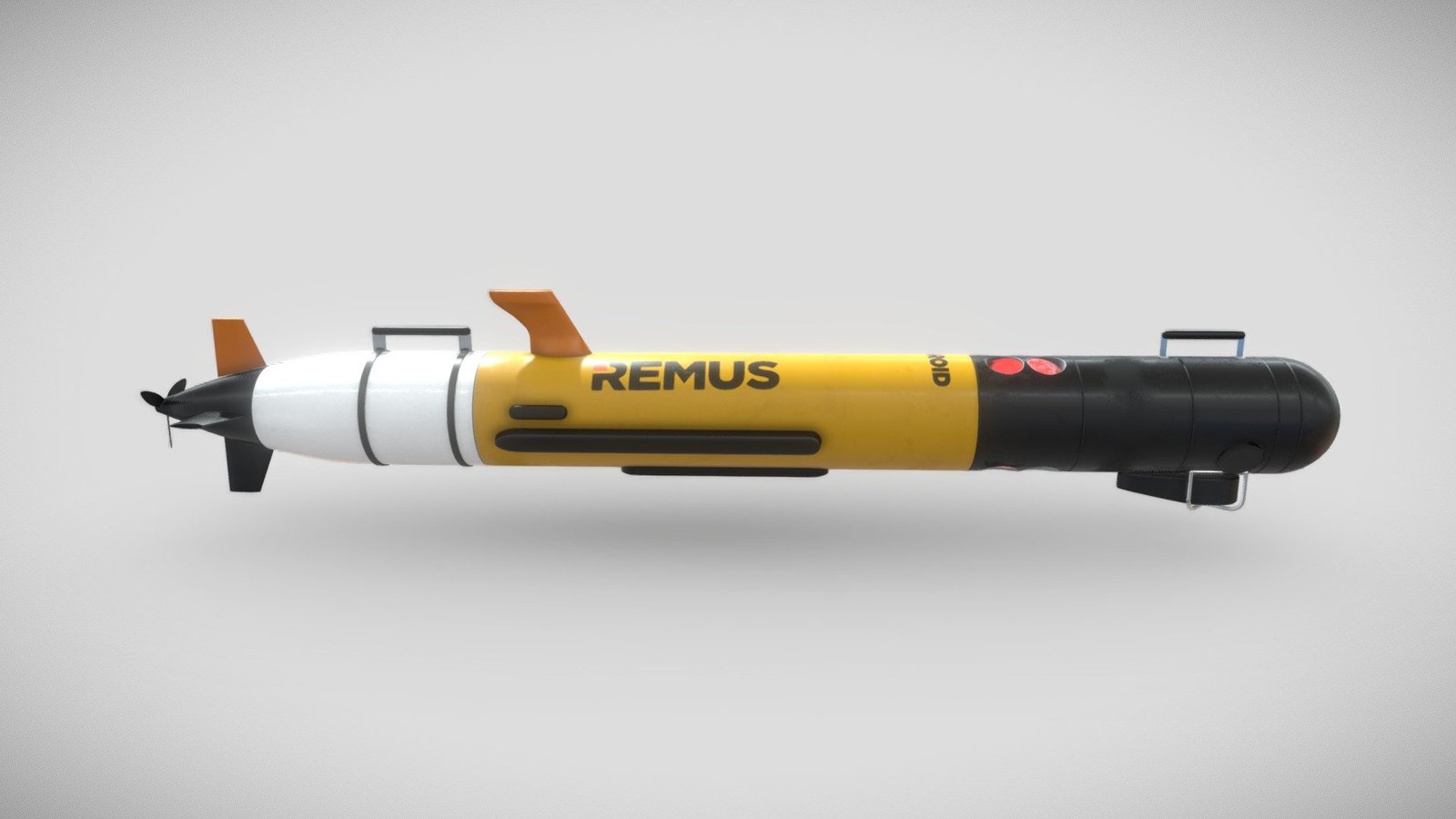
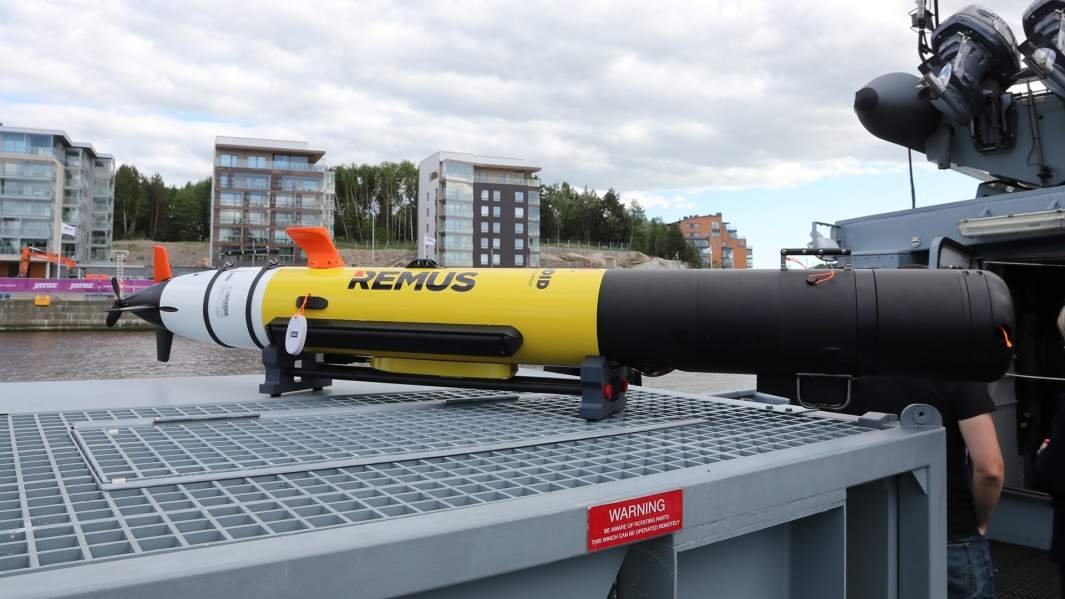
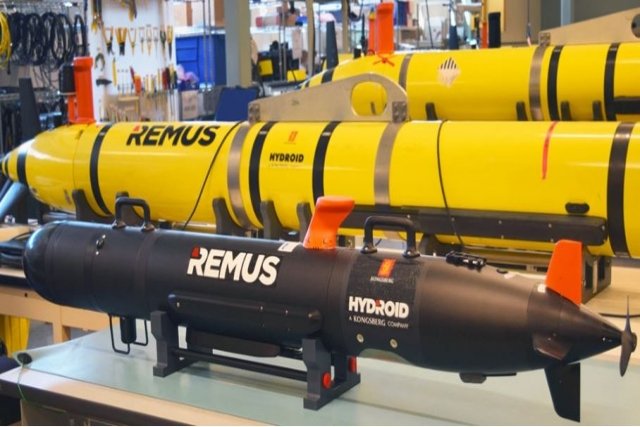
REMUS 100 is a man-portable autonomous underwater vehicle built for shallow-water mine countermeasures and harbour surveillance. The system traces back to the late 1990s at the Woods Hole Oceanographic Institution, was commercialised by spin-out Hydroid, and now sits inside Kongsberg Discovery after Kongsberg acquired Hydroid in 2008. The “100” refers to its operating depth in metres, and the vehicle is sized so a two-person team can launch and recover it from a small boat, a rigid-hull inflatable, or a beach — a deliberate departure from the ship-tethered minehunting systems it was designed to supplement.
The torpedo-shaped hull runs roughly 1.6 metres long and weighs around 37 kilograms in its baseline configuration, propelled by a single aft thruster and steered by four control fins. Endurance sits in the eight-to-ten-hour range on rechargeable lithium-ion packs, with mission planning handled topside on a laptop before the vehicle is sent off to run pre-programmed survey lanes. The standard payload is a dual-frequency side-scan sonar that images the seabed at high resolution while the AUV holds a constant altitude above the bottom; an upward-looking ADCP, a CTD, and obstacle-avoidance sonar are common additions. Navigation combines an inertial unit with GPS fixes taken when the vehicle surfaces, supplemented by long-baseline acoustic transponders for survey work that demands tighter positioning. Onboard autonomy handles lawnmower-pattern searches, target reacquisition, and abort behaviours without operator intervention; collected imagery is post-processed ashore for mine-like contact detection.
The system is best known as the first autonomous underwater vehicle used operationally in wartime. In 2003, US Navy explosive ordnance disposal teams deployed REMUS units to clear the approaches to the Iraqi port of Umm Qasr during the opening days of Operation Iraqi Freedom, working alongside trained marine mammals to confirm a navigable channel for humanitarian shipping. The US Navy fields the vehicle as the Mk 18 Mod 1 Swordfish through its EOD and expeditionary mine-countermeasures units. Beyond the United States, the platform is in service with the Royal Navy, the Royal Canadian Navy, and the Royal Australian Navy, with additional operators across NATO and partner forces; over a thousand units of the broader REMUS family are in the field worldwide.
REMUS 100 is the small end of a product line that scales up through the deeper-diving REMUS 300, 600, and 6000, the last of which played a role in locating the wreckage of Air France 447 in 2011. Successive software and sensor refreshes have kept the 100 relevant against newer entrants from companies such as L3Harris and Saab, and it remains the reference point against which other man-portable mine-hunting AUVs are measured.