Punisher
Reusable electric strike drone — catapult-launched and near-silent, it drops modular 75 mm bombs on targets tens of kilometres back, then flies home to rearm.
Droneby UA DynamicsIntroduced 2018 · Updated 2023
Photos: Maxim Subotin · Wikipedia · armyinform.com.ua
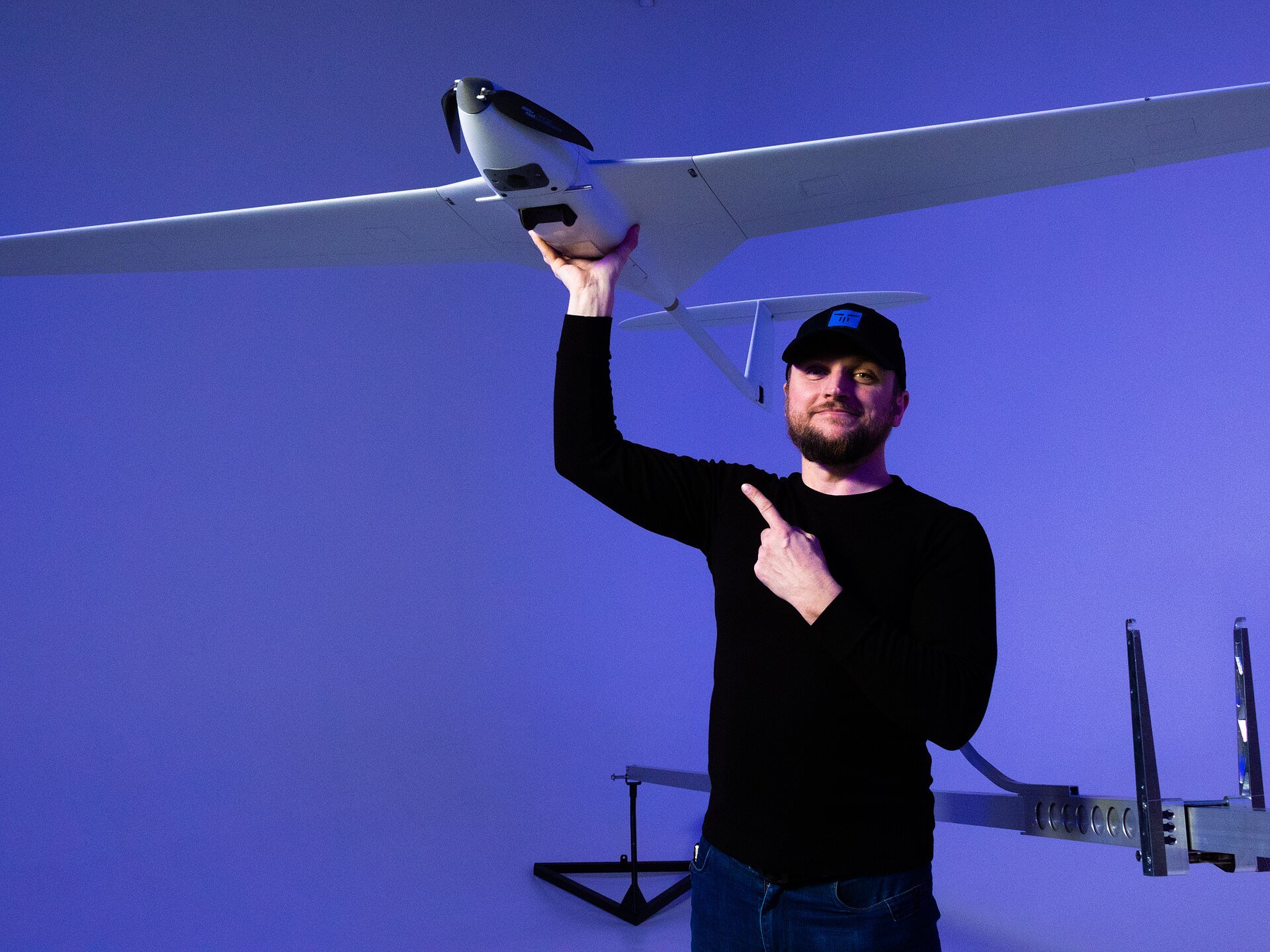
The Punisher is a small reusable strike drone built by UA Dynamics, and it inverts the economics of the one-way attack drones that dominate the war in Ukraine. Where a loitering munition is spent on a single target, the Punisher flies out, drops its bombs, and comes home to be rearmed — the maker reports a turnaround of about five minutes — so a single airframe can fly mission after mission. Coverage in early 2022 repeatedly called it “game-changing,” and the company claims among the lowest per-mission costs of any strike drone in the world.
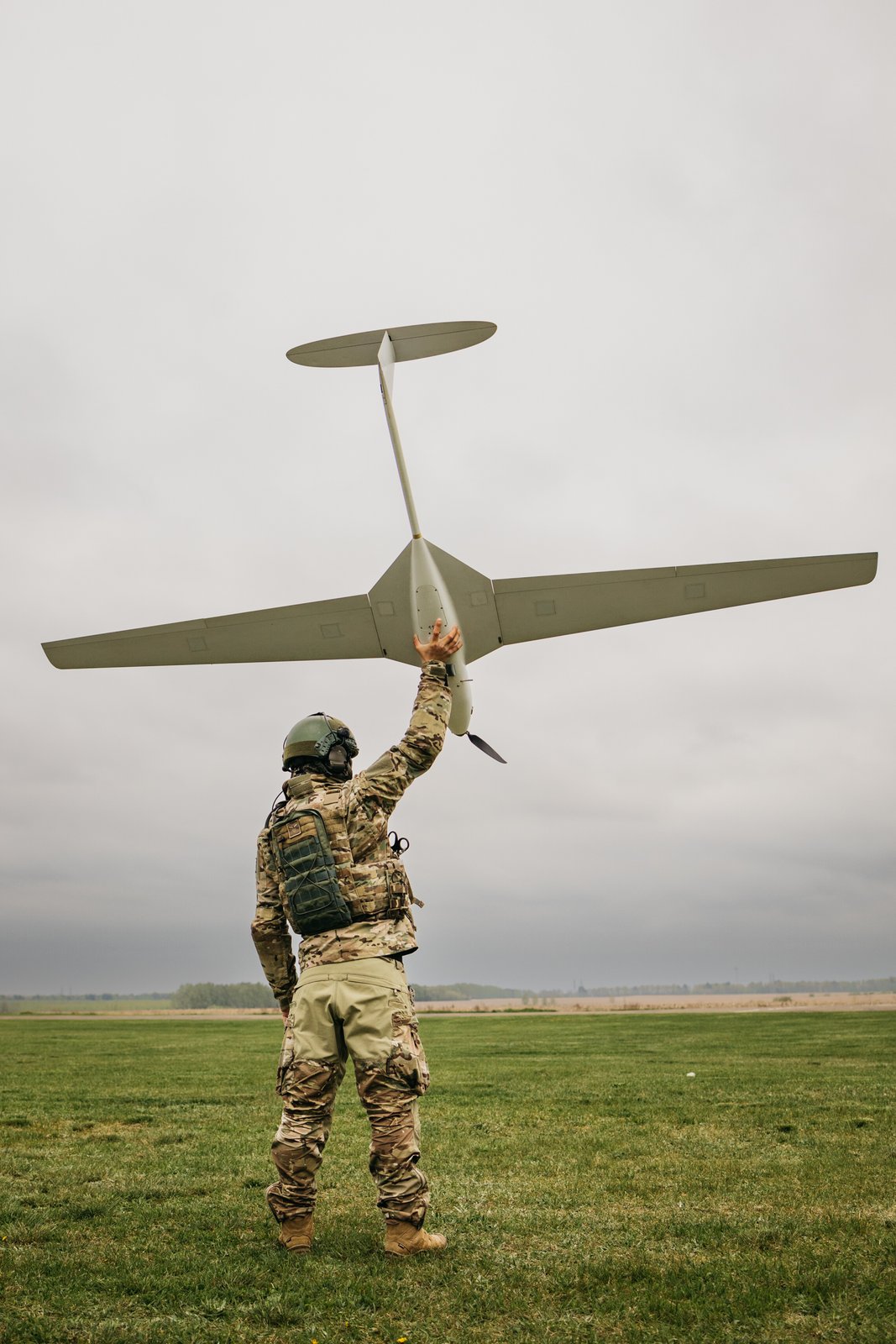
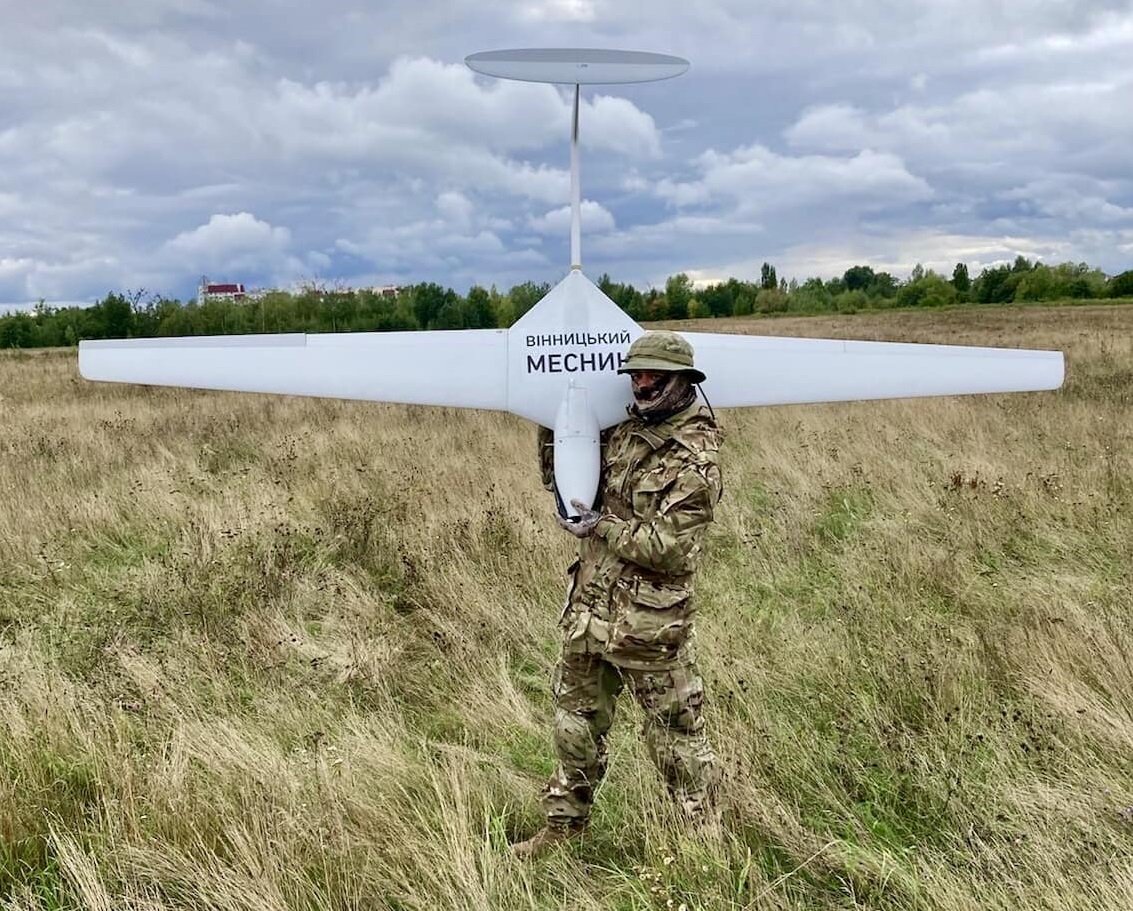
It is a modest aircraft on paper: a 2.92-metre catapult-launched fixed-wing flyer weighing 7.5 kilograms at takeoff, carrying up to 2.5 kilograms of munitions. Battery-powered, it is near-silent and leaves no heat trail, which the maker says lets it approach to its 400-metre working altitude without being picked up by air defences. Average range is around 45 kilometres, stretching toward 60 — or roughly 80 with a radio repeater — and it is flown by a three-person ground crew of pilot, operator and technician rather than anything onboard and autonomous.
The payload is the clever part. Rather than a fixed warhead, the Punisher carries modular 75-millimetre bomb containers a unit can swap in the field: a high-explosive fragmentation round (GAMECHANGER) for troops and soft targets, a shaped-charge round (NUTCRACKER) for armour and fortified positions, and an incendiary fragmentation round (BBQ) for fuel and ammunition dumps. Targeting is split with a companion reconnaissance drone, the Spectre, which finds the target and passes coordinates; navigation data is held partly on the ground so it cannot be read off a captured airframe.
Development started in 2016 with a first prototype in 2018, and the drone saw quiet use in special operations before the full-scale invasion. By 2022 the maker reported more than 100 trained crews and over 230 airframes used in combat, hitting trains, supply lines, fuel depots and command posts behind Russian lines. The Armed Forces of Ukraine placed the system under official contract in August 2023, the same year it was shown at the DSEI defence exhibition in London.
Combat experience
Effectiveness
Media
Sources
- en.wikipedia.org/wiki/Punisher_(drone) (2026-06-27) — Detailed specifications (length 1.47 m, wingspan 2.92 m, MTOW 7.5 kg, payload 2.5 kg, speed 55/28 m/s, altitude 400 m, range 45 km, drop accuracy 4 m, blast radius 50 m, 5-min reload), modular FIST-75 munitions (GAMECHANGER/NUTCRACKER/BBQ), 3-person crew, official AFU contract from 18 Aug 2023, >100 crews, >230 in combat by 2022, DSEI 2023.
- ukraineworld.org/en/articles/analysis/punisher-drone-ukraine (2026-06-27) — Range ~45 km average, up to 60 km or ~80 km with a radio repeater; drops from 400–600 m; "lowest mission cost in the world"; special-ops use 2018–2020 kept private; two prototypes in the defence of Kyiv; active production mid-April 2022.
- historynet.com/ukraine-punisher-drone/ (2026-06-27) — Spectre reconnaissance companion ("if either craft is brought down, the other is useless"); up to ~3 h endurance; rearmed in 5 min; ~$200,000 per unit (≈1/10 of a Bayraktar); hundreds of missions claimed without loss; targets trains, supply lines, fuel/munitions dumps.
- www.nytimes.com/2022/08/10/world/europe/ukraine-drones.html (2026-06-27) — NYT feature on Ukrainian workshop-built drones, including the Punisher's role.
- www.cnet.com/news/ukraine-is-fighting-russia-with-drones-and-rewriting-the-rules-of-war/ (2026-06-27) — CNET on the Punisher and Ukraine's drone war.