Pitbull
Body-worn smart RF jammer that disrupts drone control links and video downlinks on detection.
Hardwareby MyDefenceIntroduced 2019

Photos: mydefence.com · www.suasnews.com · MyDefence
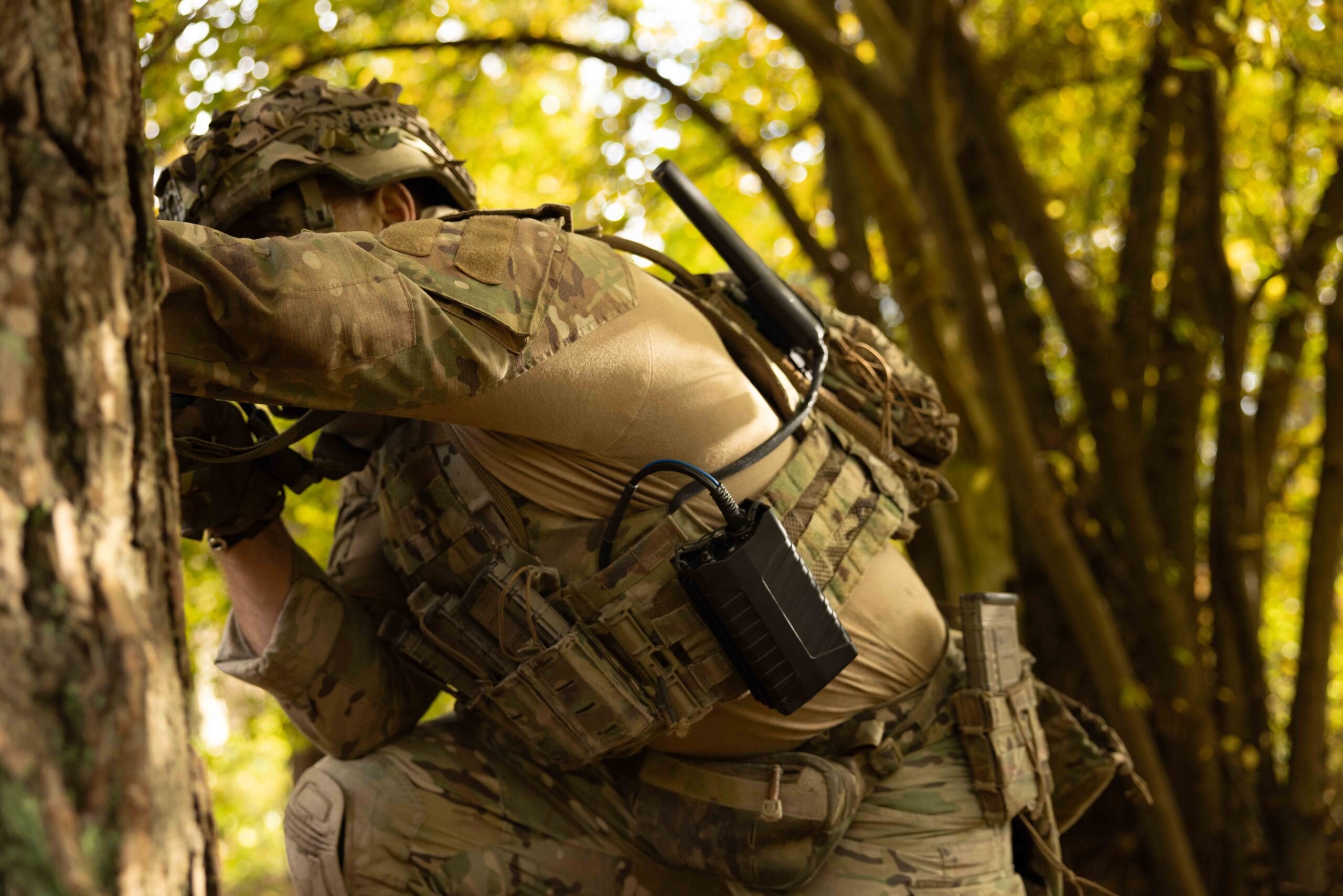
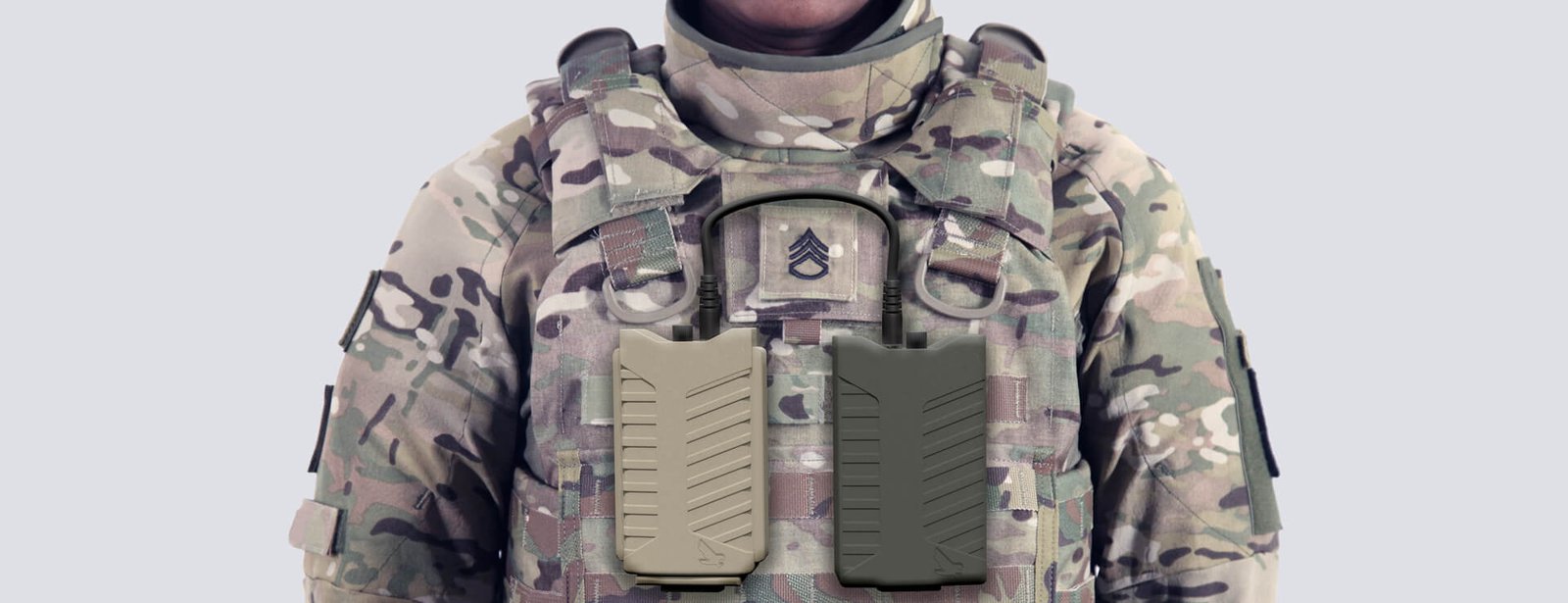
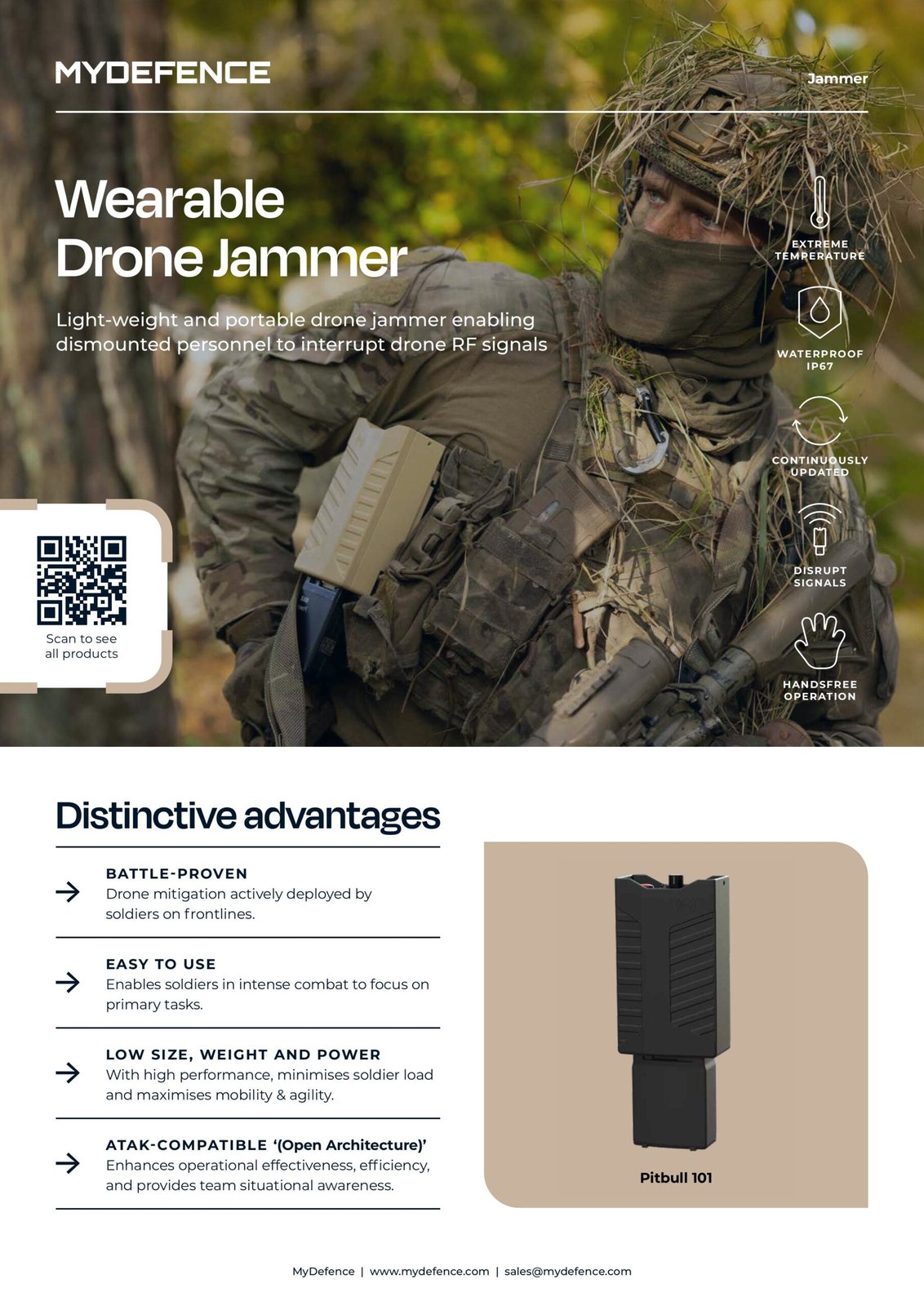
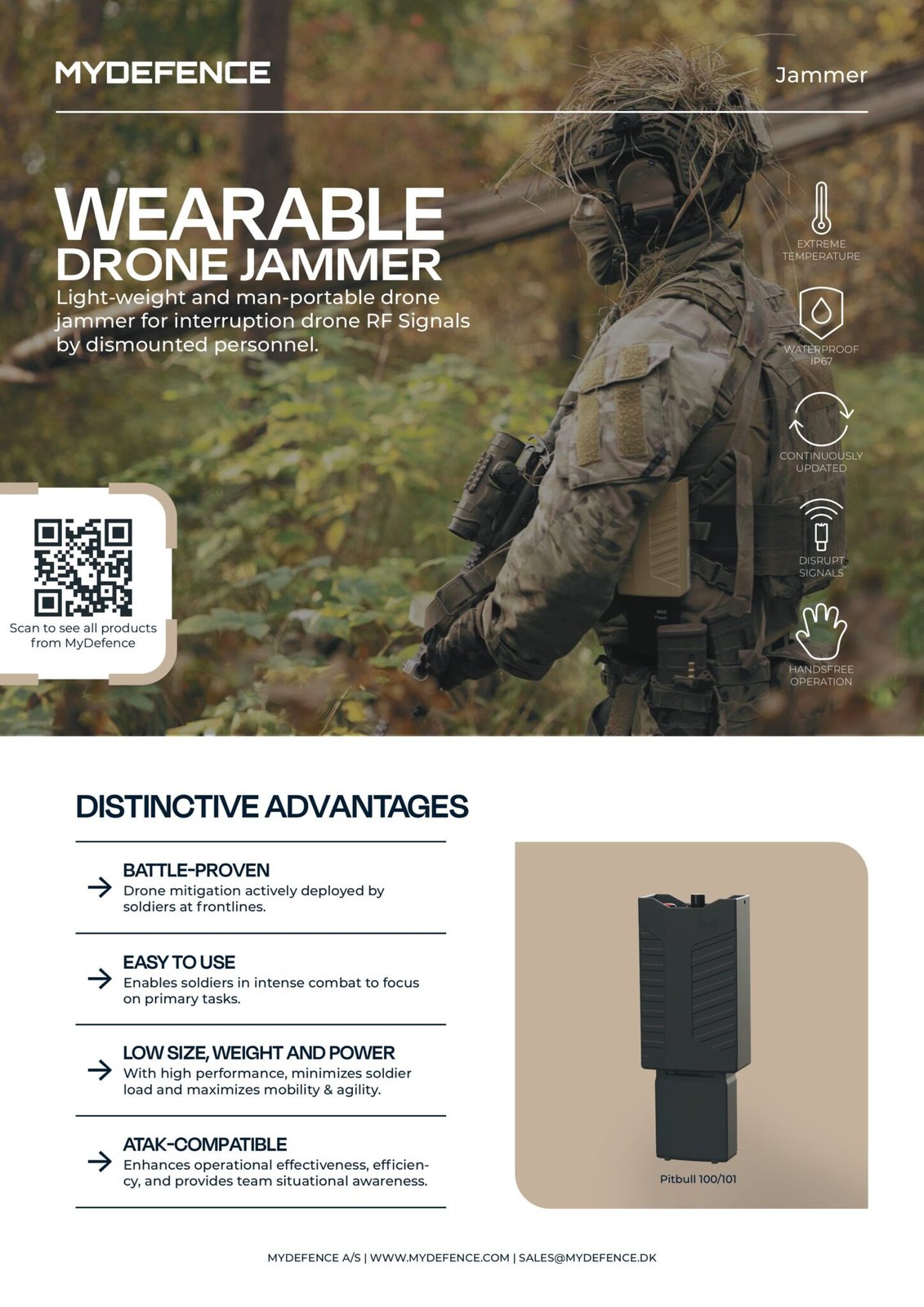
Pitbull is a body-worn radio-frequency jammer built by MyDefence, the Danish counter-drone specialist headquartered in Aalborg. Introduced around 2019 and refined across several hardware revisions since, it is designed to give a dismounted soldier — a foot patrol, a checkpoint guard, a special-operations team — the means to break the control link of a small unmanned aircraft without the bulk of a vehicle-mounted system. The unit clips to a plate carrier, weighs under a kilogram, and is intended to be worn for the length of a patrol rather than carried as a deployable tool.
The system works in concert with MyDefence’s Wingman detector, also body-worn, which sweeps the relevant radio bands looking for the telemetry signatures of common commercial and improvised drones. When Wingman classifies a hostile emitter, Pitbull is triggered to react: it transmits across the bands used for drone command-and-control and video downlink — the 2.4 and 5.8 GHz ISM bands, the 433 and 915 MHz hobby-radio bands, and the GNSS frequencies used for GPS-based waypoint flight. Because it jams on detection rather than continuously, the wearer’s own communications and the surrounding electromagnetic environment stay largely intact between engagements, which matters for units operating close to friendly radios and dismounted command nets. A separate Wolfpack networking layer lets multiple operators share detections across a small unit so that one soldier’s alert puts the rest of the squad in a usable jamming posture.
Operators include the United States, the United Kingdom, and Denmark, with reported sales also to Norway, the Netherlands, and other NATO members. U.S. Special Operations Command has been the most visible buyer, awarding MyDefence successive framework contracts that pushed Pitbull and Wingman through the U.S. dismounted counter-UAS programme of record. The kit has been used by Ukrainian forces against Russian quadcopters and fixed-wing loitering munitions, and earlier generations were fielded by Western forces in Iraq and Syria against Islamic State drones rigged to drop munitions on patrols.
MyDefence has iterated steadily on the platform — newer revisions extend frequency coverage to the bands used by digital video transmission protocols such as those on FPV racers, which Russian and Ukrainian forces have repurposed as one-way attack drones. The competitive set is small. Most counter-drone products at this weight class are antenna-based “drone guns” pointed at a target; Pitbull’s distinguishing pitch is that it is automatic, omnidirectional, and worn rather than aimed.