Products Kongsberg Defence & Aerospace
NASAMS
Network-centric short to medium-range air defence system, co-developed with Raytheon, firing AMRAAM and AIM-9X from distributed launchers.
systemby Kongsberg Defence & AerospaceIntroduced 1998
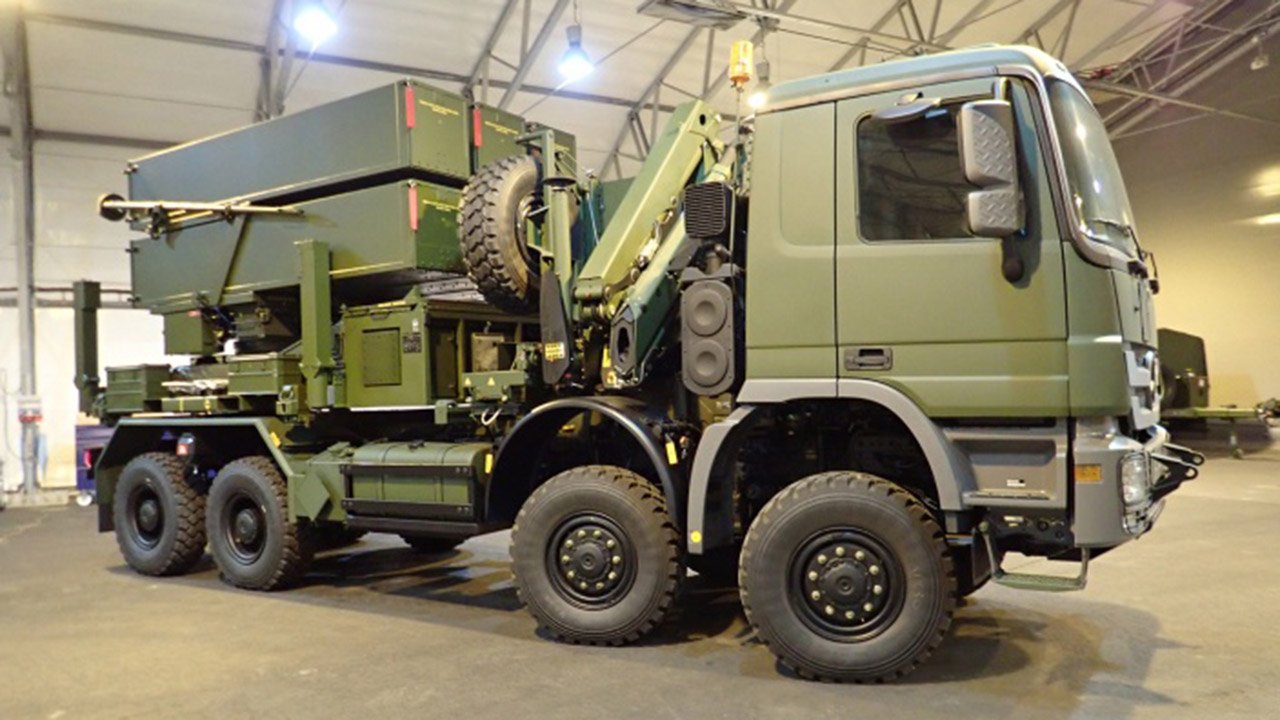

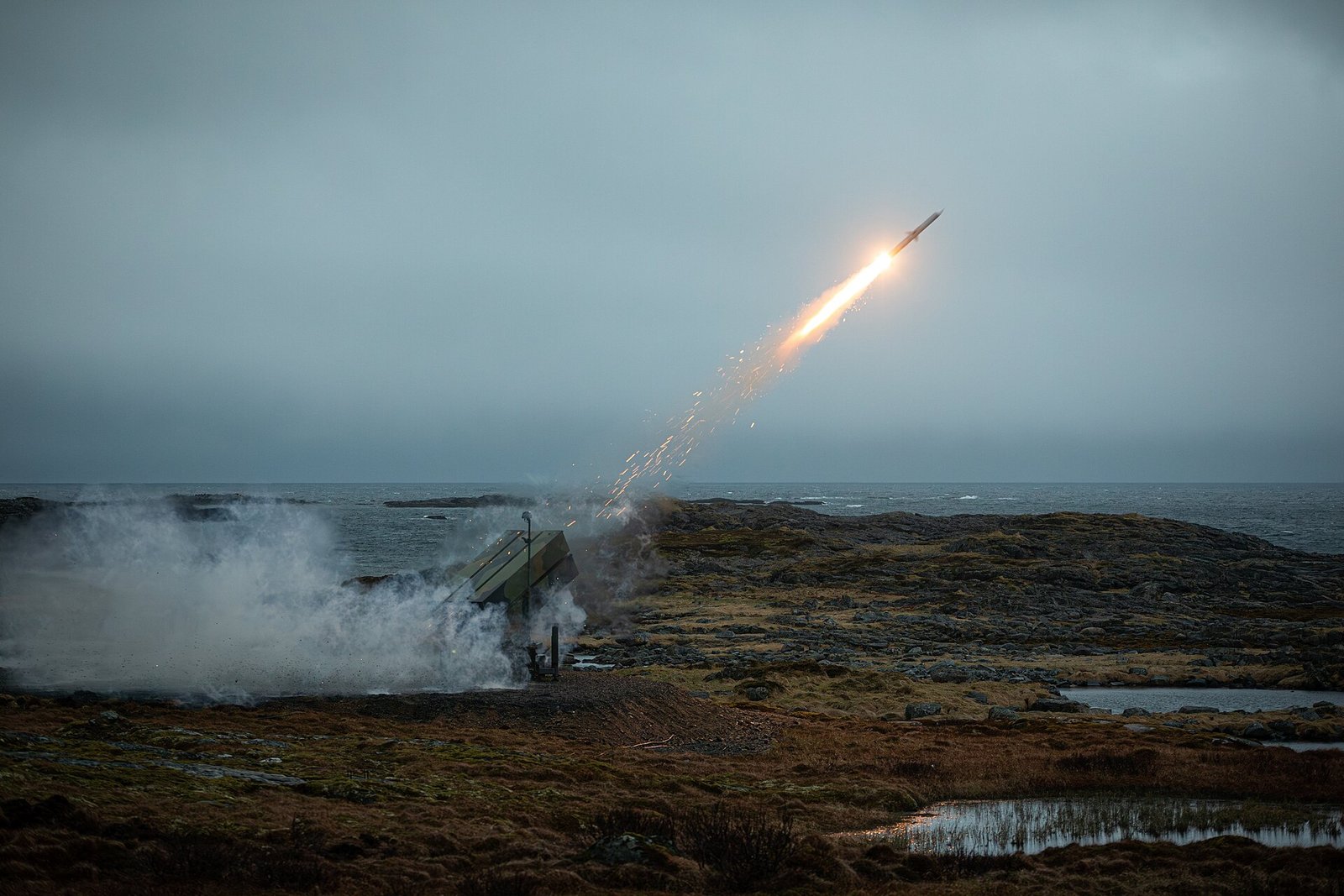

Photos: Lithuanian Armed Forces - Lithuanian Air Forces (Air defense battalion) · Kongsberg Defence & Aerospace · U.S. Naval Forces Europe-Africa/U.S. Sixth Fleet
NASAMS — the Norwegian Advanced Surface-to-Air Missile System — is a network-centric short to medium-range ground-based air defence system co-developed by Kongsberg Defence & Aerospace and Raytheon. It entered Norwegian service in 1998 as the first ground-based air defence system to fire the AIM-120 AMRAAM, originally an air-to-air missile, from a vehicle-mounted launcher. The system fills the gap between man-portable point defence and long-range systems like Patriot, and is now in service with more than a dozen countries, including the United States, where it has guarded the airspace over Washington, D.C. since 2005.
Architecturally, NASAMS is built around its Fire Distribution Centre, which fuses tracks from multiple sensors and assigns engagements across geographically separated launchers. The standard sensor is the AN/MPQ-64 Sentinel X-band 3D radar, but the FDC is sensor-agnostic and has been integrated with passive electro-optical sensors, MSP500 multi-spectral systems, and third-party radars. Each launcher carries six ready-to-fire canisters, and because the launchers communicate over a data link rather than a hardwired connection to a single radar, they can be dispersed across kilometres — a survivability feature that became central to its reputation in Ukraine. The current NASAMS 3 baseline adds the AIM-9X Sidewinder for short-range engagements and the extended-range AIM-120C-7 / AIM-120D as the primary effector, giving overlapping coverage against fixed-wing aircraft, helicopters, cruise missiles, and drones.
Operators include Norway, the United States, Spain, the Netherlands, Finland, Lithuania, Australia, Indonesia, Oman, Chile, Hungary, and Qatar, with Ukraine becoming the most prominent combat user. Washington has supplied at least eight NASAMS batteries to Kyiv since late 2022 under successive aid packages, with US officials publicly citing intercept rates above 90 percent against Russian cruise missiles such as the Kh-101 and Kalibr, and against Shahed-136 one-way attack drones. Spain has deployed NASAMS launchers to Estonia under NATO air-policing arrangements, and Australia ordered the system in 2019 to replace its RBS-70 short-range capability. Total exports have surpassed 12 nations and Kongsberg has indicated that production is fully booked through the late 2020s.
Development continues under the NASAMS 3 standard and a planned NASAMS 4, which extends radar and effector options and integrates new missiles being studied for the European Sky Shield Initiative. The system competes most directly with the German IRIS-T SLM and the Israeli SPYDER, but its early adoption of AMRAAM, its open Fire Distribution Centre architecture, and its battle record against Russian cruise missiles and loitering munitions have made it the reference point for medium-range air defence in the post-2022 European rearmament cycle.