Maritime Domain Awareness
SAR-driven vessel detection and dark-ship tracking service for navies, coast guards, and sanctions enforcement teams.
Softwareby ICEYEIntroduced 2023
Photos: ICEYE · U.S. Marine Corps photo by Sgt. Dylan Chagnon · U.S. Navy photo by Petty Officer 2nd Class Juan Sua · U.S. Navy photo by Petty Officer 2nd Class Ange-Olivier Clement
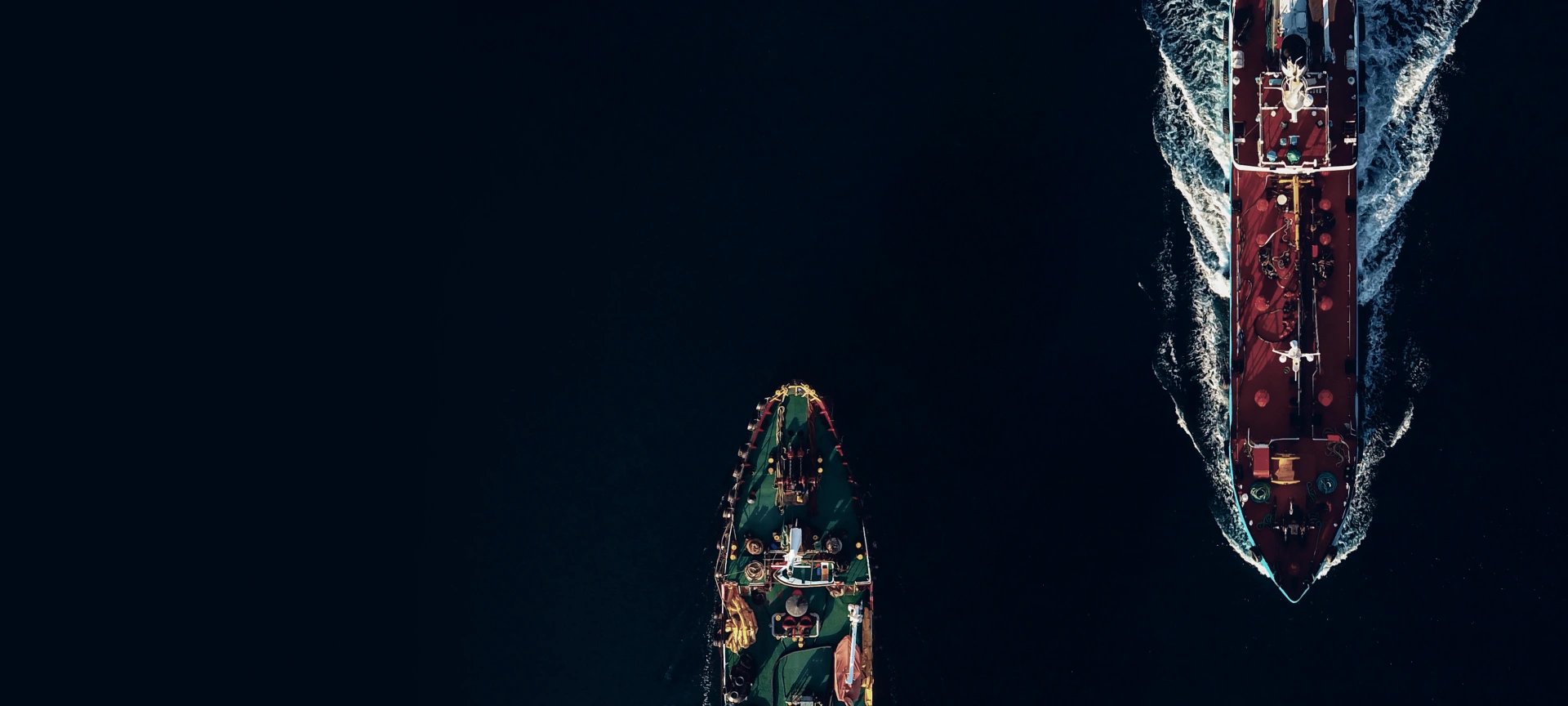
Maritime Domain Awareness is a satellite-based ocean surveillance service operated by ICEYE, the Finnish synthetic-aperture radar company that has built the world’s largest commercial SAR constellation. Introduced in 2023, the service packages the constellation’s all-weather, day-and-night radar imaging into an automated detection feed aimed at navies, coast guards, fisheries enforcement, and sanctions-monitoring cells. It is sold not as raw imagery but as processed intelligence: vessels found, classified, and cross-checked against the cooperative tracking signals ships are supposed to broadcast.
The technical core is the company’s SAR fleet — small radar satellites, each weighing roughly 100 kilograms, that image the sea surface through cloud and darkness. Detection algorithms scan the radar returns for the bright reflections that hulls produce against water, then estimate length, heading, and likely class. Those detections are correlated against Automatic Identification System broadcasts; any vessel that appears in the radar imagery without a matching AIS track is flagged as a “dark ship”. For sanctions and grey-zone work this is the central trick: ships that have switched off transponders to load Russian oil, fish in protected waters, or shadow undersea cables become visible the moment they are imaged. Customers consume the output through a web portal and an API rather than tasking satellites by hand, which collapses what was historically an analyst-heavy workflow into something closer to a live feed.
Among publicly named users are the United States, the United Kingdom, and Finland, with Helsinki an obvious early adopter given the company’s home base and the heavy traffic of Russia’s shadow tanker fleet through the Baltic. The U.S. Navy has worked with ICEYE through the Defense Innovation Unit on maritime tracking pilots, and the U.K. has folded SAR-derived vessel data into Royal Navy and intelligence-community workflows. The service has also been used to monitor Russian oil exports moving through the Black Sea and the Baltic, and to track suspicious activity around undersea pipelines and cables following the Nord Stream sabotage and the more recent Baltic cable incidents.
Development has run alongside the rapid expansion of the constellation itself, which now numbers more than forty satellites and is still growing, shrinking revisit times over any given patch of ocean. ICEYE has announced dedicated maritime products tailored to specific customer types, including a coast-guard-focused offering and faster delivery options for tactical users. The company has also bundled its maritime feed with its flood and damage-monitoring services to pitch a broader Earth-observation intelligence package.
The service sits in a small but crowded segment alongside Capella Space, Umbra, and the analytics layers built on top of them by firms such as HawkEye 360 and Spire. ICEYE’s distinguishing claim is constellation size and revisit rate, which matters most for the dark-ship problem: a tanker that goes silent for six hours is only caught if a satellite happens to be overhead.