Kemankeş
Mini turbojet cruise missile / loitering munition launched from Bayraktar UAVs, intended for stand-off strikes against fixed and moving targets.
Missile / loitering munitionby BaykarIntroduced 2023
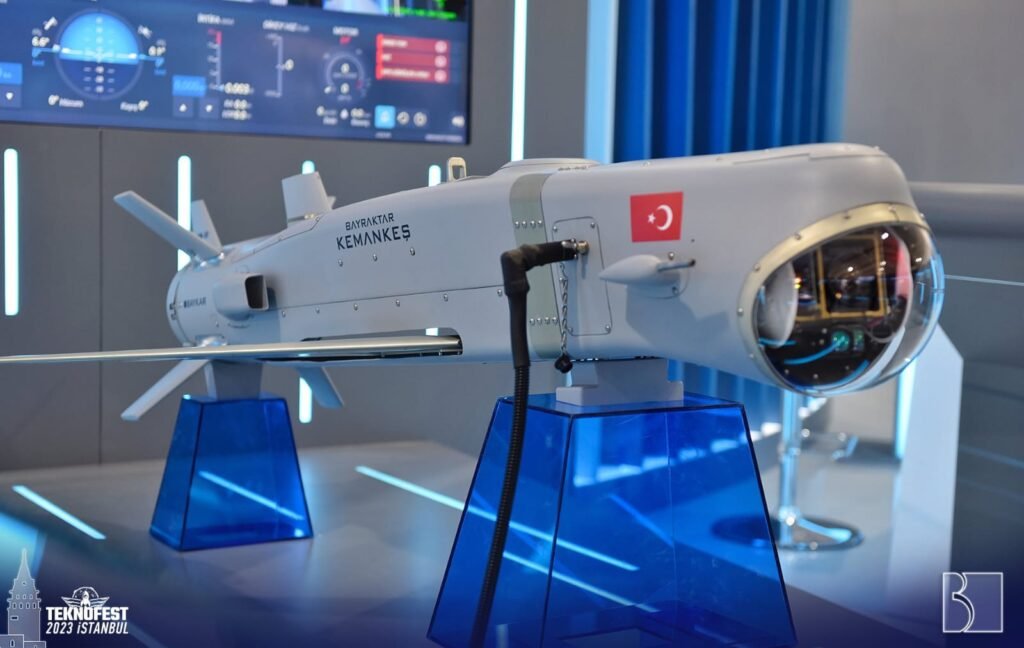
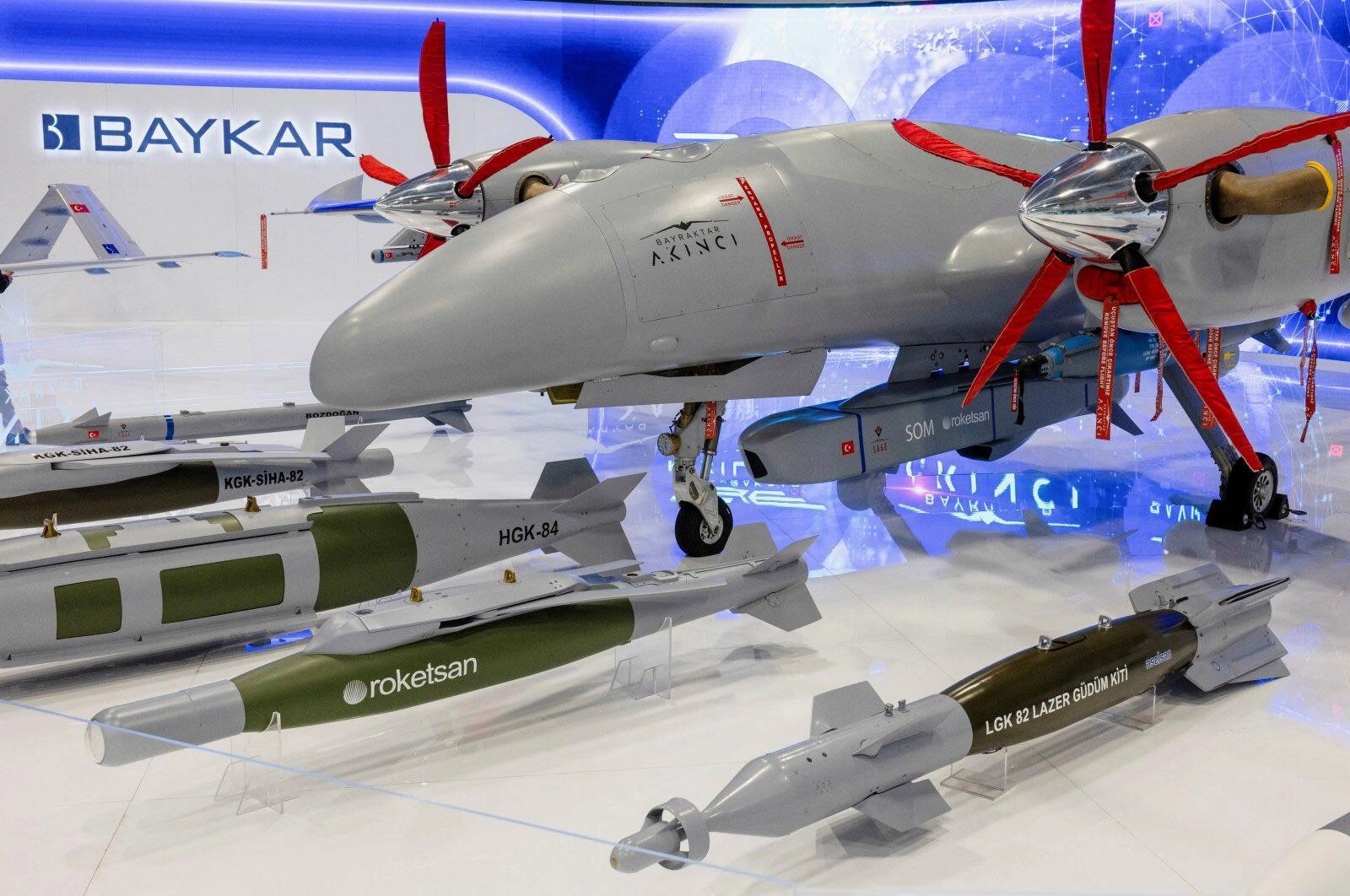
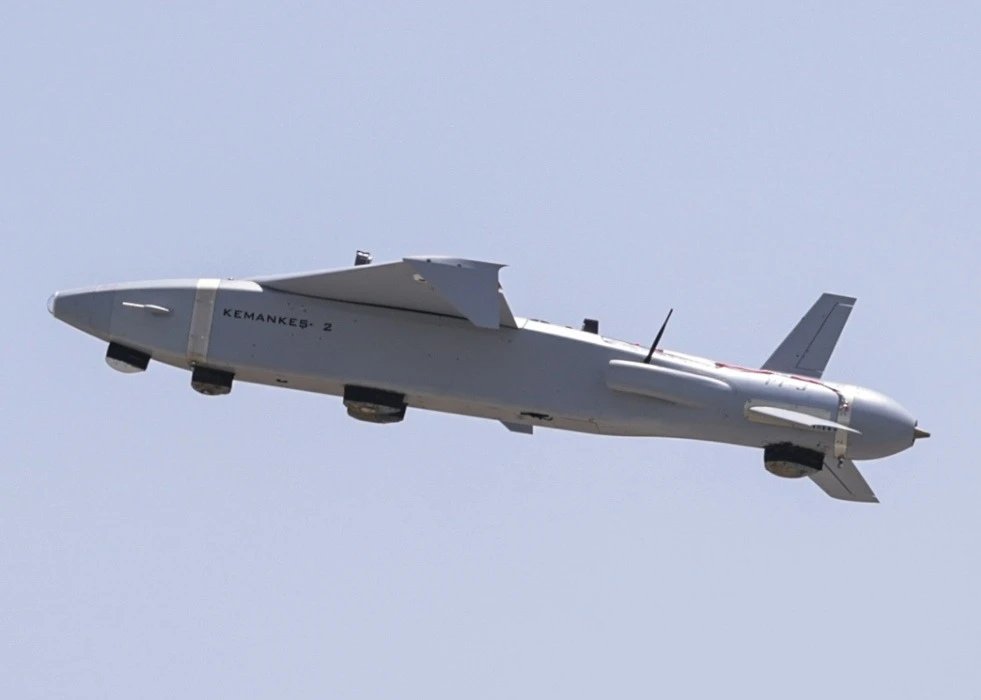
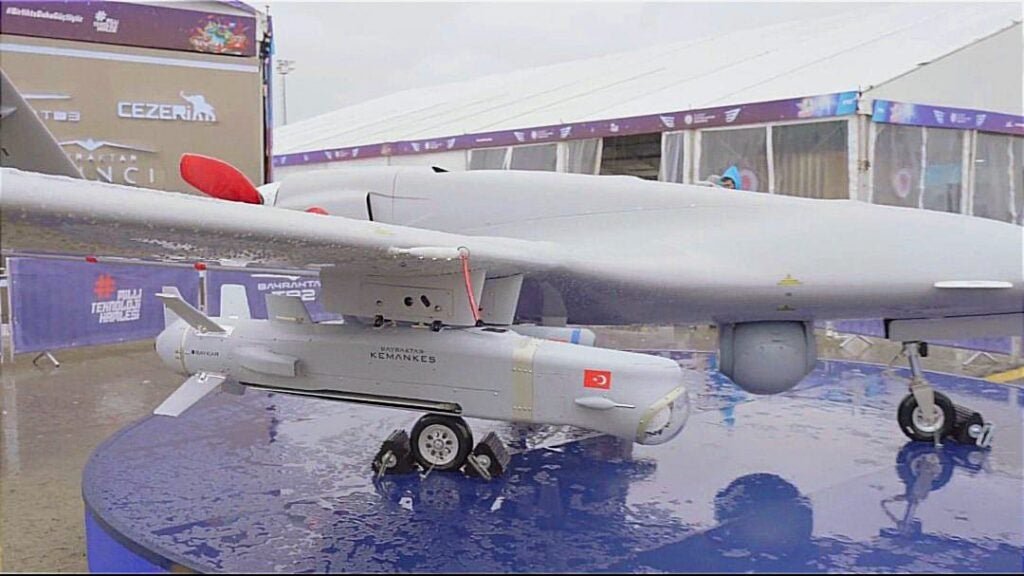
Photos: www.overtdefense.com · www.kyivpost.com · www.turdef.com · www.tapatalk.com
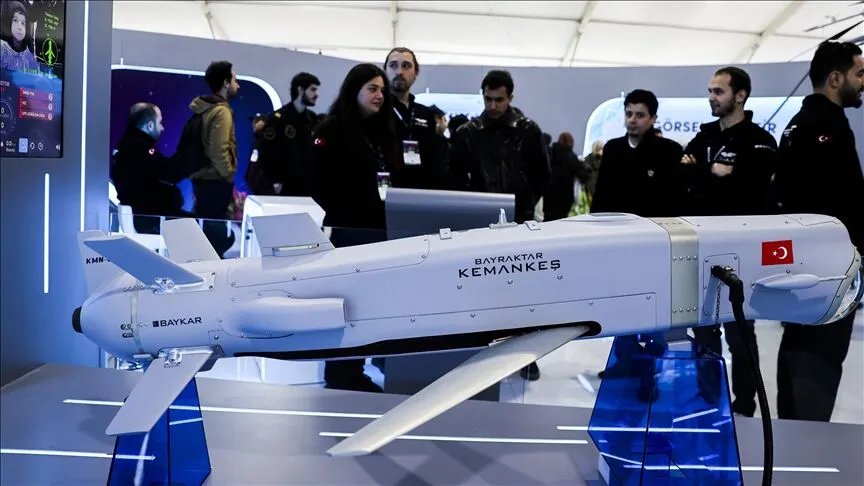
Kemankeş is a turbojet-powered loitering munition developed by Baykar, the Turkish manufacturer behind the Bayraktar series of combat drones. First flight-tested in 2023 and revealed publicly the same year, the weapon sits between conventional cruise missiles and the smaller electric-prop loitering munitions that have come to dominate the battlefield in Ukraine. It is intended to be air-launched from Baykar’s heavier platforms — primarily the Akıncı and the jet-powered Kızılelma — extending their reach against fixed and moving targets at stand-off range.
The munition is built around a small Turkish-made turbojet, which gives it a published range of roughly 200 kilometres and around an hour of loiter time. The airframe carries a 6-kilogramme warhead, modest by cruise-missile standards but consistent with the precision-strike role Baykar has marketed for it. Guidance combines GNSS/INS for the cruise leg with an electro-optical/infrared seeker for the terminal phase, and the company has emphasised AI-assisted target recognition — onboard image processing that can identify and track a designated class of target after release, allowing the operator to commit to a target category rather than a specific aim point. The Kemankeş folds its wings for internal carriage in the Kızılelma’s weapons bay, a design choice that signals Baykar’s intent to pair the missile tightly with its own next-generation aircraft.
Türkiye is the announced operator. Baykar flew the system from the Akıncı during its development campaign and has demonstrated release from the Kızılelma in subsequent trials. Series production for the Turkish Armed Forces was reported to be underway by 2024, though deployed numbers and contract values have not been disclosed publicly. The munition has not been used in combat as of writing, and there are no confirmed export customers, though Baykar’s existing operator base — Ukraine, Azerbaijan, and several Gulf states — is the obvious follow-on market.
A heavier variant, Kemankeş-2, was unveiled in 2024 with a substantially larger warhead and an extended range, aimed at hardened or higher-value targets. Both variants are being iterated alongside Baykar’s broader move from propeller-driven ISR-strike drones into jet-powered combat aircraft and stand-off munitions, narrowing the gap with Western and Israeli equivalents such as the Spike NLOS and the Hero loitering-munition family.