K9 Thunder
South Korean 155 mm self-propelled howitzer — the global market leader in self-propelled artillery, in service across six NATO countries.
vehicleby Hanwha AerospaceIntroduced 1999 · Updated 2025
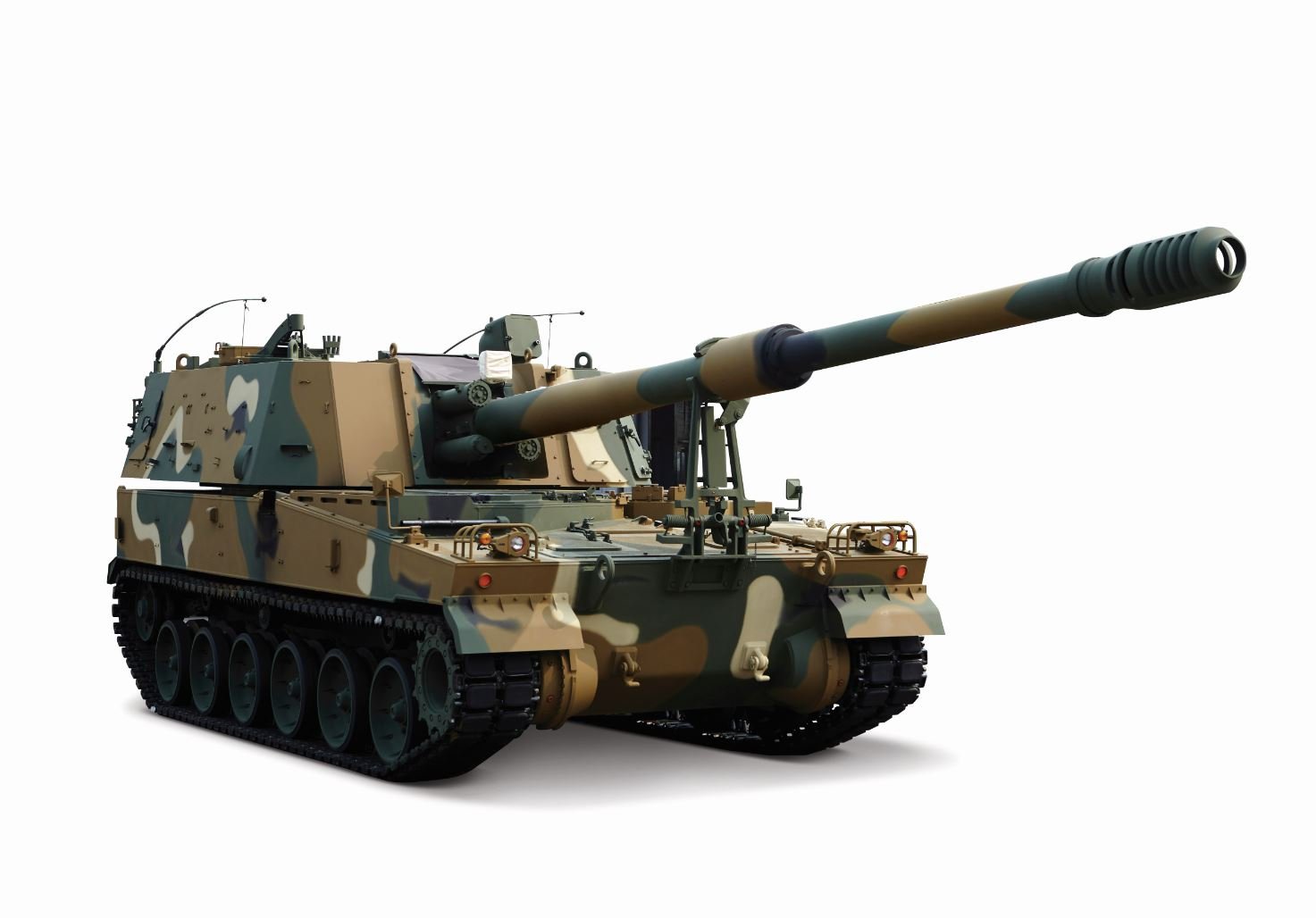
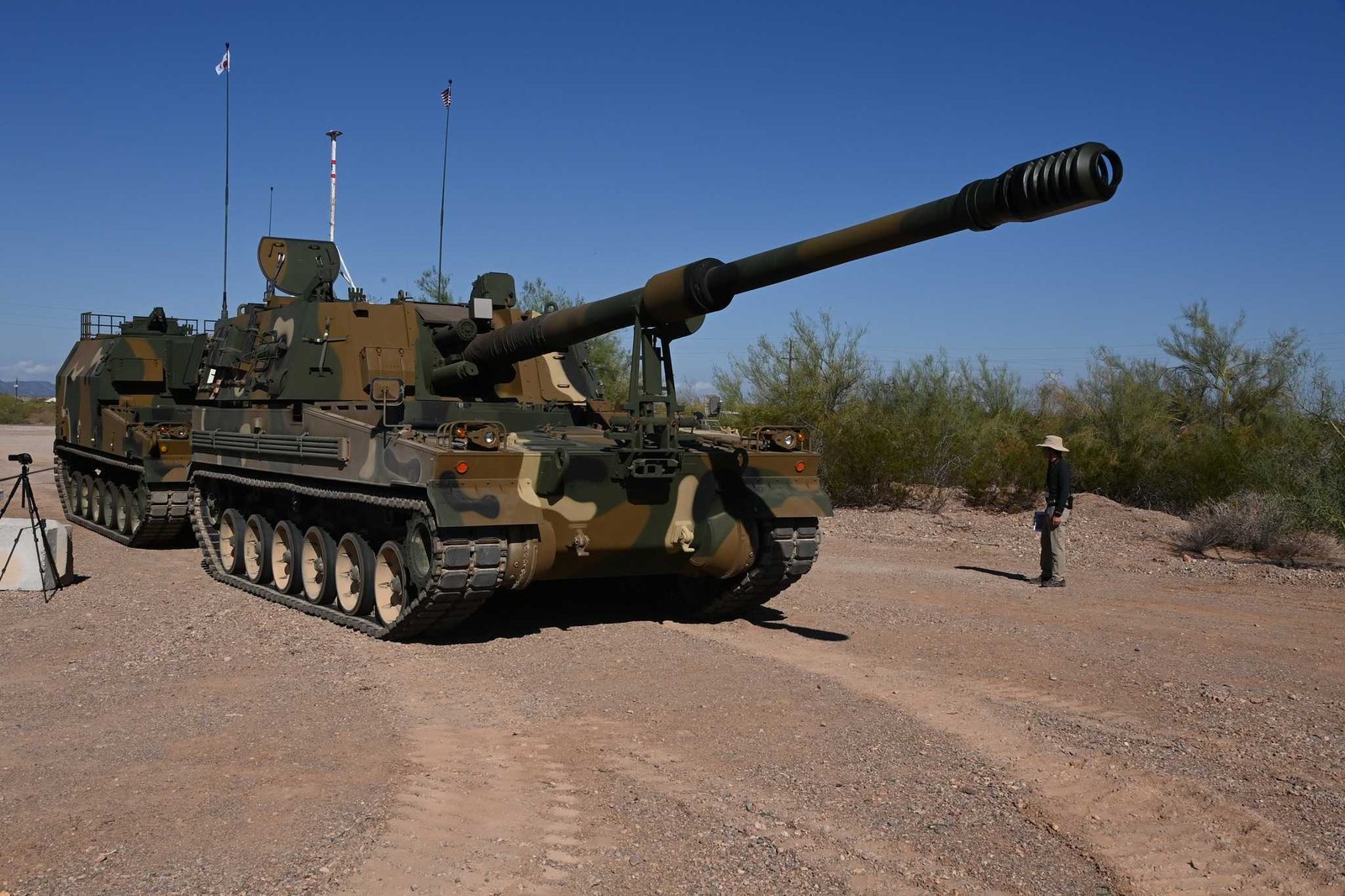
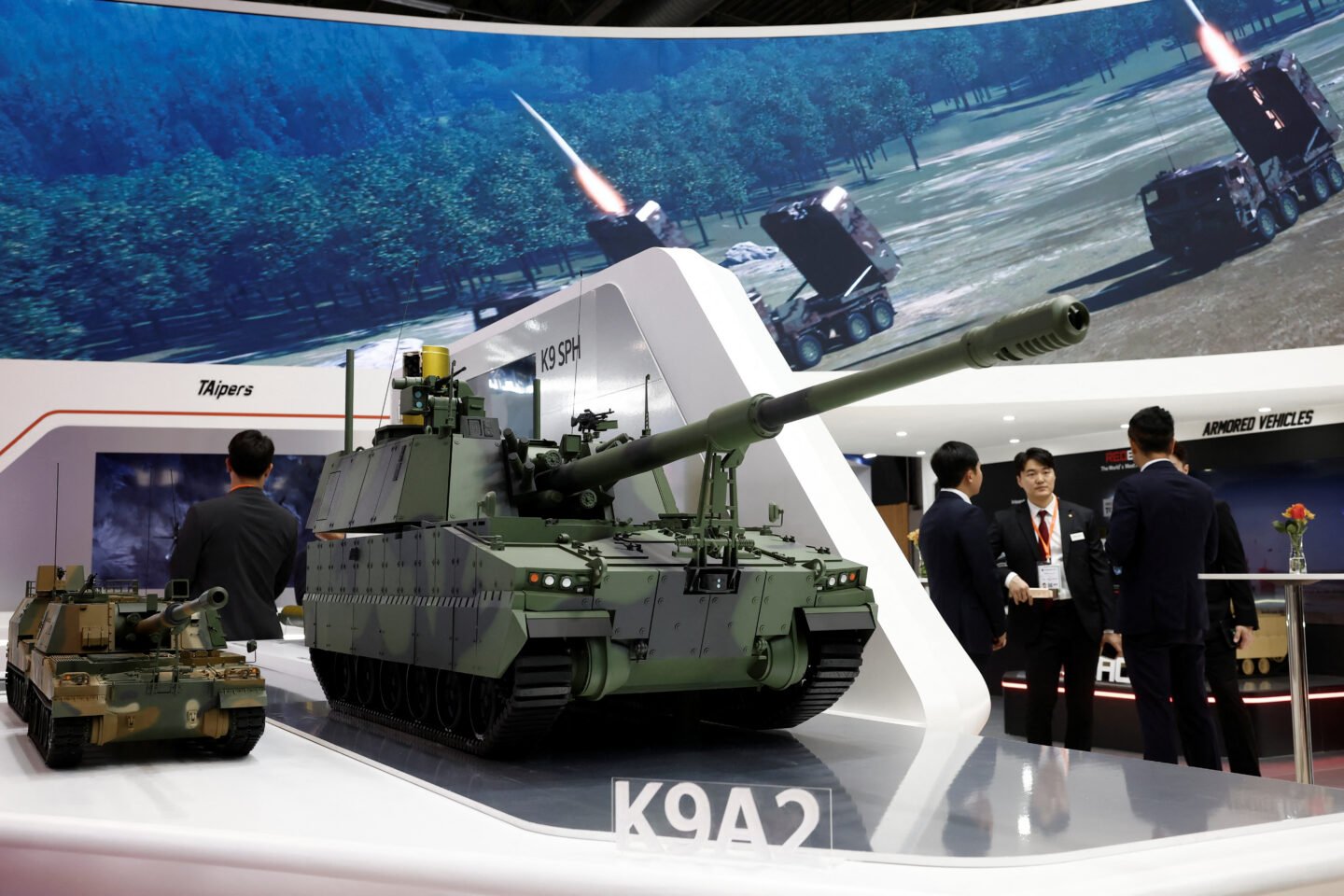
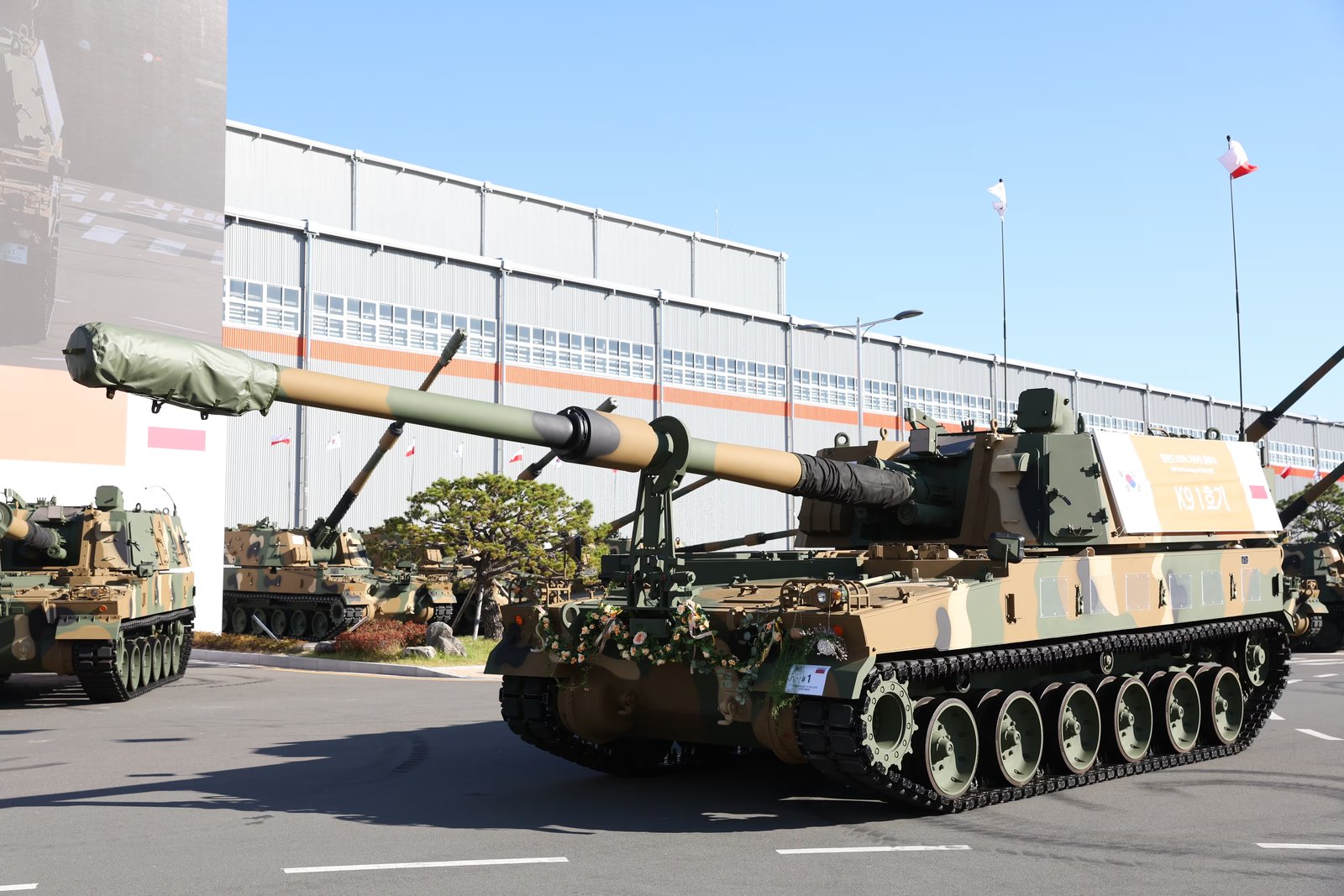
Photos: news.cision.com · gagadget.com · www.onalert.gr · www.defensenews.com · www.armyrecognition.com
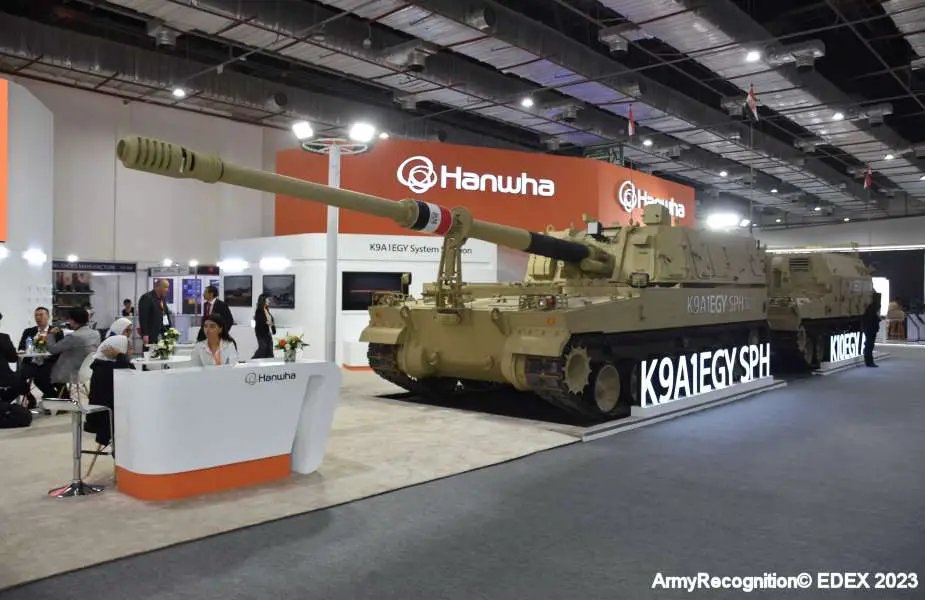
The K9 Thunder is South Korea’s 155 mm / 52-calibre self-propelled howitzer, in service with the Republic of Korea Army since 1999 and now operated by ten countries — including six NATO members. More than 1,700 vehicles have been delivered across operators, making it the world’s best-selling self-propelled artillery system in production.
Mechanically the K9 sits in the same class as the German Rheinmetall PzH 2000 and the American M109A7: 155 mm / 52 cal main gun, 30 km HE range and 40+ km with extended-range projectiles, 6-8 rounds per minute sustained or three rounds in fifteen seconds in burst mode, automated loading. The MTU MT 881 powerpack is shared with the PzH 2000. What distinguishes the K9 is not its tactical envelope — Western peers cover the same ground — but its industrial cadence.
Korean assembly lines were already running at full rate when Russia invaded Ukraine in February 2022 and Western artillery production was essentially saturated. Hanwha could deliver against existing contracts and absorb new orders simultaneously: a Polish K9A1 framework contract in 2022 was followed by a Romanian deal in 2024, a chassis-supply deal with Poland in 2025, and a second K9 contract with India the same year. The result is that East European militaries from Poland to Romania to Estonia have shifted self-propelled artillery procurement decisively toward Korea, and that Hanwha now claims a higher share of the Western SP-howitzer market than any single European prime.
Combat experience remains thin. The K9 fired in anger for the first time during the 2010 Yeonpyeong Island shelling, when ROK Marines returned fire on North Korean artillery. Polish K9A1s now sit forward-deployed under the post-2022 NATO eastern-flank posture but have not yet been used in a shooting war.
Combat experience
Effectiveness
The K9’s commercial dominance — six NATO operators, more than any rival self-propelled howitzer in production — comes from a combination that is hard for European primes to match: rapid Korean industrial ramp, dual-fielded burn-down economics with the ROK Army, full-rate production lines that absorbed the post-2022 European demand spike when Rheinmetall PzH 2000 and BAE M109A7 production was already saturated, and offset deals (local production in Türkiye, India, and Poland) that European primes were slower to offer.
Tactically the K9 sits in the same envelope as the PzH 2000 — 155 mm / 52 cal, 30+ km range, automated loader, 6-8 rpm sustained fire — with a slightly heavier vehicle and a more modest electronics fit. The differentiation is the production economics, not the fires.
Sources
- en.wikipedia.org/wiki/K9_Thunder (2026-05-02) — Encyclopedic entry — confirms 1999 introduction, operator list, Yeonpyeong combat use.
- www.asiae.co.kr/en/article/2026041420153680392 (2026-05-02) — Asia Business Daily — 2025 contract additions for Poland, India.