HUGIN
Modular autonomous underwater vehicle family (HUGIN 1000 through HUGIN Endurance) used for naval mine countermeasures, seabed mapping and covert ISR.
Droneby Kongsberg DiscoveryIntroduced 1996
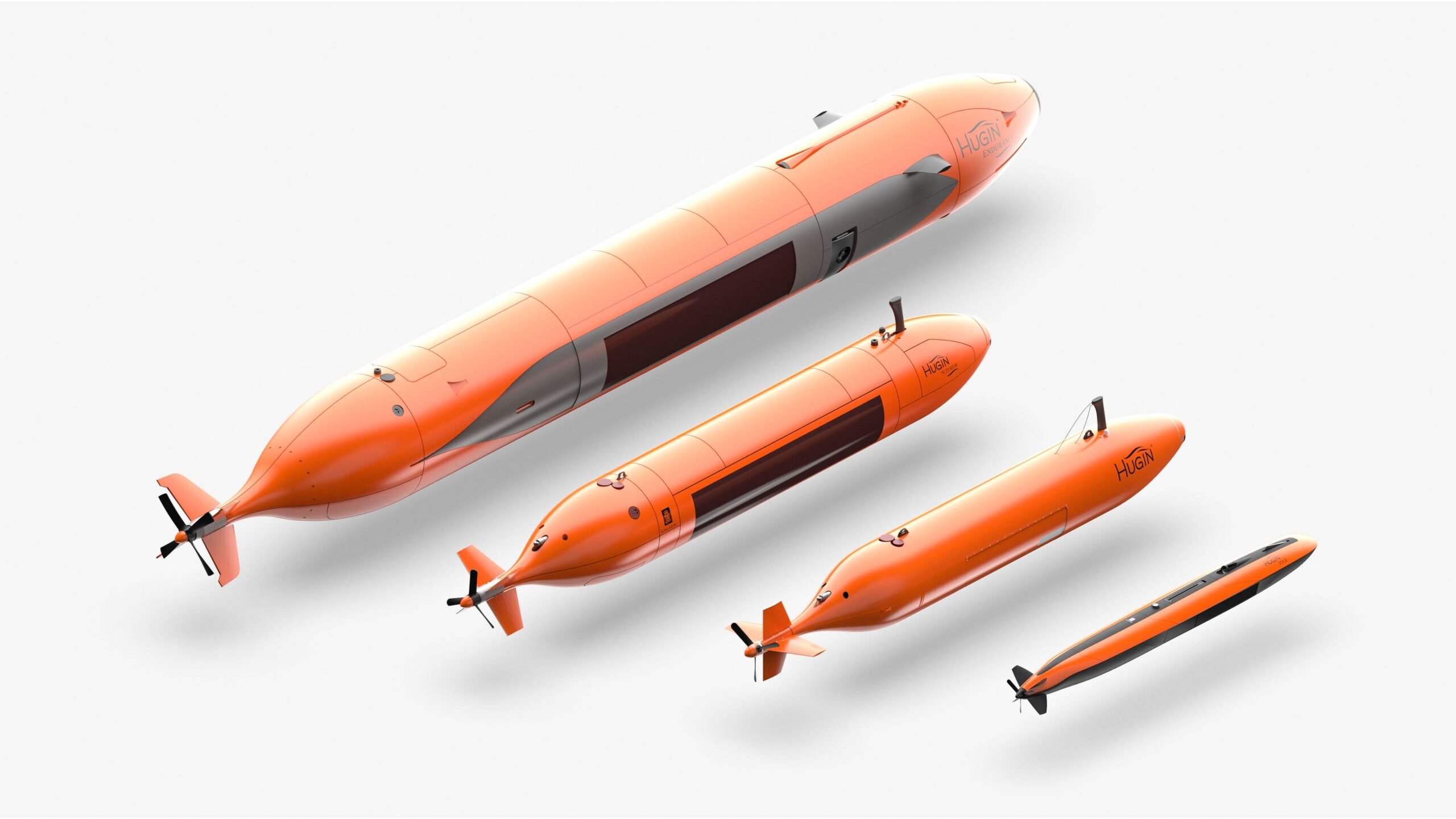

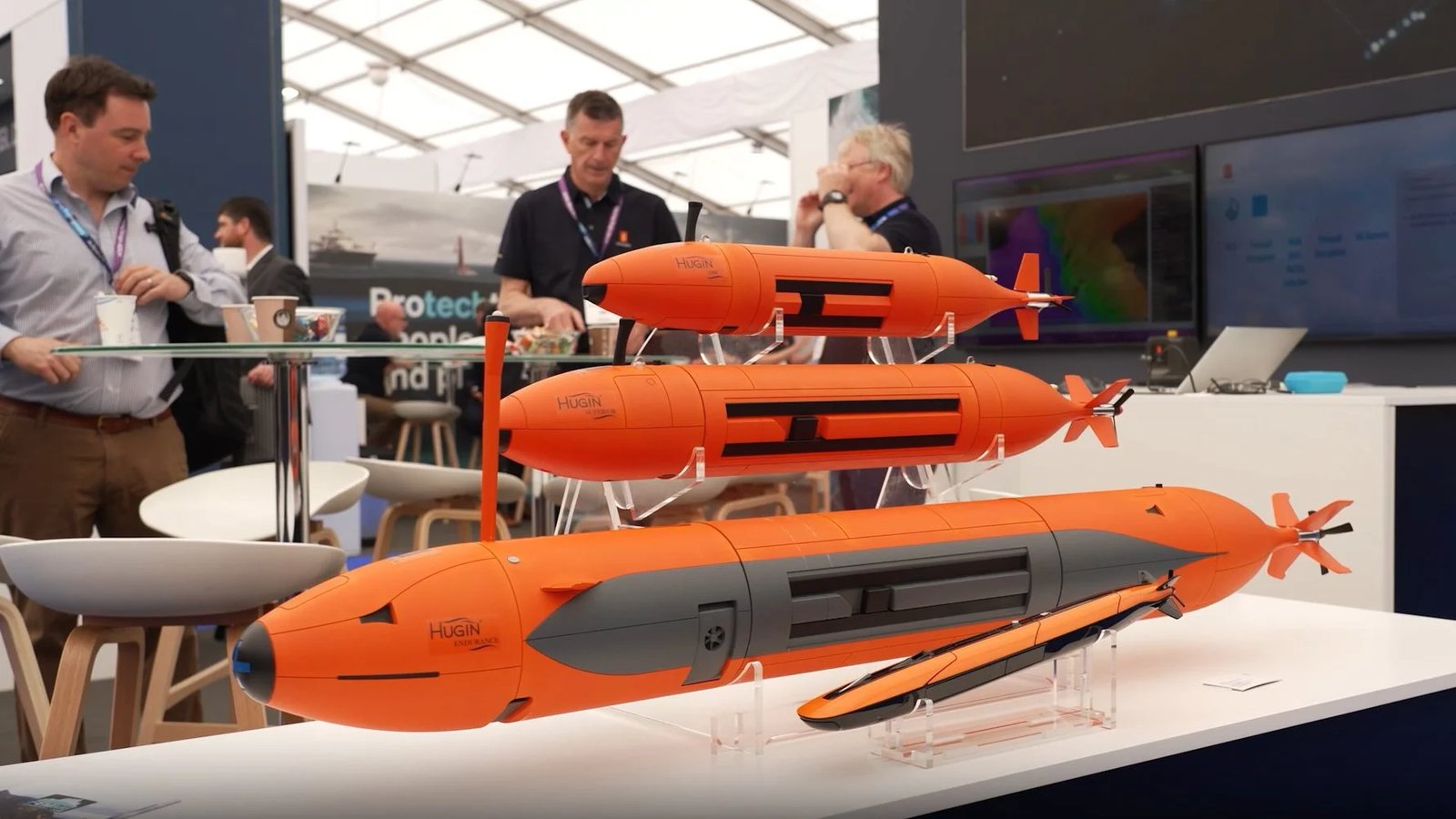
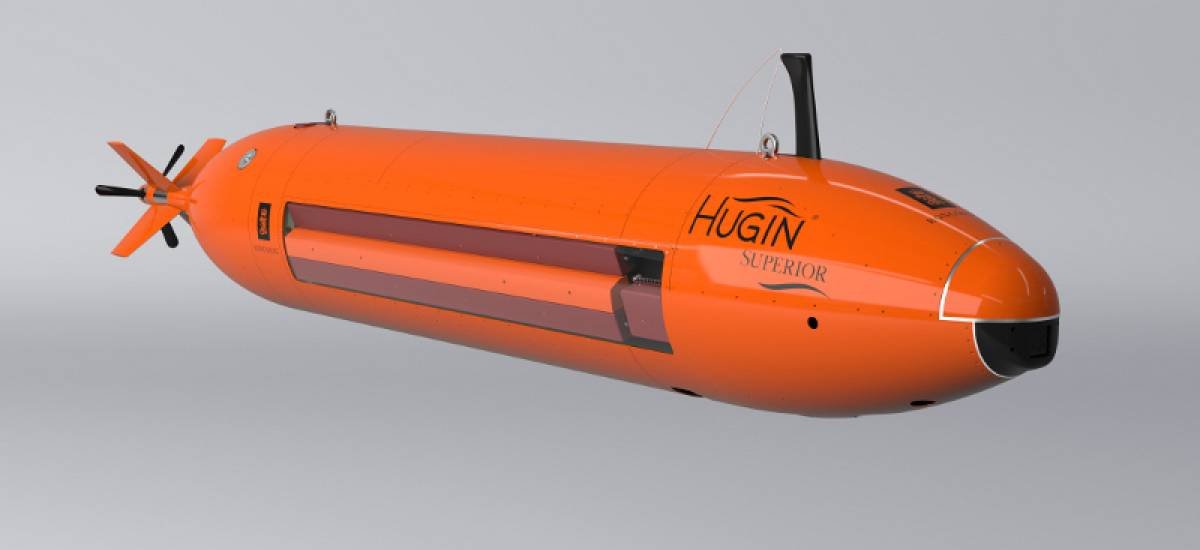
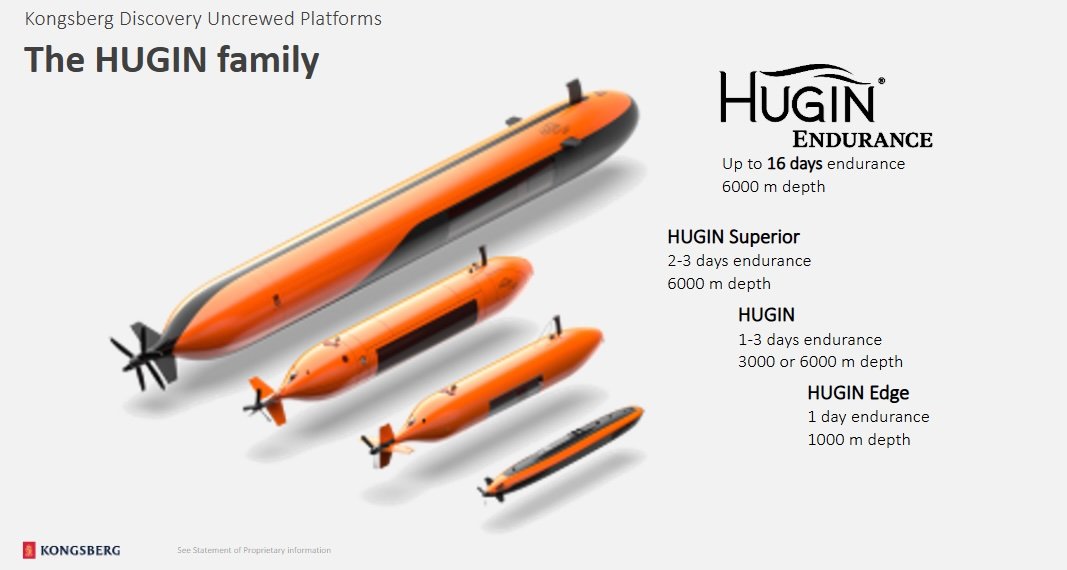
Photos: www.oceanbusiness.com · Kongsberg Discovery · gcaptain.com · www.meretmarine.com
HUGIN is a family of autonomous underwater vehicles built by Kongsberg Discovery, the underwater-robotics arm of Norway’s Kongsberg group. The platform was developed in the mid-1990s as a collaboration between Kongsberg, the Norwegian Defence Research Establishment (FFI) and the Norwegian offshore oil industry, with the first vehicle delivered in 1996. Three decades later HUGIN remains the reference Western heavy AUV for naval mine countermeasures and seabed survey, fielded by several NATO navies alongside a parallel commercial fleet that handles offshore pipeline inspection and deep-ocean search.
The vehicle is torpedo-shaped, lithium-ion powered and rated to depths between 1,000 and 6,000 metres depending on variant. Its defining payload is HISAS, the high-resolution interferometric synthetic aperture sonar developed in-house by Kongsberg, which produces centimetre-scale imagery and bathymetry across swaths several hundred metres wide on each side of the vehicle. HUGIN couples that sensor with multibeam echosounders, sub-bottom profilers, magnetometers and electro-optical cameras, and runs an onboard autonomy stack that handles terrain-relative navigation, adaptive mission re-planning and automatic target recognition of mine-like contacts. The vehicle holds position without GPS by combining inertial navigation, Doppler velocity logs and acoustic positioning from a surface vessel — a stack that lets it survey for many hours between fixes. The HUGIN Superior variant carries roughly 24 hours of endurance; HUGIN Endurance, unveiled in 2022, stretches that to fifteen days or more and a range measured in thousands of kilometres, pushing the platform from vessel-tethered survey toward long-duration uncrewed seabed presence.
Norway is the foundational operator and runs HUGIN from naval mine-countermeasures units. The United States Navy ordered HUGIN Superior in 2022 under a contract awarded through Kongsberg’s Massachusetts-based Hydroid subsidiary for mine-warfare and survey tasks. The Royal Australian Navy selected HUGIN Superior under its SEA 1778 deployable mine countermeasures programme. France and the United Kingdom both field HUGIN-class vehicles, the latter as part of the long-running effort to replace the Hunt and Sandown-class minehunter fleet with off-board systems. On the commercial side, Ocean Infinity’s HUGIN fleet conducted the privately-funded 2018 deep-sea search for Malaysia Airlines flight MH370 and has since become a fixture in offshore survey work, including pipeline inspection contracts across the North Sea and the Gulf of Mexico.
Development centres on autonomy and endurance. Kongsberg has been integrating multi-vehicle coordination so that several HUGINs can co-survey an area and share target designations, and is iterating onboard target recognition so that mine classification happens during the mission rather than after recovery. The Endurance variant in particular pushes HUGIN into the same operational space being explored by long-range AUVs from Anduril and Boeing — uncrewed seabed presence on the scale of weeks, not hours, with mine warfare and persistent ISR as the obvious military pull.