Products Israel Aerospace Industries
Heron
Medium-altitude long-endurance UAV for ISR and maritime patrol, fielded by more than a dozen militaries.
Droneby Israel Aerospace IndustriesIntroduced 1994
Photos: www.navalnews.com · unmanned-network.com · www.jns.org · www.eurasiantimes.com · www.unmannedsystemstechnology.com
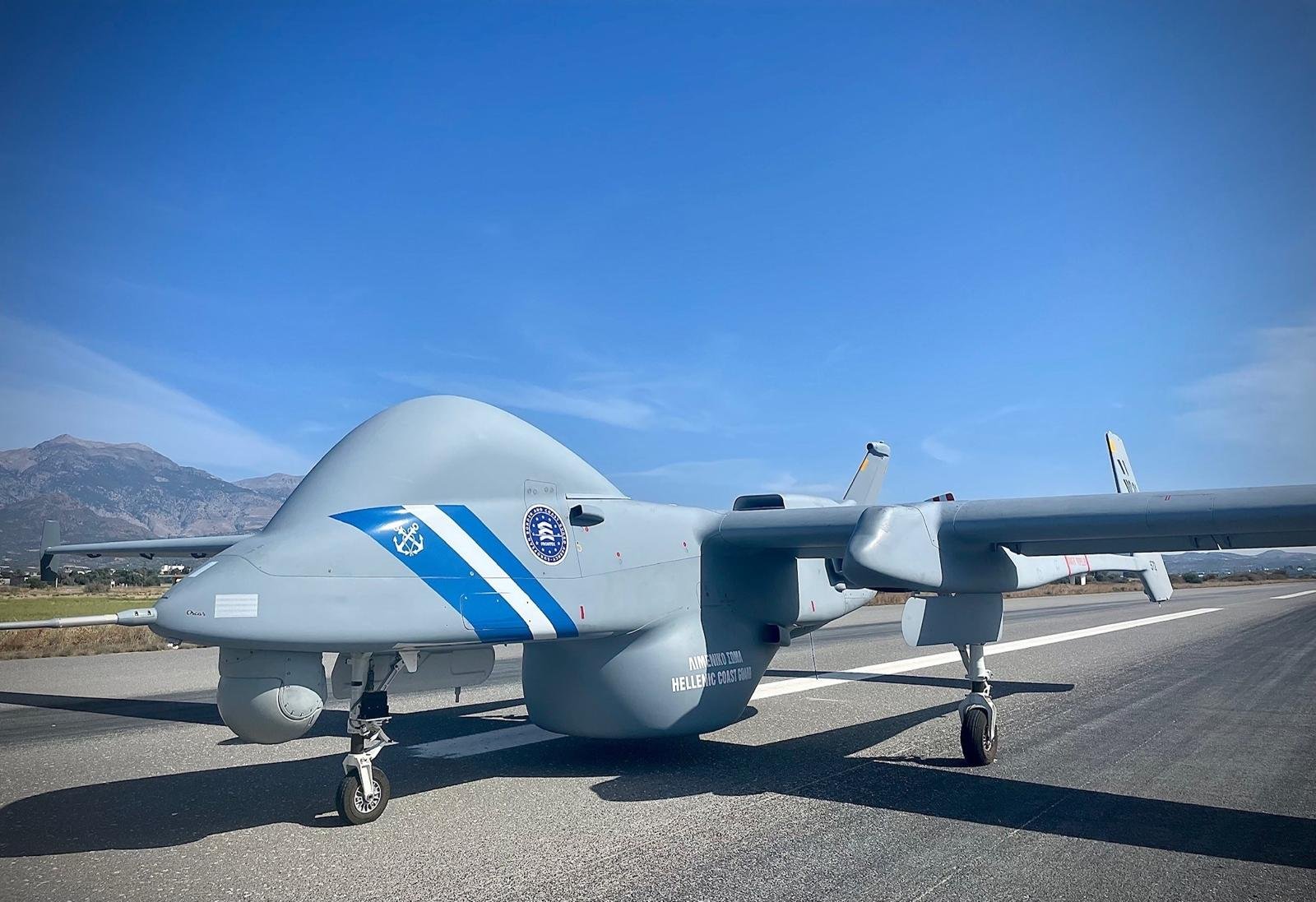
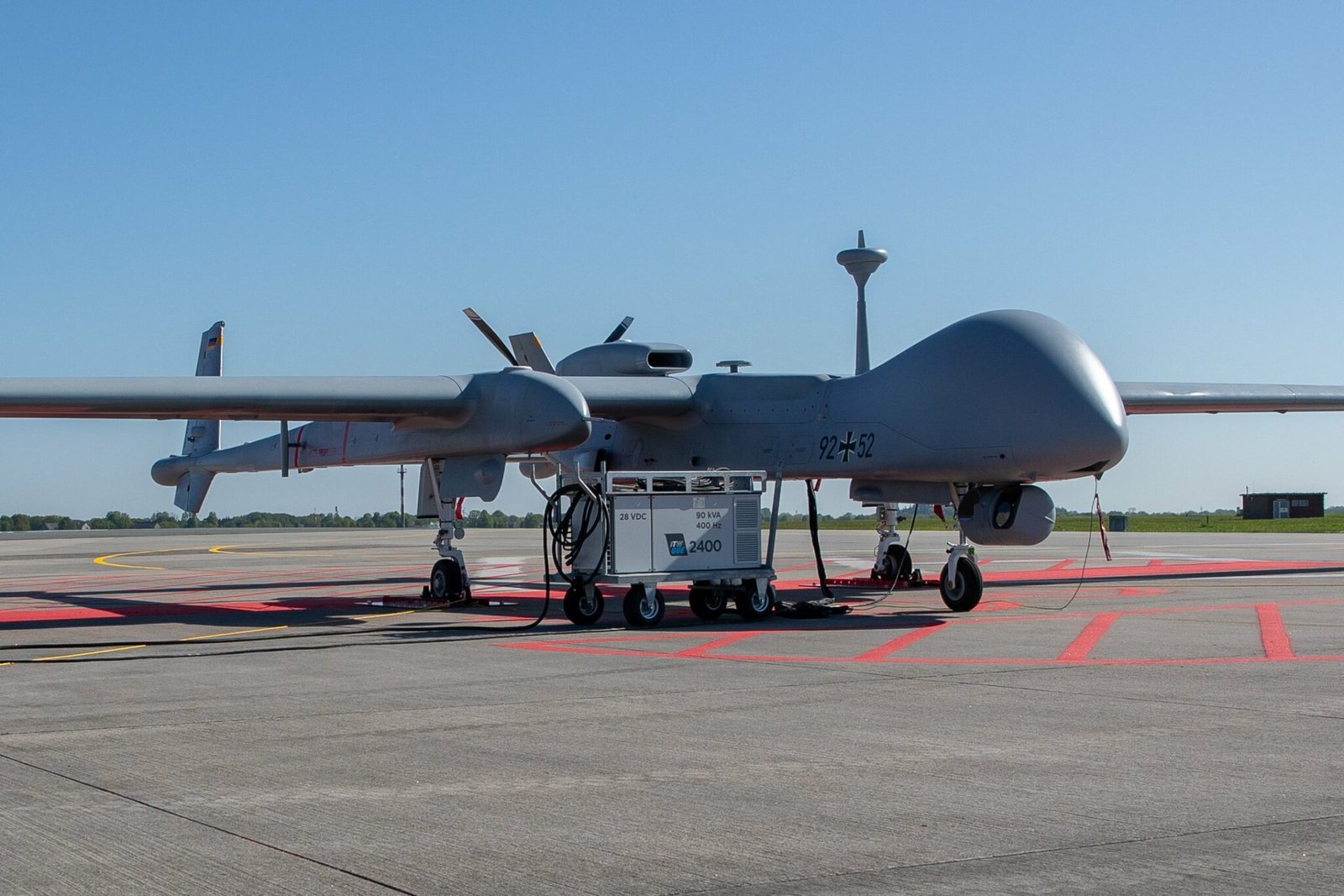
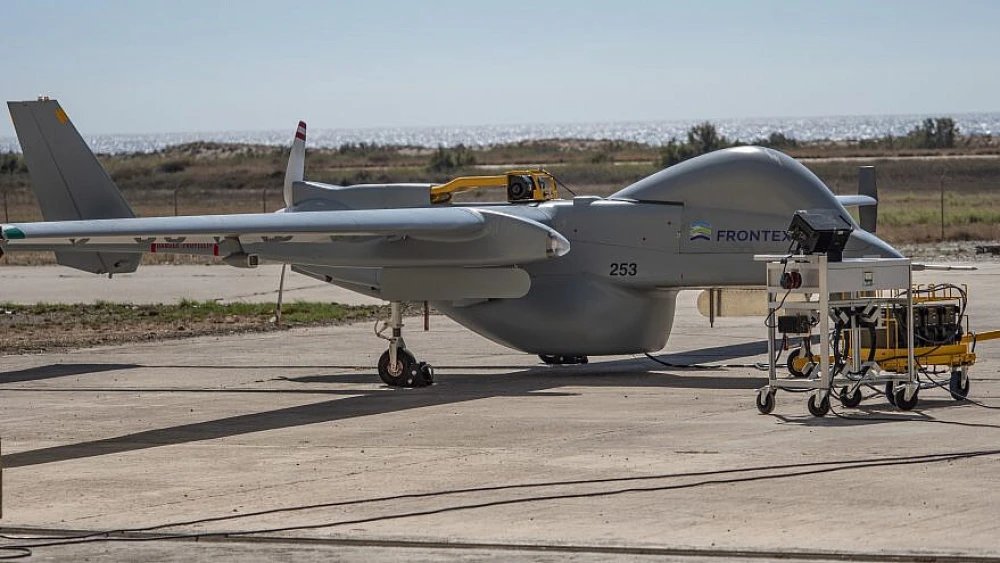
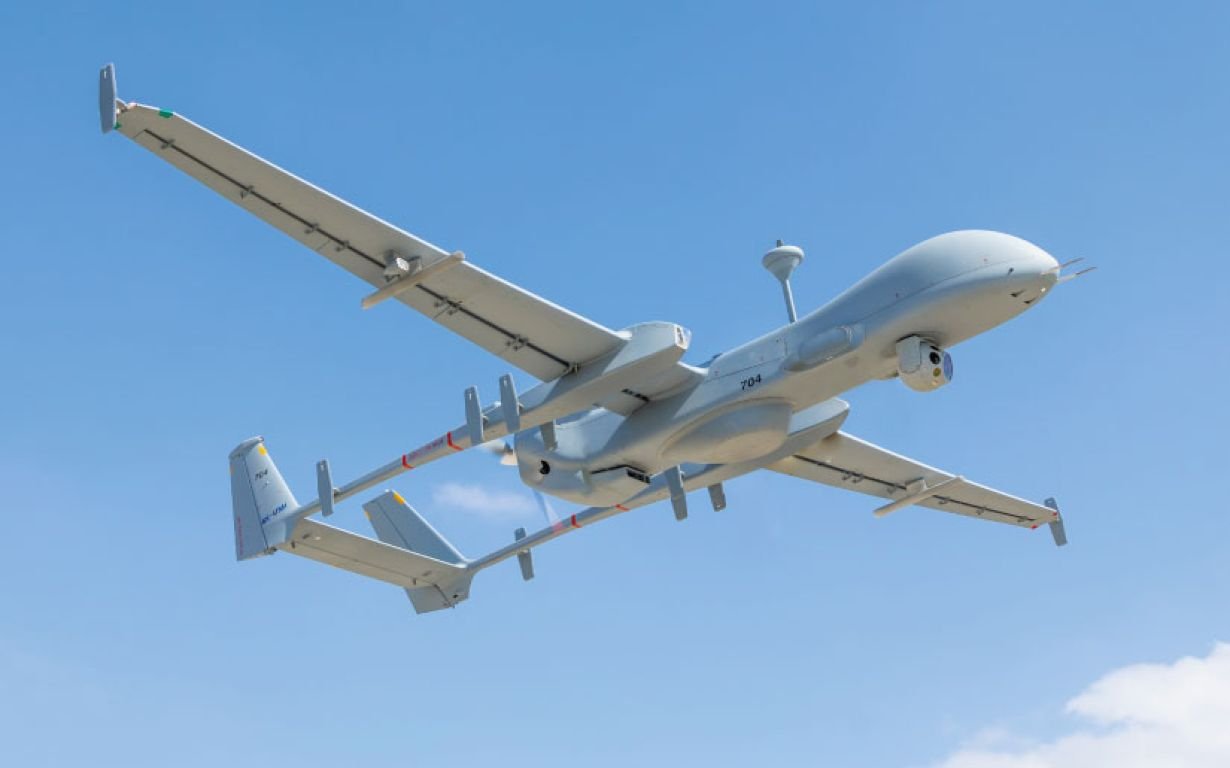
The Heron is a medium-altitude long-endurance unmanned aerial vehicle built by Israel Aerospace Industries, developed by the company’s Malat division and first flown in 1994. It is designed for persistent intelligence, surveillance and reconnaissance work, with a secondary maritime patrol role, and has become one of the most widely exported MALE-class systems in service. The aircraft has a high-mounted wing of roughly sixteen metres, a twin-boom tail and a pusher propeller driven by a Rotax piston engine, giving it an endurance of up to 52 hours, a service ceiling around 30,000 feet and a payload capacity of about 250 kilograms.
Its sensor fit is modular. A typical configuration centres on IAI’s MOSP electro-optical and infrared turret, complemented by synthetic-aperture radar and maritime patrol radar variants from IAI’s Elta subsidiary, plus communications and electronic intelligence packages tailored to the customer. Satellite and line-of-sight datalinks let the aircraft operate beyond the roughly 350-kilometre direct-control range, with automatic take-off and landing handled without an external pilot in the loop. The avionics architecture is open enough that operators have integrated their own national payloads — Germany’s Bundeswehr fitted SAR-Lupe-related sensors on its leased Heron 1 fleet, while India has flown the type with indigenous sensor adaptations.
Operators span more than a dozen militaries. Israel itself fields the aircraft across the Air Force and Military Intelligence, where it has flown extensively over Gaza and Lebanon. Germany leased Heron 1s through an Airbus arrangement to support its Afghanistan deployment from 2010, later transitioning to the larger Heron TP. Canada and Australia ran similar lease arrangements over Kandahar. India operates one of the largest fleets across its Air Force, Army and Navy, with the Navy using the aircraft for long-endurance maritime patrol over the Indian Ocean. Other users include Singapore, Morocco, France, Spain, Brazil, South Korea, Turkey (since retired) and Azerbaijan, which used Herons during the 2020 Nagorno-Karabakh war.
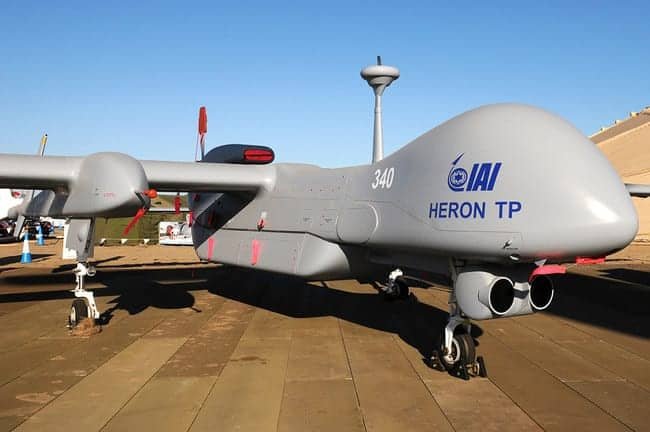
The Heron family has expanded over time. The Heron TP, also known in Israeli service as the Eitan, is a substantially larger turboprop variant with a maximum take-off weight above five tonnes and the ability to carry weapons, while the Super Heron and Heron Mark II refresh the original airframe with more powerful engines and improved avionics. Against competitors like the General Atomics MQ-1 and MQ-9 lineage and the Turkish Bayraktar Akıncı, the Heron’s distinguishing pitch has remained endurance, payload flexibility and a willingness to integrate customer-supplied sensors.