Products BAE Systems Hägglunds
CV90 MkIV
Latest-generation CV90 with an open-systems digital backbone, hunter-killer capability, and integrated optionally-manned technology demonstrators.
vehicleby BAE Systems HägglundsIntroduced 2019
Photos: www.armyrecognition.com · militaryleak.com · vpk.name · defence-industry.eu
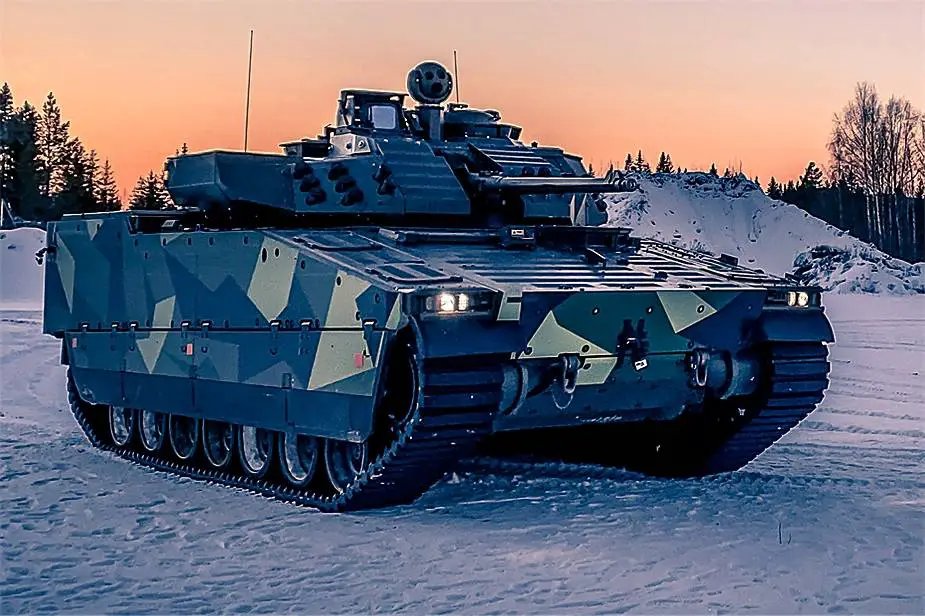
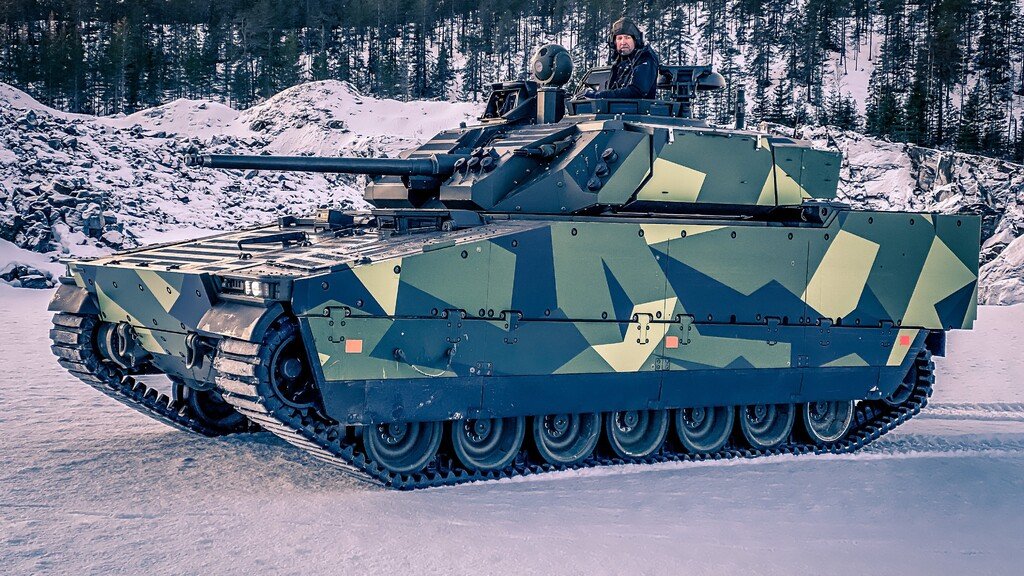
The CV90 MkIV is the latest iteration of BAE Systems Hägglunds’ tracked infantry fighting vehicle, a Swedish platform that has been in continuous evolution since the original entered service in the mid-1990s. Unveiled in 2019, the MkIV keeps the familiar hull silhouette of its predecessors but rebuilds the digital and electronic backbone around an open-systems architecture, intended to accept new sensors, weapons, and software loads without a structural redesign. It enters a market in which European armies are simultaneously replacing Cold-War-era IFVs and absorbing lessons from the war in Ukraine about armoured manoeuvre.
At the centre of the design is what BAE calls a generic vehicle architecture — a digital backbone that decouples mission systems from the chassis and turret, so capabilities can be added or swapped through software and modular hardware rather than wiring changes. The vehicle pairs this with a hunter-killer arrangement in which the commander’s independent panoramic sight can hand off targets to the gunner, letting one scan while the other engages. Main armament options span the 30, 35, and 40 mm Bushmaster family, with provision for anti-tank missile launchers, programmable air-burst ammunition, and active protection systems such as Iron Fist. Crew situational awareness is built around fused day and thermal channels routed through helmet-mounted and bustle-mounted displays.
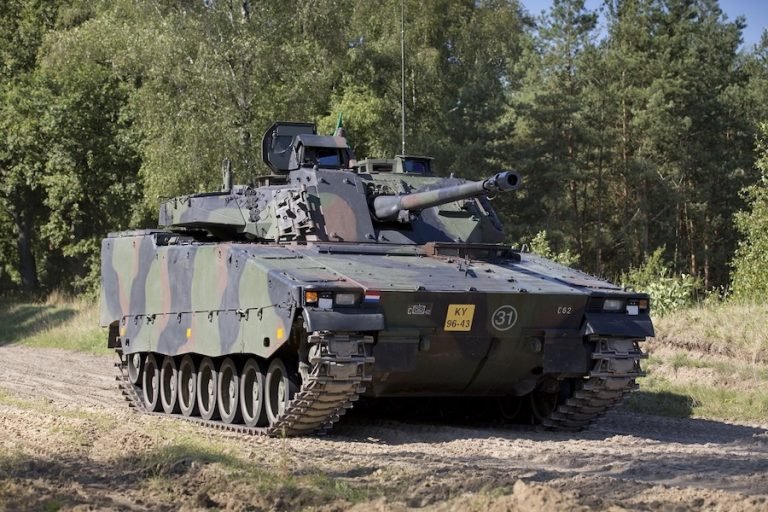
The first export buyer for the MkIV is the Czech Republic, which signed a contract in 2023 for 246 vehicles across seven variants, valued at roughly 60 billion Czech crowns. Sweden has separately committed to upgrading its existing CV90 fleet toward the MkIV standard and ordering additional new-build hulls. Earlier CV90 variants are in service with Norway, the Netherlands, Switzerland, Finland, Denmark, Estonia, and — through transfers from several of those operators — Ukraine, where they have seen sustained combat against Russian forces. That deployment record has fed back into the MkIV’s protection and survivability fittings.
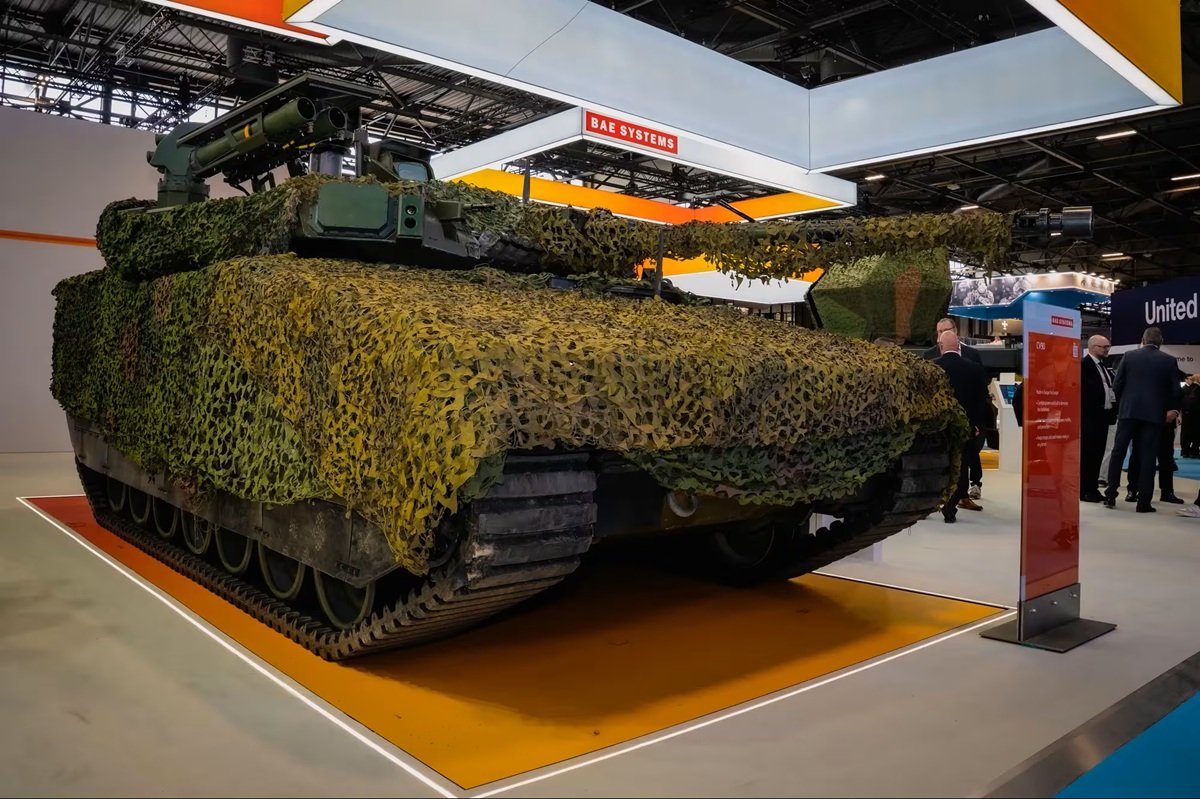
BAE Hägglunds has also used the MkIV chassis as the basis for autonomy and tele-operation experiments, demonstrating remote-driving and optionally-manned configurations at DSEI 2023. These are presented as technology demonstrators rather than fielded capabilities, but they sit alongside the company’s broader push to position tracked vehicles for crewed-uncrewed teaming, with the same digital backbone meant to host whatever autonomy stack a customer eventually selects.
Among Western IFVs the CV90 MkIV competes most directly with Rheinmetall’s Lynx and General Dynamics European Land Systems’ ASCOD/Ajax family. Its distinguishing pitch is continuity: a platform with three decades of service and combat exposure, now rebuilt around a software-defined core.