Ukroboronprom
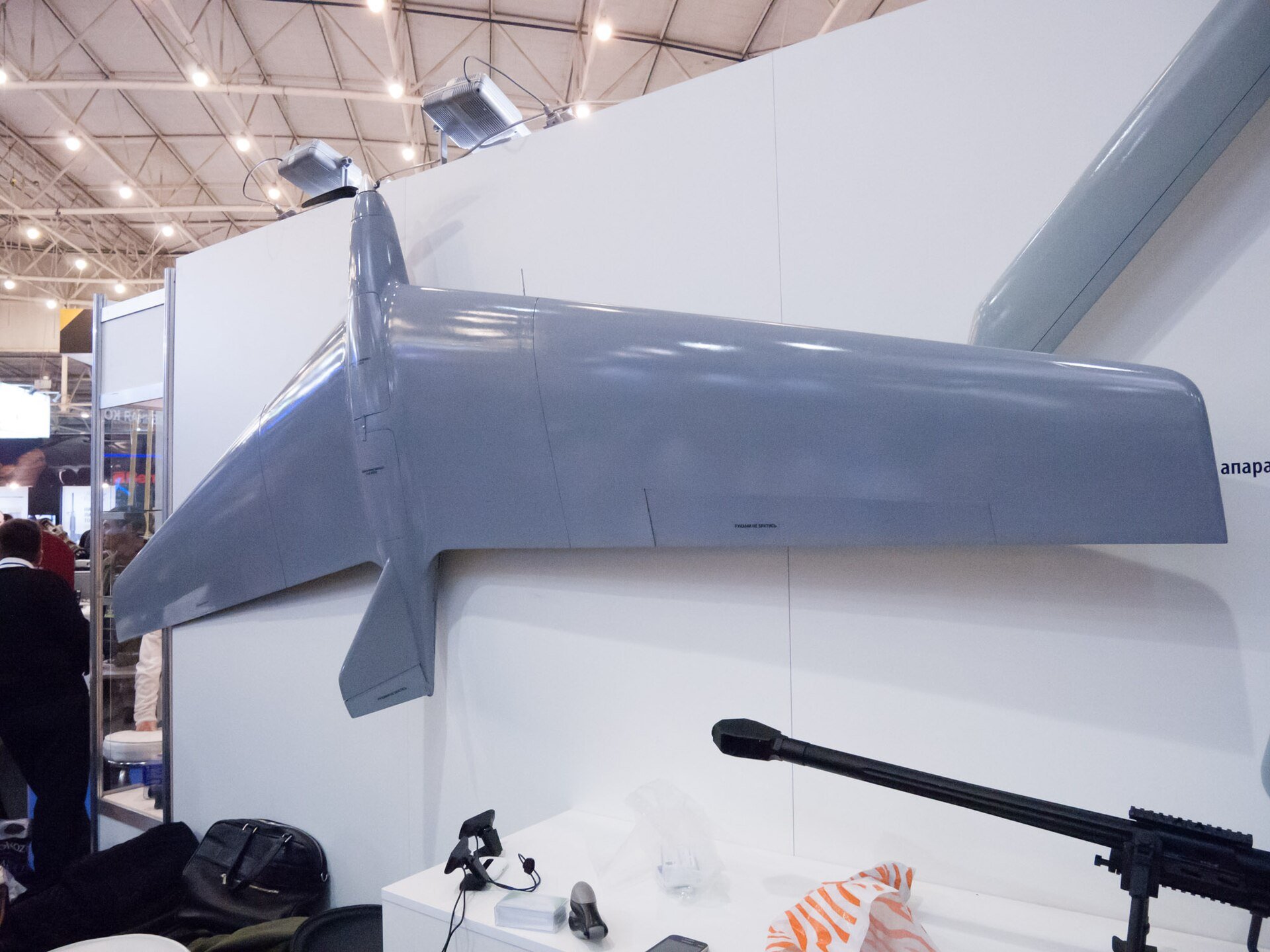
State defence conglomerate that developed long-range strike UAVs reportedly used against targets deep inside Russia.
Ukroboronprom, formally registered as Ukrainian Defense Industry, is the state-owned holding company that consolidates most of Ukraine’s legacy defence manufacturing under a single umbrella. It was created in 2010 by presidential decree, pulling together more than a hundred design bureaus, repair plants, and production facilities inherited from the Soviet military-industrial base. The company is headquartered in Kyiv and reports to the Cabinet of Ministers; it has cycled through several directors-general since 2014, with the role increasingly treated as a political appointment tied to defence reform. In 2023 the conglomerate was formally re-registered as a joint-stock company under the Ukrainian Defense Industry name, part of a long-running corporate-governance overhaul demanded by Western partners and the IMF.
The portfolio is broad rather than narrowly autonomous. Subsidiaries build and overhaul main battle tanks at the Malyshev Factory in Kharkiv, produce the BTR-3 and BTR-4 wheeled armoured vehicles, refurbish Mi-series helicopters at Motor Sich-adjacent plants, and maintain artillery and small-arms lines. On the unmanned side, the group’s design bureaus and partner firms have iterated on loitering munitions and longer-range strike drones; Ukroboronprom publicly took credit for a one-thousand-kilometre-class UAV first announced in 2022, which Ukrainian officials and Western reporting have linked to strikes on airfields and oil infrastructure deep inside Russia, including the Engels and Dyagilevo bases. The company has also been associated with development of the “Toloka” family of underwater unmanned vehicles unveiled in 2023.
Operationally, Ukroboronprom is both a supplier to the Armed Forces of Ukraine and a counter-party for foreign partners. Since the full-scale Russian invasion in February 2022, parts of production have been dispersed and, in some cases, relocated abroad to NATO countries to keep critical lines out of missile range; the company has confirmed cooperation arrangements with manufacturers in Poland, the Czech Republic, and other allied states. It sits at the centre of joint-venture talks with European primes interested in co-producing artillery shells and armoured vehicles inside Ukraine, and has been a vehicle for absorbing donated Western platforms into Ukrainian sustainment chains.
The conglomerate’s history is also a history of scandal. Successive Ukrainian administrations have launched anti-corruption probes into procurement schemes at Ukroboronprom subsidiaries, with cases ranging from inflated spare-parts contracts to the smuggling of components through intermediaries linked to Russia. The 2019 “Ukroboronprom files”, published by the investigative outlet Bihus.info, alleged that figures close to the previous presidential administration had skimmed from defence purchases; the affair contributed to the political turnover that brought Volodymyr Zelensky to power. Reform legislation passed in 2020 and 2021 set the legal basis for the corporatisation that followed.
Today Ukroboronprom occupies an unusual position in the global defence map. It is at once a Soviet-era inheritor still working through governance reform and a wartime enterprise whose long-range drones have demonstrably shaped the tempo of the conflict with Russia. Its trajectory — from opaque holding to corporatised JSC integrated with Western supply chains — is one of the clearest tests of whether Ukraine’s defence industrial base can be rebuilt while the war it serves is still being fought.
Products
Missiles & loitering munitions
R-360 Neptune
Subsonic anti-ship cruise missile credited with sinking the Russian cruiser Moskva in April 2022.
Introduced 2021
Gallery
Sources (17)
- www.wikidata.org/wiki/Q3739421
- en.wikipedia.org/wiki/Ukroboronprom
- en.wikipedia.org/wiki/Ukroboronprom
- en.wikipedia.org/wiki/Ukroboronprom
- en.wikipedia.org/wiki/Ukroboronprom
- en.wikipedia.org/wiki/Ukroboronprom
- en.wikipedia.org/wiki/Ukroboronprom
- en.wikipedia.org/wiki/Ukroboronprom
- en.wikipedia.org/wiki/Ukroboronprom
- en.wikipedia.org/wiki/Ukroboronprom
- en.wikipedia.org/wiki/Ukroboronprom
- en.wikipedia.org/wiki/Ukroboronprom
- en.wikipedia.org/wiki/Ukroboronprom
- en.wikipedia.org/wiki/Ukroboronprom rate limited
- en.wikipedia.org/wiki/Ukroboronprom
- en.wikipedia.org/wiki/Ukroboronprom
- en.wikipedia.org/wiki/Ukroboronprom