Tencore
Builds the TerMIT unmanned ground vehicle for casualty evacuation, logistics, and combat tasks.
Tencore is a Kyiv-based robotics firm founded in 2023, one of a wave of Ukrainian defence start-ups that emerged after the full-scale Russian invasion to plug gaps in domestic industrial capacity. The company designs and manufactures unmanned ground vehicles and operates in close contact with the units it supplies — its hardware is iterated on the basis of feedback from front-line crews and updated in cycles much tighter than most NATO procurement programmes allow.
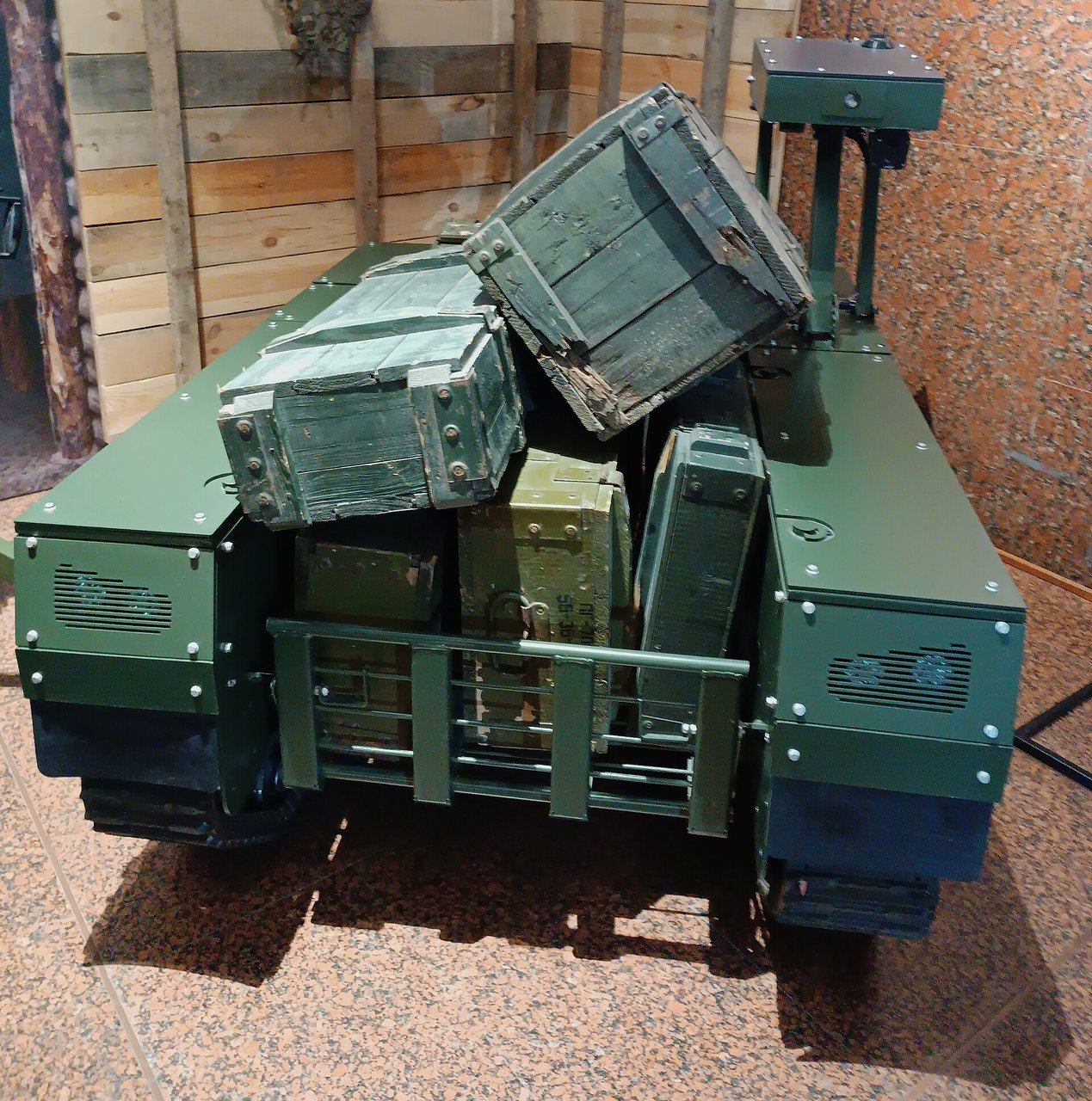
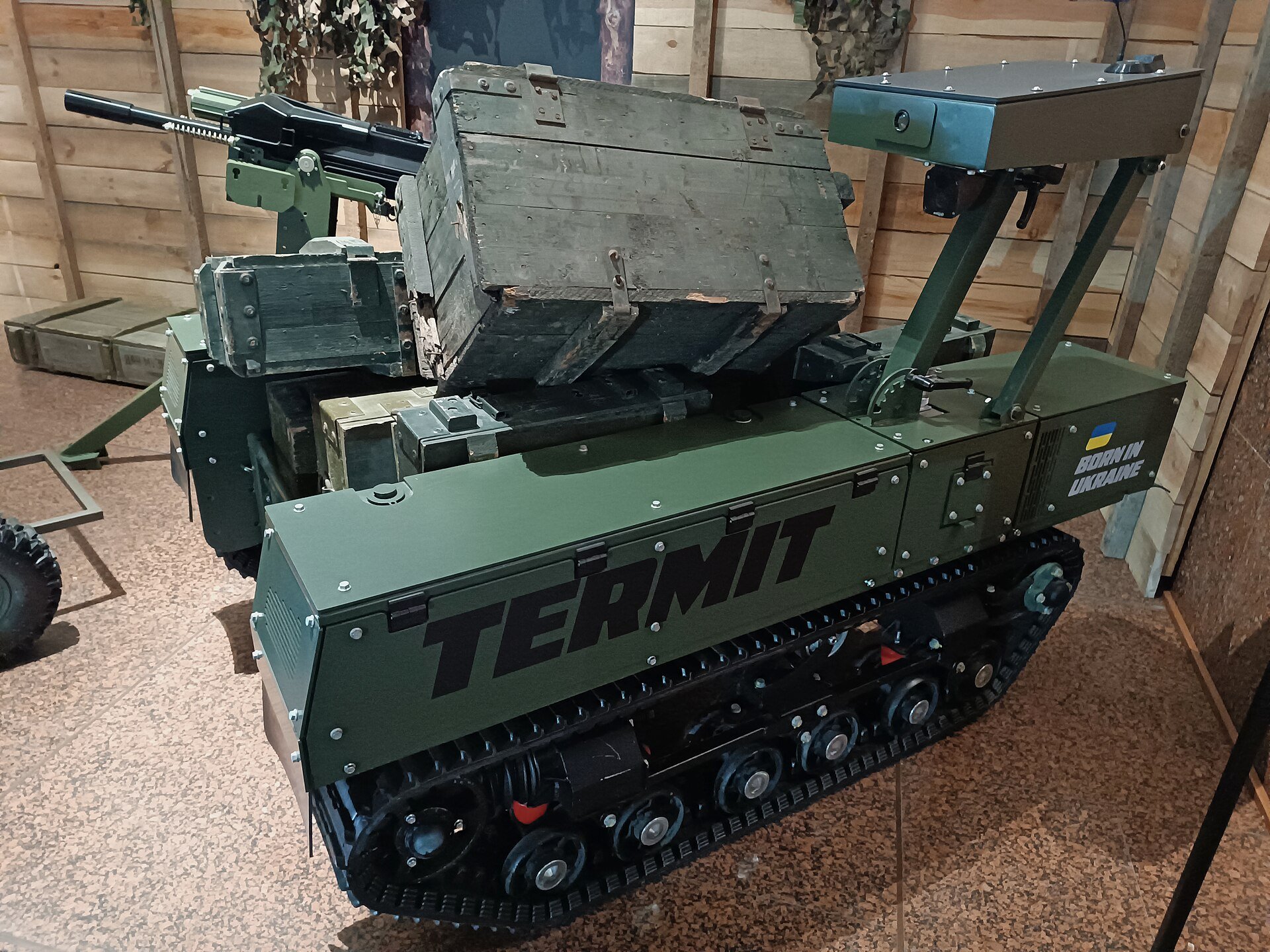
The company’s flagship platform is the TerMIT, a tracked unmanned ground vehicle built around a modular payload bay. The chassis is electrically driven, runs on swappable battery packs, and is rated to carry around 200 kilograms across rough terrain. The same vehicle can be configured as a logistics shuttle moving ammunition, water, and food to dug-in positions; a casualty-evacuation platform carrying wounded soldiers out of contact; a remote weapons station mounting a machine gun or grenade launcher; a mine-laying or de-mining tool; or an electronic-warfare carrier. TerMIT is operated over a tethered or radio link, with the controller typically several hundred metres to a few kilometres behind the vehicle.
The platform has been codified by Ukraine’s Ministry of Defence — the formal step that allows Ukrainian Armed Forces units to procure it directly — and has been deployed to brigades along the eastern front, where minefields and persistent drone surveillance have made daytime resupply by truck or pickup increasingly costly. Ukrainian units have published video of TerMITs ferrying supplies across exposed approaches and of wounded soldiers being driven back to evacuation points without putting a second crew member in the line of fire.
Tencore is privately held; the company has not disclosed financials, headcount, or unit prices. Production runs inside Ukraine, and the chassis is intentionally cheap relative to Western analogues — a deliberate choice that reflects the operational reality of platforms being lost to artillery, drones, and mines on a near-daily basis. The firm sits inside the broader Brave1-coordinated cluster of domestic UGV manufacturers, alongside companies such as Roboneers, Kvertus, and Kray, that are turning battlefield pull into export-ready hardware.
The wider context for Tencore is that ground robotics has, for most of the past decade, been a slower and harder market than aerial drones. UGVs are heavier, more mechanically complex, and more constrained by terrain than quadcopters. The Ukrainian war has compressed the development cycle in a way that no peacetime programme could: machines are designed, fielded, broken, and redesigned within months, and casualty-evacuation runs that once required infantry are now routinely handed to a robot. Whether that pace translates into a sustainable export business — and into a position alongside Estonian, German, and American competitors after the war — is the question hanging over the company’s next few years.