
Luch Design Bureau
State design bureau behind the Sokil-300 long-range strike UAV and Neptune cruise-missile family.
Luch Design Bureau, known in Ukrainian as Derzhavne Kyivske Konstruktorske Buro “Luch”, traces its origins to 1965, when it was established in Kyiv as a Soviet-era weapons design house. After Ukrainian independence it was reorganised under the state defence conglomerate Ukroboronprom, and it has since become one of the country’s principal developers of guided weapons and tactical missiles. The bureau operates as a state-owned enterprise headquartered in Kyiv, with its general designer historically serving as the public face of the organisation; Oleh Korostelyov led the bureau through the development of its most consequential systems before stepping back from the role.
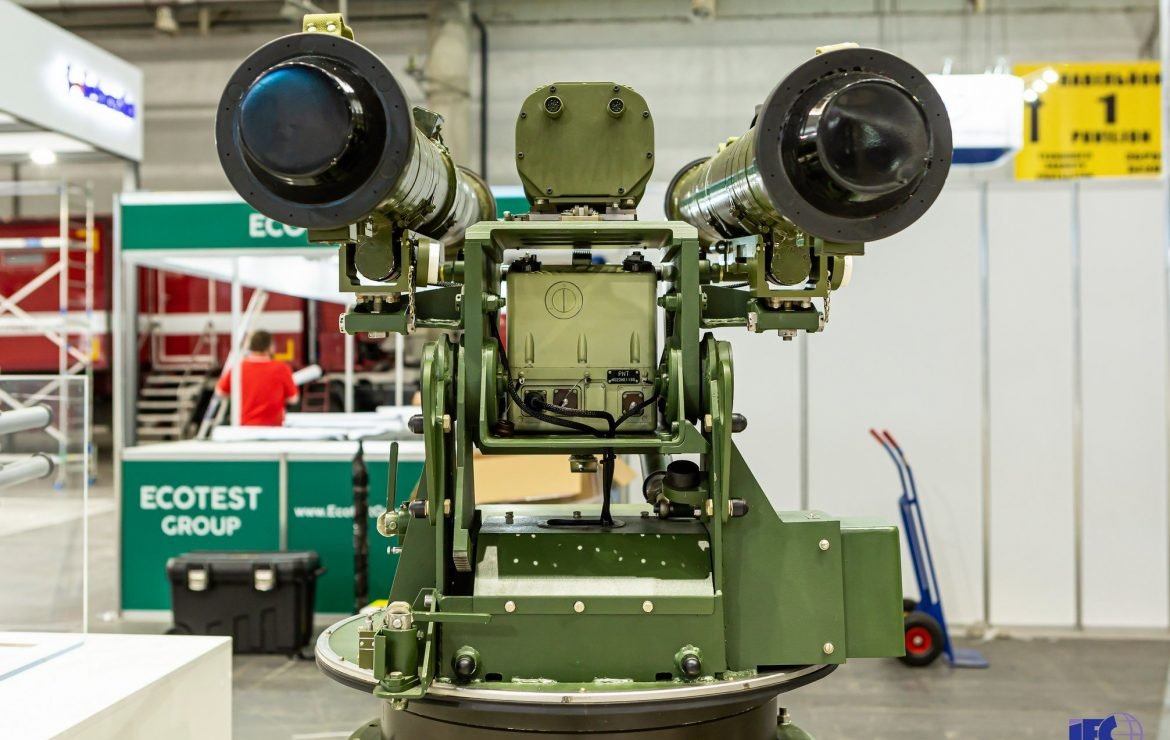
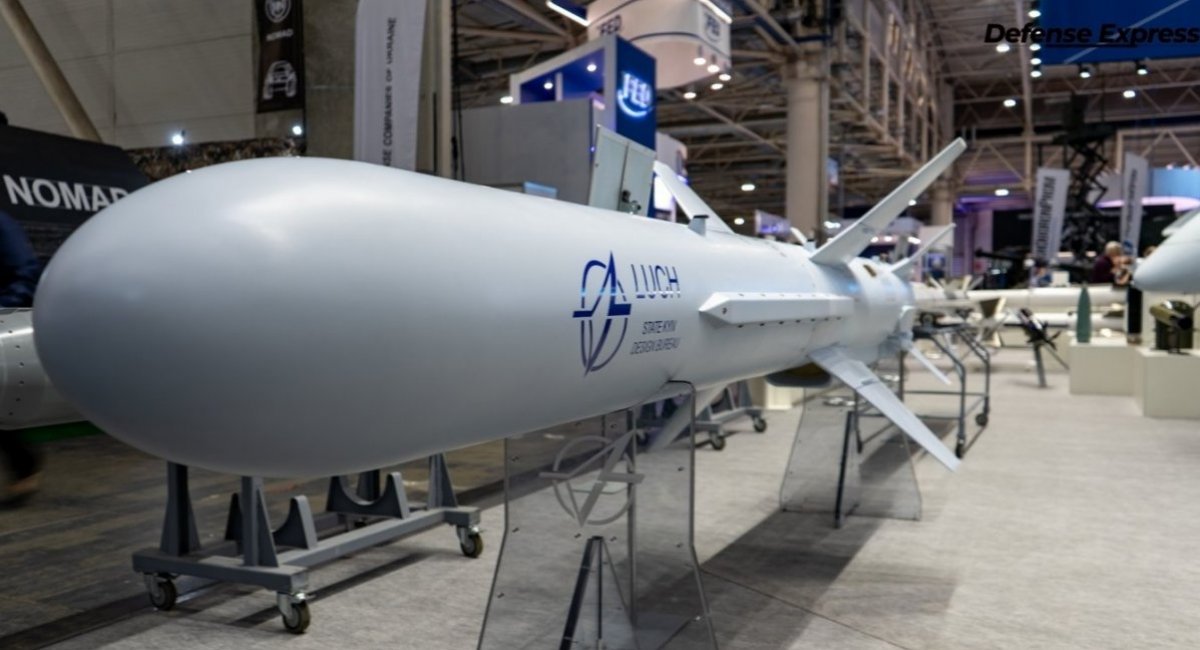
The bureau’s catalogue spans several product lines that have moved from prototype to front-line use over the past decade. Its anti-tank guided missile family — the Stuhna-P, the Korsar, and the laser-guided Skif — equips Ukrainian infantry and has been widely used against Russian armour since 2014, with combat footage of Stuhna engagements becoming a recurring feature of the war. On the air-defence side, Luch developed the RK-360MC Neptune coastal cruise missile, originally framed as an anti-ship weapon and best known internationally for the April 2022 strike that sank the Russian Black Sea Fleet flagship Moskva. Variants of the Neptune have since been adapted for land-attack roles against targets inside Russia and Russian-occupied Crimea. The bureau is also the design authority behind the Vilkha and Vilkha-M guided multiple-launch rocket systems, derived from the Soviet Smerch but with a satellite-aided guidance package developed in-house.
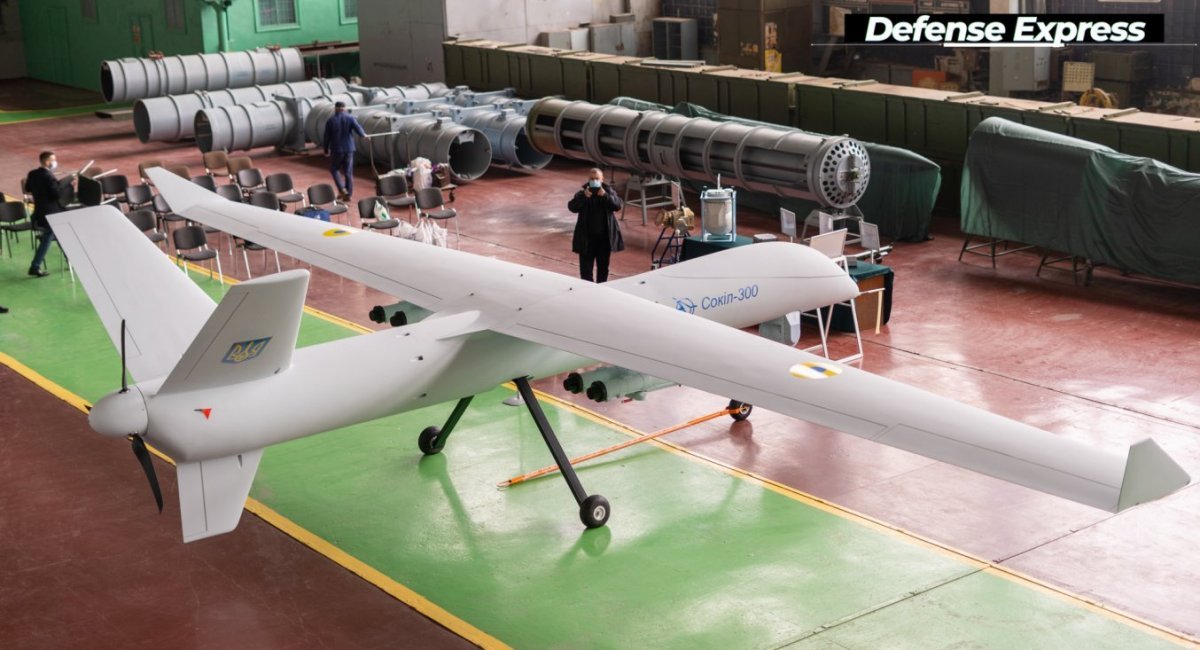
Luch’s most ambitious programme is the Sokil-300, a long-range strike unmanned aerial vehicle with a published target range of around 3,000 kilometres and a payload in the hundreds of kilograms. Development was disclosed before the full-scale invasion and the system has been repeatedly cited by Ukrainian officials as part of the country’s deep-strike toolkit, although serial fielding details remain closely held. Alongside the Sokil, Luch has continued work on shorter-range loitering and reconnaissance drones, and on the guidance kits that tie its missile and rocket families together.
The bureau’s customers have historically included the Ukrainian Armed Forces and a handful of export buyers for the Stuhna and Skif lines, with deliveries reported to partners across Africa, the Middle East and South-East Asia in the 2010s. Since February 2022 essentially all output has been directed to Ukraine’s own forces, and production has been dispersed and hardened against Russian missile and drone strikes targeting the country’s defence-industrial base. Public financial figures are scarce: as a state enterprise inside Ukroboronprom, Luch’s revenue and headcount are not separately disclosed in the way a Western contractor’s would be.
Controversy around the bureau has tended to centre on the wider Ukroboronprom system rather than Luch itself — corruption investigations into procurement and pricing across the conglomerate predated the war and shaped the post-2022 push to restructure Ukraine’s defence-industrial governance. Within that context Luch sits among the assets the Ukrainian government has been keenest to protect and scale, given how directly its products bear on the current fight.
Products
Drones
Korsar
Short-range reconnaissance and light-strike UAV for battalion-level ISR and targeting.
Introduced 2015
Sokil-300
Long-range strike UAV developed by Luch for deep-penetration attacks against high-value rear-area targets.
Introduced 2024
Missiles & loitering munitions
Barrier
Laser-beam-riding anti-tank guided missile system for vehicle-mounted and tripod employment.
Introduced 2006
Neptune (R-360)
Subsonic anti-ship cruise missile with land-attack capability, publicly credited with sinking the Russian cruiser Moskva in April 2022.
Introduced 2021
Vilkha / Vilkha-M
GPS/INS-guided 300 mm MLRS rocket with a circular error probable under ten metres, compatible with the Soviet BM-30 Smerch launcher.
Introduced 2018
Integrated systems
Bastion
Bohdana
Weapons
Corsar
Man-portable anti-tank guided missile providing company-level precision fire out to 2.5 km.
Introduced 2015
Skif
Export-oriented anti-tank guided missile sharing Stugna-P's guidance architecture, marketed for land and vehicle platforms.
Introduced 2014
Stugna-P
Remote-controlled anti-tank guided missile system with thermal/TV sight and operator-safe stand-off engagement.
Introduced 2011
Gallery
Sources (11)
- www.wikidata.org/wiki/Q12119009
- en.wikipedia.org/wiki/Luch_Design_Bureau
- en.wikipedia.org/wiki/Luch_Design_Bureau
- en.wikipedia.org/wiki/Luch_Design_Bureau
- en.wikipedia.org/wiki/Luch_Design_Bureau
- en.wikipedia.org/wiki/Luch_Design_Bureau
- en.wikipedia.org/wiki/Luch_Design_Bureau rate limited
- en.wikipedia.org/wiki/Luch_Design_Bureau
- en.wikipedia.org/wiki/Luch_Design_Bureau rate limited
- en.wikipedia.org/wiki/Luch_Design_Bureau rate limited
- en.wikipedia.org/wiki/Luch_Design_Bureau