Drones hit a Russian military cargo ship in the Gulf of Finland; it burns and drifts into Finnish waters
On 21 November two drones struck Sparta II, a sanctioned cargo ship that works for Russia's Defence Ministry, between Estonia and Finland. It caught fire, lost steering and drifted into Finnish waters off Loviisa, where Finland led the rescue with Estonian and Russian ships. Finland and Estonia point to Ukraine; Kyiv has not claimed it. The next day Ukraine did claim a sea-drone strike that sank a Russian corvette in Libya.
Episode 4 8 min
A Russian cargo ship burns in the Gulf of Finland
The Robot War Debrief episode about this report. Claire and Tom talk you through the story in 8 minutes.
About the special report Drones hit a Russian military cargo ship in the Gulf of Finland; it burns and drifts into Finnish waters
Tap play to start listening
The scoop
0:00 / 7:55
Controls, chapters and transcript
Chapters
Read the transcript
Claire Picture a Saturday morning on the Gulf of Finland, early light over the water between Estonia and Finland. A Russian cargo ship called Sparta II is on its way from St Petersburg to Kaliningrad, with 16 crew aboard. Two drones come in and set the bridge on fire. The ship loses steering and drifts for hours into Finnish waters, where Finland leads the rescue with a Russian ship. Finland's Defence Forces say it's likely Ukraine. Kyiv hasn't claimed it.
Tom And a day later, 2,400 kilometres away, Ukraine does claim another one.
Claire This is Robot War Debrief. In this episode, a sanctioned Russian military cargo ship burns in the Baltic, Finland leads the rescue, Russia tows its own ship back out, and the next day a Russian corvette goes down in Libya. Tom, where do we start?
Tom On the water, Claire.
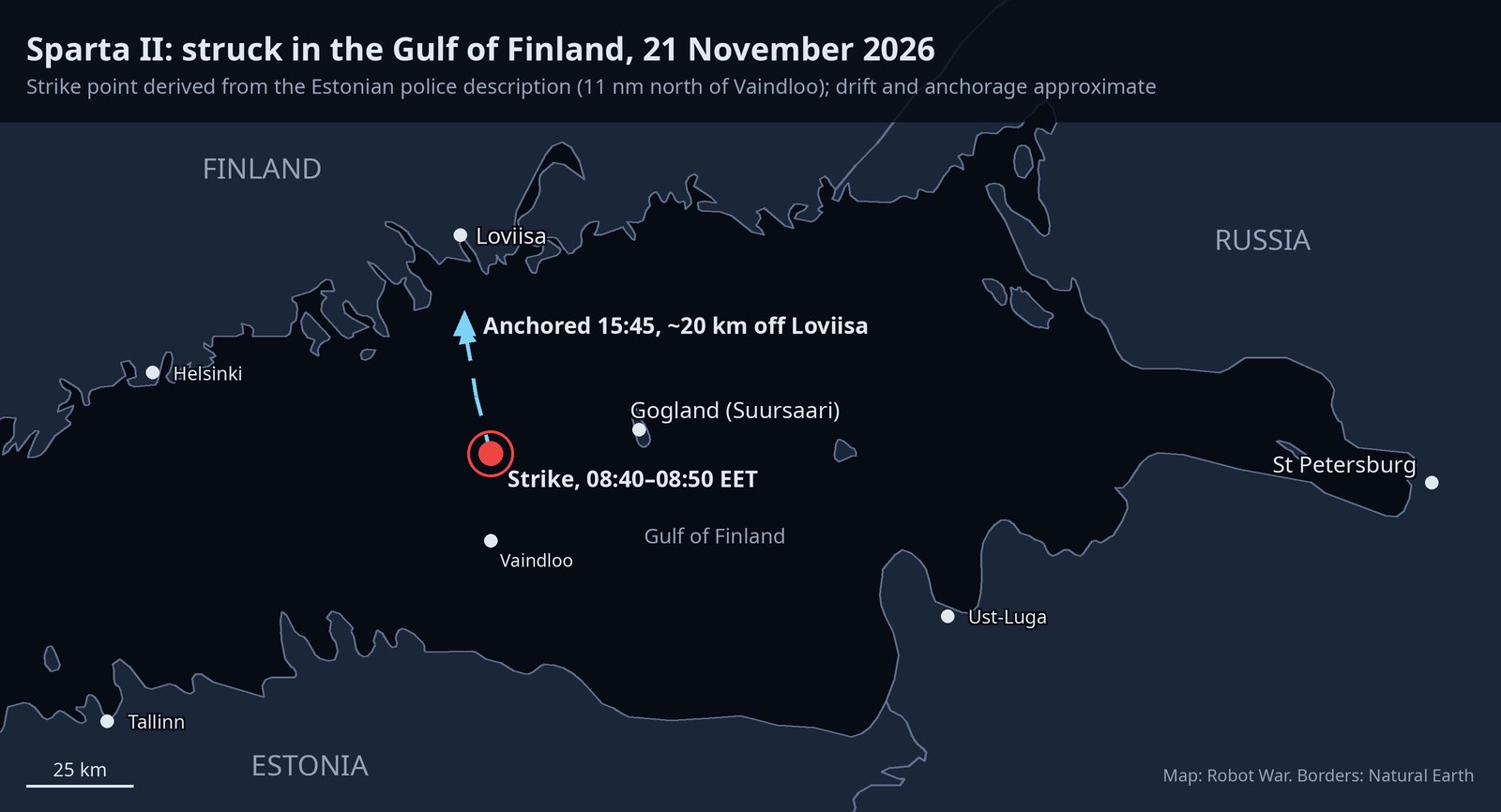
Tom So, Saturday 21 November. Sparta II leaves St Petersburg late on the Friday evening, bound for Kaliningrad with 16 crew. Around 08:40 in the morning, local time, it's roughly 11 nautical miles north of a small Estonian island called Vaindloo, in Estonia's economic zone. Finland's Border Guard says that's when it's hit. Two drones, according to the Russian governor of the Leningrad region. The bridge and some deck containers catch fire, the ship loses steering, and it starts drifting.
Tom A few hours later it's crossed into Finnish territorial waters off a town called Loviisa. The crew drop an emergency anchor, and then leave in lifeboats for a Russian ship. Finland's Border Guard leads the firefighting through the night, together with an Estonian Navy ship and a Russian rescue ship called Murman. By the next evening Murman is towing Sparta II back east, and by Monday the Leningrad governor says it's afloat with its cargo in the port of St Petersburg.
Claire So the ship doesn't sink, the crew get off alive, and Russia ends up towing its own ship out of Finnish waters. One injured, or zero?
Tom Finland says one crew member was slightly hurt. The Leningrad governor says nobody was. So that one's open.
Claire Right. And the ship itself matters here, because this isn't a random freighter.
Tom Not at all. Sparta II is a Russian-flagged roll-on, roll-off cargo ship, 122 metres long, built in the year 2000. Reuters, citing LSEG data, says its owner is a company called Oboronlogistika, which provides logistics services for Russia's Defence Ministry. It's been under US sanctions since 2022. Ukraine's own military intelligence recorded it carrying S-300 air-defence equipment out of Syria back in 2022, that's according to Yle and The Insider. And on this trip, Finland's Border Guard was careful with their words. They said there's no confirmed information about the cargo, but, in their phrase, military materiel cannot be ruled out.
Claire And they didn't go on board to check.
Tom They didn't. The Border Guard said boarding and towing it ashore would have been highly risky for maritime and environmental safety. Finland's sanctions authority did impose a hold that evening, but with exceptions for rescue, and the ship left with its cargo still on it.
Claire So that's the ship. The other big question is the drones themselves, because nobody's actually seen one yet, right?
Tom Nothing. Finnish authorities just call them unmanned aircraft. The Border Guard talks about attacks by unmanned aerial vehicles, so flying drones, not sea drones. The Russian governor said there were two. But no model, no wreckage, no video, no radar track has been published, and no launch point either. Here's what gives you a sense of the reach: the nearest Ukrainian-held territory is around 900 kilometres from where this ship was hit, in a straight line. That's inside the envelope of Ukraine's long-range strike drones, but nobody's said which drone, and nobody's said from where. Estonia's government went out of its way to say it had given no foreign state permission to use its territory, airspace or waters for attacks on Russia.
Claire And nobody's taken credit.
Tom Not for this one. Finland's Defence Forces say it is likely Ukraine. The Estonian Navy calls them Ukrainian drones. And Zelensky's sanctions adviser, Vladyslav Vlasiuk, only hinted at it. He said, quote, yes, quite a coincidence, isn't it? It seems that vessels sanctioned by Ukraine have a rather unfortunate tendency to catch fire. An analyst called Robin Häggblom, from Risk Intelligence, told Al Jazeera there are unconfirmed indications that Sparta II was targeted specifically.
Claire So Kyiv didn't claim Sparta II. But the very next day, they did claim something else, and this one is a long way from the Baltic.
Tom It is. On 22 November a Russian corvette called Merkury goes down in the port of Benghazi, in Libya. And this time Ukraine's SBU, that's the Security Service of Ukraine, and President Zelensky claim it the next morning. Their account is that seven Ukrainian-made uncrewed boats were, in their words, brought to a set location and launched from a so-called mother ship. The boats sank the Merkury, which had a Ka-27 helicopter on its deck, and damaged a cargo ship called Angara. Reuters verified both ships from satellite images.
Claire So one of these is claimed in detail, with video, and the other one, in Russia's own front yard, Kyiv won't touch. Any sense of why?
Tom Not from the material, no. It's one of the things we don't know. What we can say is both targets served Russian military logistics, both were under sanctions, and both strikes happened within a day of each other, a long way from the Black Sea.
Claire You mentioned uncrewed boats. For listeners who haven't read the report, give us a quick sense of what those actually are, because they keep coming up on this show.
Tom They do. We have a page on the Sea Baby on robotwar.io. It's the sea drone of Ukraine's SBU, a low, fast, remotely piloted boat that started life as a floating bomb and has turned into a reusable weapons platform. The SBU's own figures for the latest generation are a range over 1,500 kilometres and a payload up to 2,000 kilos. Variants can carry a warhead, a 10-round Grad-type rocket launcher, a stabilised machine gun, small attack drones, or mines. The name, by the way, is a pun. It's named after Vasyl Malyuk, who headed the SBU from 2022 to January 2026, and malyuk means baby in Ukrainian.
Claire Of course it does.
Claire So, Tom, step back for a second. What do we still not know going into next week?
Tom The big one is where the Sparta II drones were launched from, what type they were and what route they flew, and whether Finland or Estonia tracked them on radar at all. Then there's the cargo itself, which Finland never confirmed, and the position: the Finnish and Estonian statements put the ship in international waters, but one quote from the Border Guard in the Kyiv Independent put it in Russian waters, and those are two very different things legally. And the open question hanging over all of it is whether Russia will now start escorting its own ships on the St Petersburg to Kaliningrad run.
Claire The full report, with the day-by-day timeline, the map, the photos and every source, is on robotwar.io. Next time, we'll follow the next special report. Tom, thanks.
Tom Thanks, Claire. Talk soon.
Latest
Estonia's government publicly treats attacks like the Sparta II strike as something to live with. Prime Minister Kristen Michal told journalists people should get used to such incidents and be ready for them, and said Ukraine choosing Russian ships as targets in the Baltic was not surprising and not the first time. Foreign Minister Margus Tsahkna, quoted by Baltnews, called the attack a side effect of Ukraine's self-defence. Defence Minister Martin Herem said he saw no increased threat to civil shipping, because the strikes targeted vessels tied to Russia's Defence Ministry.
Sources: Telegram channel, Russian side:Два майора (Two Majors), Telegram channel, Russian side:baltnews, Telegram channel, Russian side:baltnews
On the morning of Saturday 21 November two drones hit the Russian cargo ship Sparta II in the eastern Gulf of Finland, between Estonia and Finland. Its bridge and deck containers caught fire, it lost steering, and by early afternoon it had drifted into Finnish territorial waters off Loviisa. Finland led a day-long rescue with Estonian and Russian ships; the Russian rescue ship Murman then towed it back to St Petersburg. “It is likely that Ukraine … is behind” the attack, a spokesman for the Finnish Defence Forces said (Reuters via CNBC). Kyiv has not claimed it.
Sparta II is no ordinary merchant ship. It belongs to Oboronlogistika, a company that provides logistics for Russia’s Defence Ministry, has been under US sanctions since 2022, and was bound for Kaliningrad. Ukrainian military intelligence recorded it carrying S-300 air-defence equipment from Syria in 2022, Yle and The Insider report. A day later, and 2,400 km from the front, Ukraine claimed a sea-drone strike that sank a Russian corvette in Libya.
Day by day: what became clear
Times are Finnish and Estonian time (EET, one hour ahead of CET).
Friday 20 November. Sparta II left St Petersburg at 21:22 for Kaliningrad, with 16 crew, according to Yle’s reconstruction of its track.
Saturday 21 November: the strike and the drift.
- During the night Ukraine sent drones at the Leningrad region; the regional governor, Alexander Drozdenko, claimed 80 were shot down. From 04:15 Finland’s Defence Forces closed the air and sea space of the eastern gulf “in a possible situation of intercepting unmanned aircraft”, and Estonia told residents of its north-east to take cover if they saw a drone.
- At about 07:10 the ship passed south of the island of Gogland (Suursaari). It was hit between 08:40 and 08:50, the Finnish Border Guard said; the Estonian Navy “registered the drone strike already at 09.01”, its commander Ivo Värk told ERR. The ship’s tracking signal disappeared at about 09:00 (The Insider).
- At 09:35 Estonia’s rescue centre received the first report of a fire. The ship drifted out of Estonia’s economic zone at about 10:00, and into Finnish territorial waters at 12:27. Seven minutes later a suspected Russian helicopter entered Finnish airspace off Loviisa, up to 4.1 km deep; the Border Guard is investigating (Yle).
- At 15:45 the crew managed to drop an emergency anchor about 20 km off Loviisa. On the master’s decision they left in lifeboats for the Russian ship Kapitan Sakharov. One crew member was slightly injured, Finland said; Drozdenko said nobody was.
Sunday 22 November: the tow. The fire was fought through the night, with limited water because of the risk to the ship’s stability. At about 17:00 the Russian rescue ship Murman began towing it east; thermal cameras showed that some containers were still hot (Border Guard). At 20:19 the tow left Finland’s economic zone. “In its current state it posed a serious danger,” President Alexander Stubb wrote.
Monday 23 November. Drozdenko said the ship and its cargo were afloat in St Petersburg’s Big Port. Kremlin spokesman Dmitry Peskov spoke of “a very dangerous trend” of “terrorist activity in the Baltic region” (Interfax) (claimed by Russia).
Where it happened
The accounts of the position differ. Estonia’s police put the strike “about 11 nautical miles, or about 20.4 kilometres, north of Vaindloo island”, in a shipping lane open to international traffic and inside Estonia’s economic zone; by our calculation that is about 35 km west of Gogland. Finland described the ship as “about 50 km west of Suursaari” when it was alerted, in international waters. Drozdenko said it was attacked “three nautical miles from the Russian border”. One quote of the Border Guard’s Cdr Ilja Iljin in the Kyiv Independent has the ship hit “in Russian territorial waters”; the other Finnish and Estonian statements say international waters.
What hit it, and from where
The Finnish authorities speak of unmanned aircraft: the defence ministry of “a suspected drone strike” (“lennokki-isku”), the Border Guard of “attacks by unmanned aerial vehicles” (Border Guard). So these were flying drones, not sea drones. Drozdenko counted two. No model, wreckage, video or radar track has been published.
Where they came from is not known. What is known:
- The timing. The strike came during a Ukrainian drone raid on the Leningrad region, the same kind of raid in which, on 11 November, the SBU said it hit the Russian corvette Naro-Fominsk near Gogland. Finland’s Defence Forces detected that strike too (Janes). After it, Finland told Kyiv “how sensitive this narrow stretch of the Gulf of Finland” is, Defence Minister Antti Häkkänen said.
- The neighbours. Estonia’s government said it had given no foreign state permission to use its territory, airspace or waters for attacks on Russia. During the 11 November raid, Estonia had said drones “passed briefly through the edge of Estonian airspace along the Russian border” (Maritime Executive). Lithuania’s denial the same weekend concerned a separate drone alert in Kaliningrad, not this ship.
- The distance. The nearest Ukrainian-held territory is about 900 km from the strike point in a straight line, by our calculation. That is within the range of Ukraine’s long-range strike drones, but no route has been published.
- The target. Risk Intelligence’s Robin Häggblom told Al Jazeera there are “unconfirmed indications that Sparta II was targeted specifically”. Kyiv has known the ship’s name for years, which Yle calls “the most likely explanation” for its choice. Zelensky’s sanctions adviser Vladyslav Vlasiuk only hinted: “Yes, quite a coincidence, isn’t it? It seems that vessels sanctioned by Ukraine … have a rather unfortunate tendency to catch fire” (Kyiv Independent).
The ship and its cargo
Sparta II (IMO 9160994) is a Russian-flagged ro-ro and container ship built in 2000, 122 m long. Reuters, citing LSEG data, gives its owner as Oboronlogistika, which “provides logistics services for the Russian Defense Ministry”. It runs between Ust-Luga, Baltiysk and Kaliningrad and, according to MILMAG, moved military equipment from Tartus to Libya after the fall of Assad. Ukraine added it to its sanctions list in May 2026, and Finland’s enforcement authority found that its owner is on the EU sanctions list (gCaptain).
What it carried this time is unknown. “At the moment, there is no confirmed information about what cargo is on board, but it cannot be ruled out that there is military materiel on board,” Iljin said. Finland did not board the ship: boarding it and towing it ashore would have been “highly risky for maritime and environmental safety”, the Border Guard said (Yle News). A sanctions hold the enforcement authority imposed that evening allowed exceptions for rescue and safety, and the ship left with its cargo. No oil spill was seen.
A Finnish-led rescue with Russian ships
Seven vessels fought the fire: two Russian, two Estonian and the rest Finnish, Reuters reported. The Border Guard led from its patrol ship Uisko, with the tugs Ajax and H. Kanter, the Estonian Navy’s Kindral Kurvits and, at Finland’s request, the Russian rescue ship Murman. Swedish fighters flew under Finnish command because of drone activity. “The war is spilling over into our neighbouring areas … Ukraine has the right to fight against the aggressor,” Prime Minister Petteri Orpo wrote; Defence Minister Häkkänen said “the situation carried significant risks, but they were avoided”. Estonia’s navy commander warned that new attacks in the gulf “cannot be ruled out”.
The day after, in Libya
On 22 November a Russian corvette sank at Benghazi. The next morning the SBU and President Zelensky claimed it: seven Ukrainian-made uncrewed boats were “brought to a set location and launched from a so-called mother ship”, sank the Project 20380 corvette Merkury with a Ka-27 helicopter on board, and damaged the cargo ship Angara (SBU). Reuters verified both ships from satellite images. Libyan officials told AP that four drones were intercepted and two hit the corvette, and that the drones came from a Ukrainian-run base in western Libya (The Moscow Times). The analyst H I Sutton identified one boat as a Sargan-3000 “Sea Wolf” (Militarnyi).
The two strikes were not set up the same way:
| Sparta II, Gulf of Finland | Merkury and Angara, Benghazi | |
|---|---|---|
| Date | 21 November | 22 November |
| Target | Military cargo ship under way, international waters | Corvette and cargo ship in port |
| Weapon | Flying drones, two according to Russia | Seven uncrewed boats, according to the SBU |
| Launched from | Not published; during a mass drone raid on the Leningrad region | A “mother ship” (SBU); a base in western Libya (Libyan officials) |
| Claimed | No; Finland and Estonia point to Ukraine | Yes, by the SBU and Zelensky, with video |
| Aftermath | Drifted into Finnish waters; Finnish-led rescue with Russian ships | Corvette sunk; Libya asks the UN to investigate |
What they share: both targets served Russian military logistics, both were under sanctions, and both strikes came within a day of each other, far outside the Black Sea. They follow a pattern of earlier Ukrainian strikes far from home: flying drones against the shadow-fleet tanker Qendil south of Crete in December 2025 (Maritime Executive), Sea Baby sea drones against tankers off Turkey, and, according to RFI and The Insider, a Magura sea drone launched from Zawiya in Libya against the LNG carrier Arctic Metagaz in March 2026 (The Insider).
Kaliningrad
Sparta II was carrying supplies to Kaliningrad, the exclave Russia can reach only through the Baltic or across Lithuania. On the evening of the same day, sirens sounded in Kaliningrad and explosions were reported near the Baltic Fleet base at Baltiysk; the Kyiv Independent could not verify them. Kaliningrad’s governor said supplies to the region were not under threat (claimed by Russia). Yle’s analysis: two strikes are not enough to conclude that Ukraine is trying to cut the sea link, but one damaged ship can have effects well beyond its own repair. See also our report on the Kaliningrad false-flag plot.
What we do not know
- Where the drones were launched from, what type they were and what route they flew, and whether Finland or Estonia tracked them on radar.
- Whether the strike was in Russian or international waters: the Finnish and Estonian statements differ from one quote.
- What Sparta II was carrying, and the nationality of its crew.
- Whether anyone was hurt: Finland says one crew member slightly, Russia says nobody.
- Why Ukraine claimed Naro-Fominsk and Merkury, but not this ship.
- Whether Russia will escort its ships on the St Petersburg–Kaliningrad run.
Timeline
Times are Amsterdam time. Each line names the side that reported it.
The SBU says it hit the Russian corvette Naro-Fominsk near Gogland during a drone raid on Ust-Luga. Finland’s Defence Forces say they detected the strike. source
Ukrainian sourceSparta II leaves St Petersburg for Kaliningrad, according to Yle’s reconstruction. source
Russian sourceFinland’s Defence Forces impose temporary air and sea restrictions in the eastern Gulf of Finland during a Ukrainian drone raid on the Leningrad region. source
Western sourceSparta II is hit between 08:40 and 08:50 EET, about 11 nautical miles north of Estonia’s Vaindloo island. The Estonian Navy registers the strike at 09:01. source
Independent sourceEstonia’s rescue centre receives the first report of a fire on board. Around 10:00 EET the ship drifts out of Estonia’s economic zone. source
Western sourceThe burning ship drifts into Finnish territorial waters off Loviisa. Seven minutes later a suspected Russian helicopter enters Finnish airspace, up to 4.1 km deep. source
Western sourceFinnish Defence Forces: “It is likely that Ukraine” is behind the attack. The Border Guard: military materiel on board “cannot be ruled out”. source
Western sourceRussian channels report unknown drones over Baltiysk in Kaliningrad Oblast, where the Baltic Fleet base is, and air raid sirens in Kaliningrad; Khrabrovo airport keeps accepting flights with restrictions. Telegram channel:source
Western sourceSparta II drops an emergency anchor about 20 km off Loviisa. Finland’s Border Guard leads the firefighting; the 16 crew later leave in lifeboats for the Russian ship Kapitan Sakharov. source
Western sourceWarTranslated says the ro-ros Ascalon, Lady D and Anastasiia loaded infantry fighting vehicles, MRAPs, personnel carriers and support vehicles at a naval base in Kaliningrad Oblast in mid-October and left Baltiysk by the end of the month for the Mediterranean, with Ukrainian naval drones hitting the Ascalon off Benghazi that day. Telegram channel:source
Western sourceThe Russian rescue ship Murman tows Sparta II east, escorted by Finnish and Estonian ships. Thermal cameras show some containers are hot; no leaks seen. source
Western sourceThe tow leaves Finland’s economic zone. President Stubb: “In its current state it posed a serious danger.” source
Western sourceIn Libya, the SBU claims seven Ukrainian sea drones, launched from a “mother ship”, sank the corvette Merkury and damaged the cargo ship Angara at Benghazi the day before. Telegram channel:source
Ukrainian sourceKremlin spokesman Dmitry Peskov speaks of “a very dangerous trend” of “terrorist activity in the Baltic region”. The Leningrad region governor says the ship and its cargo are afloat in St Petersburg. source
Russian sourceEstonian Prime Minister Kristen Michal tells journalists people should get used to incidents like the Sparta II attack and be ready for them, and that Ukraine choosing Russian ships as targets in the Baltic is not surprising and is not the first time. Telegram channel, Russian side:source
Russian sourceEstonian Defence Minister Martin Herem says he sees no increased threat to shipping in the Gulf of Finland, because the strikes targeted vessels linked to Russia’s Defence Ministry and took place in the eastern part of the gulf. Telegram channel, Russian side:source
Russian source
Photos
From the channels
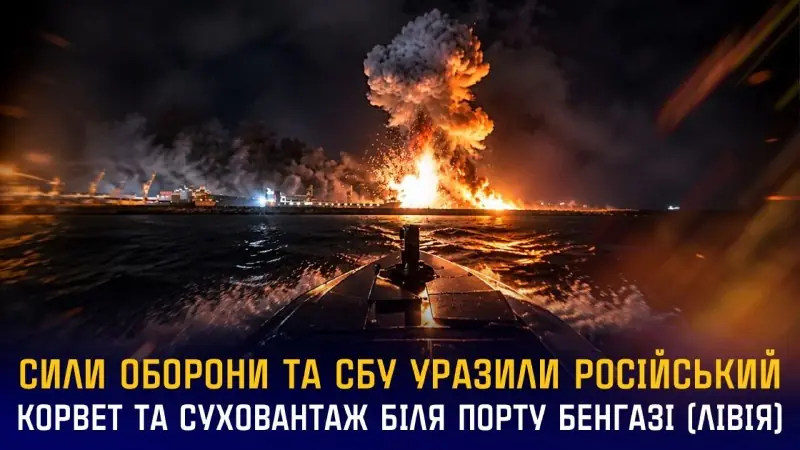
photo SBU 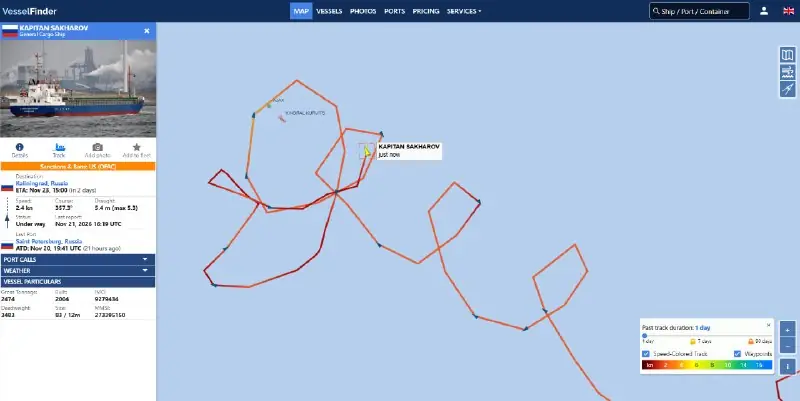
screenshot Военный осведомитель (Military Informant)C 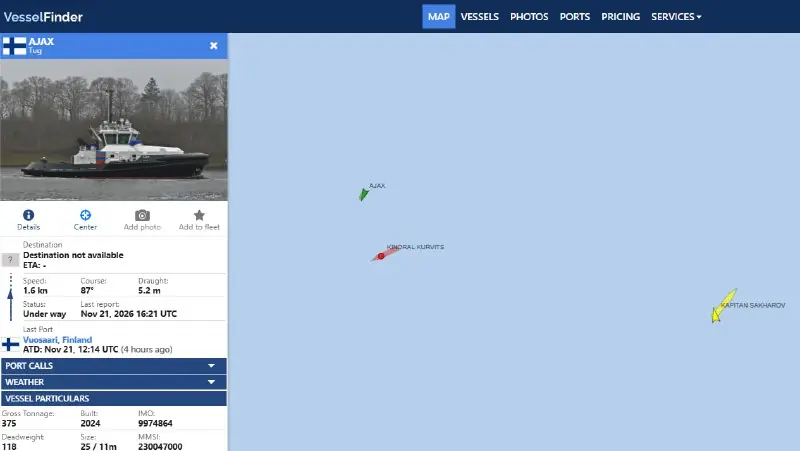
screenshot Военный осведомитель (Military Informant)C 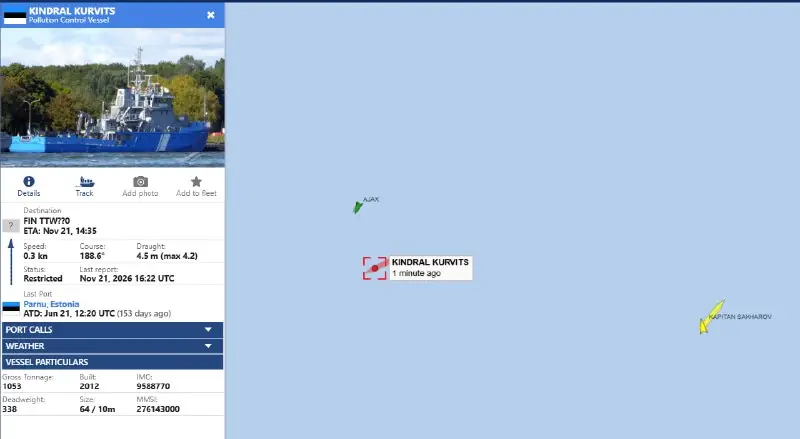
screenshot Военный осведомитель (Military Informant)C 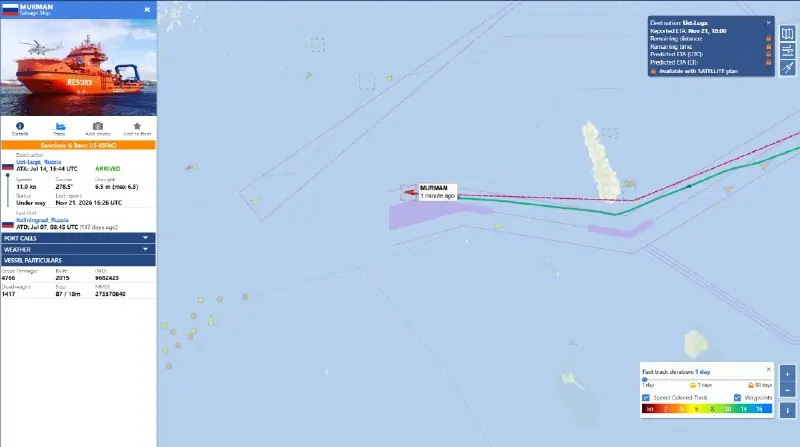
screenshot Военный осведомитель (Military Informant)C
Video
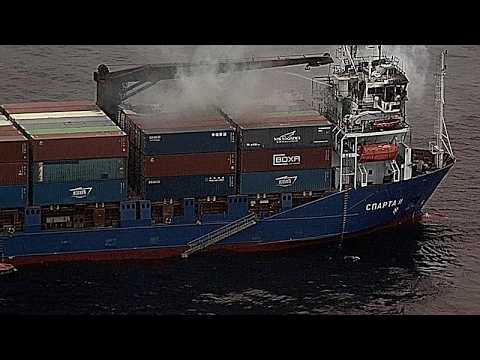
Russian cargo ship still on fire after being struck by drones in Gulf of Finlandeuronews
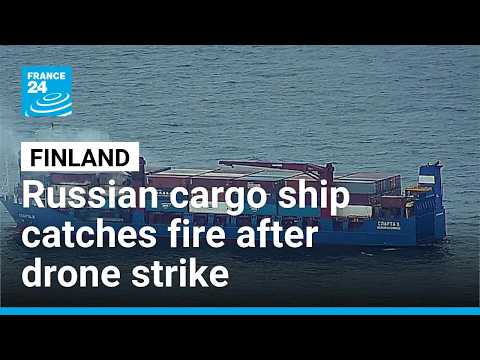
Drone attack sets Russian cargo ship ablaze in Gulf of FinlandFRANCE 24 English

Suomenlahdella iso pelastusoperaatioYle Uutiset

Mikä on venäläisen Sparta II -aluksen kohtalo?MTV Uutiset

Russian Warship Destroyed In Huge Explosion In LibyaH I Sutton
On Telegram
Sources
- Näin venäläisen Sparta II -aluksen matka eteni ja päättyi Suomenlahdella · Yle · 2026-11-21
- Venäläinen alus syttyi tuleen Suomenlahdella · Yle · 2026-11-21
- Analyysi: Sparta II · Yle (Rain Kooli) · 2026-11-21
- Sparta II live · Yle · 2026-11-22
- Sparta II towed out of Finnish waters · Yle News · 2026-11-23
- Vaurioitunut venäläinen rahtialus Suomenlahdella · Finnish Border Guard · 2026-11-21
- Rajavartiolaitos johtaa palavan aluksen meripelastustoimia Suomenlahdella · Finnish Border Guard · 2026-11-21
- Pelastustoiminta jatkuu Sparta II -aluksen hinauksella · Finnish Border Guard · 2026-11-22
- Suomenlahden merivartioston viikko 47 · Finnish Border Guard · 2026-11-23
- Russian cargo ship hit by drones in Baltic; Finland tightens security (Reuters) · CNBC · 2026-11-21
- Russian cargo ship still on fire off Finland after attack · The Moscow Times · 2026-11-22
- Russia says Kaliningrad-bound ship struck by drones in Gulf of Finland · Al Jazeera · 2026-11-21
- Drone-hit Russian cargo ship leaves Finnish waters despite sanctions hold · gCaptain · 2026-11-23
- Russian cargo ship Sparta II struck by drones in the Gulf of Finland · MILMAG · 2026-11-21
- Sparta II · The Insider · 2026-11-21
- Russian military-linked cargo ship catches fire after reported drone strike in Gulf of Finland · Kyiv Independent · 2026-11-21
- Sparta II in St Petersburg · Fontanka · 2026-11-23
- Peskov on the Baltic · Interfax · 2026-11-23
- Puolustusministeriö epäilty lennokki-isku · Maaseudun Tulevaisuus · 2026-11-21
- Finland detects strike on Russian warship; Ukraine claims attack · Janes · 2026-11-12
- Estonia confirms Ukrainian drone hits on Russian corvette in the Baltic · The Maritime Executive · 2026-11-12
- Ukraine attacks Russian warship in Libya · CBC News · 2026-11-23
- Zelensky confirms attack against Russian warship in Libya · The Moscow Times · 2026-11-23
- СБУ розкрила деталі знищення «Меркурія» · Militarnyi · 2026-11-23
- Video: Ukraine claims first strike in the Mediterranean on shadow tanker · The Maritime Executive · 2025-12-19
- Arctic Metagaz · The Insider · 2026-03-04
- Telegram channel:Merkury and Angara at Benghazi · SBU (Telegram) · 2026-11-23