The Crimean Bridge loses its arch over the Kerch Strait
Two Ukrainian attacks in under 24 hours brought down the road arch over the shipping channel, the first time any attack has cut the bridge's navigation span. A third strike, by Navy Neptune missiles in the night of 18–19 November, hit the rail section and stopped the trains. Kyiv says a month-long, seven-stage operation used Palianytsia missile-drones, Neptune and Ruta missiles and an FP-5 Flamingo steered through a relay of drones. The Ruta's Dutch maker, Destinus, says seven of its nine missiles hit, and NRC reports that Destinus staff have themselves operated the company's drones in Ukraine.
Episode 1 8 min
The Kerch Bridge, a Dutch missile and a drone at the embassy
The Robot War Debrief episode about this report. Claire and Tom talk you through the story in 8 minutes.
About the special report The Crimean Bridge loses its arch over the Kerch Strait
Tap play to start listening
The scoop
0:00 / 8:06
Controls, chapters and transcript
Chapters
Read the transcript
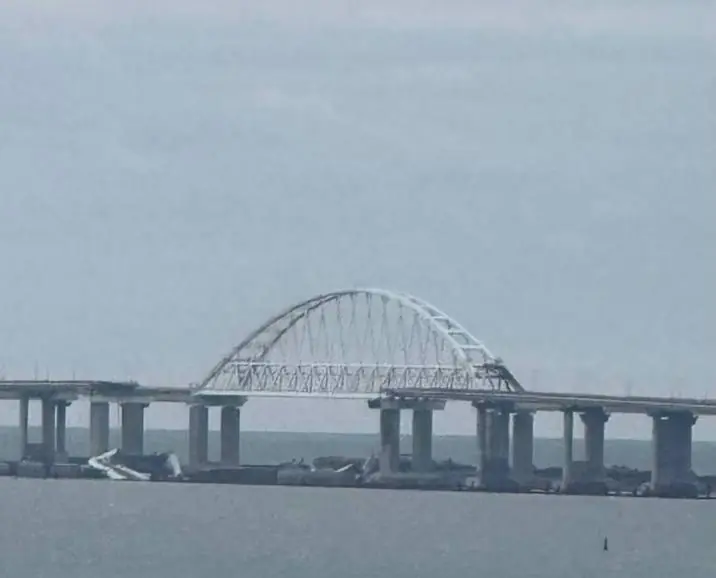
Claire Picture the Kerch Strait at first light on 17 November. Photographs from both shores show the road arch of the Crimean Bridge lying in the sea, with only the rail arch still standing beside it. It's the second Ukrainian attack on the bridge in under 24 hours, and the first time any attack has brought down the arch over the shipping channel.
Claire This is Robot War Debrief. I'm Claire, and with me is Tom, who's been through every statement, every satellite image and a long investigation by the Dutch paper NRC. Today, the bridge: how Ukraine says it was done, the Dutch missile whose maker claims it hit, and the drone that came down behind the Dutch embassy in Kyiv. Tom, where do we start?
Tom I think we start with the order of things, because there were three strikes, not one. The first came in the night of 15 to 16 November. Drones circled over Kerch for hours, and at about 03:38 a warhead hit the road arch. Russia closed the road, trains kept running, nobody was hurt. After almost 17 hours one lane reopened.
Claire And then, that same night, the second attack started.
Tom Late on the 16th, yes. Through the night the Crimean Wind monitoring channel counted cruise missiles hitting the bridge, and by first light on the 17th the road arch was in the water. Russia suspended road and rail, opened a terrorism case and confirmed what it called damage to the structure. Then a third strike, in the night of 18 to 19 November, this time on the rail section. Ukraine's General Staff said the Navy's coastal Neptune missiles had hit it, and signed off with, quote, the train goes no further, please leave Crimea. One rail track reopened later that day. The second track has no date.
Claire So that's three strikes in four days, and the road arch over the shipping channel is gone. The part I keep coming back to is who gets to claim it, because this one has a Dutch angle.
Tom It does. Hours after President Zelensky spoke on 17 November, the company Destinus, which has its head office in Valkenburg and builds its missile in Hengelo, posted on LinkedIn that its Ruta missiles had struck the bridge two days in a row. Its president, Oleksandr Danyliuk, told Reuters that Ukraine fired nine Ruta Block 1, and seven hit. He said Destinus systems were the only foreign-made weapons used in the operation.
Claire And the company meant the collapsed span?
Tom Destinus says, quote, seven RUTA missiles hit the bridge, causing one span to collapse. But that isn't what Kyiv says. Zelensky and the SBU credit the collapsed road span to Palianytsia missile-drones, fired by the SBU's Alpha unit, and they put the Ruta on the rail section, which is damaged but standing. Nobody outside the company has confirmed the number seven.
Claire So the Dutch state is tied into this through the missile, not just the maker.
Tom It is. The Netherlands pays for 250 million euros' worth of Ruta Block 2 for Ukraine; the defence minister confirmed that to parliament on 1 September. Whether the Rutas fired at Kerch were the ones The Hague paid for, we don't know.
Claire The other thing that stood out for me was how one of these missiles was actually guided in. Not by satellite, you said.
Tom No, and this is the newest piece. According to Ukraine's Unmanned Systems Forces, the final big missile, an FP-5 Flamingo made by Fire Point in Kyiv, was flown into the rail section by a human operator watching through its nose camera. And the signal from the operator to the missile wasn't carried by Starlink. It was carried by a chain of drones, acting as a radio relay. An officer told The Times, quote, we used all these drones to pass video signals to missiles.
Claire A whole wave of drones, just to carry the signal.
Tom Exactly. The Guardian describes the final night as three waves over about four hours. From around 22:00 Kyiv time hundreds of attack drones flew in from central Ukraine to tie down the air defence; a second wave acted as the relay; then came the missiles. The Flamingo is built on a claimed 3,000 km range with a very heavy warhead. BBC Verify said it had verified the video from its nose camera. A cruise missile built to fly on inertial and satellite navigation, flown in its last seconds by a person through a mesh of drones, is a new combination.
Claire So that's the tech. Then on 19 November the story moves to Kyiv, and specifically to the Dutch embassy.
Tom During a Russian drone attack that lasted hours, a drone came down directly behind the Dutch embassy in the Podil district. The Kyiv Independent reported broken windows, damaged cars and a damaged security post, and the top floor of the building next door badly damaged. A NOS crew filmed what a local cameraman said was the drone's engine lying in the courtyard. Foreign Minister Tom Berendsen wrote that his colleagues were unharmed and that there was some light damage to the building.
Claire And what do we actually know about whose drone it was?
Tom Not much. A source in Ukraine's air defence told NOS the damage was probably caused by an intercepted Russian attack drone, and that there is, quote, no confirmed information that suggests the embassy was the direct target. The Russian embassy in The Hague said, quote, we unequivocally state that this was not a targeted attack. The Netherlands still summoned Russia's ambassador. Prime Minister Rob Jetten, at a meeting in Berlin, called it part of an escalation on the Russian side, and when asked about a link to Destinus he said, quote, we are not going to speculate about that.
Claire So this isn't being called an attack on the Netherlands, by the Dutch or the Ukrainian side.
Tom By the morning of 20 November we hadn't found a Dutch minister or MP calling it an attack on the Netherlands or an act of war. Who fired the drone, and at what, is not settled.
Claire Let's land one piece in plain words, because this story has a lot of weapon names in it. The Ruta — can we just say what it is?
Tom The Ruta is a small, jet-powered cruise missile. Ukraine flies it, Destinus makes it. The Dutch defence minister told parliament it can be characterised both as a drone and as a cruise missile. We have a page on Destinus on robotwar.io and a separate page on the Ruta. Destinus also makes a propeller-driven long-range attack drone called LORD, which in Ukraine is known as Da Vinci; it was on Zelensky's list of weapons used in the operation.
Claire And the one Kyiv says actually brought the road arch down?
Tom Palianytsia, named after a Ukrainian bread. It's a turbojet missile-drone from Luch Design Bureau in Kyiv, the same bureau that makes Neptune, the anti-ship missile credited with sinking the cruiser Moskva back in 2022. Both have their own pages on robotwar.io.
Claire Before we go, the road arch is in the sea, the Dutch state is tied in through the missile, and Russia's ambassador has been called in. What should we actually watch?
Tom A few things. Nobody has given a total count of missiles and drones fired; what we have is partial, and comes from each side. Nobody outside Destinus has confirmed its figure of seven hits. Russia has given no date for the repair, and engineers quoted by Reuters and the BBC put it at more than a year. The shipping channel is reported blocked by the wreckage; Russia hasn't commented. And on the embassy, the Dutch minister says his ministry is investigating. We don't know whose drone it was, and we don't know what was said when the Russian ambassador was called in.
Claire The full report, with the day-by-day, the photos and every source, is on robotwar.io. We'll follow the next special report next time. Thanks, Tom.
Tom Thanks, Claire.
Latest
Neither side has reported a new strike on the Crimean Bridge since the night of 18–19 November. Rail traffic runs on both tracks again, Russia says, but the operator's Tavria passenger trains end at Kerch until 30 November, with buses onward, and it gives no reason. The road section is still closed with no reopening date; Deputy Prime Minister Marat Khusnullin said on 22 November that the restoration stages had been set, without naming a contractor or a date.
Sources: Telegram channel:Grand Service Express, Telegram channel, Russian side:SolovievLive, Telegram channel, Russian side:SIL0VIKI
Deputy Prime Minister Marat Khusnullin said on 22 November that he had personally visited the Crimean Bridge and that the stages of its restoration had been determined, with designers, builders and material suppliers already brought in. Speaking on the SolovievLive programme, he said the work was being done on a daily basis. He again gave no date for reopening the road section, which remains closed.
Sources: Telegram channel, Russian side:SolovievLive, Telegram channel, Russian side:RVvoenkor
Russia's Deputy Prime Minister Andrei Nikitin said on 21 November that rail traffic across the Crimean Bridge had been fully restored, with trains running on both tracks without restrictions. Services had been running reversibly on a single track since the night of 18–19 November, when Ukraine's Navy said it hit the rail section with coastal Neptune missiles. Nikitin said work continues on restoring the road section, which remains closed.
Sources: Telegram channel, Russian side:SIL0VIKI, Telegram channel, Russian side:mig41
The road arch over the Kerch Strait’s shipping channel is in the sea. Photographs taken from both shores at first light on 17 November show the span of the Crimean Bridge’s road section lying in the water, with only the rail arch still standing beside it. It was the second Ukrainian attack on the bridge in under 24 hours. It is also the first time any attack has brought down the arch over the navigation channel, Russia’s road and rail link to occupied Crimea and the gateway to the Sea of Azov.
Russia’s Transport Ministry suspended road and rail traffic and said nobody on the bridge was hurt. Its Investigative Committee opened a terrorism case and confirmed “damage to the structure”. Even the pro-war channel Rybar called it the most serious damage since 2022.
Day by day: what became clear
Times are Amsterdam time (CET). Claims are marked as claims.
Day 1, Monday 16 November: the first strike, by drone.
- At about 03:38 a drone warhead hit an arch of the road bridge, according to residents writing to Crimean Wind. Russia closed the road section after a “UAV attack”; trains kept running and nobody was hurt.
- Satellite imagery from Vantor, published by The War Zone, showed damage around the road arch.
- After almost 17 hours one lane reopened. Aksyonov and Deputy Prime Minister Khusnullin inspected the bridge: “We will restore everything.”
- At 23:35 Aksyonov reported a new attack. The second strike had begun.
Day 2, Tuesday 17 November: the road arch falls.
- Through the night Crimean Wind counted cruise missiles hitting the bridge. At first light the road arch lay in the water; only the rail arch still stood.
- Russia suspended road and rail traffic. The Investigative Committee opened a terrorism case and confirmed “damage to the structure”. In the afternoon one rail track reopened; the road section stayed shut.
- President Zelensky credited the SBU and the General Staff and named the weapons. The SBU described a month-long operation in seven stages, with its Palianytsia missile-drones aimed at the road section (claimed by Ukraine).
- The makers claimed their share: Destinus said seven of nine Ruta missiles hit; Fire Point said “two missiles hit the bridge”, one on the road arch and one on the rail section (Fire Point).
Day 3, Wednesday 18 November: no strike, the fallout begins.
- The road section stayed closed; Russia said trains were running to schedule.
- The Russian embassy in The Hague answered Destinus on X: “Is The Hague openly joining the conflict?” Foreign Minister Berendsen said Ukraine may use Dutch-made weapons within the laws of war, and that his ministry had no further details on Destinus’s role.
- Sevastopol’s Russian-installed governor limited fuel sales from midnight to a full tank plus 20 litres in canisters, after panic buying (Kyiv Independent).
Day 4, Thursday 19 November: the third strike, on the rail section.
- In the night Neptune missiles hit the rail section, Ukraine’s General Staff said: “Target hit, traffic on the bridge stopped. The rail track is damaged.” Trains were stopped; one track reopened at 13:55, and the second has no date.
- Satellite images taken that day show a 225-metre road section down and the rail arch standing, damage to one of the two rail tracks, no repair work and no ships in the strait (Vantor via Business Insider and The War Zone).
- In Shenzhen, Putin said that after the strikes “we will not negotiate”. Khusnullin said parts of the bridge might reopen “in a month or two” (claimed by Russia).
- NRC published its investigation into Destinus staff at the front. Russia’s embassy in The Hague said civilians who take part in hostilities become “legitimate targets”. That afternoon a drone came down behind the Dutch embassy in Kyiv, and the Netherlands summoned Russia’s ambassador. In the evening the embassy claimed that “at least 40” Destinus employees may have gone to Ukraine to take part in combat drone launches, including against Russian territory (MID Russia). That is the embassy’s claim; it says it rests on Dutch media reports.
- Asked about the bridge, Zelensky said that Crimea is Ukraine and that Ukrainians do with what is theirs as they wish; Russia had hit Ukrainian bridges for years, so “we respond”, which he called fair (UkraineNow).
Day 5, Friday 20 November: no attack on the bridge.
- No attack on the bridge was reported in the night of 19–20 November by the Russian authorities or by Crimean Wind. A resident’s report of air-defence fire over Kerch on the evening of the 19th is unverified. Around midnight a powerful explosion was heard across the Krasnoperekopsk district in northern Crimea, Crimean Wind said; it did not know what was hit.
- In Kyiv, Russian ballistic missiles hit three bridges over the Dnipro, the night after Putin promised a “much more painful” response; at least six people were killed in the city.
- Khusnullin said “the main beam” of the arch span and “the arch itself” are damaged and that two repair options are being pursued in parallel, with no date (claimed by Russia). The passenger boats meant to replace the road link were postponed because of a storm.
- Maria Zakharova said Dutch actions are “taken into account in military planning”.
- The same morning three Russian Kh-101 cruise missiles from the night’s attack on Ukraine came down in south-east Poland; see our report Three Russian cruise missiles come down in Poland.
Day 6, Saturday 21 November: both rail tracks back.
- Deputy Prime Minister Andrei Nikitin said train traffic had “resumed in full”, on both tracks and “without restrictions”; since 19 November trains had run in alternating directions on one track (SIL0VIKI) (claimed by Russia).
- Ukraine’s defence minister Yevhen Khmara said Russian divers were surveying the fallen span to work out how to lift and tow it away, which would take “at least several months” (Krym.Realii). Zelensky said Putin had struck Ukrainian bridges “109 times” before Ukraine answered with the strike on the Crimean Bridge (Krym.Realii).
- In the Gulf of Finland, drones hit the Russian military cargo ship Sparta II, bound for Kaliningrad; see our report.
Day 7, Sunday 22 November: “the stages of restoration” set.
- Khusnullin said he had visited the bridge in person, and that designers, builders and material suppliers had been brought together and “the stages of the Crimean Bridge’s restoration” determined (SolovievLive). He named no contractor, method, cost or date.
- Ukraine’s defence ministry set out why it considers the bridge a lawful military target, citing Article 51 of the UN Charter (as relayed by Crimean Wind).
Day 8, Monday 23 November: a claimed “attempt”.
- In the night of 22–23 November a Kerch resident told Crimean Wind of “launches heard, presumably drones”, and the pro-Russian aggregator IntelSlava claimed “another attempt to attack the Crimean Bridge, unsuccessful” (IntelSlava). Neither is verified, no damage or closure was reported, and rail traffic stayed open, according to Russian outlets.
- The road section remained closed; the free passenger boats to Port Kavkaz still had not started because of the weather.
Day 9, Tuesday 24 November: no new strike.
- Neither side has reported a new strike on the bridge since the night of 18–19 November. Ukraine’s General Staff summaries for 20–23 November name only an ammunition depot near Pervomaiske in Crimea. The regional commuter rail company adds two daily trains between Anapa and Kerch across the bridge.
The third strike: Neptunes on the rail section
Ukraine came back for the rail section in the night of 18–19 November. Residents in Kerch told the monitoring channel Crimean Wind of at least eight strong explosions near the bridge from about 00:50 Moscow time, with missiles heard flying over, and at 01:09 of “two hits on the rail bridge”; none of this is verified. At 01:35 Crimea’s Russian-installed head, Sergei Aksyonov, wrote that traffic was closed “as a result of another attack” and damage was being assessed. Russia’s Transport Ministry suspended trains on the rail section in the early morning after what it called “a night UAV attack”, and the Tavria operator held three trains bound for Crimea.
Kyiv named the weapon at midday. Ukraine’s General Staff said the Navy’s coastal Neptune missile systems had struck the bridge: “Target hit, traffic on the bridge stopped. The rail track is damaged.” The Defence Ministry reported hits “in the area of the arch and the rail tracks”, called it the third strike on the bridge in a week, and signed off: “The train goes no further. Terminus. Please leave Crimea.” Hours earlier the General Staff had congratulated Lisbon’s Vasco da Gama bridge on becoming the longest in Europe. Neither side has said how many missiles were fired, and Russia’s Defence Ministry claimed no intercepts over Crimea that night (ASTRA).
The rail arch is still up. Residents told Crimean Wind it was “in place, no damage visible”, and Aksyonov promised trains “approximately from 16:00” Moscow time on 19 November. Crimean Wind read that as a sign the damage is not critical. Ukraine Context, a channel close to military intelligence, says there is an order to keep hitting the rail section until it cannot be repaired before the war ends; that is not confirmed. With the road closed and the ferry stopped by a storm, Crimea’s authorities plan free passenger boats across the strait from 20 November, with no cars and no petrol in cans (Krym.Realii). Videos from Sevastopol and other towns show queues at filling stations.
Trains came back that afternoon, on one track. At 12:55 UTC the Transport Ministry said traffic on “the first track” of the rail section was open and a Moscow–Kerch train had left Taman; by evening the operator reported that all the delayed Tavria trains had reached Kerch. The second track has no date. “There is no task to do it fast, there is a task to do it well,” Deputy Prime Minister Andrei Nikitin told Interfax. His colleague Marat Khusnullin said the plan to restore the bridge is “fully agreed” and will be approved in the coming days, without giving a timeline or a method (TASS, Russian state media). Residents gave Crimean Wind a different picture of the night: “8–10 hits, all on the arch and the deck of the bridge”, fired without a drone attack first, after a Pantsir-S1 on Mount Mithridates “fired its whole load in a minute or two” (Crimean Wind, unverified). A satellite picture posted by the monitoring channel Supernova+ shows the rail arch standing, with two or three impact points marked on the rail deck and three on the road deck. It names no provider and no date, so it cannot be tied to the third strike.
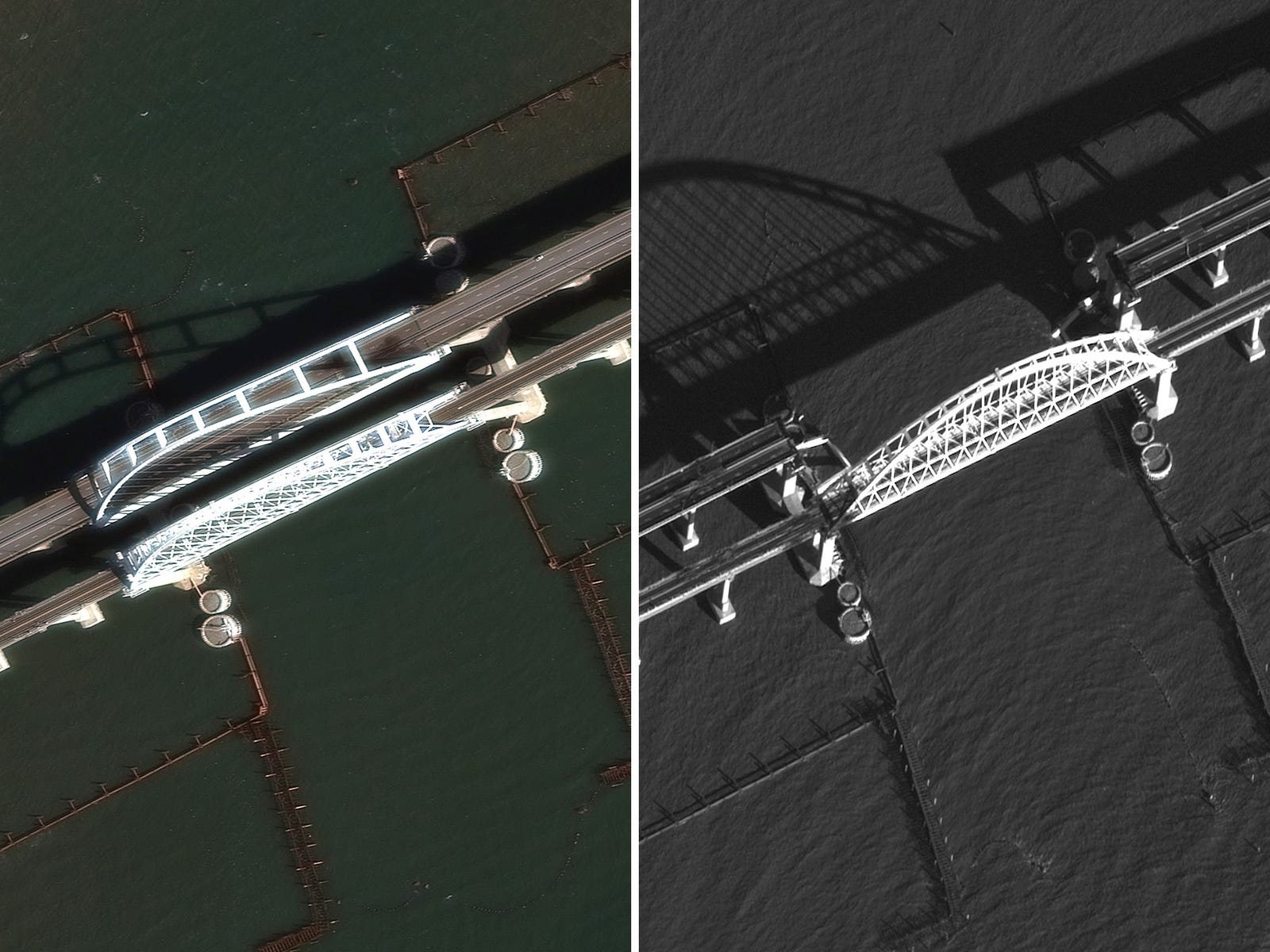
Satellite pictures now show the bridge after all three strikes. Images Vantor took on 19 November, published by Business Insider, show a 225-metre section of the road bridge collapsed, parts of it partly under water, and the rail arch still standing. Vantor said it saw no repair work on or near the bridge and no shipping traffic in the strait. In the night of 19–20 November no new attack on the bridge was reported; a Kerch resident told Crimean Wind of a Russian air-defence launch and an explosion that evening, which could not be verified (Crimean Wind).
The bridge now, and the repair
More pictures from 19 November show the rail section. A Vantor WorldView-1 image taken at 13:51 local time, published by The War Zone, shows “at least two, and possibly three, impact points” on the rail span; the damage “looks to be limited to only one of the two sets of tracks”. An image of the same day published by Radio Svoboda, which names no provider, shows “significant damage to the railway track in at least three places”. On 20 November Deputy Prime Minister Marat Khusnullin, who oversees the repair, said: “We understand that the main beam of the span of the arch bridge is damaged. The arch itself is damaged” (Fontanka). He did not say which of the two arches he meant.
The road section is still closed, and the sea route is not yet a substitute. Russian-installed officials in Crimea had said a ferry to the mainland would start on 20 November and that food, medicine and fuel supplies were uninterrupted (Reuters via RNZ). That morning Crimea’s Russian-installed transport minister, Arseny Kozlovsky, cited a storm warning with southerly winds of 15–20 m/s: “A decision has been made to suspend the launch of the sea passenger line ‘Port Krym – Port Taman’.” No new date was given (AiF Kuban). In Sevastopol the Russian-installed governor, Mikhail Razvozhaev, limited fuel sales at the Atan and TES chains from midnight on 19 November to a full tank plus up to 20 litres in canisters, after people had filled containers of up to 500 litres at a time, he said; footage showed long queues at a filling station (Kyiv Independent). Whether ships can pass the fallen span is disputed. Working from ship-tracking data, Vërstka wrote on 18 November that “there is enough room in the fairway for vessels with a small draft”; Vantor saw no shipping in the strait the next day.
Since 21 November both rail tracks are open again, Russia says. Long-distance passenger trains still stop short: the operator’s Tavria trains run only to Kerch-Yuzhnaya Novy Park until 30 November, with buses on to Simferopol and Sevastopol, and it gives no reason (Grand Service Express). Freight figures have not been published. The road section is still closed, cars are not carried on the ferries, and the free passenger boats announced for 20 November had not run by 23 November because of storms. Sevastopol still limits fuel to a full tank plus 20 litres in canisters, which the city blames on panic buying, not a shortage. The rolling power cuts across Crimea are a separate problem: they began on 24 October, and Russian officials blame damage to the grid outside the peninsula (Krym.Realii). No satellite image taken after 19 November has been published.
Moscow has not given a date for the repair. “Individual elements we may be able to launch in a month or two. The rest we will see, it is the storm season now. So we will assess and say exactly within a week,” Khusnullin said on 19 November (Fontanka, via TASS). A day later: “We are moving in parallel with two restoration options at once”; the exact timelines will be known once the designs are ready. He did not say what the two options are, and no contractor has been named. On 22 November he said the stages of the restoration had been set; the assessment he promised “within a week” is due around 26 November. Maria Zakharova promised that the bridge “will be restored. It will become even better” (VZ).
Western engineers describe a long job. Andreas Kappos of Khalifa University told The New York Times that about two years is realistic for road traffic, provided the piers are sound and the work is not attacked (as summarised by UNITED24; we could not read the original). Ukraine’s navy spokesman Dmytro Pletenchuk: “They cannot repair anything; all they can do is carry out, so to speak, an assessment of the situation” (Ukrinform). “You have to produce a new arch span, a large steel structure,” Inger Kroon of the consultancy COWI told Reuters. Her colleague David MacKenzie told RFE/RL that “it would not be feasible to provide temporary road access over the bridge and maintain shipping access at the same time” and that the new span “will have to be assembled on the shoreline of the Sea of Azov and then floated to site”, and Mike Petersen of the Center for Naval Analyses said: “Ukraine could contest each and every attempt to clear the channel and that may extend the closure almost indefinitely.”
Putin: “We will respond”
Vladimir Putin spoke about the strikes for the first time on 19 November, at a press conference at the APEC summit in Shenzhen, China. He said he had asked Russia’s Security Council to consider a ceasefire in some areas with Ukraine. “But after the strike on the Crimean bridge I decided that we will not negotiate. We will respond to these strikes,” he said, as quoted by RIA Novosti (Russian state media). According to The Moscow Times, he added: “I believe that our response will be much more painful than what the Kyiv regime did to the bridge.” In TASS’s version, the “more painful” line refers to Russia’s answer to Ukraine’s strikes on tankers, not to the bridge.
Putin called the bridge “an exclusively peaceful object”, which according to TASS “has long not been used to move oil and ammunition”. He promised it would be rebuilt; its rail part, he said, “has already been restored” (Kommersant). He also said Russia would “strengthen its presence” along the land route to Crimea, the road it calls the Novorossiya highway, “including in connection with the strikes on the Crimean bridge”, and would push Ukrainian forces back from it (Interfax). He did not mention the Netherlands, Destinus or the Ruta in any account we found. Neither did Kremlin spokesman Dmitry Peskov or the Foreign Ministry on 19 November.
A projectile at the Dutch embassy
The Russian embassy in The Hague had spent two days on the Netherlands. On 18 November it asked whether The Hague was “openly joining the conflict”; on the morning of 19 November, after NRC’s investigation, it wrote that civilians who take part in hostilities are “legitimate targets of the opposing side”, and that it was becoming “increasingly difficult to regard the Netherlands as a mere bystander” (The Moscow Times).
That afternoon, during a Russian drone attack on central Kyiv that lasted for hours, a drone came down directly behind the Dutch embassy on Kontraktova Square in the Podil district. According to the Kyiv Independent it damaged cars and a security post and shattered the building’s windows. The top floor of the apartment block behind the embassy was badly damaged; a NOS crew filmed what a local cameraman said was the drone’s engine lying in the courtyard (NOS). “Our colleagues are fortunately unharmed; there is some light damage to the building,” Foreign Minister Tom Berendsen wrote; the staff had been “safely inside”. RTL’s correspondent saw a second drone circle over the embassy shortly afterwards before it was shot down (NL Times). Ukraine’s Foreign Minister Andrii Sybiha wrote that “Russian attacks on Kyiv have once again damaged a diplomatic mission”; the Austrian embassy, a few kilometres away, and the grounds of Ukraine’s own Foreign Ministry were also hit that day.
Who fired it, and at what, is not settled. A source in Ukraine’s air defence told NOS the damage was probably caused by an intercepted Russian attack drone: “At this moment there is no confirmed information that suggests the embassy was the direct target of the attack.” NOS itself noted that, until confirmed, the drone could also have been a Ukrainian interceptor. The Dutch side has not said whose drone it was; Berendsen said the ministry is investigating. The Russian embassy in The Hague answered: “We unequivocally state that this was not a targeted attack. We will provide further clarification at a later time” (NL Times).
The Netherlands summoned Russia’s ambassador. Berendsen told RTL the incident was “unacceptable”, and told NOS he was calling the ambassador to account because “it is unacceptable that Kyiv has been attacked for many years” and because of the projectile at the embassy. Prime Minister Rob Jetten, at a summit of Ukraine’s allies in Berlin, called it “part of an escalation on the Russian side, which is of course unacceptable” and said there was “a very big chance that this is indeed due to a Russian attack”. On a link with Destinus: “We are not going to speculate about that. We should just calmly wait for the investigation” (ANP). “The Netherlands will not be intimidated,” he said; Zelensky approached him to express his “solidarity”. Defence state secretary Derk Boswijk called it “extra confirmation that we must support Ukraine”. Austria’s chancellor Christian Stocker called the damage to his embassy “completely unacceptable”: “Diplomatic posts are inviolable and must be protected at all times.” The EU’s foreign-policy chief Kaja Kallas summoned Russia’s ambassador to the EU, saying Russia had again shown its contempt for the international law that protects embassies.
Ron Keller, a former Dutch ambassador to Kyiv, said the drone landed in the back garden near the visa section and that it could “only be interpreted as a signal from Russia” (NL Times). Others warned against reading it that way. Patrick Bolder of HCSS told NOS that “if the Russians had wanted to hit the Dutch embassy, they would have hit it”, and that linking it to Destinus means “telling the story the Kremlin wants told”. In Hengelo, the Forum voor Democratie group leader Brian Geertshuis asked for an emergency council debate on Destinus, saying residents ask “how safe they still are with such a company around the corner”; only one other councillor backed it (1Twente). By the morning of 20 November we found no Dutch minister or MP who had called the incident an attack on the Netherlands or an act of war, and nothing on what was said when the ambassador was summoned.
Moscow kept up the pressure on 20 November. Foreign Ministry spokeswoman Maria Zakharova called Destinus’s statement a “self-exposure”, claimed that Berendsen had “confirmed” Dutch participation in “a terrorist attack on Russia”, and recalled that Defence Minister Yeşilgöz had called Russia an “enemy”. She ended: “All such actions are recorded by the Russian side and taken into account in military planning” (Russian Foreign Ministry).
That night Russia struck Kyiv’s bridges. Ballistic missiles damaged the Podilsko-Voskresenskyi bridge, which was closed to traffic towards the left bank, and the Darnytskyi bridge, and hit the Southern bridge again, Mayor Vitali Klitschko reported. At least six people were killed in Kyiv, among them three workers of the city’s water company, according to Prime Minister Serhii Koretskyi and Klitschko; Ukraine’s Air Force counted 84 cruise missiles, an unspecified number of ballistic missiles and 404 drones across the country (Kyiv Independent). The independent Russian outlet Agentstvo found no earlier case of three Kyiv bridges being hit at once, and noted that the attack came the day after Putin promised a “much more painful” answer to the strikes on the Crimean Bridge (Agentstvo). Russia’s Defence Ministry described its targets as defence plants, depots, energy and transport infrastructure.
Why the bridge matters
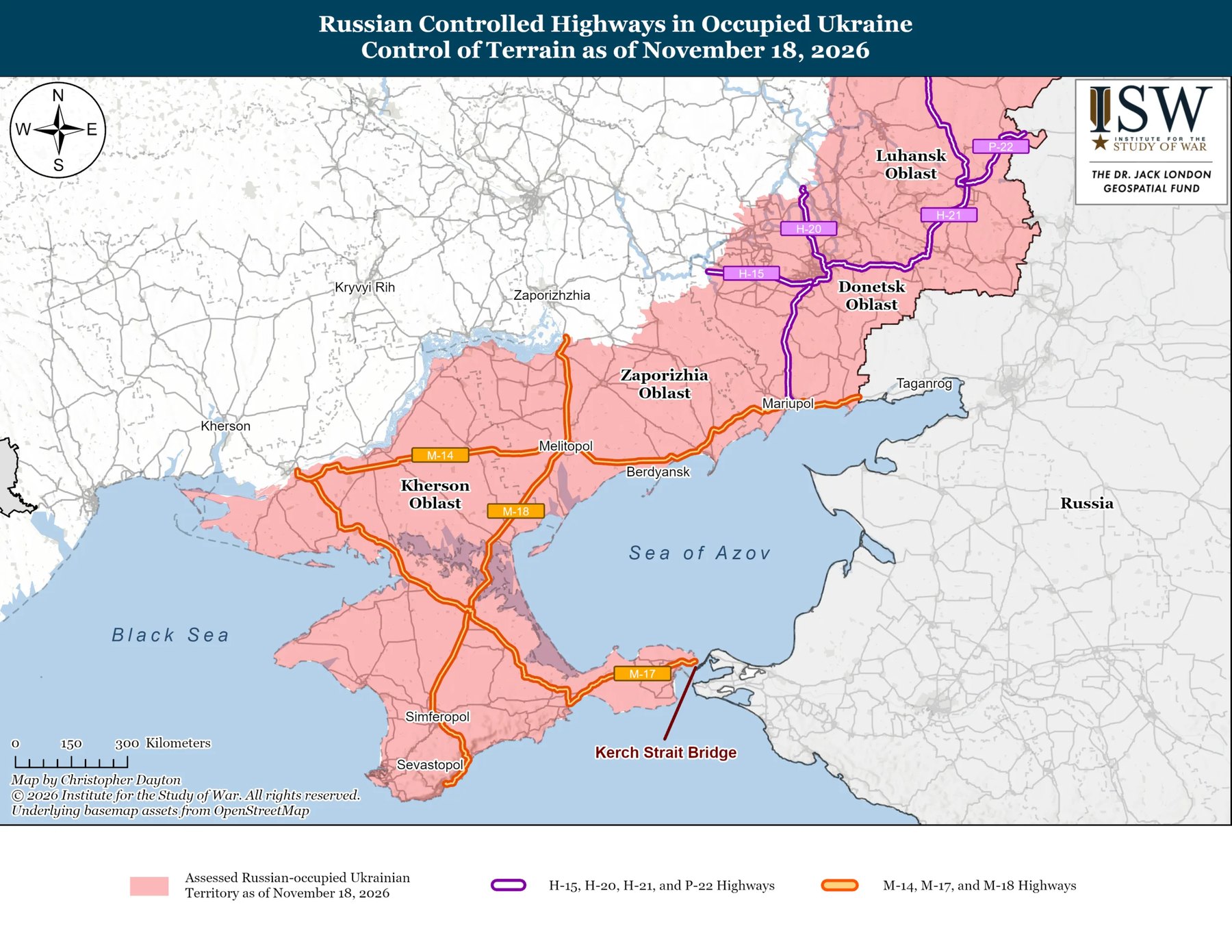
The 19 km bridge, opened for road traffic in 2018 and for trains in 2019, is the only fixed link between Russia and occupied Crimea. Russia has two overland ways to supply its forces in Crimea and southern Ukraine: across the bridge on the M-17, or along the land corridor it has held since 2022, the M-14 and M-18 highways that run from Rostov through occupied Mariupol, Melitopol and Kherson oblast. The Institute for the Study of War describes the strikes on the bridge as part of Ukraine’s “ongoing and systematic strike campaign aimed at denying Russian forces the use of major ground lines of communication (GLOCs) via occupied Crimea”. With the road span down, lorries have to take the corridor or wait for the ferry. Ukraine’s mid-range drones have been “systematically targeting Russian traffic” on its coastal road, which Russia numbers R-280 and calls the Novorossiya highway, since April 2026, according to the Kyiv Independent.
Who hit what
At 10:27 CET President Volodymyr Zelensky claimed the operation for the SBU security service and the General Staff. The SBU gave the outline: the operation took about a month and had seven stages. First the SBU and the armed forces “systematically knocked out the enemy’s air defence”; then came direct strikes on the bridge, some by the SBU alone; other branches joined for the final stage. The General Staff put it the same way: air defence, electronic warfare and radar were neutralised step by step before “a final combined strike with weapons developed in Ukraine”. The drone strike of 16 November, first reported as a raid of its own, was the penultimate stage.
Each party claims its own part, and only one gives a number:
| Weapon | Target | How many | Who says so |
|---|---|---|---|
| Palianytsia missile-drone | Road section; it “collapsed into the water” | not given | SBU (fired by its Alpha unit), Zelensky |
| R-360 Neptune | Rail section | not given | Zelensky |
| Ruta Block 1 | Rail section (Zelensky); “causing one span to collapse” (Destinus) | 9 fired, 7 hit | Destinus |
| FP-5 Flamingo | Rail section, operator-guided | not given; “at least four” in reports, three launches on video | Zelensky, Fire Point |
| FP-1 | The bridge structure | not given | Fire Point |
| LORD / Da Vinci | Air defence around the bridge | not given | Destinus |
| Attack drones of the Unmanned Systems Forces | Air defence, and the radio relay for the final strike | “hundreds” | Unmanned Systems Forces |
Zelensky’s full list of weapons used across the operation also names the Dovbush, Vendetta, Sichen, MICH 2000 and the An-197, which his office describes as a jet-powered version of the Liutyi drone. Which of them did what in the earlier stages has not been said. Robert Brovdi, the commander of the Unmanned Systems Forces, listed the units: the Navy’s deep-strike units, the Missile Troops and Artillery, the new 7th Deep Strike Centre of the 414th Brigade, the 1st Separate Centre of the Unmanned Systems Forces, and the SBU.
The claims overlap. The SBU credits the road span to the Palianytsia. Fire Point, the maker of the FP-1 and the Flamingo, says more than 270 m of road deck was destroyed and the arch fell “as a result of numerous hits”, with an FP-5 damaging the rail section. Destinus says its Rutas brought the span down. None of the three accounts has been independently confirmed, and the morning’s first reports, which credited a Flamingo with the road arch, were contradicted by Zelensky within hours.
How many
Kyiv has not said how many missiles and drones it fired; the counts that exist are partial and come from different parties:
- Ruta: nine Block 1 fired on the second night, seven hits, according to Destinus.
- Flamingo: “at least four”, according to reports cited by The Guardian. The monitoring channel Crimean Wind posted video of three launches and attributed a figure of two to Fire Point. On the evening of 17 November Fire Point published an animation of the attack and wrote: “Two missiles hit the bridge”, one on the road arch, which collapsed, and one on the rail section (Fire Point).
- The whole operation: “over 16 hits”, according to Fire Point on 19 November. It names eleven systems from several makers, among them the Ruta, the Palianytsia, the Flamingo and the Neptune; some watched the results, some distracted the air defences and the rest struck (Fire Point). It does not say how many hits each weapon scored.
- Cruise missiles on the bridge: four hits in the second attack, according to Crimean Wind that night.
- Drones: about 100 at the bridge in the first attack, the Kyiv Post reported without naming its source. For the final night, a press officer of the 414th Brigade told The Guardian that “hundreds” of attack drones flew at it over four hours.
- Russia’s count: the Defence Ministry claimed to have shot down 4,305 Ukrainian drones and 16 Flamingo missiles in the 48 hours from about midday on 15 November, against a daily average of 882 drones in the week before (bne IntelliNews). That covers all of Russia and occupied Crimea, not the bridge alone. Among missiles it named only the Flamingo.
One larger figure circulates without evidence. A Polish analyst who posts on X as Thorkill, citing Russian sources, said around 100 cruise missiles were used, mostly the US-made Rusty Dagger (AGM-188A, the basis of the ERAM that Washington cleared for sale to Ukraine in 2025), and possibly Storm Shadow. No government or company has said so, and no footage or wreckage has been shown. According to Bloomberg, Destinus said its Da Vinci drones were used against defences that included electronic-warfare units, short-range Pantsir systems and longer-range S-300 and S-400 batteries.
The plan: blind the defences, then strike
No official source has itemised the first six stages. The Russian independent outlet The Insider reports, citing one unnamed source and an unpublished memo, that the engineering plan for the attack was ready in summer 2025, and that “the operation had to be postponed for lack of weapons” accurate enough to hit it. What has been published fits the outline. On 3–4 November the General Staff reported two Pantsir air-defence systems hit in Crimea, one of them a Pantsir-S2. During the final night it reported electronic-warfare stations destroyed near Yakovenkove on the Kerch Peninsula and near Priazovsky in Krasnodar Krai. A press officer of the 414th Brigade, “Leon”, told the Telegraph his unit had flown near the bridge since the summer, attacking targets on both sides of it, Kerch included, to learn how the air defence reacted: “It was reconnaissance by practical operations.”
The last night, as reconstructed by The Guardian from officers involved, ran in three waves. From about 22:00 Kyiv time, hundreds of attack drones launched from central Ukraine, some 500 km away, flew over land and then the Black Sea for four hours to keep the air defence busy. A second wave had a different job: to act as a radio relay. Then came the missiles.
That relay is how the Flamingo was steered. The Unmanned Systems Forces say their units handled “relaying the signal to enable the final missile strike on the bridge”. An officer told The Times “we used all these drones to pass video signals to missiles”, without Starlink or the military Starshield service (The Moscow Times). Ten days earlier, according to The Guardian, Ukrainian drones using Starshield had been limited to 161 km/h; SpaceX denies slowing them. BBC Verify called the video from the Flamingo’s nose camera verified. RUSI’s Justin Bronk told the BBC the missile’s “very heavy warhead” suits concrete spans and supports. A 3,000 km cruise missile built to fly on satellite and inertial navigation, flown in its last seconds by a person through a chain of drones, is a new combination.
A Dutch missile
The Ruta is made in the Netherlands. Its maker, Destinus, has its head office in Valkenburg, near Leiden, and builds the missile in Hengelo, in Twente; it was founded in Switzerland in 2021. Hours after Zelensky spoke, the company claimed a bigger role than he had given it. “Destinus RUTA missiles struck the Kerch (Crimean) Bridge on two consecutive days,” it posted on LinkedIn, as quoted by The War Zone. The first night’s strikes “damaged the bridge’s upper load-bearing structure”, and on 17 November “seven RUTA missiles hit the bridge, causing one span to collapse”. Destinus added that its LORD long-range drones, which Ukraine calls Da Vinci, the name on Zelensky’s list, helped suppress Russian air defences. “We are proud to support the Ukrainian defence forces in their fight to defend Ukraine and Europe.”
That evening Destinus’s president, Oleksandr Danyliuk, a former Ukrainian finance minister, gave Reuters the numbers: Ukraine launched nine Ruta Block 1 and seven hit the bridge. Destinus systems, he said, were the only foreign-made weapons used in the operation. A spokesperson told NOS it was the first time the company had publicly tied its weapons to a single attack, and that it takes “the safety of our employees and the communities around them very seriously”.
That account does not match Kyiv’s. Zelensky and the SBU credit the collapsed road span to Palianytsia missile-drones and put the Ruta on the rail section, which is damaged but standing. Nobody outside the company has confirmed the number seven. The Dutch news agency ANP ran the claim at 16:14 under the headline “Dutch missile maker claims big role in demolishing Crimean bridge”.
The Dutch state is part of the story. In June the government announced €250 million for “one-way-attack drones produced in the Netherlands” for Ukraine. Pressed by the PVV, Defence Minister Dilan Yeşilgöz-Zegerius confirmed on 1 September that the weapon is the Ruta Block 2, which “can be characterised both as a drone and as a cruise missile”. Ukraine’s defence minister spoke of about 700 missiles; The Hague has not confirmed the number. Whether the Rutas fired at Kerch were the ones the Netherlands paid for is not known. Destinus says it builds nearly 300 Rutas a month. The Block 1 carries a 150 kg warhead over 300 km on an in-house turbojet; the Block 2 reaches more than 700 km with 250 kg.
It is not the Ruta’s first combat use: Zelensky reported a hit on an offshore rig in October 2025, and Russian channels showed Ruta wreckage in July 2026. It is the most prominent claim so far for a weapon built by a Dutch company and partly paid for by the Dutch state.
Destinus is also working on the other side of the missile war. It leads Bliksem EXO, a European interceptor meant to destroy ballistic missiles of the Oreshnik class above the atmosphere, with MBDA, Safran, Airbus and Thales. A letter of intent was signed in July and the first space test is planned for 2027 (Defense News). Its Vorexon interceptor is designed against artillery rockets and glide bombs, with testing from 2027 (Breaking Defense).
Hengelo on Moscow’s list
Moscow answered the next morning. The Russian embassy in The Hague replied to Destinus on X: “Moscow has been duly informed of the NL involvement. The confession has been well noted. Is The Hague openly joining the conflict?” (The Moscow Times). In a parliamentary committee debate, Foreign Minister Tom Berendsen said Russian embassies spread the Kremlin’s narrative: “They want to drive us apart, so we must look at it through that lens.” Ukraine may use Dutch-made weapons in its defence as long as it respects the laws of war, he said (NOS). His ministry had “no further details” on the company’s role, and whether to publicise it was “really up to those companies themselves” (ANP). The municipalities of Hengelo and Katwijk, where Valkenburg lies, declined to comment; Hengelo said “this is about national security” (RTV Oost). The missile researcher Fabian Hoffmann told NOS that Destinus had now “put itself on the map”, which raises the risk of Russian sabotage and cyberattacks. Patrick Bolder of HCSS: “Destinus was already on Russia’s blacklist.”
On 17 November itself, no Russian official had named Destinus or the Netherlands. Foreign Ministry spokeswoman Maria Zakharova said that “like any terrorists, the Kyiv regime needs to propagandise its crimes” (Lenta.ru), and the Investigative Committee spoke only of drones. But Moscow had marked the plant long before. In April Russia’s Defence Ministry published a list of European factories making weapons for Ukraine, including “Destinus in the Netherlands (Hengelo): Ruta” (Kommersant). Dmitry Medvedev called it a list of potential targets: “Sleep well, European partners!” Two days later the Russian embassy in The Hague named “the company Destinus, based in Hengelo” among those helping Ukraine commit “terrorist acts”.
The pro-war channels picked it up within hours. Military Informant wrote of “cheap Dutch RUTA missiles”. Two Majors, one of the largest, called the Ruta “another sign of NATO countries’ direct participation in the strike on the Crimean Bridge” and added that “some drone or missile that lost control could calmly hit the production sites of these and other weapons in Europe”. In Russia Destinus’s Russian-born founder, Mikhail Kokorich, who gave up his citizenship in 2024, is named in a terrorism case against the exiled Anti-War Committee and is on the financial-monitoring list of “terrorists and extremists”.
Destinus staff in the field
On 19 November, two days after Destinus tied its missiles to the bridge, the Dutch newspaper NRC published a six-month investigation by Carola Houtekamer and Esther Rosenberg into how the company works in Ukraine. They spoke to more than forty people, most of them current and former staff who would talk only anonymously, and read internal documents, emails, app messages, photos and video. Its central finding is that Destinus employees have operated the company’s weapons in the war themselves.
2023, near Kharkiv. In early June 2023, at a Ukrainian unit’s invitation, Destinus staff went to the front near Kharkiv with Danyliuk, who arranged the trip. NRC writes that the Ukrainian soldiers “have no idea how to set a destination or launch” the plywood Da Vinci drones, now sold as the LORD, so the employees prepared, set up, armed and launched them at a military airfield about 180 km over the border near Voronezh. Several sources told NRC the attack drones had been declared on customs papers as “aid goods” or “reconnaissance drones”. Destinus says it complies with all export rules.
2024–25, the Hornet team. From autumn 2024 a small team of Destinus employees from several European countries flew Hornet interceptors against real Shahed drones in Ukraine, first in the west, then near Kyiv and later on the bank of the Dnipro. Destinus confirmed this part to NRC: its staff “launched and operated” interceptors “against actual incoming Shahed drones”, with inert payloads and under the direction of Ukrainian soldiers.
That is how the best weapons in this war are being made. Ukraine’s drone industry runs on a loop of building, flying in combat, failing and fixing within weeks, and NRC itself grants that Ukraine can win only with companies that develop, test and launch new drones at great speed. Destinus says the same in its statement: its systems are “shaped by … testing and feedback from the field”, and “developing and testing in a country at war can never be risk-free”. The questions NRC raises that matter most are about how that testing was protected. The team’s own messages, as NRC quotes them, describe:
- No cover. The team stood “without camouflage, unprotected, with a van in an open field”, with Russian Shaheds overhead and their own drones out of control. They asked about their own safety and that of nearby civilians; NRC reports no answer.
- Risk acknowledged, and accepted. After a crash a team member wrote that operating the Hornet was “an enormous risk … which could end catastrophically for our ground crew”.
- No deconfliction with friendly fire. “I don’t really trust the gunners in the field. They have no regard for our position and shoot down targets directly above our trailer.” Without GPS during an attack, a Hornet that strayed could appear on the air-defence picture as hostile, and “they’ll use everything to bring it down”.
- Radio signature. The home team in Spain suggested hunting Russian Orlan reconnaissance drones. The Ukrainians called it “very, very dangerous”: an Orlan can locate a transmitter and call in guided bombs. “It was just an idea,” the home team replied.
- Uncontrolled flights over homes. A Hornet was “nearly lost in the middle of a village full of houses”; another, stuck in autonomous mode, flew around uncontrolled before crashing in a forest.
- Command from a desk. The field team judged the drone “not ready for combat missions”. The team leader in Spain overruled them: “Let’s fly tonight and try.” “We are in a war zone, please remember that,” the field team wrote back.
- Fatigue and kit. The team had been on duty fifteen days without a break. Its cameras worked only in daylight while the Shaheds fly at night; a collapsing tent let water into the batteries and a drone caught fire.
The last point is legal, and it is about the staff’s own protection. The Dutch Defence Ministry told NRC that “all actions around deploying a weapon system” count as direct participation in hostilities, which ends an employee’s civilian status; general instruction on how a system works does not. Lawyer Liesbeth Zegveld said that staff not formally part of Ukraine’s armed forces have no combatant status either: “They have nothing.” NRC does not say whether the Destinus staff in the field held Ukrainian military contracts, and the article does not mention insurance or safety training. None of this would be news in a country at war. It matters for a company whose employees fly home to the Netherlands, Spain and Switzerland, and whose plant Moscow has put on a target list.
Destinus’s founder Mikhail Kokorich answered about sixty written questions. “Destinus does not carry out military operations,” he wrote; the Ukrainian army picks targets and the company gives “technical support in line with the contracts”. Safety is “of the utmost importance”. Its statement adds that the company has made “difficult decisions” and learned “lessons”, and that “supporting Ukraine does not place us above scrutiny”. Two of his answers sit awkwardly with the company’s Kerch claims: he told NRC that Destinus no longer makes the LORD apart from “small individual orders”, two days after it said LORD drones helped suppress the air defences at the bridge, and that it has stopped developing the Hornet, which Ukraine “never wanted to buy”. NRC also reports that the Ruta had major technical problems until at least mid-2025.
The Hague’s answer was guarded. Defence Minister Yeşilgöz would not discuss the findings and said weapons are “much better” tested in an exercise scenario (ANP via Villamedia). Wimar Bolhuis (PRO) asked the ministry to explain the testing and the export licences, and Volt leader Laurens Dassen called for an inquiry. NRC’s experts warn the company could draw the Netherlands into the war. Russia’s sabotage campaign in Europe did not wait for Destinus: the Reformatorisch Dagblad recalls the foiled arson attack on the Estonian drone maker Threod Systems and the 2024 plot against the head of Rheinmetall. The risk to Hengelo is not new; the question NRC raises is whether the people Destinus sends to the front are protected as well as the war requires.
The cabinet did not speak with one voice. Defence’s statement to ANP added that general instruction on how a weapon works is not direct participation, but that when staff do take part, “the use of force can be prosecuted as a violent crime by the competent authorities”; the ministry is in constant contact with Dutch defence firms, “so also Destinus”. Yeşilgöz told BNR at the NEDS arms fair in Rotterdam that the Netherlands helps Ukraine in line with the law of war, “and about everything else, unfortunately, we say nothing” (ANP via RD). At the same fair her state secretary, Derk Boswijk, took a different line: “I think everyone understands that you can test a drone better in the situation it is meant for than in a simulated one”, and “that also goes for other companies, for example from Germany and America” (RD). To EenVandaag he drew the line at combat: “You have to distinguish between testing and an act of war. That is really for states, for the armed forces.” Foreign Trade Minister Sjoerd Sjoerdsma (D66) called Dutch export control “very careful”, said the cabinet had not yet been able to check NRC’s findings, and asked for the “right perspective”: “What is barbaric and very, very wrong are the attacks from Russia on Ukraine, on Kyiv.” His party colleague Mpanzu Bamenga spoke of “a worrying report” that raises “serious questions”; MPs from CDA and PRO were also concerned (ANP via RD). Destinus told RTL and Nieuwsuur that its staff “have not taken part, and are not taking part, in active military operations”.
Dutch commentators questioned the publicity more than the help. “I understand that they are proud. Taking out the Crimean bridge really hurts Russia. But I think restraint is more fitting,” Bart van den Berg of the Clingendael institute told Nieuwsuur; by claiming the strike, the company “could be seen as a party to a large conflict”. Marten Zwanenburg, professor of military law at the University of Amsterdam, said the Netherlands should find out what happened in June 2023, when according to Nieuwsuur a Destinus drone flew towards Voronezh, where a drone hit a block of flats and injured three people; whether it was Destinus’s is not known. “If weapons were used that do not distinguish between civilians and targets”, that could breach the law of war, and “the company and individual employees could then be prosecuted.” Patrick Bolder of HCSS told Omroep West that the company “was already on a list and would not easily come off it”, and that Russia’s way of operating against European arms makers is known. In Valkenburg, where Destinus has its head office, residents were blunter: “Ridiculous, I find it ridiculous,” one said; “Soon it will come here too!” said another. Next to the Hengelo plant a worker told RTV Oost: “Secretly you may be a bit proud of the Netherlands that we do it this way. But being put on the map like this, I secretly find that a bit nerve-racking.” A few hundred metres away, on the same industrial estate, sits Enerpac, a firm that helped build the Crimean bridge; prosecutors said it earned millions illegally on the project, and it settled by paying €120,000 (RTV Oost).
Moscow used the investigation within hours. On the morning of 19 November the Russian embassy in The Hague posted that, under the Geneva Conventions, civilians may not take part in hostilities. “If they do, they are no longer civilians but legitimate targets of the opposing side,” according to ANP’s rendering. It shared a summary claiming that experts and people from the Dutch Ministry of Defence were involved. NRC’s own article does not say that. That afternoon Prime Minister Rob Jetten said Russia’s complaints should not be taken too seriously. “If they want to start on that, we can have a word or two to say as well,” he said (ANP); ANP’s headline called it his dismissal of “Moscow’s threatening language over Destinus as a sign of weakness”. As of 19 November no MP had tabled written questions on Destinus or the bridge, according to parliament’s records.
The first strike, by drone
The first attack came on the night of 15–16 November. Drones circled over Kerch from about 23:30 CET. At about 03:38 a warhead hit an arch, according to the Crimean Wind monitoring channel. The Russian channel Mash said the arch had bent by about 15°; analysts working from photographs measured 4.9°. Satellite imagery from Vantor, published by The War Zone, showed damage around the road arch.
The road section stayed closed for almost 17 hours, with about 2,000 cars queuing at Kerch. Crimea’s Russian-installed head Sergei Aksyonov and Deputy Prime Minister Marat Khusnullin inspected the bridge: “We will restore everything, there is no doubt about it.” The Kremlin called the damage minor. Traffic resumed in one alternating lane at about 17:00 CET. A few hours later the second attack began.
A blocked strait
By the morning of 18 November the road section was still closed. (The third strike, on the rail section, is described above.) Russia reopened one rail track on 17 November and said trains were running to schedule the next day, although Ukraine’s General Staff says the rail arch is damaged too. Kremlin spokesman Dmitry Peskov promised the bridge would be restored “even better than before”, and Deputy Prime Minister Andrei Nikitin said Russia could do it “in short order”. Others are less sure. The arch was 227 m long and weighed more than 5,000 tonnes; building it took eleven months and installing it more than fourteen, and Defense Express reckons a replacement would take over two years. An engineer at the consultancy COWI told the BBC that reinstating full road traffic will take “over a year”. A recovery fleet has gathered at the fallen arch: “no fewer than ten vessels”, among them six tugs, the dredger Ivan Cheremisinov and an oil-spill response ship, according to The Insider, citing the outlet Vërstka and the ship-tracking service Starboard. Konstantinos Tsavdaridis, a structural engineer at St George’s, University of London, told The Insider that reopening the shipping channel and restoring road traffic are “mutually exclusive tasks”. “Even in normal conditions full restoration of the road span would take many months. In wartime I would not name a limit,” he said (Krym.Realii).
The Vantor image distributed by Reuters and printed by The Guardian on 17 November, shown under Photos below, carries no capture date, but both arches and the road deck under them are intact in it, so it predates the collapse. The images that circulated on 16 November, including Vantor’s for The War Zone and the Kyiv Independent, show the bridge after the first attack. The first dated pictures after the collapse were taken on 19 November; they are described above.
The fallen span is described as 227 m (the arch) or more than 270 m (the arch with the adjoining deck). By most accounts it now lies in the Kerch–Yenikale channel, the only deep-water passage through the strait, about 120 m wide. If confirmed, that closes the Sea of Azov to large ships until the wreckage is cleared. Russia has not commented on the channel. The Kerch ferry is also closed, because of a storm according to ASTRA, and four trains to Kerch were running up to four hours late. Military analyst Andrii Kharuk told the Kyiv Independent that rebuilding the section could take “a year or even longer”.
The worst of four attacks
Ukraine has struck the bridge before:
- October 2022: a truck bomb damaged two road spans and set a fuel train on fire.
- July 2023: Sea Baby sea drones brought down another road span and killed two civilians.
- June 2025: the SBU said it set off underwater charges at the supports; the Kremlin said nothing was damaged.
Each time the road section was repaired within months. This is the first stand-off missile attack on the bridge and the first that cuts the arch over the channel. It follows months of Ukrainian strikes on the roads and rail lines that supply Russian forces through Crimea, which ISW describes as a systematic campaign.
Russia’s version
Russia’s Defence Ministry claimed 1,441 drones shot down overnight across more than 20 regions, Crimea included, and said nothing about missiles at the bridge. On the first night it had claimed 1,336. Pro-war channels claimed at least five missiles shot down. Our Russian-channel trend watch on /osint-hetzner/ found the bridge dominating the milbloggers’ feeds, next to the record interception claims.
What it shows
On Ukraine’s account, this was a layered strike rather than a single blow. First came weeks of drone and missile attacks on the air defence, radars and jammers around the target. Then hundreds of drones were sent to exhaust what was left, a second wave turned into a flying radio relay, and missile-drones and cruise missiles went at both halves of the bridge. Last, a Flamingo was flown into the rail section by an operator watching through its nose camera. The ingredients this site tracks are all here: mass drones to exhaust the defence, long-range strike, cheap European cruise missiles built by the thousand, and a human operator steering the final seconds through a video link.
Timeline
Times are Amsterdam time. Each line names the side that reported it.
Strike 1: a drone warhead hits a bridge arch, according to subscribers of the Crimean Wind channel. Drones had circled over Kerch since about 23:30. Telegram channel:source
Ukrainian sourceCrimea’s Russian-installed head Sergei Aksyonov: “The enemy struck the Crimean Bridge.” Traffic limited “until about mid-day”. Telegram channel, Russian side:source
Russian sourceRussia’s Transport Ministry closes the road section after a “UAV attack”. Trains keep running; no casualties. Telegram channel, Russian side:source
Russian sourceA satellite image shows the deck damaged in at least two places and the road arch deformed. Vantor imagery later published by TWZ confirms damage to the arch. Telegram channel:source
Ukrainian sourceRoad traffic reopens in alternating one-lane mode after almost 17 hours. Aksyonov and Deputy Prime Minister Marat Khusnullin visit the site: “We will restore everything.” Telegram channel, Russian side:source
Russian sourceUkraine’s Air Force: ballistic missiles heading for Kyiv. Minutes later Mayor Klitschko reports hits on the city’s Northern and Southern bridges. Telegram channel:source
Ukrainian sourcePowerful explosions by the bridge; a missile alert is declared in Kerch and windows are blown out. Telegram channel:source
Ukrainian sourceStrike 2. Aksyonov: “The adversary attacked the Crimean Bridge again.” Traffic suspended. Telegram channel, Russian side:source
Russian sourceCrimean Wind reports four cruise missiles hitting the bridge. Further waves of explosions follow until about 02:00. Telegram channel:source
Ukrainian sourceFirst daylight pictures: the road arch lies in the water; only the rail arch stands. Telegram channel:source
Ukrainian sourceA video said to show an FP-5 Flamingo seconds before impact circulates, first posted by Anton Gerashchenko. source
Ukrainian sourceRussia’s Defence Ministry claims 1,441 drones shot down overnight, Crimea included. It does not mention missiles at the bridge. Telegram channel, Russian side:source
Russian sourceTransport Ministry: road and rail traffic suspended after a “repeated UAV attack”; damage being assessed; no casualties. Telegram channel, Russian side:source
Russian sourceRussia’s Investigative Committee opens a terrorism case and confirms “damage to the structure”. Telegram channel, Russian side:source
Russian sourcePresident Zelensky claims the operation for the SBU and the General Staff and names the weapons. One minute later the commander of the Unmanned Systems Forces, Robert Brovdi, names the units. Telegram channel:source
Ukrainian sourceThe SBU: a month-long operation in seven stages, air defence first. Its Alpha unit fired Palianytsia missile-drones at the road section, “after which it collapsed into the water”; the rail section is “preliminarily damaged”. Telegram channel:source
Ukrainian sourceThe Unmanned Systems Forces say their units struck targets, overloaded the air defence and relayed “the signal for the final missile strike on the bridge”. Telegram channel:source
Ukrainian sourceDestinus, the Dutch maker of the Ruta, claims on LinkedIn that its missiles struck the bridge on two consecutive days and that “seven RUTA missiles hit the bridge, causing one span to collapse”. Its LORD drones, called Da Vinci in Ukraine, helped suppress air defences, it says. source
Western sourceRussia’s Transport Ministry reopens rail traffic on one track; the road section stays closed. Telegram channel, Russian side:source
Russian sourceThe Russian channel Military Informant repeats Zelensky’s list, naming “cheap Dutch RUTA missiles”. Telegram channel, Russian side:source
Russian sourceThe Dutch news agency ANP: “Dutch missile maker claims big role in demolishing Crimean bridge”. source
Western sourceThe pro-war channel Two Majors calls the Ruta “another sign of NATO countries’ direct participation” and suggests that a drone that “lost control” could hit the weapons plants in Europe. Telegram channel, Russian side:source
Russian sourceDestinus president Oleksandr Danyliuk tells Reuters Ukraine launched nine Ruta Block 1 and seven hit the bridge, and that Destinus systems were the only foreign-made weapons used. source
Western sourceFire Point: its FP-1 drones and FP-5 missiles hit the bridge, more than 270 m of road deck is destroyed and the arch fell “as a result of numerous hits”. Co-owner Denys Shtilierman posts a Flamingo launch video. source
Ukrainian sourceFire Point: “Two missiles hit the bridge”: one Flamingo on the road arch, which collapsed with the deck, one on the rail section. “To be continued.” Telegram channel:source
Ukrainian sourceRoad section still closed; trains run to schedule, says the Transport Ministry. Deputy Prime Minister Andrei Nikitin says the bridge can be restored “in short order”. Telegram channel, Russian side:source
Russian sourceThe Russian embassy in The Hague replies to Destinus on X: “Moscow has been duly informed of the NL involvement. The confession has been well noted. Is The Hague openly joining the conflict?” source
Russian sourceDutch Foreign Minister Tom Berendsen in a parliamentary committee: “They want to drive us apart.” Ukraine may use Dutch-made weapons within the laws of war; the ministry has no further details on Destinus’s role. source
Western sourceSevastopol’s Russian-installed governor Mikhail Razvozhaev limits fuel sales at the Atan and TES chains to a full tank plus up to 20 litres in canisters; queues at filling stations. source
Russian sourceThird attack. Residents in Kerch report at least eight strong explosions near the bridge and missiles flying over; at 22:09 the monitoring channel Crimean Wind reports “two hits on the rail bridge”. Unverified. Telegram channel:source
Ukrainian sourceCrimea’s Russian-installed head, Sergei Aksyonov: traffic on the bridge closed “as a result of another attack”; damage is being assessed. He does not say what was hit. Telegram channel, Russian side:source
Russian sourceRussia’s Transport Ministry: trains on the rail section suspended after “a night UAV attack”; nobody hurt. The Tavria operator reports three Crimea-bound trains delayed. Telegram channel, Russian side:source
Russian sourceResidents tell Crimean Wind the rail arch is “in place, no damage visible”. Unverified. Telegram channel:source
Ukrainian sourceNRC publishes its investigation into Destinus: staff launched Da Vinci drones at the front in 2023 and flew Hornet interceptors against live Shaheds, from an open field without cover. Destinus confirms its staff “launched and operated” interceptors under Ukrainian command. source
Western sourceUkraine’s General Staff congratulates Lisbon’s Vasco da Gama bridge on becoming “the longest bridge in Europe”. Telegram channel:source
Ukrainian sourceAksyonov: trains to run again “approximately from 16:00” Moscow time (13:00 UTC). Telegram channel, Russian side:source
Russian sourceThe Russian embassy in The Hague, after NRC’s report: civilians who take part in hostilities are no longer civilians “but legitimate targets of the opposing side” (ANP’s rendering). source
Russian sourceDeputy PM Marat Khusnullin: “Individual elements we may be able to launch in a month or two. The rest we will see, it is the storm season now.” source
Russian sourceFire Point: “over 16 hits” in one operation by eleven Ukrainian systems, among them Ruta, Palianytsia, Flamingo and Neptune; some observed, some distracted the air defences, the rest struck. Telegram channel:source
Ukrainian sourceGeneral Staff: the Navy’s coastal Neptune missile systems struck the bridge. “Target hit, traffic on the bridge stopped. The rail track is damaged.” The Defence Ministry: “The train goes no further … Please leave Crimea.” Telegram channel:source
Ukrainian sourceVantor WorldView-1 image (published by The War Zone): “at least two, and possibly three, impact points” on the rail span, damage limited to one of the two tracks. source
Independent sourceDefence Minister Dilan Yeşilgöz declines to discuss the NRC findings: weapons are “much better” tested in an exercise scenario. MPs from PRO and Volt ask for clarification and an inquiry. source
Western sourceFalcon Intel, cited by Faytuks Network, claims more than 15 strikes were observed on the bridge during the Ukrainian missile and drone attack. Telegram channel:source
Western sourcePutin, at the APEC summit in Shenzhen: he had discussed a ceasefire in some areas with the Security Council, “but after the strikes on the Crimean bridge we will not negotiate”. The bridge “will be restored”. Telegram channel, Russian side:source
Russian sourceResidents tell Crimean Wind of “8–10 hits, all on the arch and the deck” in the night, fired without a drone attack first. Unverified. Telegram channel:source
Ukrainian sourceTransport Ministry: traffic on “the first track” of the rail section is open; a Moscow–Kerch train leaves Taman. The second track stays shut. Telegram channel, Russian side:source
Russian sourceDuring a day-long Russian drone attack on Kyiv, a drone comes down directly behind the Dutch embassy in the Podil district, breaking windows and damaging cars and a security post. The top floor of the building next door is badly damaged. The Kyiv Independent: unclear whether the drone was aimed at the area or shot down. source
Ukrainian sourceDeputy PM Marat Khusnullin: the plan to restore the bridge is “fully agreed” and will be approved in the coming days. Telegram channel, Russian side:source
Russian sourceA satellite image of the bridge after all three strikes circulates on Telegram: rail arch standing, impact points on both decks. No provider or capture date. Telegram channel:source
Ukrainian sourceForeign Minister Tom Berendsen: “This afternoon a projectile struck behind the Dutch embassy in Kyiv. Our colleagues are fortunately unharmed; there is some light damage to the building.” source
Western sourcePutin: Russia will “strengthen its presence” along the Novorossiya highway to Crimea, “including in connection with the strikes on the Crimean bridge”. source
Russian sourcePrime Minister Rob Jetten on Moscow’s complaints over Destinus: not to be taken too seriously. “If they want to start on that, we can have a word or two to say as well.” source
Western sourceForeign Minister Andrii Sybiha: “Russian attacks on Kyiv have once again damaged a diplomatic mission.” He later reports damage at the Austrian embassy too. source
Ukrainian sourceDeputy PM Andrei Nikitin gives no date for the second rail track: “There is no task to do it fast, there is a task to do it well.” source
Russian sourceForeign Trade Minister Sjoerd Sjoerdsma on Destinus: Dutch export control is “very careful”; “What is barbaric and very, very wrong are the attacks from Russia on Ukraine, on Kyiv.” MPs from D66, CDA and PRO call the NRC findings worrying. source
Western sourceThe Netherlands summons the Russian ambassador. Prime Minister Rob Jetten, in Berlin: “part of an escalation on the Russian side, which is of course unacceptable”; there is “a very big chance” Russia caused the damage, but “we are not going to speculate” about retaliation. A Ukrainian air-defence source tells NOS the embassy was probably not the target. source
Western sourceThe Russian embassy in The Hague claims that at least 40 Destinus employees may have travelled to Ukraine to take part in combat launches of attack drones, including against Russian territory, citing Dutch media reports. No evidence given. Telegram channel, Russian side:source
Russian sourceA Kerch resident tells Crimean Wind of a Russian air-defence missile launch and an explosion. Unverified; no attack on the bridge is reported that night. Telegram channel:source
Ukrainian sourceZelensky on the bridge strike: Crimea is Ukraine and Ukrainians do with what is theirs as they wish; Russia has hit Ukrainian bridges for years, so Ukraine responds, which he calls fair. Telegram channel:source
Ukrainian sourceNieuwsuur: experts urge the defence minister to keep an eye on Destinus. Clingendael’s Bart van den Berg: “I understand that they are proud … But I think restraint is more fitting.” source
Western sourceAround midnight a powerful explosion is heard across the Krasnoperekopsk district in northern Crimea, Crimean Wind says; what was hit is not known. No attack on the Crimean Bridge is reported that night. Telegram channel:source
Ukrainian sourceMayor Vitali Klitschko: a ballistic missile attack has damaged the Podilsko-Voskresenskyi bridge, closed to traffic towards the left bank, and the Darnytskyi bridge; the Southern bridge was hit again. An hour later he reports three dead, workers of the city water company. Telegram channel:source
Ukrainian sourceForeign Ministry spokeswoman Maria Zakharova on Destinus: its statement is a “self-exposure”, and Berendsen “confirmed” Dutch participation in a “terrorist attack on Russia”. “All such actions are recorded by the Russian side and taken into account in military planning.” Telegram channel, Russian side:source
Russian sourceCrimea’s transport minister Arseny Kozlovsky postpones the Port Krym – Port Taman passenger boats because of a storm warning; no new date. source
Russian sourceDefence State Secretary Derk Boswijk at the NEDS arms fair: “everyone understands that you can test a drone better in the situation it is meant for”; it “also goes for other companies, for example from Germany and America”. source
Western sourceKhusnullin: “the main beam of the span of the arch bridge is damaged. The arch itself is damaged.” Two restoration options are being pursued in parallel. source
Russian sourceRussian state broadcaster RT publishes an exclusive claiming Destinus has received hundreds of millions of euros from EU countries, including €291.9 million in drone deliveries this year under a Dutch Ministry of Defence contract, citing the ministry’s annual report, and says the firm also holds the contract to supply Kyiv with Ruta Block 2 cruise missiles. Telegram channel, Russian side:source
Russian sourceRT links Destinus to Mikhail Kokorich, a Russian fugitive and former owner of Tekhnosila, whom Russia has charged with state treason. Telegram channel, Russian side:source
Russian sourceMilitary expert Yury Knutov, cited by the dva_majors channel, says the overnight mass strike on Ukraine was planned work, not the promised response to the Crimean Bridge attack. Telegram channel, Russian side:source
Russian sourceThe wargonzo channel attributes the damage on the bridge to three attacks this week, citing Deputy PM Marat Khusnullin that the main beam of the arch span and the arch itself are damaged and that two restoration options are being pursued. Telegram channel, Russian side:source
Russian sourceRussia’s Deputy Prime Minister Andrei Nikitin says rail traffic across the Crimean Bridge has been fully restored: «Движение поездов возобновлено в полном объеме» (train traffic has resumed in full). Trains had been running reversibly on a single track since the night of 18–19 November; work continues on the road section. Telegram channel, Russian side:source
Russian sourceDeputy Prime Minister Andrei Nikitin: train traffic has “resumed in full”, on both tracks and without restrictions. Telegram channel, Russian side:source
Russian sourceUkraine’s defence minister Yevhen Khmara: Russian divers are surveying the fallen span; lifting it will take “at least several months”. Telegram channel:source
Ukrainian sourceDeputy Prime Minister Marat Khusnullin, on the SolovievLive programme, says he has personally visited the Crimean Bridge, that the stages of its restoration have been determined and that designers, builders and material suppliers have been brought in, with work ongoing on a daily basis. Telegram channel, Russian side:source
Russian sourceThe intelslava channel claims a mass Ukrainian drone attack on Russia and another attempt to strike the Crimean Bridge, which it says was unsuccessful; no further detail is given. Telegram channel, Russian side:source
Russian sourceThe Two Majors channel, trailing a Vesti Nedeli report, promotes the R-280 “Новороссия” highway through three frontline regions as the alternative road from Rostov to Crimea bypassing the Crimean Bridge, saying President Putin compared it to the legendary road of life. Telegram channel, Russian side:source
Russian sourceKhusnullin: he has visited the bridge, and designers, builders and suppliers have set “the stages of the Crimean Bridge’s restoration”. No contractor, cost or date. Telegram channel, Russian side:source
Russian sourceThe pro-Russian aggregator IntelSlava claims “another attempt to attack the Crimean Bridge, unsuccessful”; a Kerch resident tells Crimean Wind of launches heard. Unverified; no damage or closure reported. Telegram channel, Russian side:source
Russian sourceRoad section still closed; the free passenger boats announced for 20 November still not running because of storms. Two extra daily Anapa–Kerch commuter trains from 24 November. source
Russian source
Photos
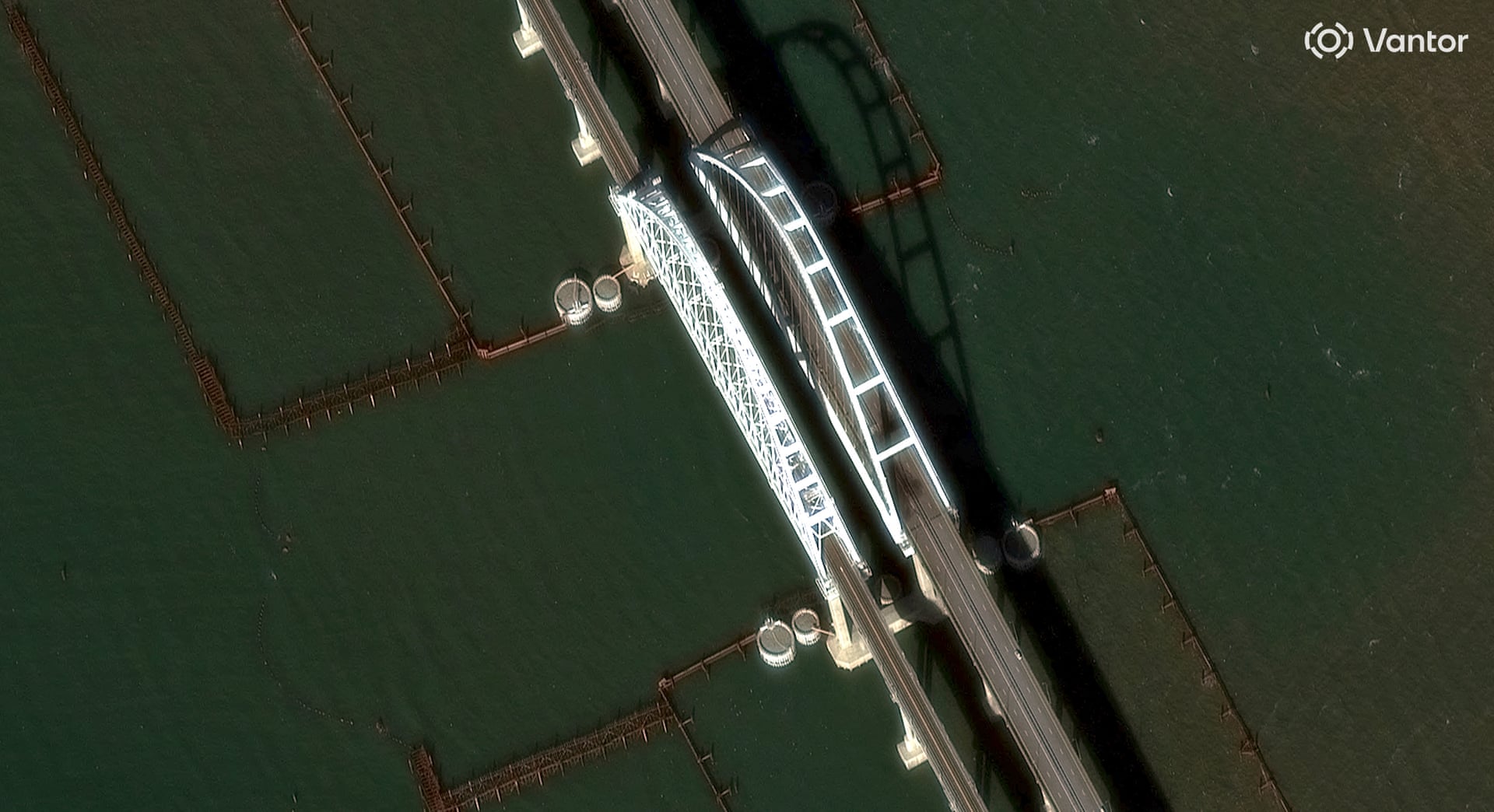 Before the collapse. A Vantor satellite image distributed by Reuters and printed by The Guardian on 17 November, without a capture date: both arches still stand and the road deck under the arch is intact, so it was taken after the first attack and before the second.
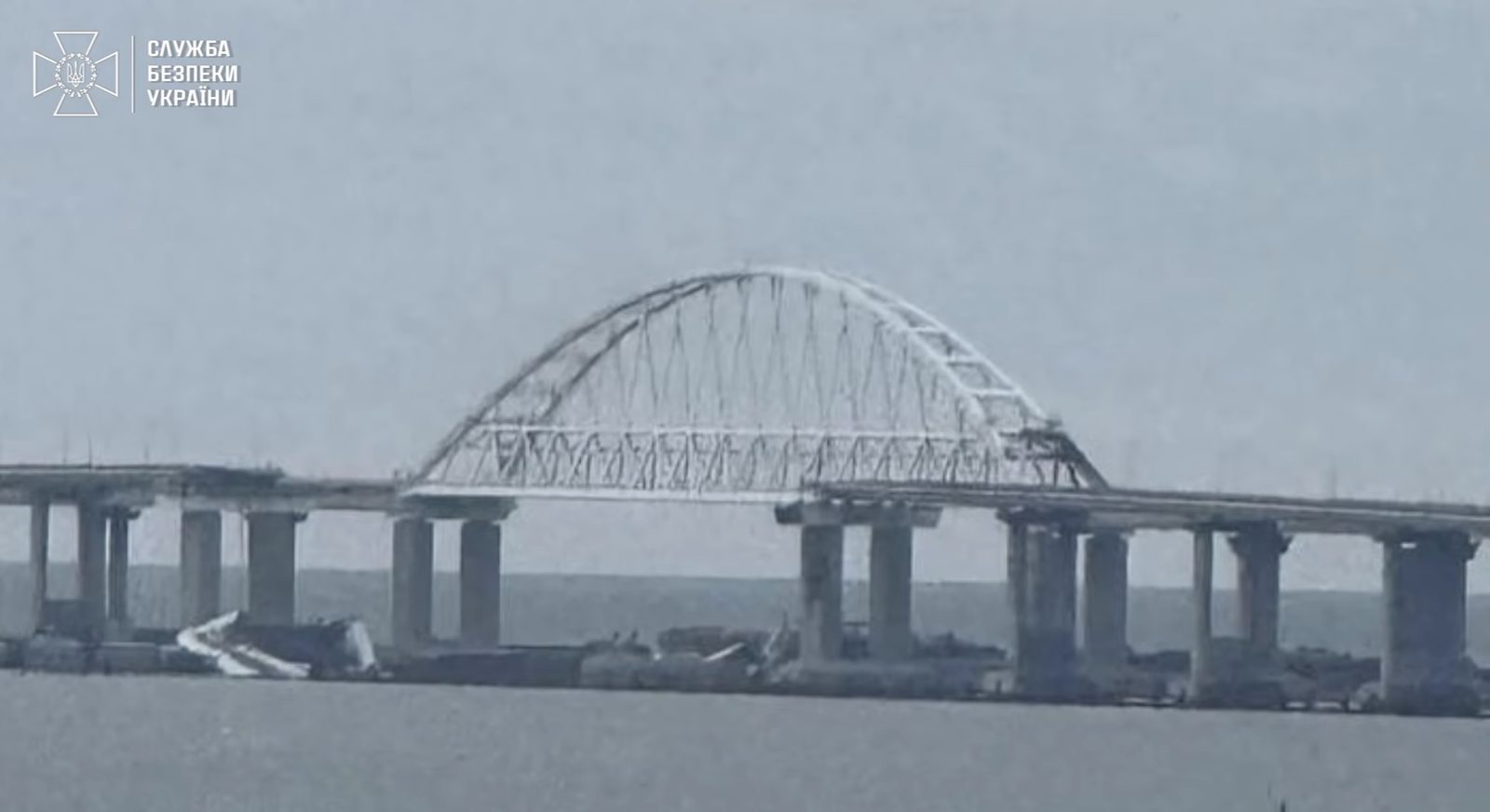 After. The road span under the arch lies in the water; the rail arch still stands. Released by the SBU on 17 November.
- From space, 16 and 19 November. Left: both arches standing on the 16th, after the first attack. Right: on the 19th the road arch and its deck are gone; the rail arch stands. Vantor told Business Insider it saw no repair work on or near the bridge and no shipping in the strait.
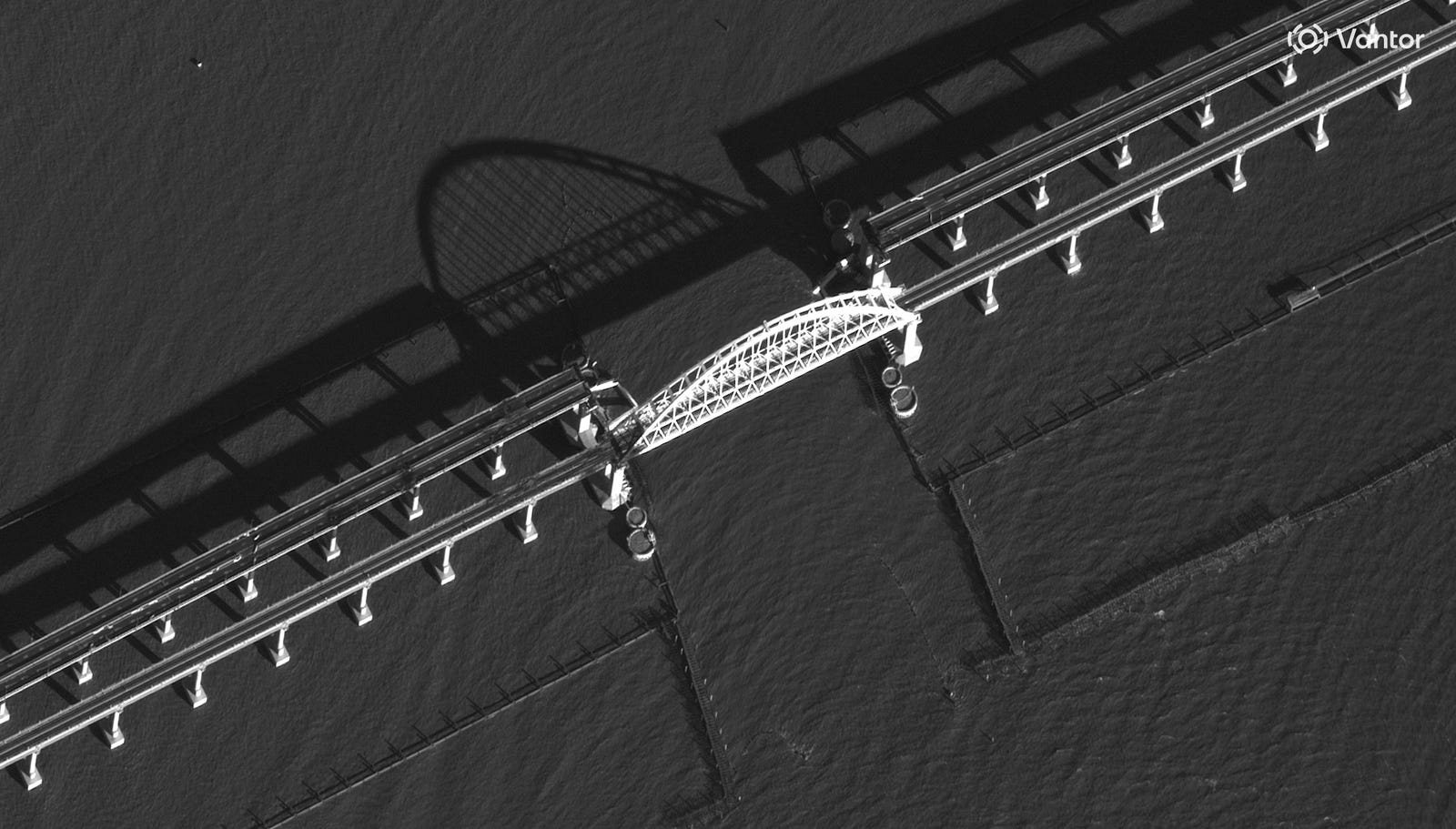 The navigation channel on 19 November, after the third strike: the rail arch with its deck in place, the road deck ending at the piers on both sides of the gap.
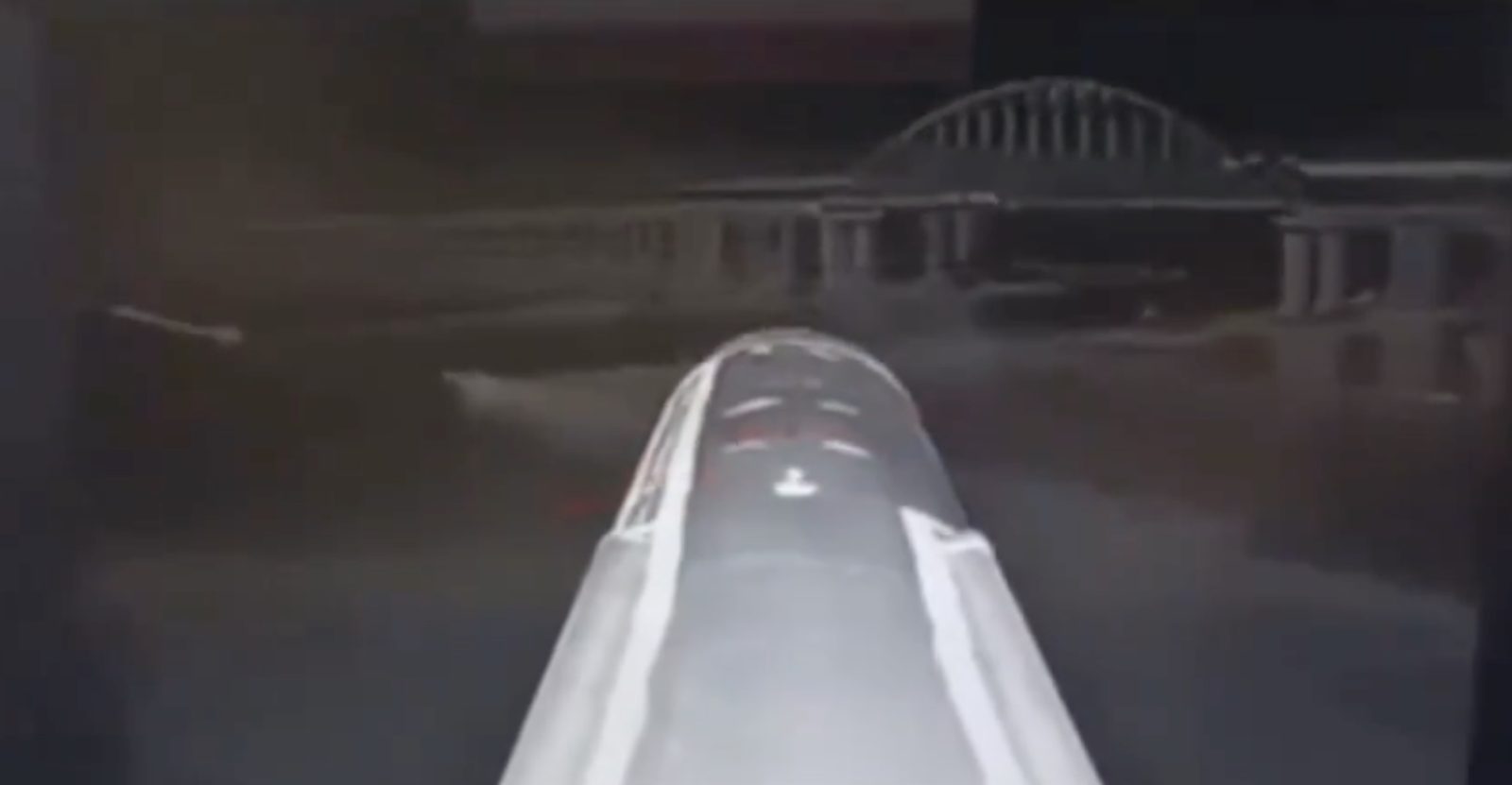 The view from an FP-5 Flamingo's nose camera as it approaches the bridge, from the video Zelensky published.
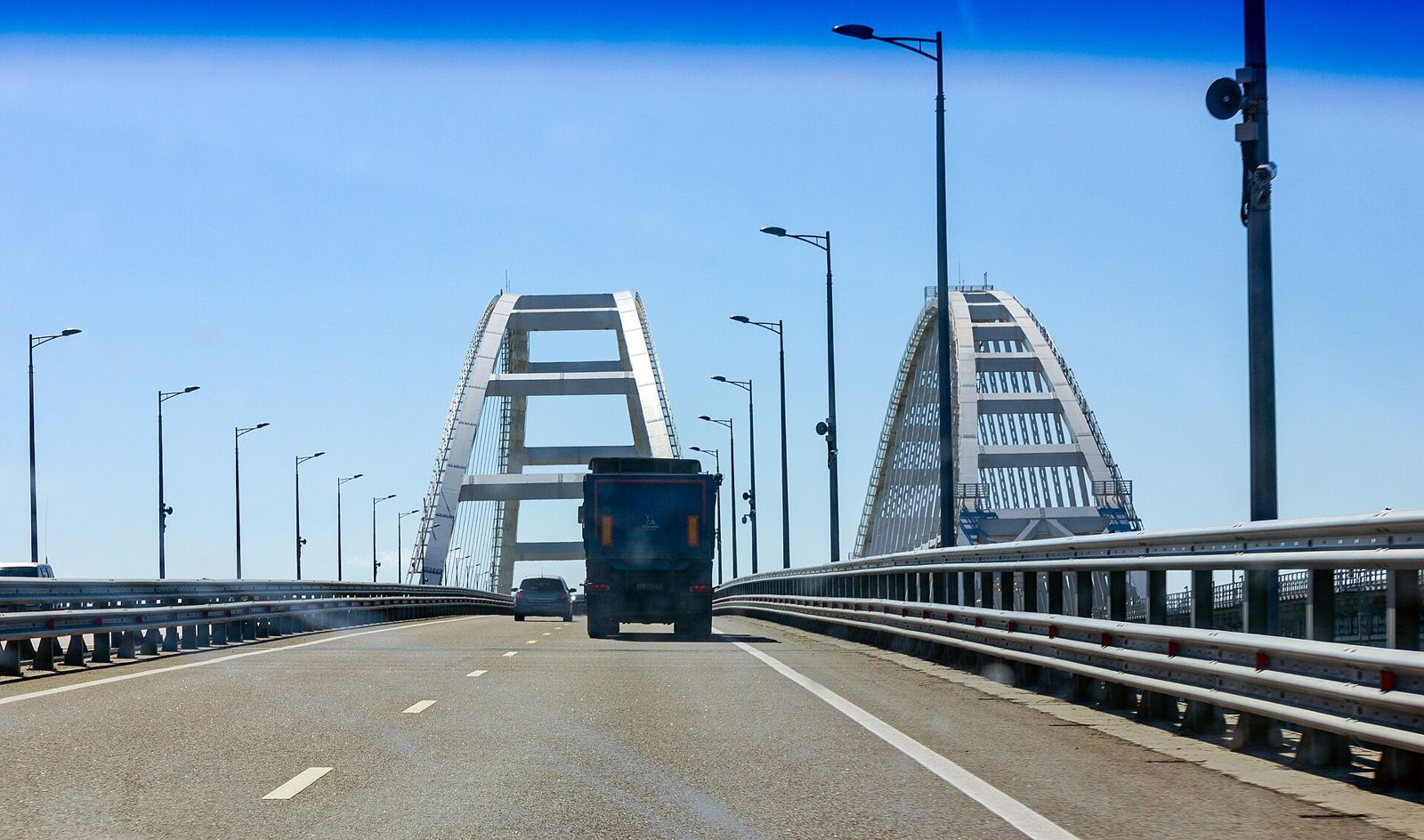 Before. The bridge's twin arches over the Kerch–Yenikale channel in September 2020, the road arch in front and the rail arch behind.
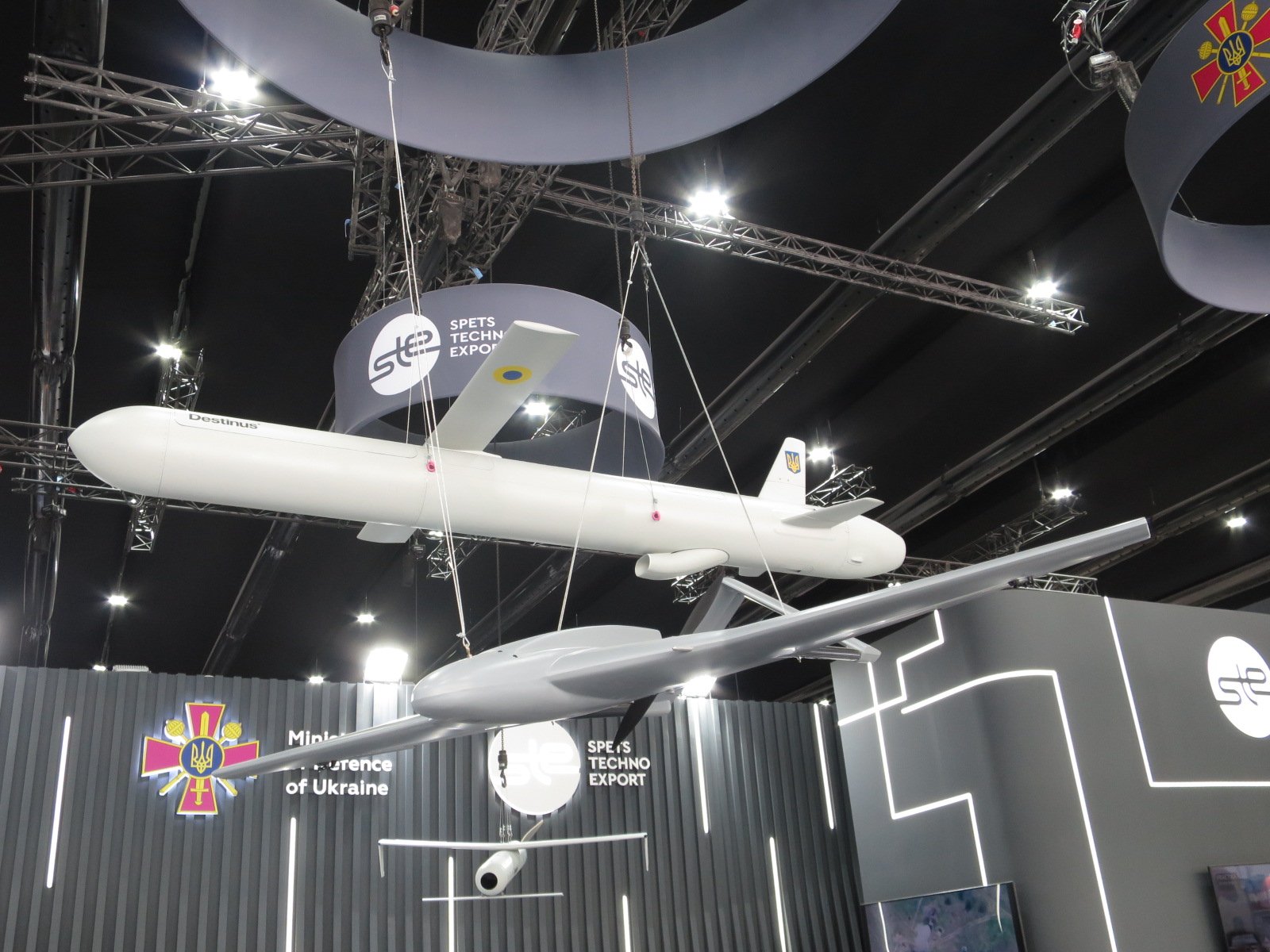 The Ruta, built by Destinus in Hengelo, in Ukrainian markings on the Ukrainian Defence Ministry stand at IDEX 2025 in Abu Dhabi.
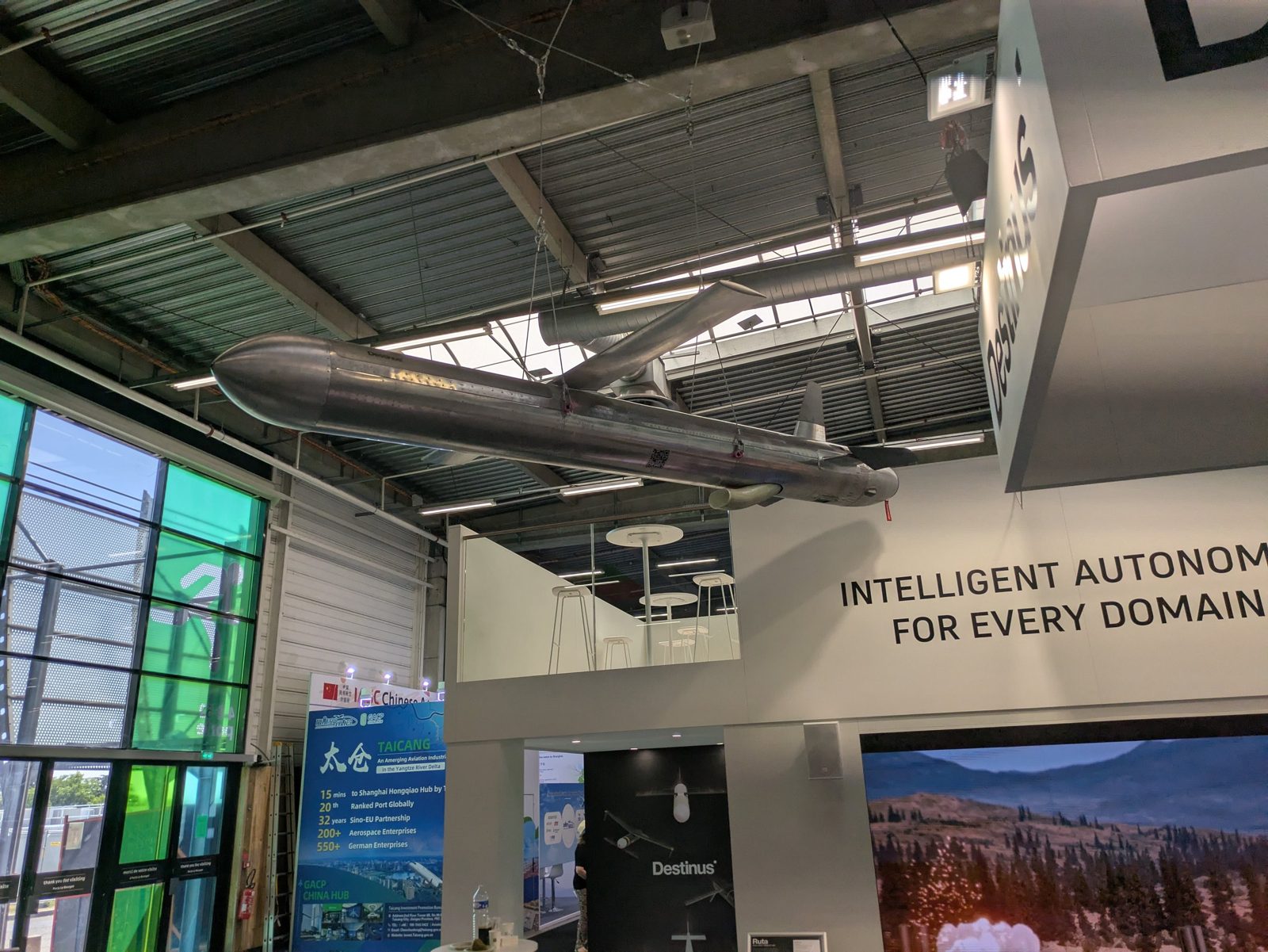 A Ruta on the Destinus stand at the Paris Air Show, June 2025.
Photos: Vantor/Reuters, via The Guardian (used as news reporting) · Security Service of Ukraine, via Wikimedia Commons (CC BY 4.0) · Satellite image ©2026 Vantor, via Business Insider (used as news reporting) · Office of the President of Ukraine, via Wikimedia Commons (CC BY 4.0) · Bestalex, Wikimedia Commons (CC0) · Mztourist, Wikimedia Commons (CC BY 4.0) · Artvill, Wikimedia Commons (CC BY 4.0)
From the channels
Video Serhii Sternenko 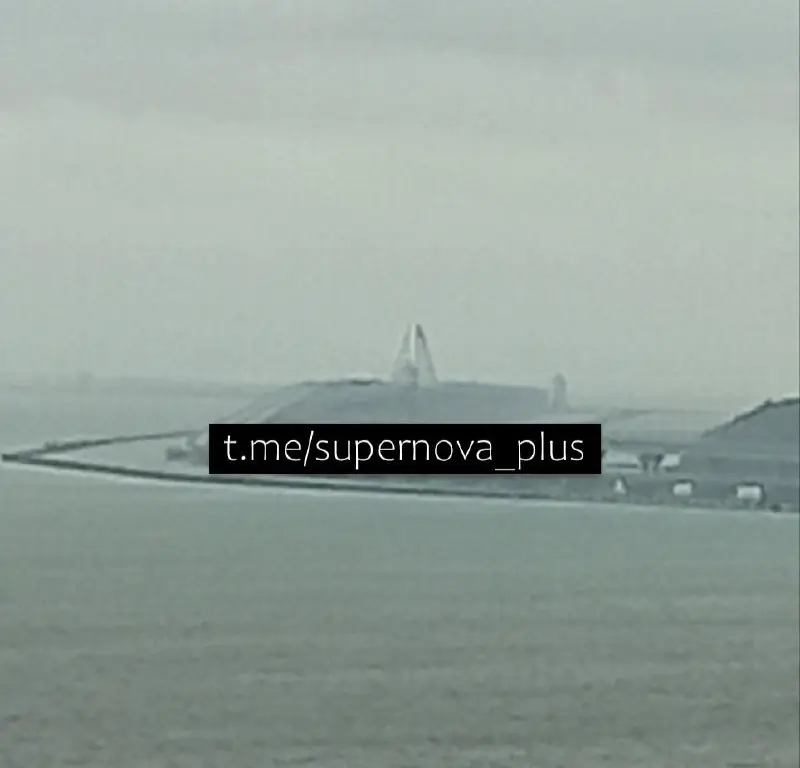
photo Supernova+ 
screenshot Exilenova+ 
Video Crimean Wind 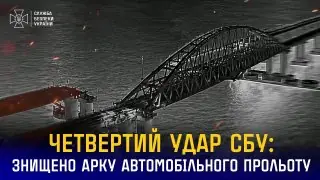
Video SBU 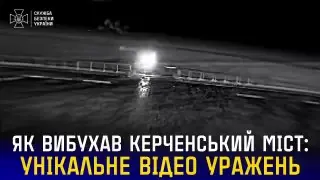
Video SBU 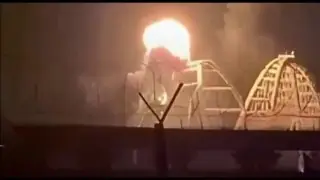
Video Crimean Wind 
Video Crimean Wind 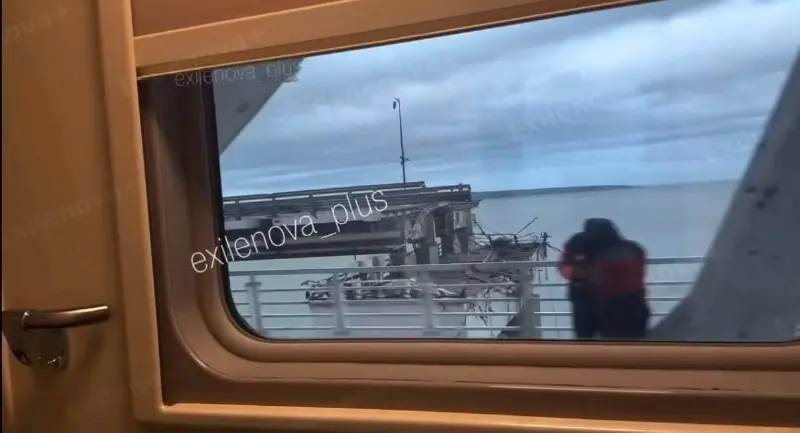
screenshot Crimean Wind 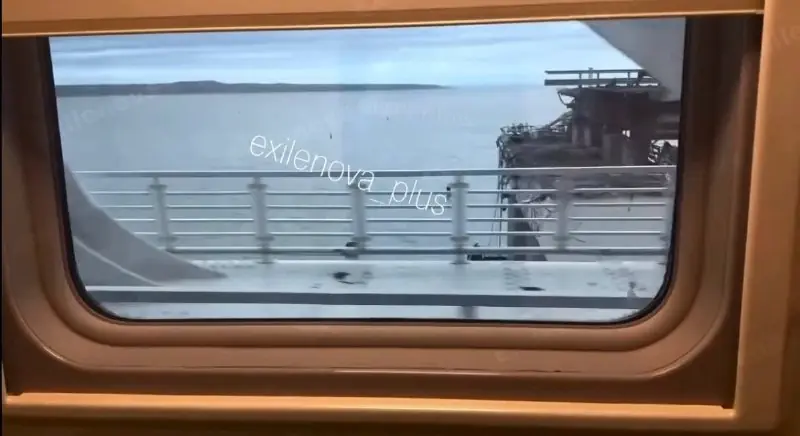
photo Crimean Wind 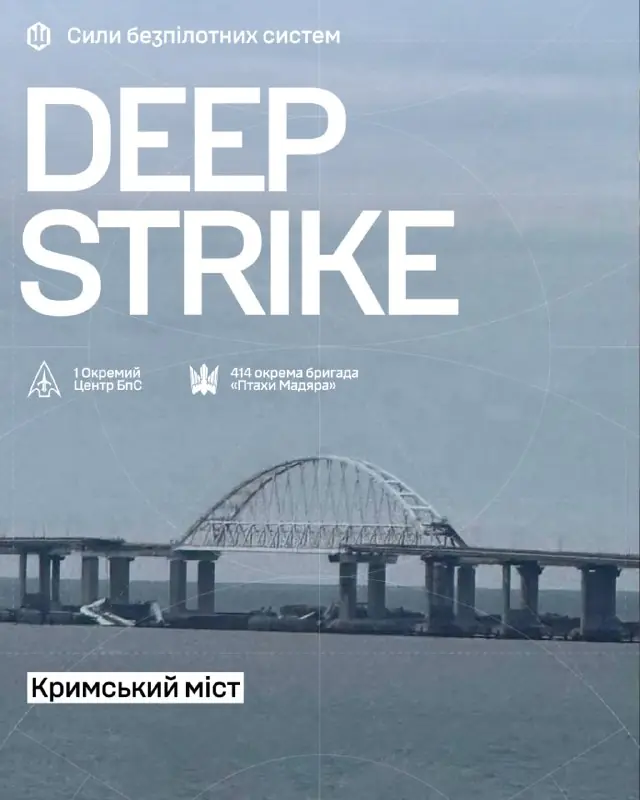
photo Unmanned Systems Forces 
photo Exilenova+ 
photo Exilenova+ 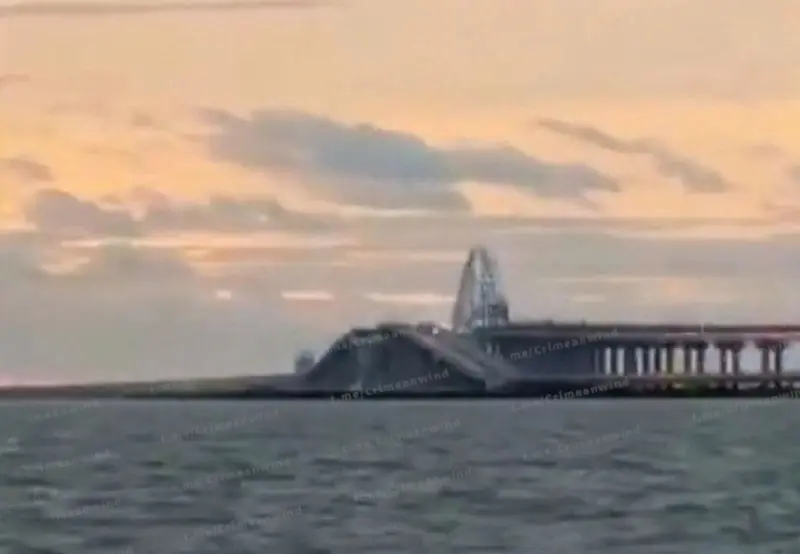
photo Crimean Wind 
photo Crimean Wind photo Mykola Lukashuk 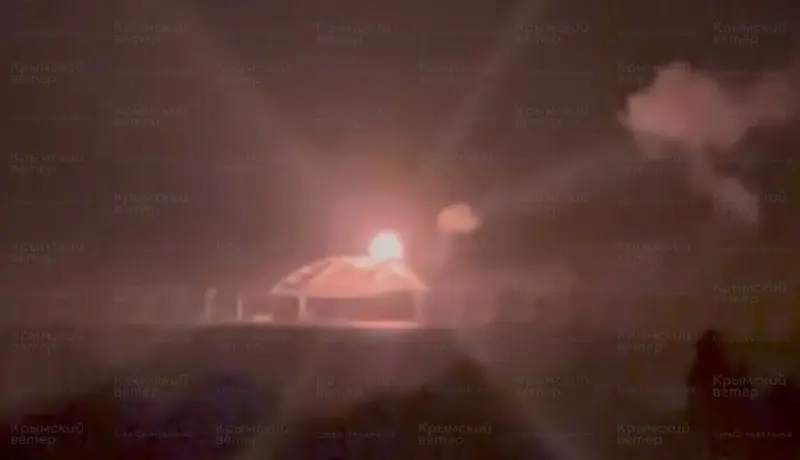
photo Crimean Wind 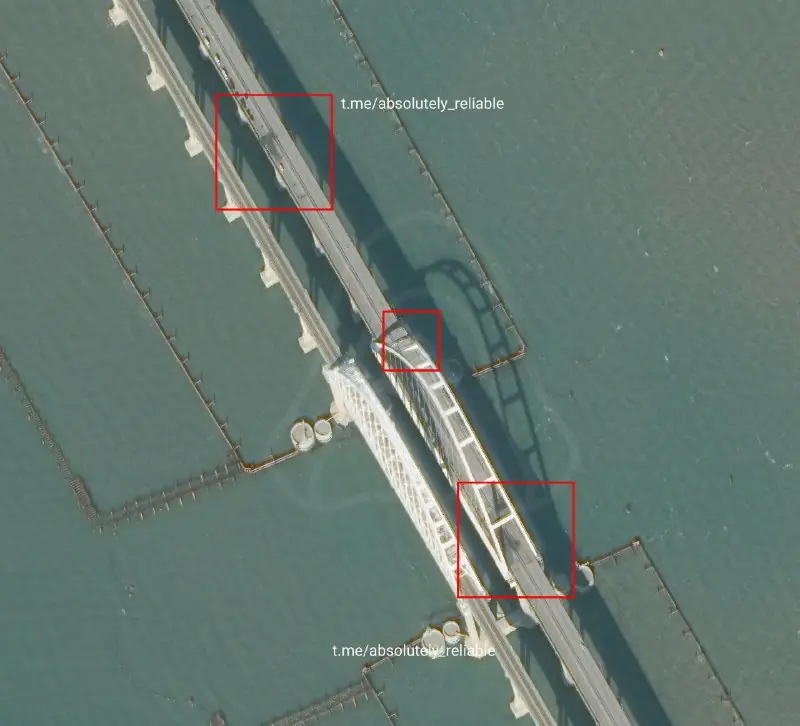
satellite image Exilenova+ 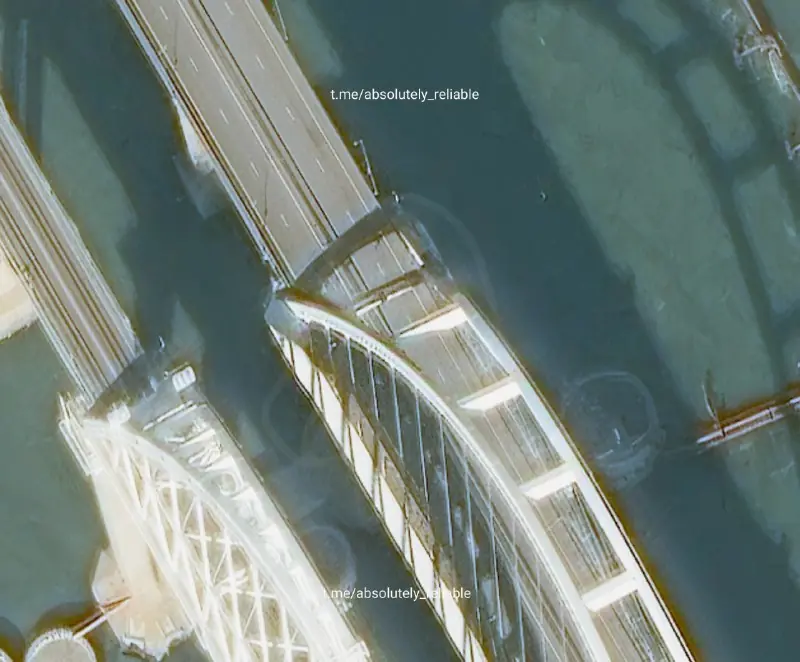
satellite image Exilenova+ 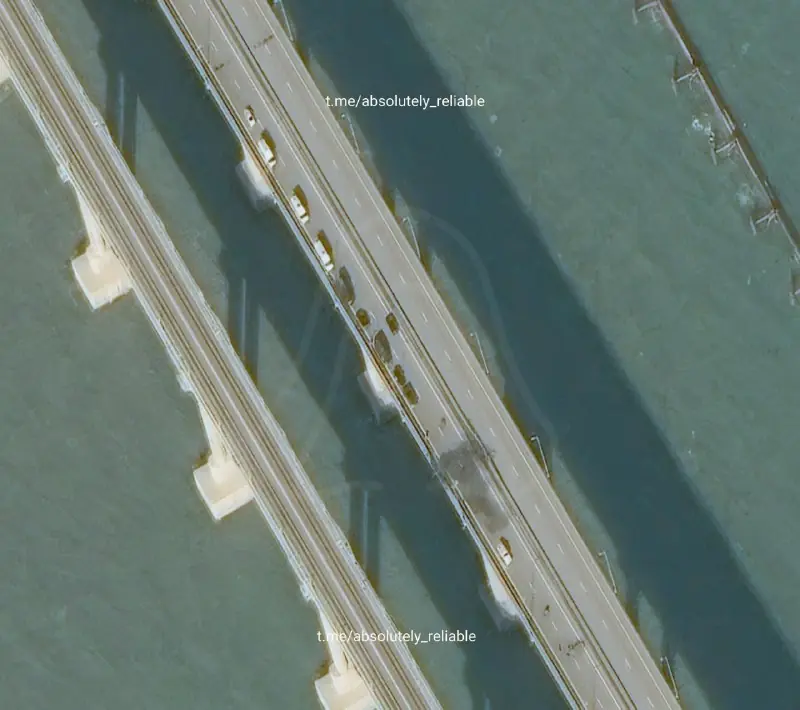
satellite image Exilenova+ 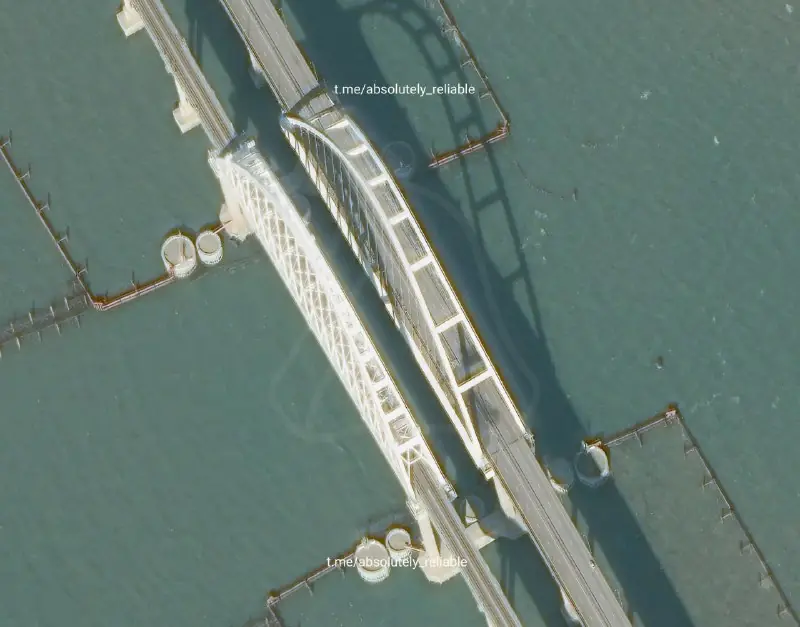
satellite image Exilenova+ 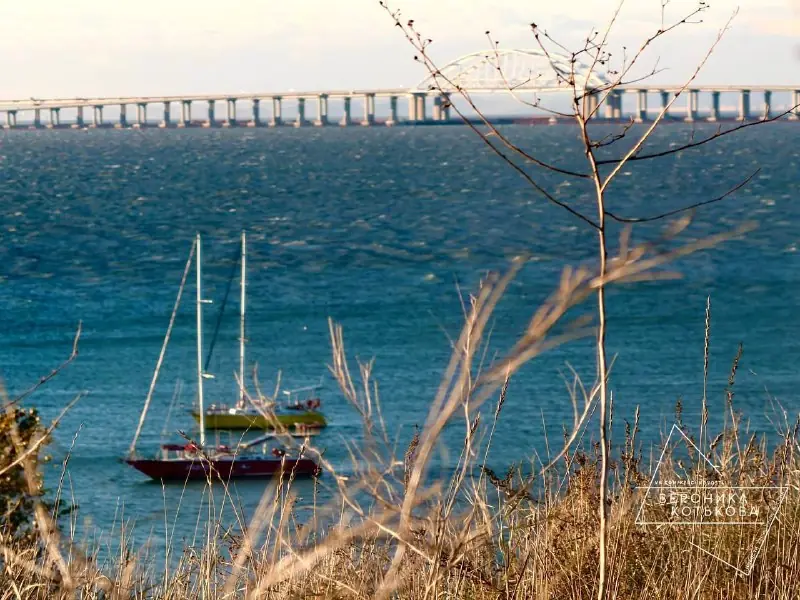
photo Mash 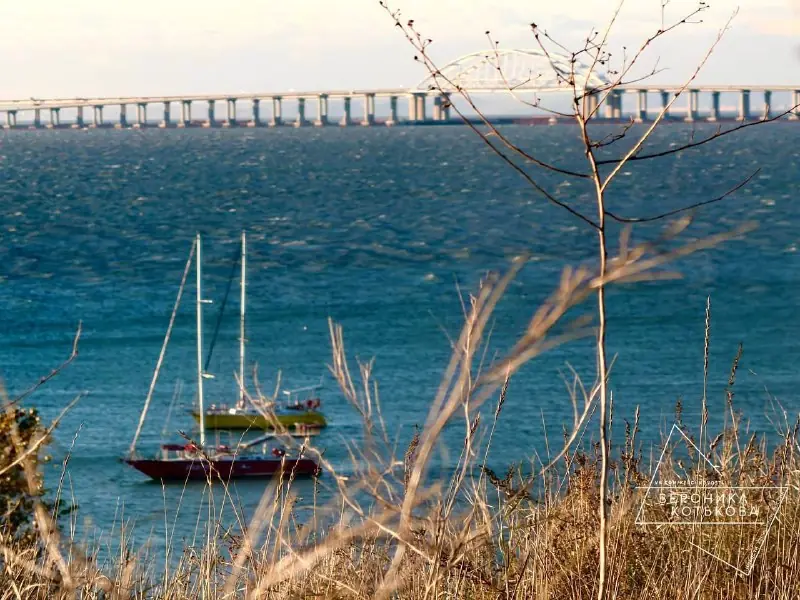
photo MIG Rossii 
Video Volodymyr Zelensky 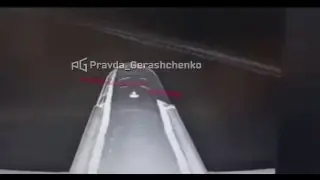
Video Crimean Wind 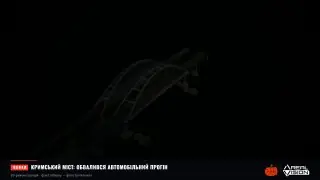
Video Dnipro Osint 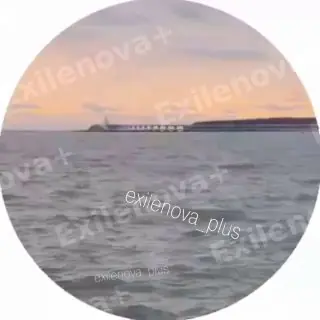
Video Crimean Wind 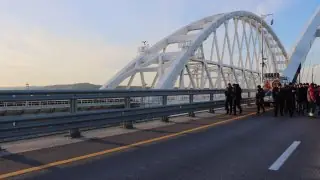
Video Sergei Aksyonov 
document MID_RussiaD 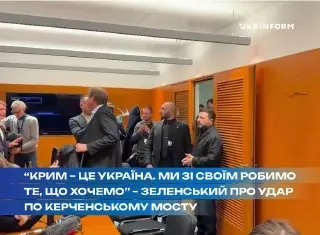
Video UkraineNowD 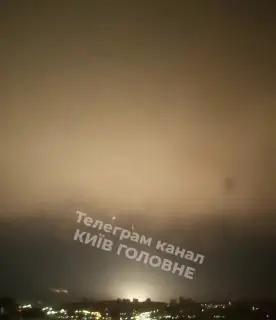
Video agentstvonewsB 
Video agentstvonewsB 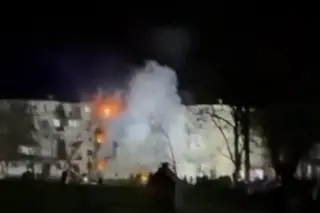
Video clashreportC 
Video clashreportC 
photo MID_RussiaD
Video

Hoe werknemers van een Nederlands bedrijf meedoen in de Oekraïne-oorlogNRC

Russia says Crimea bridge damaged in third attackWION

Керченский мост атаковали в третий раз за четыре дняBelsat (Вот так)
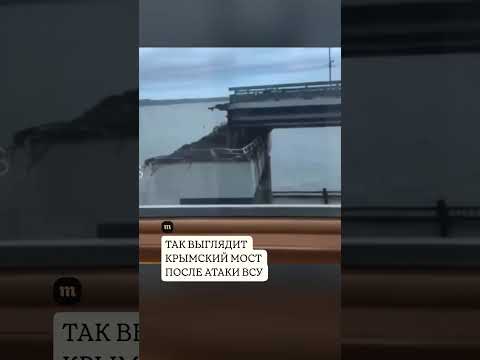
Так выглядит Крымский мост после атаки ВСУ. Видео из поездаMeduza

Rusland haalt uit naar Nederland na Oekraïense aanval op Krimbrug met Nederlandse rakettenBNR

«Довгий Нептун» на 1000 км: від КБ «Луч» до удару по Кримському мосту5 канал

Ukraine releases video it says shows strikes on key Crimea bridgeReuters
Ukraine strikes Crimean Bridge with Flamingo missileKyiv Independent

Part of Putin's prized Crimea bridge collapses in 'unprecedented' attackSky News

Inside Kyiv after Ukraine partly collapses Putin's Crimea bridgeBBC News

Ukraine strikes Putin's prized bridge to occupied CrimeaCNN
New video shows damage to Crimean Bridge as train traffic resumesKyiv Independent

Ruta B2 flight testDestinus

Russen vinden Nederlandse kruisraket: dit bedrijf maakt zeNU.nl

Bridges in Kyiv and Crimea closed as Russian and Ukrainian strikes target infrastructureFRANCE 24 English

Kerch Bridge heavily damaged in strikes: first footageUATV English

The arch fell into the sea: the Crimean Bridge destroyed after the attackTSN

Aftermath at Kyiv's Northern Bridge after Russian missile strikeKyiv Independent

Ukraine hits key Crimea bridge with dronesFRANCE 24 English

Why Ukraine's New Strike on the Crimean Bridge Will Cause Russia the Most Problems So FarWilliam Spaniel
On Telegram
- Telegram channel:Third attack: missiles flying over and explosions near the bridge (unverified) Crimean Wind
- Telegram channel:Hits on the rail section in the night of 18–19 November Serhii Sternenko
- Telegram channel, Russian side:Aksyonov: trains back from 16:00 Sergei Aksyonov
- Telegram channel:Queues at filling stations in Crimea Crimean Wind
- Telegram channel:The SBU's statement: seven stages, Palianytsia on the road section SBU
- Telegram channel:Hits at the mounts of the steel arch SBU
- Telegram channel:The moment the road arch falls Crimean Wind
- Telegram channel:Three FP-5 Flamingos launched at the bridge Crimean Wind
- Telegram channel:Zelensky's statement with footage of the strike Volodymyr Zelensky
- Telegram channel:Footage said to be from the FP-5 Flamingo's camera before impact Crimean Wind
- Telegram channel:The impact at night Dnipro Osint
- Telegram channel:3D reconstruction of the collapsed span Dnipro Osint
- Telegram channel:The bridge in daylight after the collapse Crimean Wind
- Telegram channel, Russian side:Aksyonov and Khusnullin on the bridge after the first strike Sergei Aksyonov
The same night in Kyiv
From our OSINT desk
- Ukrainian drone strikes hit Crimean Bridge arch
Ukrainian drone forces have struck the Crimean Bridge railway arch for a second time, with Russian milbloggers confirming hits but noting no structural collapse.
- Ukrainian drones strike Crimean Bridge, deforming arch
Russian sources report a second drone strike on the Crimean Bridge on 16 Nov, causing arch deformation and suspending traffic, following an earlier attack that day.
- Russian MoD claims record drone interceptions overnight
Russian MoD claims to have intercepted 1,336 Ukrainian drones overnight, with approximately 600 targeting the Moscow region.
Sources
- Telegram channel:Tavria trains to and from Kerch-Yuzhnaya Novy Park until 30 November · Grand Service Express (Telegram) · 2026-11-20
- Fixing the Crimean Bridge could take Russia two years · UNITED24 · 2026-11-20
- Russia lacks technical capacity to repair Crimean bridge - Pletenchuk · Ukrinform · 2026-11-21
- Правительство определило этапы восстановления Крымского моста после атак · TKS.ru · 2026-11-23
- Russia lost the Kerch bridge's road span, and ISW expects Russian supply to occupied Crimea to suffer · Euromaidan Press · 2026-11-23
- Impacts Of Latest Neptune Missile Strike On Kerch Bridge Seen In Satellite Imagery · The War Zone · 2026-11-19
- Повреждения Крымского моста: новый спутниковый снимок · Radio Svoboda · 2026-11-20
- Khusnullin on the damaged arch span and two restoration options · Fontanka · 2026-11-20
- Khusnullin: some elements in a month or two · Fontanka · 2026-11-19
- Putin says he will hit back hard after Ukraine strikes Crimea bridge again (Reuters) · RNZ · 2026-11-19
- Kerch Bridge destroyed · RFE/RL · 2026-11-18
- Погода подвела: Крымский мост 20 ноября · AiF Kuban · 2026-11-20
- Fuel restrictions reportedly cause gas station queues in occupied Sevastopol after Crimean Bridge strikes · Kyiv Independent · 2026-11-19
- Recovery fleet at the Crimean Bridge · Vërstka · 2026-11-18
- Zakharova: the Crimean Bridge will be restored · VZ · 2026-11-20
- Telegram channel:Керченський міст. Сила спільних зусиль · Fire Point · 2026-11-19
- Telegram channel:Flamingo strikes on the Kerch bridge: two missiles hit · Fire Point · 2026-11-17
- Yeşilgöz wil niet ingaan op NRC-onthullingen over Destinus (ANP) · Reformatorisch Dagblad · 2026-11-19
- Exportcontrole is zorgvuldig, zegt Sjoerdsma na bericht Destinus (ANP) · Reformatorisch Dagblad · 2026-11-19
- Goedgevulde geldruif van Defensie trekt meer standhouders dan ooit naar Rotterdamse wapenbeurs · Reformatorisch Dagblad (Riekelt Pasterkamp) · 2026-11-20
- Medewerkers Nederlandse wapenfabrikant vochten mogelijk mee in oorlog Oekraïne: de gevolgen voor ons land · EenVandaag · 2026-11-19
- Experts roepen minister Yesilgöz op: houd wapenfabrikant Destinus in de gaten · NOS Nieuwsuur · 2026-11-19
- 19-11 in Nieuwsuur: Nederlandse wapenfabrikant schoot zelf drones af in Oekraïne · NOS Nieuwsuur · 2026-11-19
- Wapenfabrikant trots op wapens die Krimbrug raakten, maar in dorp zijn ze niet blij: 'Belachelijk' · Omroep West · 2026-11-19
- Trots · RTV Oost · 2026-11-20
- De bizarre link tussen twee Hengelose bedrijven en de verwoeste Krimbrug · RTV Oost · 2026-11-17
- Jetten: Nederland laat zich niet intimideren (liveblog on the Dutch embassy in Kyiv) · NOS · 2026-11-19
- Nederland roept Russische ambassadeur op het matje voor projectiel bij ambassade · NOS · 2026-11-19
- BZ ontbiedt Russische ambassadeur om projectiel bij ambassade (ANP) · Reformatorisch Dagblad · 2026-11-19
- Den Haag roept Rusland op het matje na inslag bij Nederlandse ambassade in Kyiv · Reformatorisch Dagblad · 2026-11-19
- Dutch embassy damaged in Russian drone strike on Kyiv · The Kyiv Independent · 2026-11-19
- Russian drone crashes behind Dutch embassy in Kyiv, causing damage · NL Times · 2026-11-19
- Netherlands Summons Russian Ambassador as Kyiv Embassy Hit · The Moscow Times · 2026-11-19
- Berendsen on the projectile behind the embassy · Dutch Foreign Minister (X) · 2026-11-19
- Telegram channel, Russian side:Zakharova on Destinus and the Crimean Bridge · Russian Foreign Ministry (Telegram) · 2026-11-20
- Telegram channel:Three Kyiv bridges damaged in ballistic missile attack · Vitali Klitschko (Telegram) · 2026-11-20
- 3 Kyiv bridges struck in massive Russian aerial assault on Ukraine · The Kyiv Independent · 2026-11-20
- Telegram channel:Russia hits three bridges in Kyiv after Putin promised escalation · Agentstvo (Telegram) · 2026-11-20
- Before-and-after satellite images show the damage Ukraine did to Russia's Crimean Bridge · Business Insider · 2026-11-19
- Hengelo's raadslid wil raad bijeen laten roepen om kwestie Destinus · 1Twente · 2026-11-19
- Putin vows painful retaliation to Crimean Bridge attacks · The Moscow Times · 2026-11-19
- Putin on ceasefire talks after the Crimean Bridge strike (RIA Novosti) · RIA Novosti via Mail.ru · 2026-11-19
- Telegram channel:"After the strikes on the Crimean bridge we will not negotiate" · TASS (Telegram) · 2026-11-19
- Telegram channel:Putin calls the bridge an exclusively peaceful object · TASS (Telegram) · 2026-11-19
- Telegram channel:Putin on a "more painful" response · TASS (Telegram) · 2026-11-19
- Putin's press conference in Shenzhen · Kommersant · 2026-11-19
- Putin on protecting the Novorossiya highway · Interfax · 2026-11-19
- Telegram channel:First track of the rail section open · Russian Transport Ministry (Telegram) · 2026-11-19
- Telegram channel:All delayed Tavria trains have reached Kerch · Grand Service Express (Telegram) · 2026-11-19
- Nikitin on the second rail track · Interfax · 2026-11-19
- Telegram channel:Restoration plan fully agreed · TASS (Telegram) · 2026-11-19
- Telegram channel:"8–10 hits" on the rail arch and deck · Crimean Wind (Telegram) · 2026-11-19
- Telegram channel:Satellite images of the Crimean bridge (undated) · Supernova+ (Telegram) · 2026-11-19
- Russische ambassade: burgers mogen geen oorlogsdaden verrichten · ANP / Reformatorisch Dagblad · 2026-11-19
- Jetten doet dreigende taal Moskou om Destinus af als zwaktebod · ANP / Reformatorisch Dagblad · 2026-11-19
- The engineering parameters of an attack on the Crimean bridge were ready in summer 2025 · The Insider · 2026-11-19
- At least ten vessels at the fallen arch · The Insider · 2026-11-18
- Telegram channel:"Many months" to restore the road span · Krym.Realii (RFE/RL) · 2026-11-19
- Telegram channel:Neptune coastal missile systems struck the Kerch bridge · General Staff of the Armed Forces of Ukraine · 2026-11-19
- Telegram channel:"The train goes no further" · Ministry of Defence of Ukraine · 2026-11-19
- Telegram channel:Train traffic on the rail section suspended · Russian Transport Ministry · 2026-11-19
- Telegram channel:Traffic closed after another attack · Sergei Aksyonov · 2026-11-18
- Telegram channel:Trains to resume from 16:00 · Sergei Aksyonov · 2026-11-19
- 'Please vacate Crimea': Crimean Bridge hit by Neptune missiles, Ukraine confirms, railway traffic halted · Kyiv Independent · 2026-11-19
- Kerch Bridge attacked for third time in a week: trains halted, Ukraine hints at strike · Ukrainska Pravda · 2026-11-19
- Ukraine Attacks Railway Section of Crimean (Kerch) Bridge, Halting Train Traffic · Militarnyi · 2026-11-19
- Telegram channel:Passenger boats across the strait from 20 November · Krym.Realii (RFE/RL) · 2026-11-19
- Let's hunt down some damn shahed-drones! Hoe een Nederlands bedrijf meedoet in de oorlog in Oekraïne · NRC (Carola Houtekamer · 2026-11-19
- Statement by Destinus to NRC · Destinus via NRC · 2026-11-19
- NRC: medewerkers Nederlandse wapenfabrikant schoten zelf drones af in Oekraïne · NOS · 2026-11-19
- Yeşilgöz wil niet ingaan op NRC-onthullingen over Destinus · Villamedia (ANP) · 2026-11-19
- Dutch arms maker's staff hunted Russian drones in Ukraine: NRC · DutchNews · 2026-11-19
- Russian Offensive Campaign Assessment, November 16, 2026 · Institute for the Study of War · 2026-11-16
- Russian Controlled Highways in Occupied Ukraine (map) · Institute for the Study of War · 2026-11-18
- Telegram channel:Statement on the Crimean Bridge operation · Volodymyr Zelensky (Telegram) · 2026-11-17
- Telegram channel:Units involved in the operation · Robert Brovdi (Telegram) · 2026-11-17
- Telegram channel:Road and rail traffic suspended after a repeated attack · Russian Transport Ministry (Telegram) · 2026-11-17
- Telegram channel:Road section closed after a UAV attack · Russian Transport Ministry (Telegram) · 2026-11-16
- Telegram channel:"The adversary attacked the Crimean Bridge again" · Sergei Aksyonov (Telegram) · 2026-11-16
- Telegram channel:Investigative Committee opens a terrorism case · ASTRA · 2026-11-17
- Telegram channel, Russian side:Overnight drone interception claim · Russian Defence Ministry (Telegram) · 2026-11-17
- Kerch Bridge struck for the second time in less than 24 hours · The War Zone · 2026-11-17
- Russia's prized Kerch Bridge struck in Ukrainian drone onslaught · The War Zone · 2026-11-16
- Ukrainian forces reportedly strike Crimean Bridge after Russian missiles hit Kyiv bridges · Kyiv Independent · 2026-11-17
- Flamingo missiles used to destroy road section of Crimean Bridge · Militarnyi · 2026-11-17
- Ukrainian strike sends more than 270 meters of Russia's Crimean Bridge into the sea · UNITED24 Media · 2026-11-17
- Telegram channel, Russian side:"The most serious" damage since 2022 · Rybar (Telegram) · 2026-11-17
- Telegram channel:The arch blocks the only deep-water channel · Crimean Wind (Telegram) · 2026-11-17
- Telegram channel:Tavria trains delayed 2.5 to 4 hours · ASTRA · 2026-11-17
- Ukrainian drone damages navigation span of Kerch Strait Bridge · The Maritime Executive · 2026-11-16
- War live coverage · Meduza · 2026-11-17
- Dedication by Fire Point's Denys Shtilierman · X · 2026-11-17
- Telegram channel:Two killed in Kyiv's Obolon district · State Emergency Service of Ukraine (Telegram) · 2026-11-17
- What we know about Ukraine's strikes that cut Russia's Kerch Bridge road vehicle span · The War Zone · 2026-11-17
- Nederlandse rakettenbouwer claimt grote rol bij slopen Krimbrug · ANP / Reformatorisch Dagblad · 2026-11-17
- Krimbrug deels ingestort · Defence Watch · 2026-11-17
- Europe's Ruta missiles hit Crimean Bridge seven times · UNITED24 Media · 2026-11-17
- Antwoord op Kamervragen over Ruta Block 2 voor Oekraïne · Minister of Defence (Tweede Kamer) · 2026-09-01
- Russian Defence Ministry list of European drone plants · Kommersant · 2026-04-15
- Telegram channel, Russian side:Russian embassy in The Hague names Destinus · Russian Foreign Ministry (Telegram) · 2026-04-17
- Telegram channel, Russian side:"A sign of NATO's direct participation" · Two Majors (Telegram) · 2026-11-17
- Zakharova on the bridge strikes · Lenta.ru · 2026-11-17
- Destinus unveils new counter-rocket interceptor · Breaking Defense · 2026-07-21
- European firms plan exo-atmospheric interceptor for 2027 test · Defense News · 2026-07-15
- Telegram channel, Russian side:Russian claim of strikes on Kyiv's bridges and missile plants · Russian Defence Ministry (Telegram) · 2026-11-17
- Telegram channel:Operation statement: seven stages, Alpha unit, Palianytsia · SBU (Telegram) · 2026-11-17
- Telegram channel:Units and signal relay for the final strike · Unmanned Systems Forces (Telegram) · 2026-11-17
- Telegram channel:"The road part is dead" · General Staff of Ukraine (Telegram) · 2026-11-17
- Telegram channel:EW stations hit near Yakovenkove and Priazovsky · General Staff of Ukraine (Telegram) · 2026-11-17
- Telegram channel:Two Pantsir systems hit in Crimea · General Staff of Ukraine (Telegram) · 2026-11-04
- European-made Ruta missiles only foreign weapons used in Ukraine's Crimean bridge strike · Reuters · 2026-11-17
- Fire Point statement and Flamingo launch video · NV · 2026-11-17
- How Ukraine struck the Kerch bridge · The Guardian · 2026-11-17
- Crimean bridge damage and repair estimates · BBC News · 2026-11-17
- Ukraine sidesteps Starlink throttling with Crimea bridge strike · The Moscow Times · 2026-11-18
- Russia asks if Netherlands is joining Ukraine war · The Moscow Times · 2026-11-18
- Nederlandse wapenfabrikant laat wereld weten: onze raketten troffen Krimbrug · NOS · 2026-11-17
- Russische ambassade reageert op Krimbrugaanval: doet Den Haag mee aan conflict? · NOS · 2026-11-18
- Berendsen geen details bekend over rol Destinus bij aanval Krim · ANP / Reformatorisch Dagblad · 2026-11-18
- Hengelose raketbouwer trots op aanval Krimbrug, maar hoe veilig is Hengelo? · RTV Oost · 2026-11-18
- Peskov on restoring the bridge · Interfax · 2026-11-17
- How long rebuilding the arch would take (Defense Express) · UNIAN · 2026-11-17
- Telegram channel:Road closed · Russian Transport Ministry (Telegram) · 2026-11-18
- "Crimea is turning into an island" · Al Jazeera · 2026-11-18
- These are the weapons Ukraine used to drop the Kerch Bridge · The War Zone · 2026-11-17
- Ukraine brings down Kerch road span with mixed missile and drone arsenal · bne IntelliNews · 2026-11-18
- Crimean Bridge arch collapses into sea after fresh Ukrainian missile strike · Kyiv Post · 2026-11-17
- Telegram channel:Three FP-5 Flamingo launches at the bridge · Crimean Wind (Telegram) · 2026-11-17
- Ukraine used its own communications system in attack on Crimean (Kerch) Bridge · Militarnyi · 2026-11-18
- Clear satellite images of the Crimean Bridge have emerged after the third strike in a week · UNN · 2026-11-19
- How Ukraine destroyed the Crimean Bridge – the story of a large-scale special operation, seven stages of preparation, and details revealed by the SBU · UNN · 2026-11-19