Delta: inside the AI of Ukraine's battle-management system
Delta puts Ukraine's war on one map: drone video, reports, satellite pictures and strike records from the whole front. Its AI layer is growing fast: Avengers marks enemy equipment in the drone feeds, Avengers Labs sells access to five million annotated battlefield frames, and assistants answer users and help staff officers plan. Almost every figure comes from the Ukrainian Ministry of Defence, and not all of them add up.
Latest
Ukraine's Ministry of Defence announced on 18 November 2026 that Ukraine and Denmark had signed a strategic defence AI cooperation agreement. Under the deal, Denmark joins Avengers Labs to train models on Ukrainian battlefield data. Denmark is the second foreign partner of the programme after Britain, which joined on 25 September 2026.
Sources: Ministry of Defence of Ukraine
Delta is the software in which Ukraine’s war is seen. Drone video, reconnaissance reports, satellite pictures and strike results end up on one map that units from headquarters down to drone crews open in a browser. It was built by the volunteer group Aerorozvidka and is now run by the Ministry of Defence’s Centre for Innovation and Development of Defence Technologies. It had more than 200,000 users by December 2025, the ministry said (Interfax-Ukraine); in 2026 it says the system carries more than 75,000 video streams and records more than 6,600 enemy targets hit every day (Ministry of Defence).
This report looks at the part of Delta that is changing fastest: its artificial intelligence. “Almost every part of Delta now has some AI capability”, the centre’s chief technology officer, Serhii Zahriichuk, told the UK Defence Journal on 21 November, “from detecting objects in video to helping commanders make sense of large volumes of data”. Almost every figure below comes from the Ukrainian Ministry of Defence itself; we mark them as its claims, and point out where they do not add up.
What Delta does
Delta is a cloud system: “cloud-based but cloud-agnostic, meaning it can be hosted in different clouds without major issues”, Zahriichuk said. About a petabyte of traffic passes through it each day, according to the same interview. Its main parts, as the ministry describes them:
- The map: the shared picture of friendly and enemy positions, fed by units, sensors and partners.
- Vezha, “a real-time battlefield video analysis module” with voice communication and joint analysis of drone video (Ministry of Defence, March 2026).
- Avengers, “an AI-driven platform for the automatic detection of enemy vehicles and equipment, including tanks, armored vehicles, and light vehicles” (same release).
- Satellite imagery: data from “several satellite providers”; in July 2026 alone more than 1,700 orthophotos were added, and users are notified when new pictures of their area arrive (Ministry of Defence).
- Strike records: Delta supports the Army of Drones Bonus programme, in which units earn points for confirmed hits; confirmed strikes per month almost doubled in the first half of 2026, from 105,798 to 200,218, the ministry says.
The centre’s deputy head and Delta’s architect, Col. Artem Martynenko, set out the AI plan in 2024: specialised detection models for each kind of camera and drone, a “universal military dataset”, text analysis that turns reports into objects on the map, and a Ukrainian-language assistant (DOU). “There cannot be one super-model that recognises everything on every camera and every kind of video. You need specialised models,” he said. Two years on, parts of that plan are in service.
Avengers: the machine that watches the drone feeds
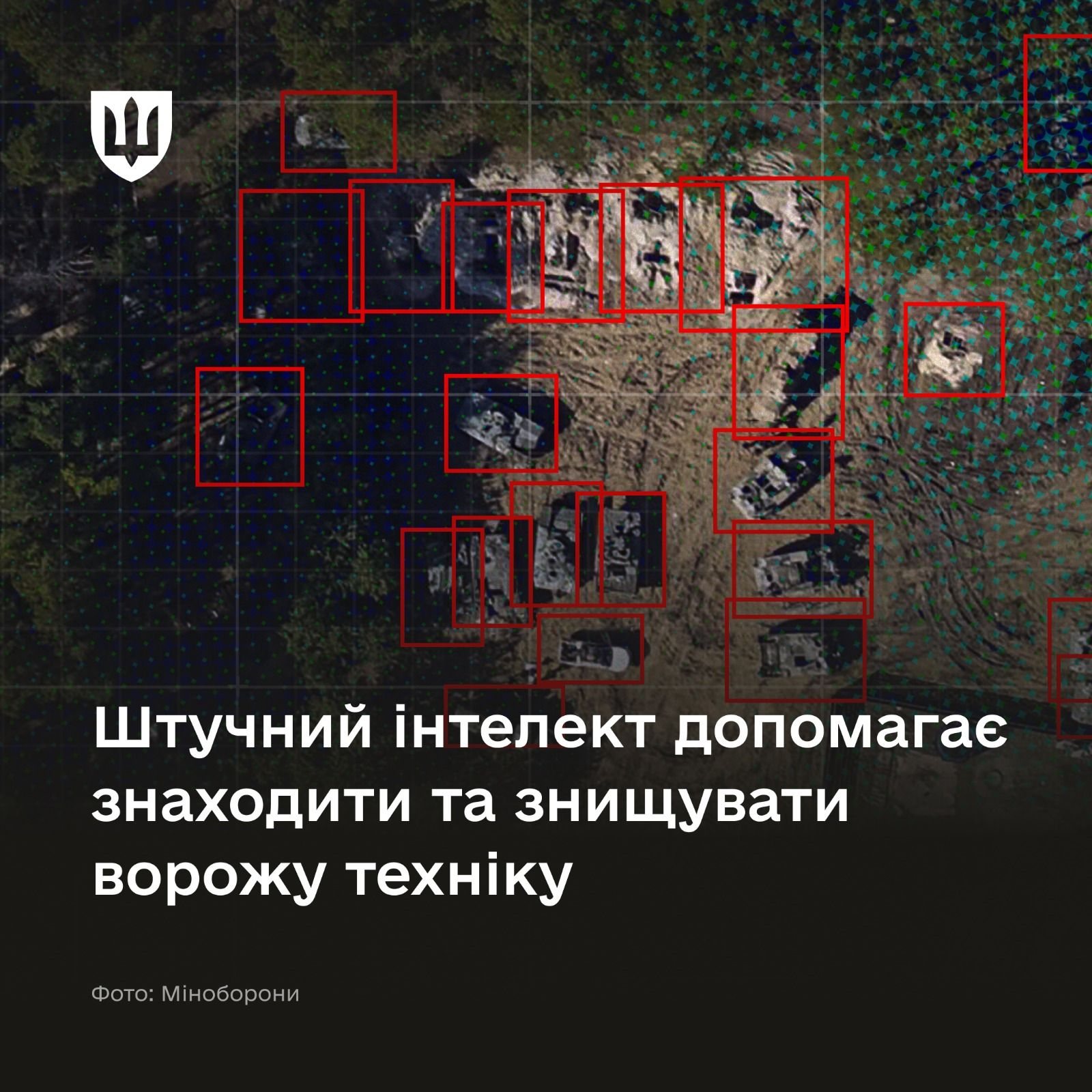
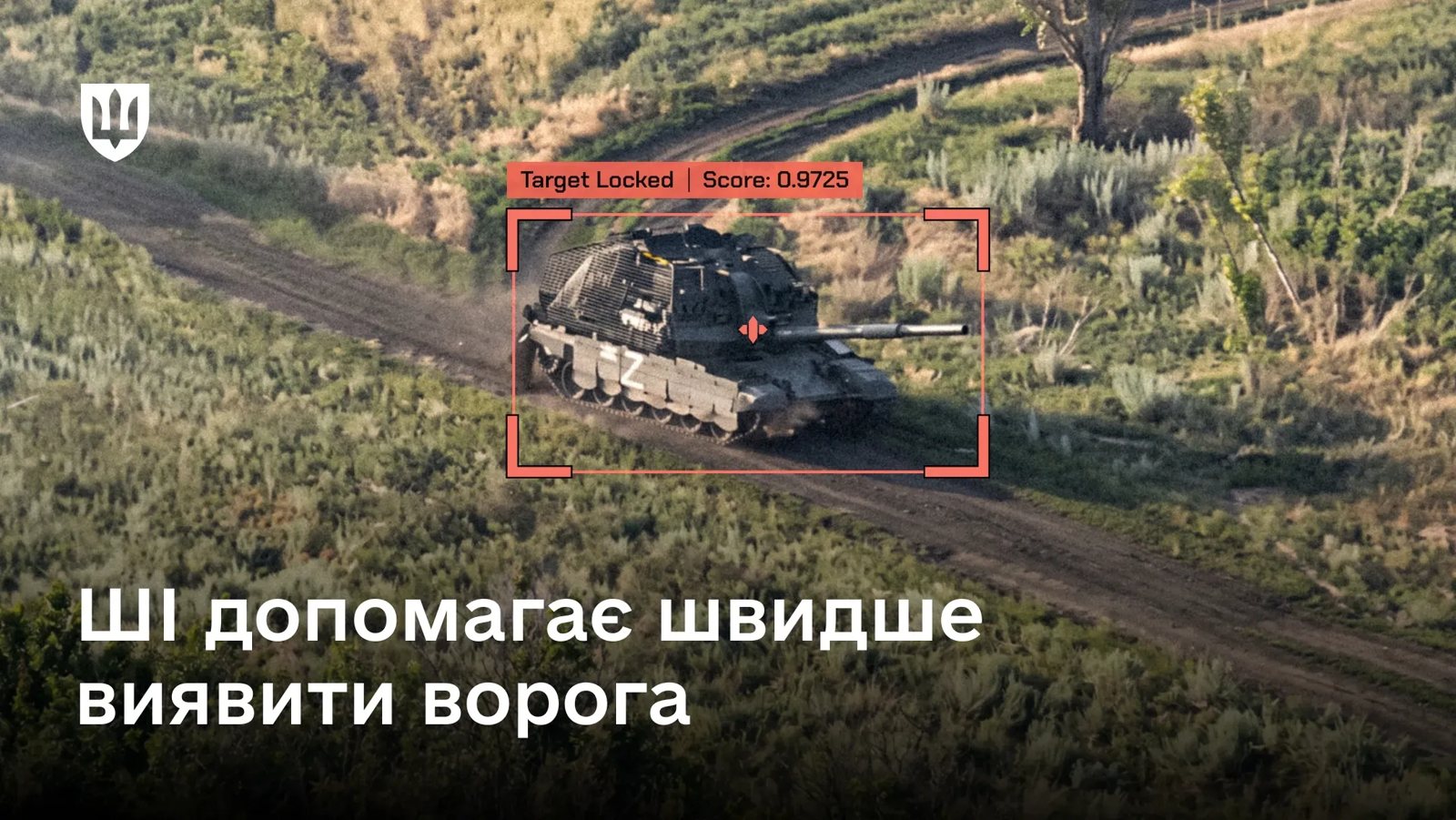
Avengers is the heart of Delta’s AI. It watches video from drones and fixed cameras, draws a box around enemy equipment and, after a person has confirmed it, puts the type and coordinates into Delta.
- Origins. Development “started in spring 2022 thanks to volunteer IT people and data-analytics specialists, and it became a full product at the end of 2023”, its development lead, who goes by the call sign “Yizhak”, told the regional outlet Vchasno. Maksym Korzhenevskyi, who led the group that created it, says the Ministry of Digital Transformation “were the first to believe in it” (dev.ua).
- How it is built. On “open-source solutions available on the market for training neural-network models”, with the biggest costs in cloud infrastructure and rented GPU machines for training (Vchasno). Which models and which hardware has not been published.
- The human step. “The AI analyses these streams faster and gives the imagery interpreters a list of detections to confirm,” the developers told Vchasno. Only then does the information go into Delta.
- What it finds. Tanks, armoured vehicles and light vehicles; the training data also covers artillery, air defence, infantry and air targets such as Shahed drones and reconnaissance UAVs. Since late 2025 it also works at night, a deputy minister said.
The numbers, and why they do not add up
| Claim | Source | Date |
|---|---|---|
| 12,000 pieces of enemy equipment detected a week | Ministry of Defence | Sept 2024 |
| 70% of enemy vehicles in video detected, 2.2 seconds per item | Ministry of Defence, London Defence Conference | May 2025 |
| 10,000 drone streams a day in Vezha; 2,500 verified hits a day | Deputy Minister Yurii Myronenko | Dec 2025 |
| 75,000+ video streams a day through Delta | Ministry of Defence | July 2026 |
| 100,000+ drone streams a month analysed by the detector | Ministry of Defence | Aug 2026 |
| Up to 90% of analysts’ search time saved | Ministry of Defence | Aug 2026 |
Taken together, the figures raise questions. If Delta carries 75,000 streams a day but the detector analyses 100,000 a month, it looks at a small share of the video, or the two figures count different things. “70%” says how much equipment the system finds; no figure has been published for how often it is wrong. The developers themselves said in 2024 that there was “no simple way to measure the equipment hit as a share of the equipment detected”. A developer of a rival Ukrainian system, Oleksandr Dmitriev, warned then that off-the-shelf models “tuned for fixed cameras, not drones that are always moving” can cause false detections, and that “the minimum true-identification threshold that helps a soldier is 80%” (Vchasno). In 2026 the ministry still gives 70%.
Avengers Labs: Ukraine’s battlefield data as a product
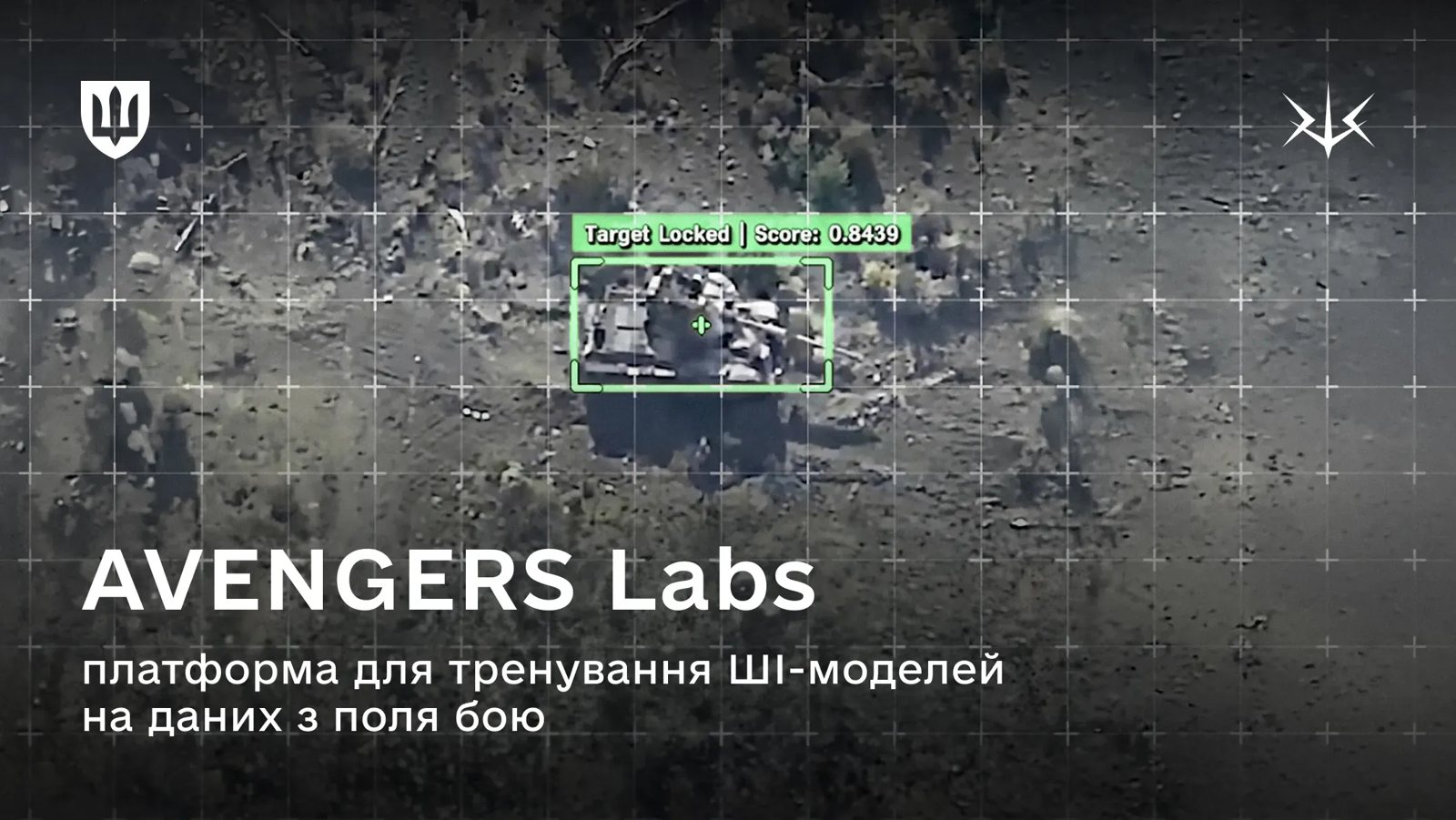
In August 2026 the ministry opened Avengers Labs to Ukrainian defence companies: a training platform built on “an annotated dataset of 5 million frames collected on the battlefield”, most of it coming “directly from the DELTA combat system” (Ministry of Defence). A dataset of that size and quality “is practically impossible for private companies to collect”, the ministry says.
The terms are strict. Companies sign a licence agreement with the ministry and are vetted under Cabinet Resolution No. 310 of March 2026: no links to Russia, no business there, no sanctions. They train inside a secure environment, and “get no direct access to the dataset and cannot download it”. The data is “anonymised and delayed so that it poses no risk to troops”. By September more than 30 Ukrainian companies were training models there, and three of their products were in combat use, the ministry says. What the models are for is spelled out on the platform’s own site: terminal guidance onto static and moving targets, and “automatic detection of targets in a defined zone with minimal operator involvement”.
It is separate from Brave1 Dataroom, a platform for air-target data that Brave1 built with Palantir in January 2026 and that more than 100 companies use. That one has drawn criticism in Ukraine: “Our combat data is not free raw material for Western technology corporations… Ukraine has paid for it with blood,” the Fire Point co-owner Denys Shtilerman told Al Jazeera. Avengers Labs, where nothing leaves the perimeter, reads as the ministry’s answer to that worry. Zahriichuk put it plainly: “We are not sharing the data sets… Today we will share data sets, tomorrow these data sets will be in enemy hands.”
The assistants: support, and SPECTR
- An AI assistant for users. Since August 2026 every Delta user can ask an assistant how the system works, for instance how to build a route. It “operates within DELTA’s secure environment and draws only on designated system knowledge sources”. The ministry says it handles about a quarter of questions through the web widget, that support requests fell by about 27% and that waiting times fell thirtyfold (Ministry of Defence). The model behind it has not been named. It is the Ukrainian-language assistant Martynenko wanted in 2024, because “ChatGPT… is a commercial product we don’t control”.
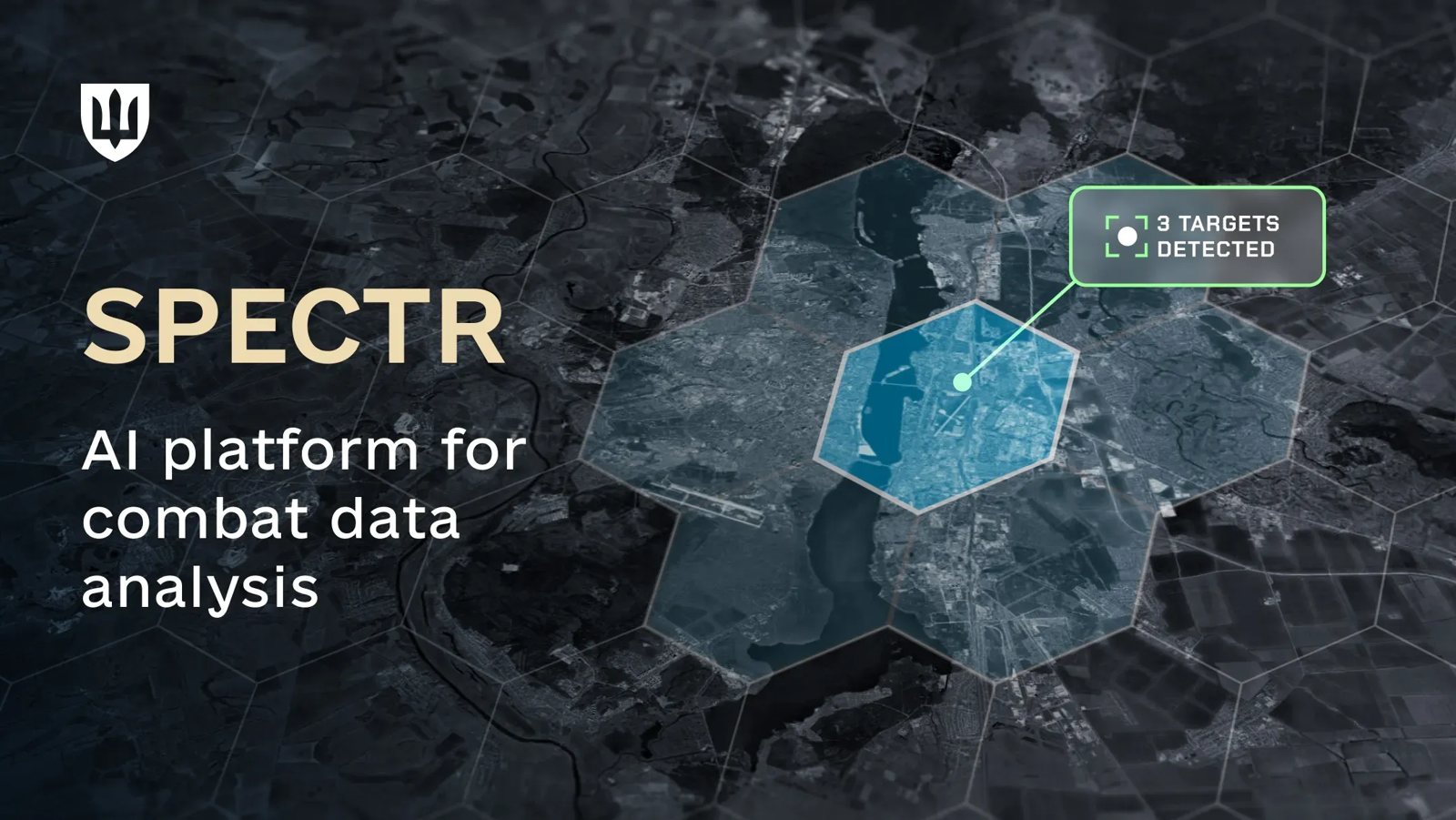
- SPECTR, for staff officers. The ministry’s Defense AI Center A1 is building SPECTR, “an AI system for analysing combat data and planning operations”, tested by several units. “Essentially, we are building an operating system for warfighting. It will help the military choose effective courses of action and predict the enemy’s possible moves,” said its head, Danylo Tsvok (Ministry of Defence). It is meant to run on local devices too. The ministry’s release does not mention Delta; The New York Times reported that SPECTR “connects to Delta and other software” (as retold by ZN.ua).
Who decides
The ministry’s line is that a person decides: “the technology helps detect a target and speeds up its assessment, but the final decision to strike stays with a human.” Zahriichuk: “We are not bringing the full capabilities like you open Delta and push a button and say how I can win a war… We are bringing the pragmatic capabilities where the AI can be used.”
The direction of travel goes further. The ministry wrote in August that algorithms are now given tasks “from navigation and object identification to autonomous target engagement”, in the same text that says a human makes the final decision (Ministry of Defence). Avengers Labs’ first priority with Britain is AI for drone swarms that can “detect threats and enemy targets” where communications and satellite navigation are jammed. Reports that Delta “automatically assigns” targets among drones come from The New York Times as retold by Ukrainian outlets; no ministry source describes that, and we could not read the original.
What Delta as a whole has done to speed is easier to show. A battalion chief of staff told The New York Times that the time from spotting a target to striking it fell from “at least 20 minutes” to “three to five minutes” (as retold by ZN.ua). That is the whole system, not AI alone.
Delta for allies
Ukraine is opening parts of the system to partners, on its own terms:
- Britain became the first foreign partner of Avengers Labs on 25 September 2026: up to 12 British companies, chosen by the UK defence ministry’s Rapid AI Delivery task force, may train models there after export-control checks. “This world-first access to real battlefield data will allow British companies to continue pushing the frontier of defence innovation,” Defence Secretary Wes Streeting said (Defense News).
- Allies’ access to Ukrainian battlefield data was announced by Defence Minister Mykhailo Fedorov in March 2026: partners can train their AI on “real data from modern warfare”, and Ukraine gets “faster development of autonomous systems” in return (Engadget).
- Delta itself has been shown to NATO: at the London Defence Conference in May 2025, and at NATO Edge 26 in Izmir this month, where the UK Defence Journal headlined that countries are on a waiting list for it. Companies that train models on Avengers Labs are reported to have to license what they build back to the Ukrainian military (UKDJ, not confirmed by a primary source).
The model, so far, is not a software sale: partners get access to train on the data and to work with the system, and Ukraine keeps the data and the system.
What independent analysts say
- CSIS (Kateryna Bondar, December 2024): Avengers can find objects “in thousands of simultaneous video streams”; “the further adoption of AI will be essential for enhancing Delta’s analysis features” (CSIS). Its claim that Avengers can tell decoys from real targets has no traceable source.
- IFRI (2026): AI in this war “has been used mainly as an enabler rather than an independent decision-maker… human operators retain control over lethal decisions” (IFRI).
- War on the Rocks (January 2026) on the points system that Delta records: “units may privilege point-rich targets even when they are tactically marginal” (War on the Rocks).
- Russia calls its own equivalent “SVOD” and claims, without evidence, that “the Americans even used Ukrainian image databases to teach their models to recognise equipment in snow” (Rossiyskaya Gazeta, claimed by Russia).
What we do not know
- Which AI models Avengers uses, on what hardware, and whether they run on drones yet.
- How often Avengers is wrong: no false-alarm rate or independent test has been published, and “70%” has never been defined.
- How the stream figures fit together (10,000 a day, 75,000 a day, 100,000 a month analysed).
- Whether Delta assigns targets automatically, as The New York Times reportedly wrote.
- Whether SPECTR is part of Delta.
- Which countries are on the waiting list, and on what terms Delta could be used outside Ukraine.
Timeline
Times are Amsterdam time. Each line names the side that reported it.
Delta’s architect Artem Martynenko sets out the AI plan: specialised detection models, a universal military dataset, text-to-map analysis and a Ukrainian-language assistant. source
Ukrainian sourceMinistry of Defence: Avengers detects 12,000 pieces of enemy equipment a week in drone and fixed-camera video, inside Delta’s Vezha module. source
Ukrainian sourceCSIS asks whether Ukraine already has functional CJADC2 technology, with Delta and Avengers as its case. source
Western sourceAt the London Defence Conference the ministry shows Delta and Avengers: 70% of enemy vehicles detected, 2.2 seconds per item. source
Ukrainian sourceDeputy Minister Yurii Myronenko: 10,000 drone streams a day in Vezha, 2,500 verified hits a day; night detection launched “a few weeks ago”. source
Ukrainian sourceBrave1 Dataroom launches with Palantir: datasets of air targets such as Shahed drones for Ukrainian companies to train on. source
Ukrainian sourceDefence Minister Mykhailo Fedorov announces that allies may train their AI models on Ukrainian battlefield data. source
Ukrainian sourceThe ministry launches the Defense AI Center A1, for combat-data analysis, forecasting, autonomy and command tools. source
Ukrainian sourceMinistry: Delta records more than 6,600 enemy targets hit and carries more than 75,000 video streams a day. source
Ukrainian sourceAvengers Labs opens to Ukrainian defence companies: 5 million annotated frames, no downloads, licence and vetting. source
Ukrainian sourceAn AI assistant becomes available to all Delta users; the ministry says it cut support requests by about 27%. source
Ukrainian sourceBritain becomes the first foreign partner of Avengers Labs: up to 12 British companies, swarm AI the first priority. source
Western sourceThe Defense AI Center A1 presents SPECTR, an AI platform for analysing combat data and planning operations, in testing with units. source
Ukrainian sourceUkraine’s Ministry of Defence says Ukraine and Denmark signed a strategic defence AI cooperation agreement, with Denmark joining Avengers Labs to train models on battlefield data. source
Ukrainian sourceAt NATO Edge 26, CTO Serhii Zahriichuk: “almost every part of Delta” has AI, but it does not tell commanders how to fight. source
Ukrainian source
Photos
- "AI helps find the enemy faster": the ministry's illustration of a detection with a confidence score. Promotional image.
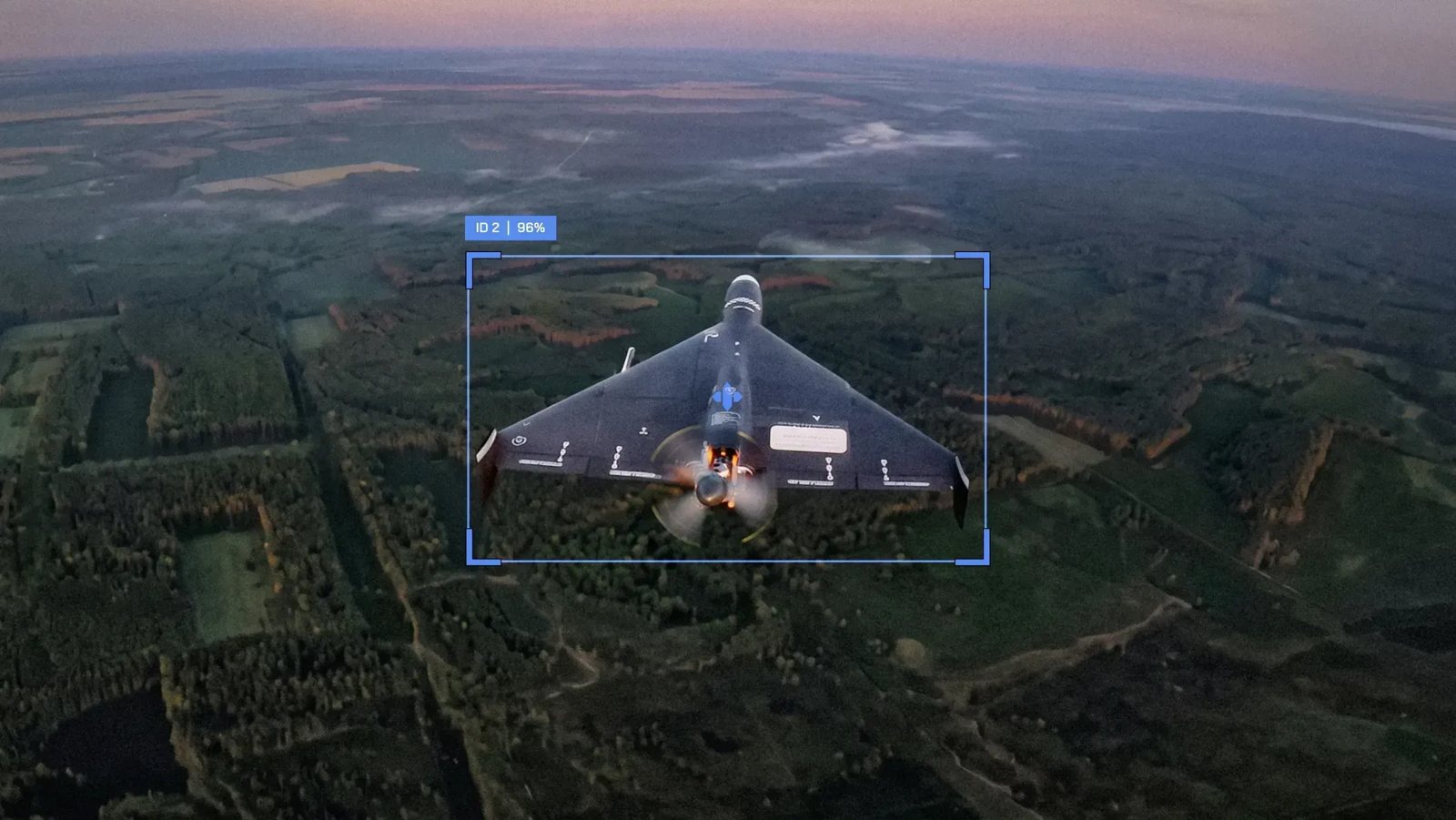 The ministry's illustration of an air target, a Shahed-type drone, under detection. Promotional image.
- Avengers Labs, the ministry's platform for training AI models on battlefield data. Promotional image.
- SPECTR, the AI platform for combat-data analysis of the Defense AI Center A1. Promotional image.
Photo: Ministry of Defence of Ukraine (CC BY 4.0)
Video

СИСТЕМА, ЯКУ ХОЧЕ НАТО: як працює українська розробка DELTAАрмія Медіа

ДРОНИ ЗІ ШТУЧНИМ ІНТЕЛЕКТОМ: майбутнє, що вже насталоАрмія Медіа

Як розвивається DELTA/Сумісність з Link 16/Військове IT | До Зброї!Militarnyi

Ukraine-War: How is AI transforming the battlefield? | DW NewsDW News

Britain Signs AI Defence Deal With Ukraine, Gains Access to Avengers AI Labs | WIONWION
Sources
- 12,000 enemy targets are detected by the Ukrainian military weekly · Ministry of Defence of Ukraine · 2024-09-23
- Enemy equipment detected in 2 seconds: the Ministry of Defence showcased DELTA and Avengers at the London Defence Conference · Ministry of Defence of Ukraine · 2025-05-13
- Independent assessment confirms DELTA remains compliant with all cybersecurity standards after scaling · Ministry of Defence of Ukraine · 2026-03-09
- The DELTA combat system records more than 6,600 enemy targets hit every day · Ministry of Defence of Ukraine · 2026-07-31
- Українські оборонні компанії тренуватимуть власний ШІ на платформі Avengers Labs · Ministry of Defence of Ukraine · 2026-08-10
- Smart weapons: more than 70 systems using AI and computer vision are already striking enemy targets · Ministry of Defence of Ukraine · 2026-08-18
- AI assistant for DELTA is now available to all users · Ministry of Defence of Ukraine · 2026-08-28
- ШІ заощаджує до 90% часу на пошук ворожих цілей на фото й відео · Ministry of Defence of Ukraine · 2026-08-28
- See more, plan more precisely: satellite data, orthophotos and 3D in DELTA · Ministry of Defence of Ukraine · 2026-09-03
- UK becomes the first international partner to join Avengers Labs · Ministry of Defence of Ukraine · 2026-09-25
- Less routine for staff officers: SPECTR AI platform to analyse combat data and predict enemy actions · Ministry of Defence of Ukraine · 2026-09-25
- Ministry of Defence launches first AI Center of Excellence · Ministry of Defence of Ukraine · 2026-03-17
- Countries on waiting list for Ukraine's Delta battle system · UK Defence Journal · 2026-11-21
- Ukraine's deadly AI training platform for drone tech opens to UK companies · Defense News · 2026-09-25
- Ukraine feeds sensitive military data to Palantir AI for training · Defense News · 2026-01-21
- ШІ на службі ЗСУ. Ворожу техніку на десятках одночасних відеопотоків виявляє штучний інтелект Avengers · Vchasno · 2024-10-12
- «Ми почали будувати захищену екосистему для всіх військових застосунків». Архітектор DELTA — про розвиток системи · DOU · 2024-07-11
- «Ми зробили те, про що самі не мріяли у 2022»: інтерв’ю з творцем ШІ-рішення Avengers · dev.ua · 2025-06-04
- Міноборони України: В системі Delta понад 200 тис. користувачів, в планах на 2026р - інтеграція ШІ · Interfax-Ukraine · 2025-12-08
- Ukraine allows allies to train AI models on its battlefield data · Engadget · 2026-03-12
- Does Ukraine Already Have Functional CJADC2 Technology? · CSIS (Kateryna Bondar) · 2024-12-11
- Mapping the MilTech War: Eight Lessons from Ukraine's Battlefield · IFRI
- Gamified War in Ukraine: Points, Drones, and the New Moral Economy of Killing · War on the Rocks · 2026-01-07
- Palantir harvests battlefield data that Ukraine pays for 'with blood' · Al Jazeera · 2026-11-05
- Система Delta Украины: как работает обнаружение целей · ZN.ua · 2026-08-26
- Russian state or pro-Kremlin media:"2026-й стал годом, когда ИИ пошел на войну": Как алгоритмы меняют поле боя · Rossiyskaya Gazeta · 2026-11-11
- Ukraine and Denmark launch strategic cooperation in defence AI · Ministry of Defence of Ukraine · 2026-11-18