Zveroboy
systemAdversary capabilityby Kalashnikov Concern

Photos: Victory Drones (Telegram) · Boris Rozhin (Colonel Cassad) (Telegram)
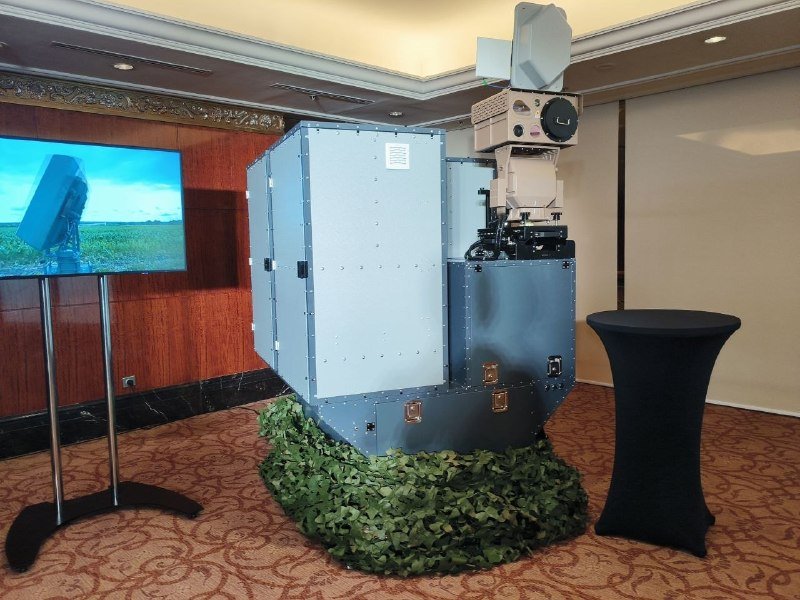
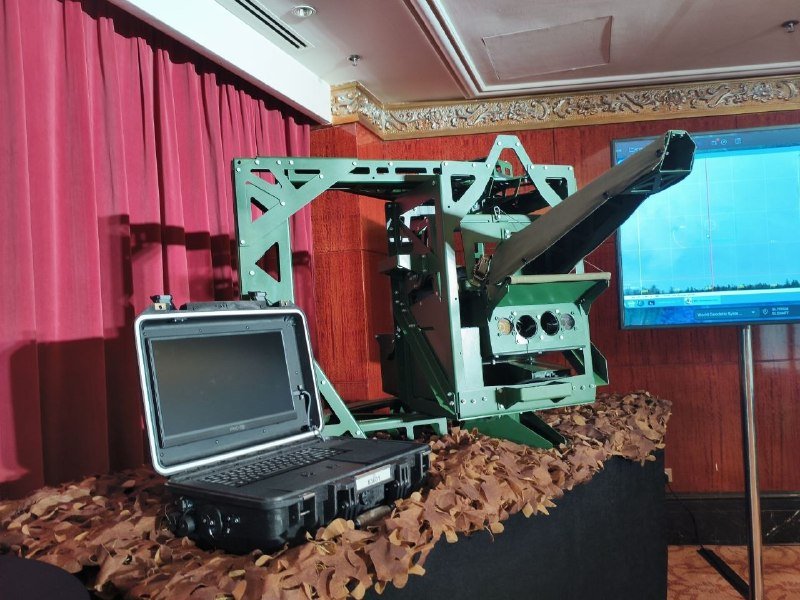
Zveroboy is a Russian short-range counter-drone system developed by Kalashnikov Concern, unveiled publicly at the IV All-Russian Weapons Forum in Moscow in September 2026 and shown again inside a layered air-defence demonstration at Patriot Park on 2 November 2026. Kalashnikov describes it as a complex for round-the-clock protection of fixed objects against reconnaissance and strike UAVs, naming Ukrainian systems such as the Leleka, Lyutyi, Bober and Hornet-XR as its intended targets. Interfax has reported that the system was trialled inside what Moscow terms the “special military operation” zone — a claim that originates with the manufacturer.
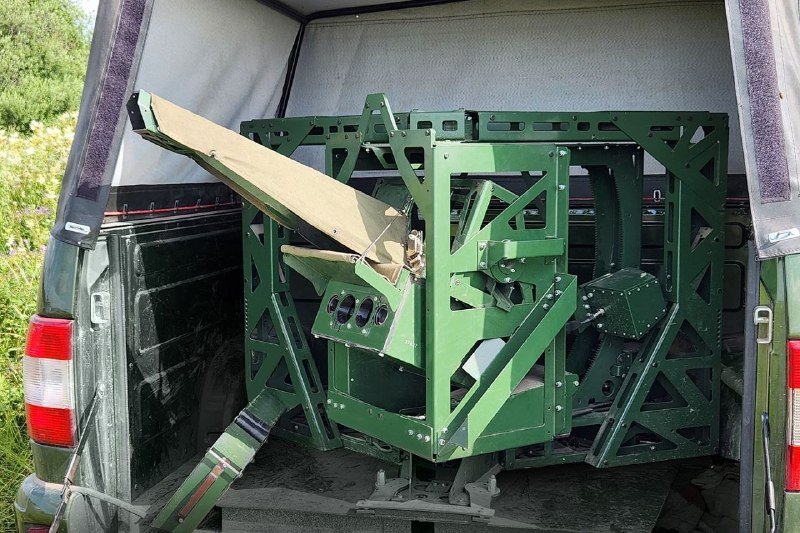
The core of Zveroboy is a kinetic interceptor rather than a gun or jammer. According to Kalashnikov, each launcher carries three containers, and each container holds three Kraken interceptor drones — multi-rotor FPV platforms that fly out to engage incoming UAVs. The Ukrainian channel Victory Drones, reporting on the Patriot Park demonstration, notes that the Kraken carries a fragmentation warhead and detonates near its target to form a shrapnel cloud, rather than relying purely on a ramming kill — a shift from the earlier Yolka-style interceptors it visually resembles. Russian sources quote a top speed of around 65 m/s and describe a night variant, the Kraken-N, fitted with a thermal imager. Around the launchers sit a ground control station, an optical target-designation module, a digital repeater and a radar used for detection and track. The pro-Kremlin outlet Voennoe Delo cites an engagement envelope of 5–11 km for the Zveroboy layer; the figure is a manufacturer claim and has not been independently corroborated.
Software is where Zveroboy is placed in a wider architecture rather than treated as a standalone piece. Russian presentations describe each Kraken as capable of navigating toward its assigned target autonomously, with the operator retaining a manual override and the final decision to open fire. In the November demonstration, Zveroboy was tied into Uzor, Kalashnikov’s AI-based decision-support system, which aggregates feeds from radars and sensors, models incoming raids and distributes targets between weapons — connecting Zveroboy to the Kalitka-KA machine-gun turret and the Krona short-range missile system in the same network. No specific onboard-compute hardware, flight stack or open-source library has been publicly disclosed.
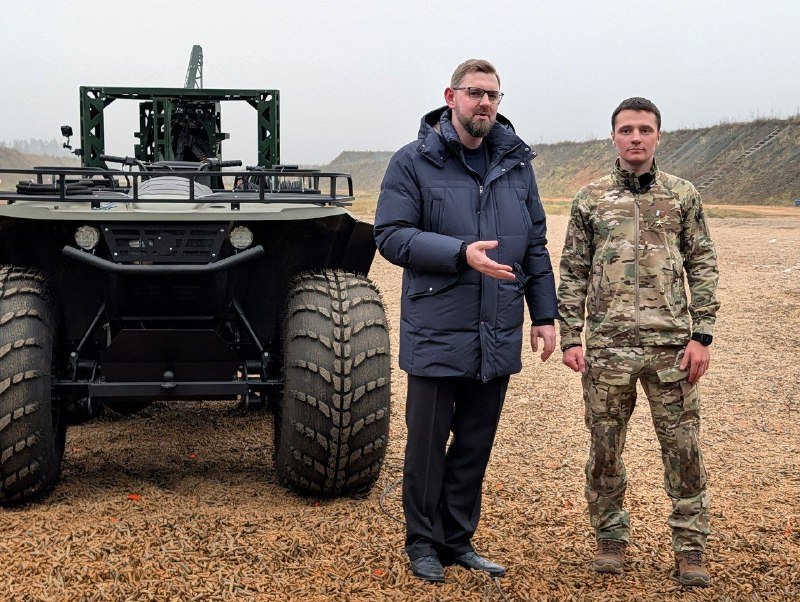
Zveroboy is being offered in both stationary and pickup-mounted variants, which Kalashnikov says eases redeployment and masking. Combat-effectiveness claims attach mostly to its companion Kalitka-KA turret, whose operators are said by Russian channels to have destroyed more than 200 Ukrainian fixed-wing and multirotor drones over three months on one axis — a figure that, like the broader system, rests entirely on the manufacturer and Russian military media and has no independent verification.
Sources (13)
- Telegram channel, Russian side:t.me/voin_dv/21147
- Telegram channel:t.me/VictoryDrones/68421
- Telegram channel:t.me/VictoryDrones/64746
- Telegram channel, Russian side:t.me/SolovievLive/391155
- Telegram channel, Russian side:t.me/milinfolive/182160
- Telegram channel, Russian side:t.me/boris_rozhin/232192
- Telegram channel, Russian side:t.me/bes_pilot/6386
- Telegram channel, Russian side:t.me/bes_pilot/6358
- Telegram channel, Russian side:t.me/anna_news/95866
- /osint-hetzner/2026-11-05--kalashnikov-unveils-layered-air-defense-with-ai-decis …
- /osint-hetzner/2026-11-04--helsing-presents-ai-driven-contra-sam-with-dual-inter …
- /osint-hetzner/2026-09-15--russia-unveils-ai-guided-yolka-and-kalashnikov-counte …
- Russian state or pro-Kremlin media:voennoedelo.com/en/posts/id21730-kalashnikov-unveils-three-tier-drone-defense-sy …