Products China Academy of Aerospace Aerodynamics
YH-1000S
Hybrid-electric unmanned cargo aircraft from the CH drone house — 1.2 t payload, 1,500 km range, short enough take-off to use roads and grass strips. First flown February 2026.
DroneAdversary capabilityby China Academy of Aerospace AerodynamicsIntroduced 2026 · Updated 2026
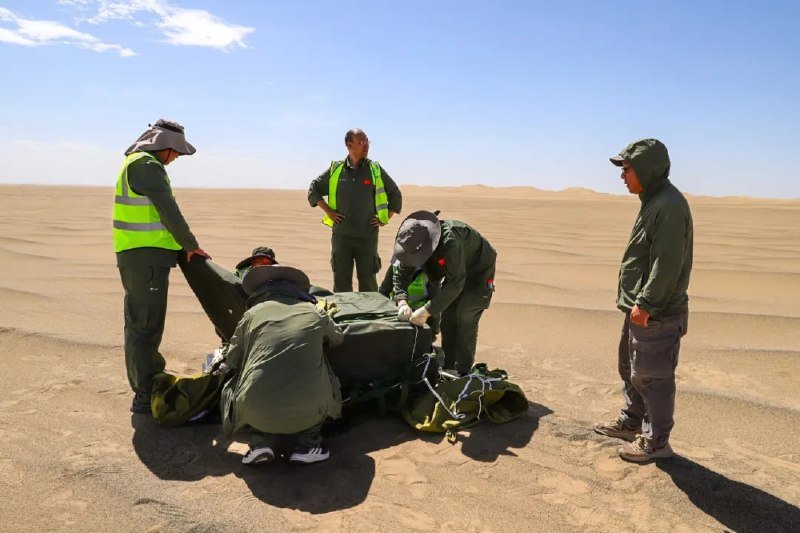
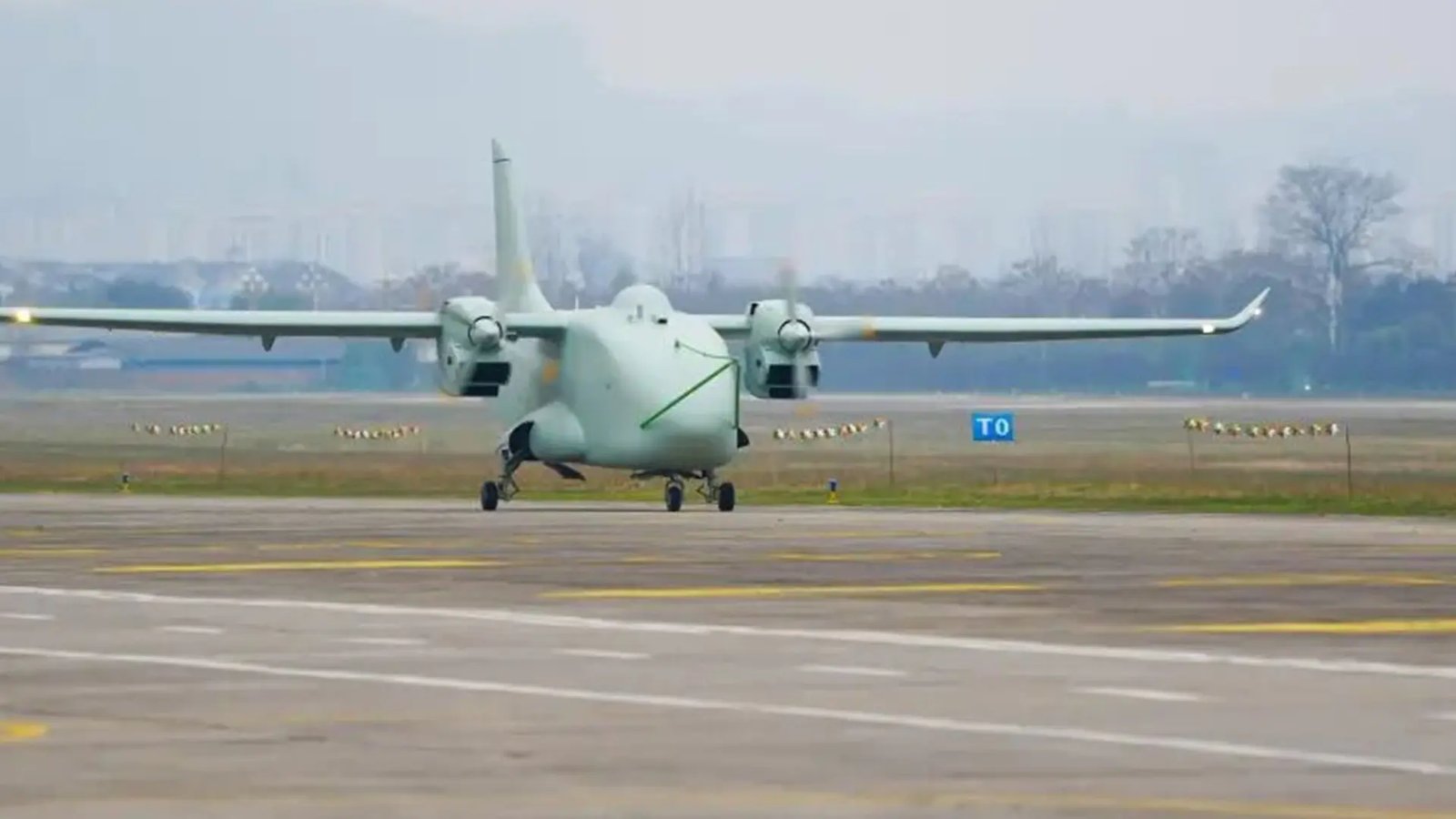
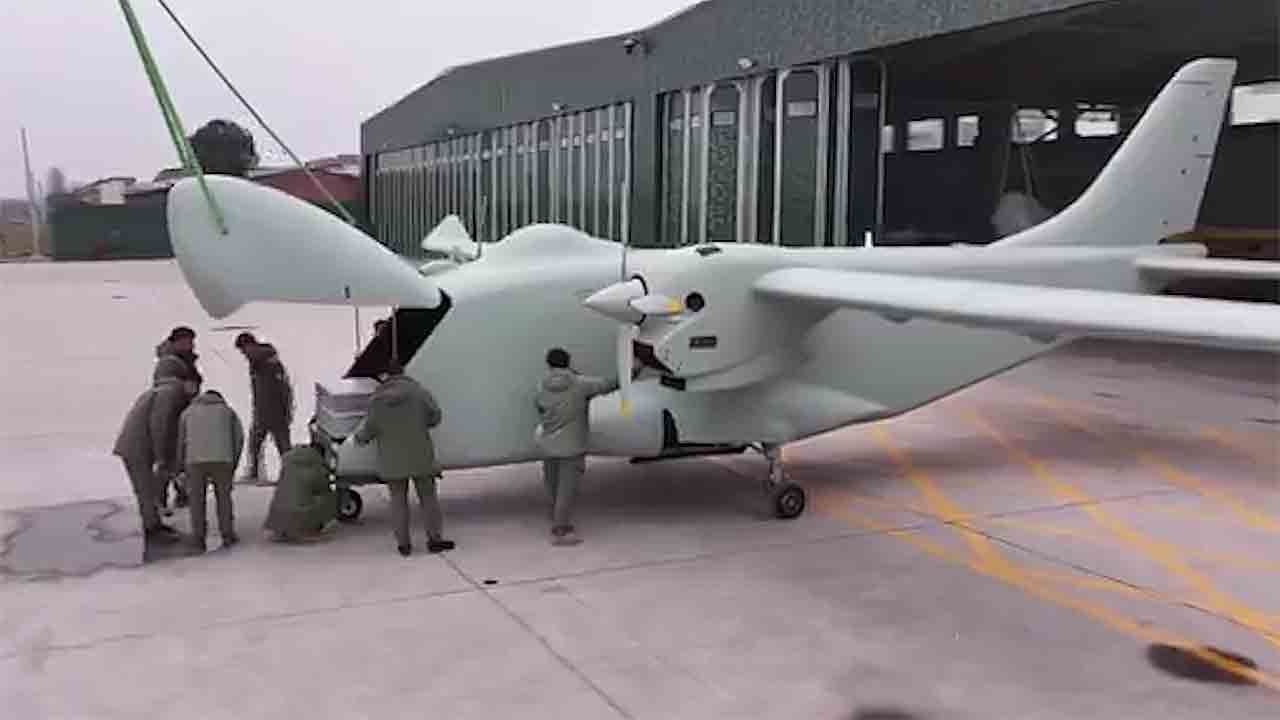
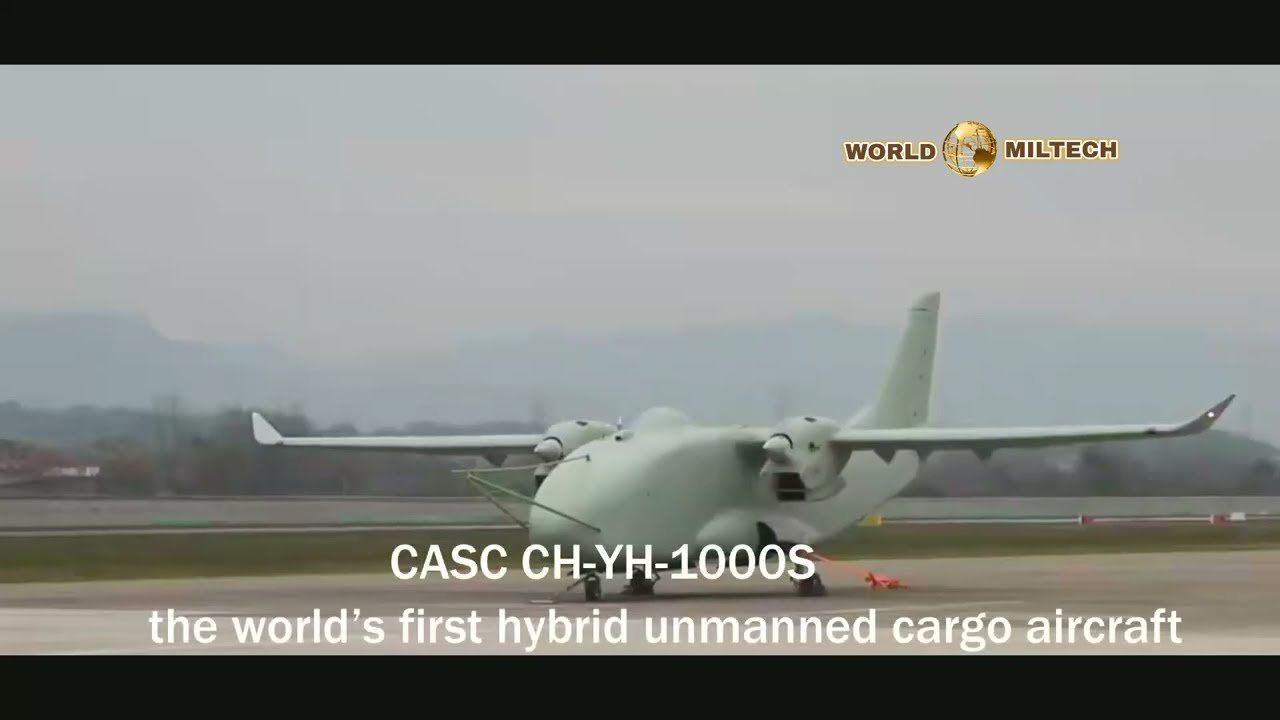
Photos: Беспилот (Bespilot — UAV, drones, robots) (Telegram) · interestingengineering.com · www.nextmsc.com · carroemotos.com.br · world mil-tech
Videos


The YH-1000S is a large unmanned cargo aircraft developed by the China Academy of Aerospace Aerodynamics, the CASC institute that builds China’s CH (“Rainbow”) export drones. It made its first flight on 1 February 2026 at Liangping in Chongqing municipality, and the academy announced it two days later as the world’s first hybrid-powered unmanned transport aircraft. It is an export-oriented upgrade of the YH-1000, which first flew in May 2025: the same twin-engined airframe and mission avionics, with the powertrain replaced.
That powertrain is the point of the aircraft. A conventional fuel engine and an electric motor sit in a parallel hybrid arrangement — either can drive the propellers alone, or both together for take-off — and the system was co-developed with a Chinese new-energy-vehicle manufacturer that the academy has not named. CAAA engineer Wang Chao told state television it was the first time an automotive hybrid system had been applied to an aircraft, and that borrowing a mature car powertrain cut test costs substantially. The practical effect, according to the developer, is a shorter take-off and landing roll than the YH-1000’s, enough for the aircraft to operate from secondary roads, packed-earth strips and grass fields rather than paved runways. Payload is quoted at 1,200 kg and range at 1,500 km; the predecessor’s figures of more than ten hours’ endurance and an 8,000 m ceiling have not been restated for the S model. Cargo goes in through the nose, into a bay sized for four one-cubic-metre pallets, and can also be dropped from the belly in flight. The flight-control avionics are carried over from the CH series, which the academy describes as mission-proven. No onboard autonomy stack beyond the CH heritage flight control has been described publicly.
The developer lists civil roles for the aircraft: international logistics, emergency and disaster relief, weather modification, ocean monitoring and maritime law enforcement. Chinese reporting says the S model was iterated quickly for international customers. No operator, order or delivery has been announced. The military reading is nonetheless obvious and has been made in print: the baseline YH-1000 has been reported with a variant carrying precision-guided munitions in a weapons bay, and a 1.2-tonne unmanned transport that lands on roads is, in Lyle Goldstein’s words to DroneXL, the kind of sustained drone-based resupply that would lower the risk of early-phase operations for PLA units in a Taiwan scenario.
For now the YH-1000S is a first-flight prototype, and the figures above are the developer’s. What distinguishes it is not performance but the production logic: a drone house with a decade of export sales has taken a hybrid system from the world’s largest electric-vehicle industry and put it in an airframe that fits on a dirt road — a path to cheap, numerous unmanned airlift that no Western programme has yet followed.
Media
Articles
China's YH-1000S Hybrid Unmanned Cargo Aircraft Flies
Clash Report · 2026-02-04
China's Hybrid CH YH-1000S Drone Could Shift Taiwan Logistics
DroneXL · 2026-02-06
China flight tests upgraded YH-1000S hybrid transport drone
Aerospace Global News · 2026-02-03
China's YH-1000S autonomous cargo aircraft completes first flight
Interesting Engineering · 2026-02-03
Sources
- www.cctvplus.com/news/20260203/8464326.shtml (2026-10-01) — CCTV+ (state TV agency) story of 3 February 2026 — maiden flight 1 February 2026, Liangping District, Chongqing; developer CAAA / CASC 11th Academy; hybrid system co-developed with a leading NEV maker; engineer Wang Chao on first automotive-hybrid application to an aircraft and reduced test costs; civil applications list.
- www.youtube.com/watch?v=OhdWuu8Lq_0 (2026-10-01) — CCTV Video News Agency clip of the maiden flight, uploaded 5 February 2026 (77 s).
- www.youtube.com/watch?v=dunC_U4yTp8 (2026-10-01) — The "world mil-tech" clip, uploaded 5 February 2026; description gives the CASC designation CH-YH-1000S and the parallel-hybrid powertrain with an NEV manufacturer.
- clashreport.com/defense/articles/chinas-yh-1000s-hybrid-unmanned-cargo-aircraft-makes-maiden-flight-1i6huzwnv28 (2026-10-01) — Clash Report, 4 February 2026 — 1,500 km range, 1,200 kg payload, hybrid fuel+electric, shortened take-off/landing, upgraded variant of the YH-1000 (maiden flight May 2025), developed for the global market.
- aerospaceglobalnews.com/news/china-yh-1000s-hybrid-cargo-drone-flight/ (2026-10-01) — Aerospace Global News — twin-engined, "mission-proven avionics from the CH drone series", front loading and belly drop; YH-1000 2,300 kg MTOW / 1,200 kg / 1,500 km / 10+ h / 8,000 m, programme from June 2024, military variant with precision-guided munitions from a weapons bay.
- dronexl.co/2026/02/06/chinas-ch-yh-1000-drone-taiwan/ (2026-10-01) — DroneXL, Rafael Suárez, 6 February 2026 — four 1 m³ pallets, front loading, belly drop; engine and motor independent or together; Lyle Goldstein (Defense Priorities) on drone resupply for PLA units in a Taiwan scenario; CH series exported to more than ten countries.
- news.cgtn.com/news/2026-02-03/China-s-hybrid-unmanned-cargo-aircraft-completes-first-flight-1KsC7QiWzBK/share_amp.html (2026-10-01) — CGTN — hybrid power shortens the runway enough to take off and land on secondary roads, compact dirt runways and grass fields.
- www.ichongqing.info/2026/02/03/worlds-first-hybrid-powered-unmanned-cargo-aircraft-takes-off-on-maiden-flight-in-china/ (2026-10-01) — iChongqing — Liangping district; "rapidly iterated to meet the requirements of international customers".