Products Yakovlev
Yak-130
systemby Yakovlev
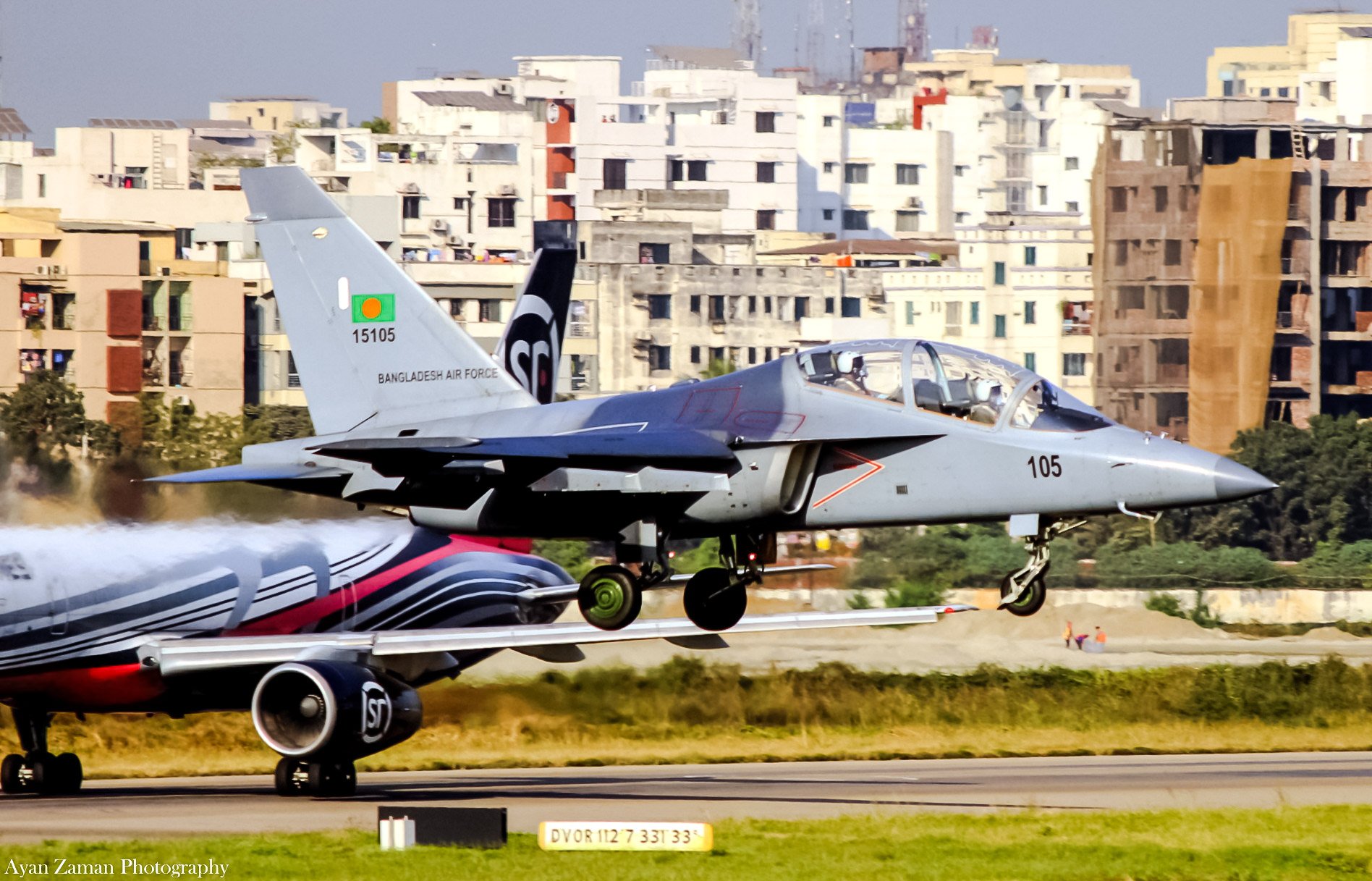
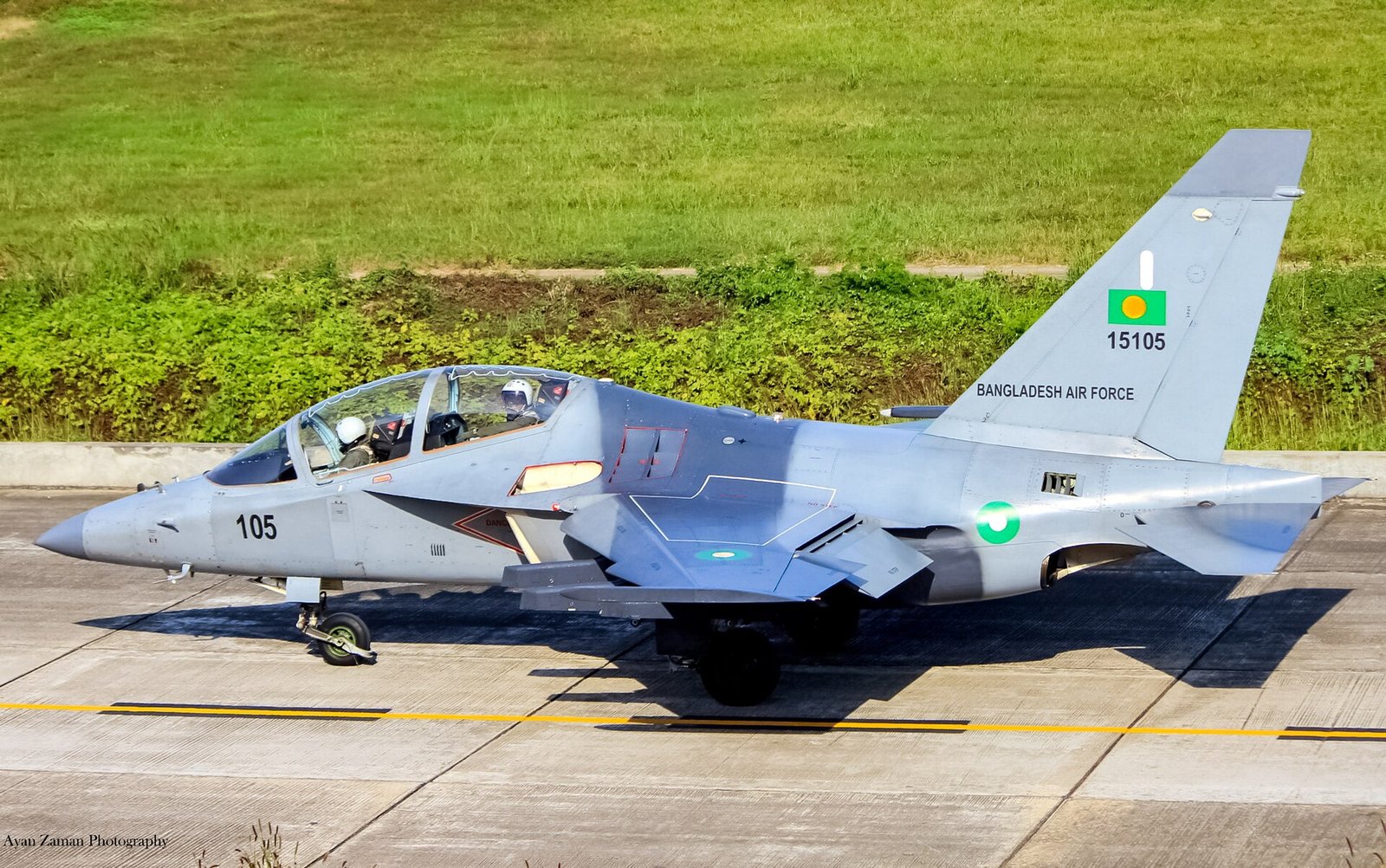
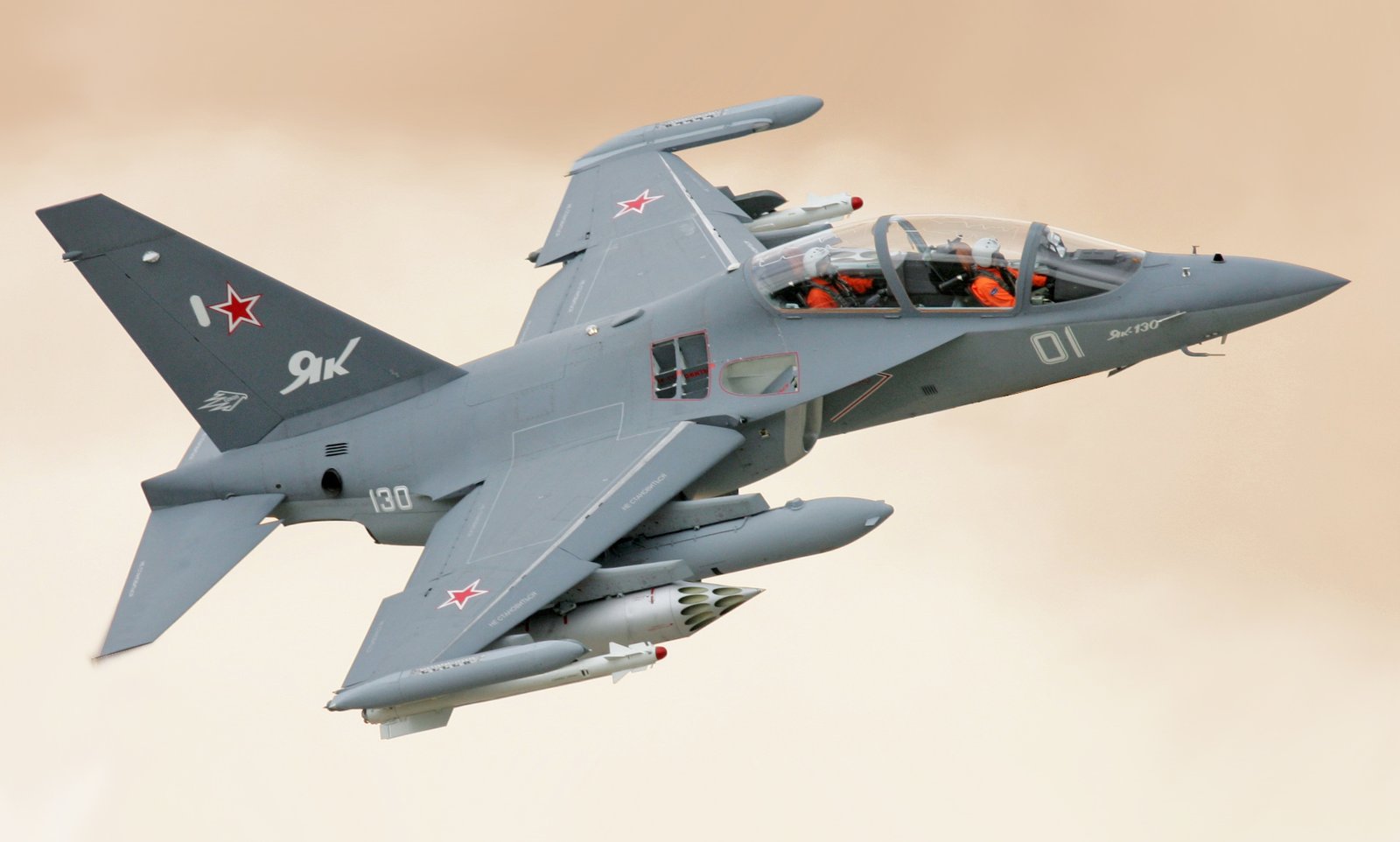
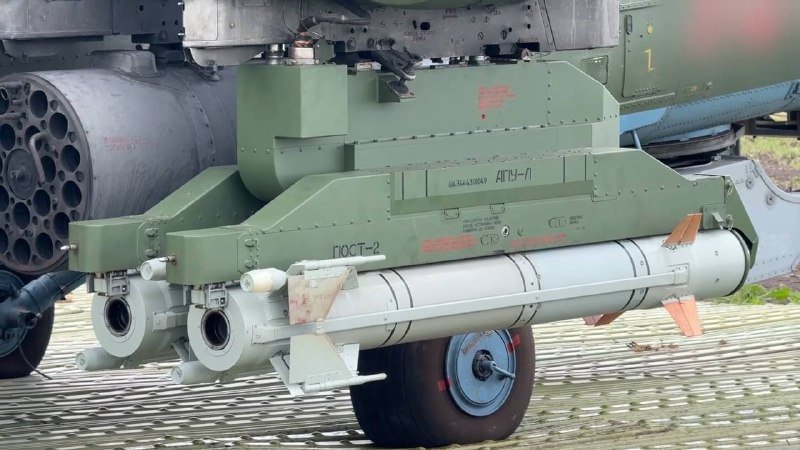
Photos: Md Shaifuzzaman Ayon · Md Shaifuzzaman · Ministry of Defence · Victory Drones (Telegram) · Intel Slava (Telegram)
The Yak-130 is a subsonic, two-seat advanced jet trainer and light combat aircraft designed by Yakovlev, now part of the United Aircraft Corporation under Russia’s Rostec. Entering Russian Air Force service in the early 2010s, it was conceived to replace ageing L-39 trainers and to give student pilots a platform whose handling could be reprogrammed to mimic front-line fighters including the MiG-29 and Su-30. Its armed configuration, with nine hardpoints and a stated combat payload of around three tonnes, doubles the airframe as a light-attack aircraft suited to low-intensity conflicts and to export customers with limited budgets.
The aircraft is powered by two AI-222-25 turbofans, the same engines Rostec cites in its marketing of the upgraded Yak-130M variant. Avionics centre on a glass cockpit with multifunction displays, a head-up display and hands-on-throttle-and-stick controls, carried over into the operational-trainer role so that pilots arrive at fighter conversion already familiar with modern cockpit management. Weapon options span unguided bombs and rockets, gun pods, short-range air-to-air missiles and, more recently, guided munitions. Rostec says the Yak-130M adds new radar, thermal imagers and quad-pod launchers tailored to engage slow-moving targets such as drones, and the company claims the airframe now carries the President-S130 defensive suite, which it describes as automatically detecting incoming missiles, jamming their seekers and dispensing decoys. A third Yak-130M prototype has reportedly flown, with first deliveries announced for 2028.
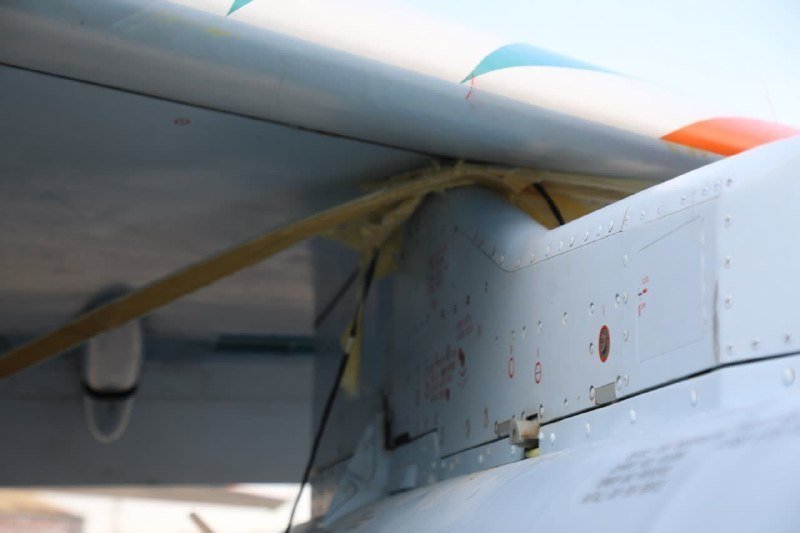
Operators span Russia, Belarus, Algeria, Bangladesh, Myanmar, Laos and Vietnam. Russian channels have reported deliveries to Iran under an export code identified in leaked Irkutsk plant paperwork, with two aircraft said to be due in the second quarter of 2023 and four more by year end — figures that have not been independently confirmed. Russian media also claim that an Iranian Yak-130 rammed and destroyed an uncrewed aerial vehicle during the spring 2026 strikes by the United States and Israel, after an air-to-air missile reportedly failed against the drone’s countermeasures; fragments of the UAV were said to have been recovered from one of the aircraft’s weapon pylons. On the home front, Ukrainian monitoring channels say Borisoglebsk airfield in Voronezh Oblast, where Yak-130s are based alongside Su-25s, Su-30s, Su-34s and Su-35s, has been targeted by cruise-missile strikes.
Rosoboronexport has pushed the aircraft hard in Africa, most recently at Africa Aerospace and Defence 2026 in Pretoria, where it was displayed alongside Mi-171Sh and Mi-28NE helicopters. Russian commentators have argued publicly that the type is underused and could fill a niche in border air defence against Western uncrewed systems once the war in Ukraine ends, framing it as a cheaper air-policing option than the Su-30 and Su-35. Whether that pitch finds buyers will depend on how the Yak-130M upgrades fare in testing, and on how willing export customers are to accept an airframe whose industrial base now operates under heavy Western sanctions.
Sources (11)
- en.wikipedia.org/wiki/Yakovlev_Yak-130
- en.wikipedia.org/wiki/Yakovlev_Yak-130
- Telegram channel, Russian side:t.me/vrogov/26325
- Telegram channel:t.me/VictoryDrones/68553
- Telegram channel, Russian side:t.me/UAVDEV/12840
- Telegram channel, Russian side:t.me/rybar_in_english/34312
- Telegram channel, Russian side:t.me/milinfolive/182878
- Telegram channel, Russian side:t.me/intelslava/97722
- /osint-hetzner/2026-09-22--rostec-delivers-zubr-ad-system-and-upgrades-yak-130-f …
- Russian state or pro-Kremlin media:voennoedelo.com/en/posts/id21658-iran-confirms-russian-su-35-purchase-expects-je …
- Russian state or pro-Kremlin media:voennoedelo.com/en/posts/id21406-yak-130m-gets-president-s130-anti-missile-defen …