Tu-95MS
Soviet-era turboprop strategic bomber that fires Kh-101 cruise missiles at Ukraine from deep inside Russian airspace; out of production since the 1990s.
AircraftAdversary capabilityby TupolevIntroduced 1981 · Updated 2026
Photos: www.airliners.net · wall.alphacoders.com
Videos



Overview
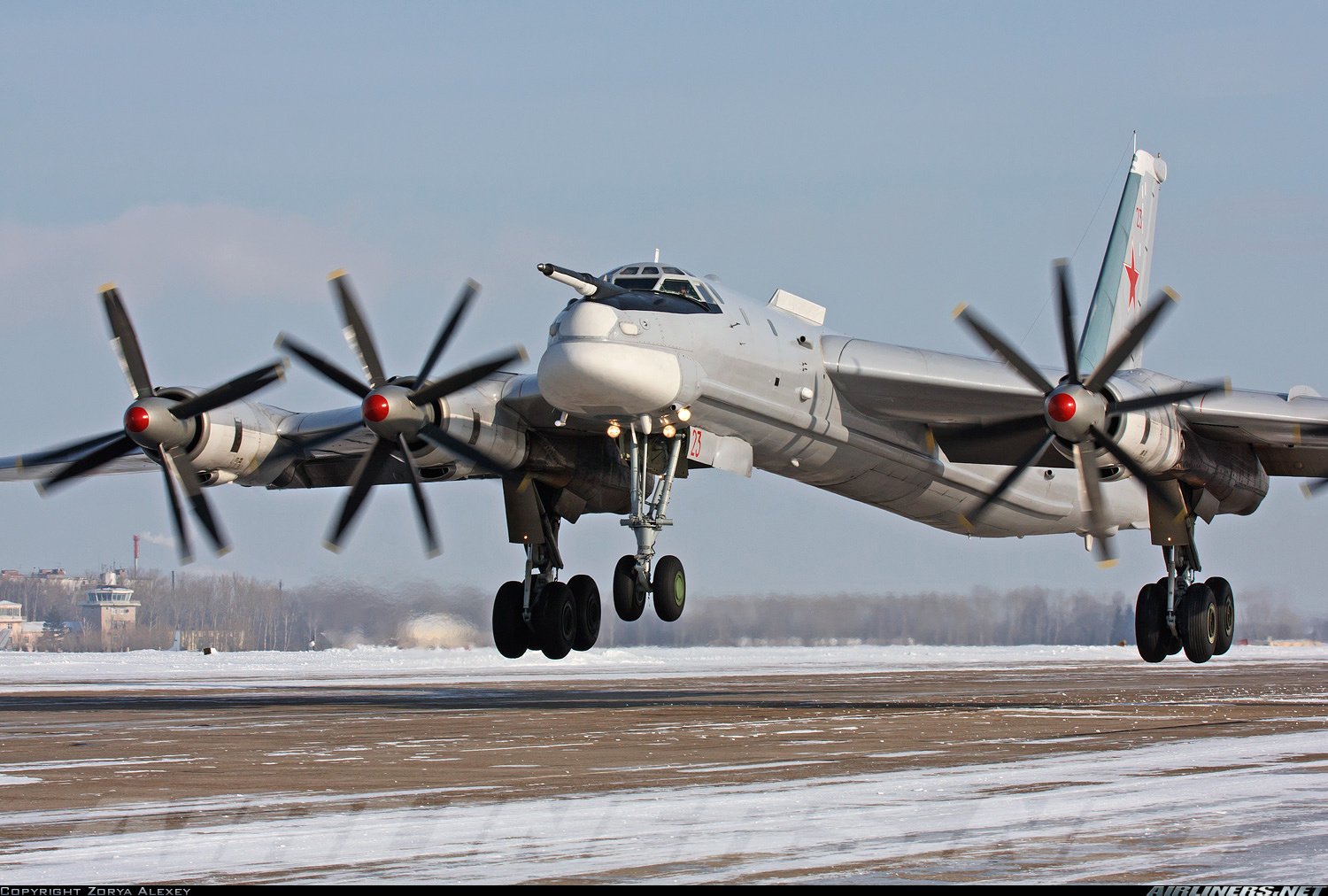
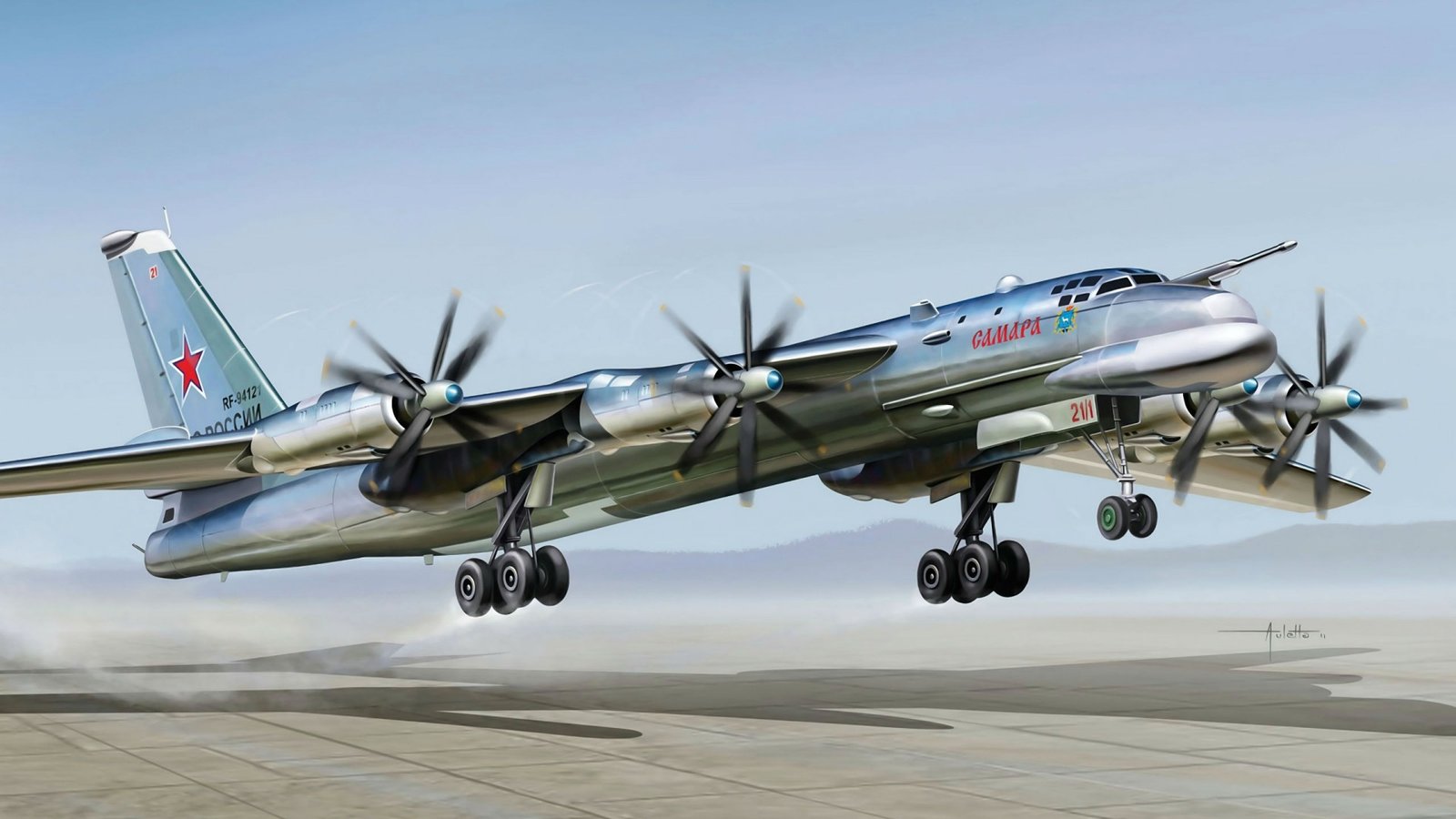
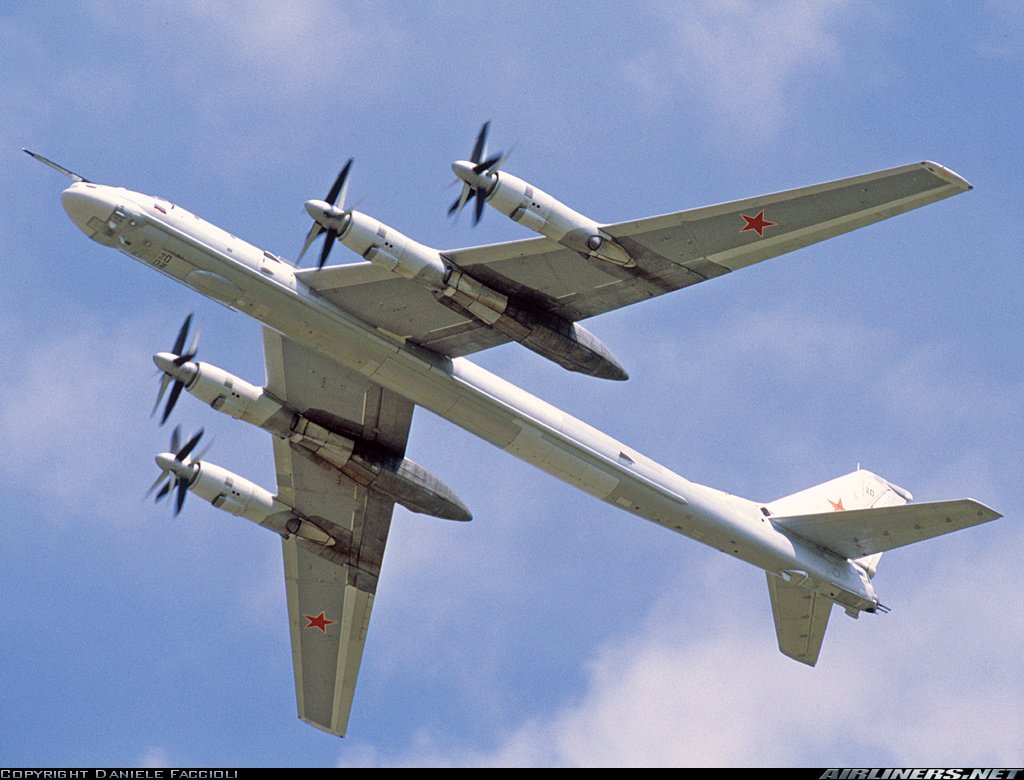
The Tu-95MS (Ту-95МС, NATO reporting name “Bear-H”) is the cruise-missile carrier of Russia’s Long-Range Aviation and one of the two aircraft, with the Tu-160, that launch the Kh-101 missiles fired at Ukrainian cities and power plants. Designed by Tupolev, it is a derivative of the Tu-95 bomber that entered service in 1956. The MS version went into serial production in 1981, according to Wikipedia. Four turboprops with counter-rotating propellers give it a range of about 15,000 km. It is slow and very large, and it does not need to come anywhere near the front line.
That stand-off is the point. Ukraine’s Air Force routinely reports Tu-95MS taking off from Olenya on the Kola Peninsula or Engels near Saratov, flying to launch positions over the Saratov region or the Caspian Sea, and releasing their missiles from there, as The Barents Observer has documented strike by strike. The aircraft is a bus for missiles, and the war over it has been fought on the ground at its bases.
Airframe and systems
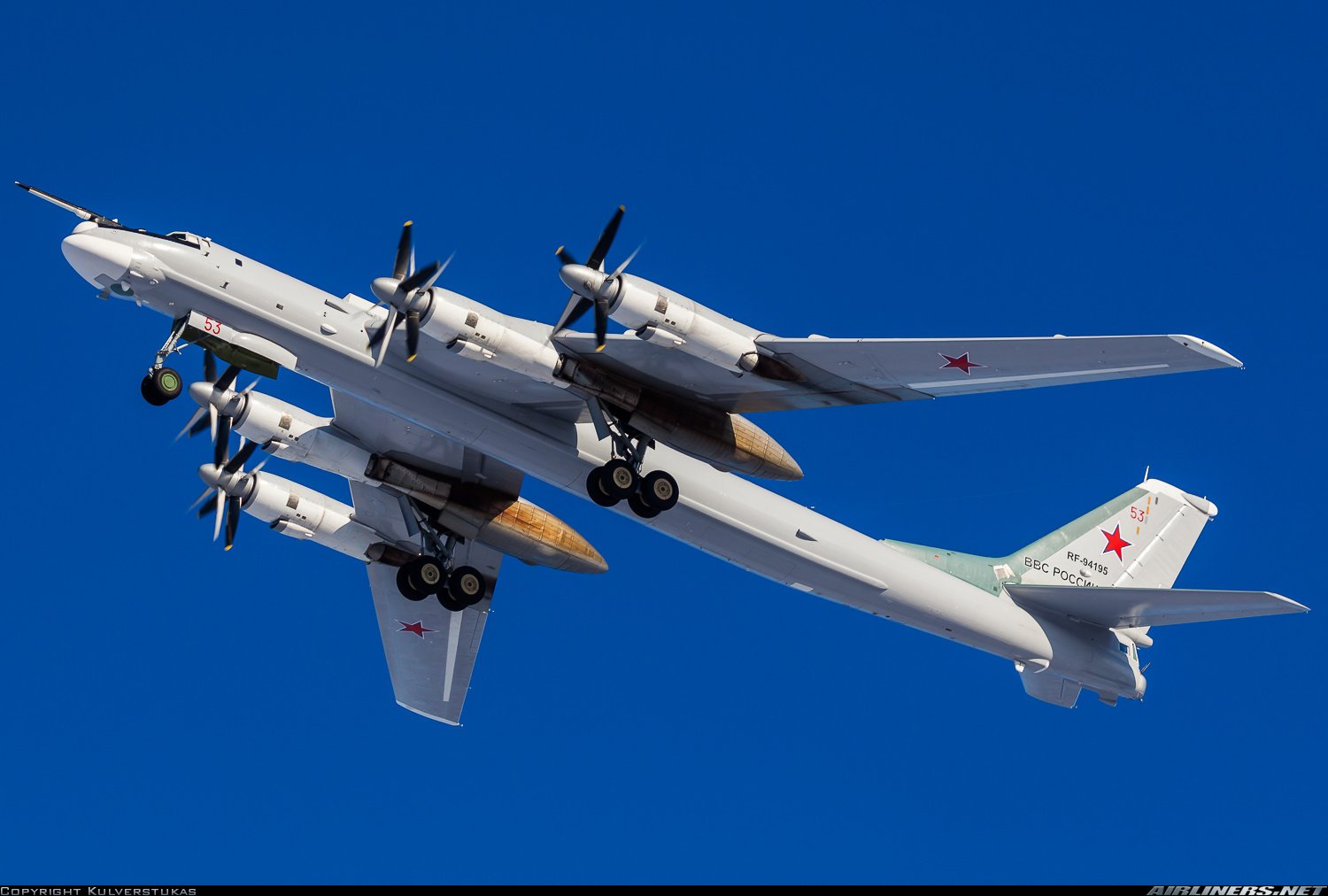
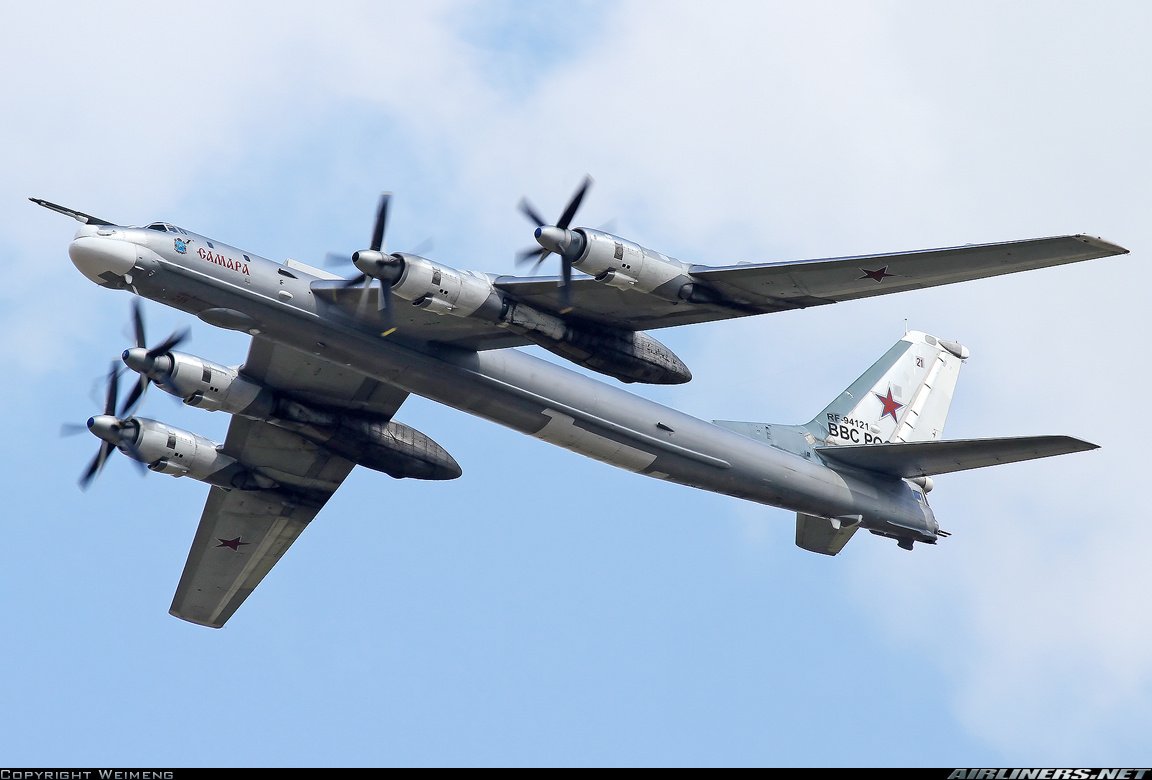
The aircraft is 46.2 m long with a 50.1 m wingspan and a maximum take-off weight of 188 tonnes. Its four Kuznetsov NK-12MP turboprops each produce about 15,000 hp and drive eight-bladed counter-rotating AV-60N propellers, Airforce Technology reports. The same source lists a self-protection fit of an SPS-160 Geran-series jammer, the computer-controlled Meteor-NM ECM system, APP-50 chaff and flare dispensers and an SPO-32 / L150 radar warning receiver. Navigation combines the ANS-2009 celestial system and the BINS-SP-2M strapdown inertial system from KRET, built to work without satellite navigation.
Weapons were originally carried internally. The Tu-95MS6 has a rotary launcher for six Kh-55-family missiles, and 32 were built. The Tu-95MS16 added four underwing pylons for up to 16 Kh-55, and 56 were built. The first modernisation step fitted four double pylons for eight Kh-101 or Kh-102 under the wings while keeping the six internal missiles. Two GSh-23 23 mm cannon in the tail turret remain on unmodernised aircraft.
Tu-95MSM
The Tu-95MSM is the current upgrade standard. It replaces the Obzor-MS radar with the Novella NV1.021 passive electronically scanned array and adds the S021 navigation system, the Meteor-NM2 defensive complex, and NK-12MPM engines with AV-60T propellers that are said to cut vibration by half. The tail turret is removed. Accounts of the first flight differ, giving either the end of 2019 or 22 August 2020, and serial conversions at the Aviakor plant in Samara run at about three aircraft a year (Wikipedia). Because the Tu-95 is no longer built, these upgrades are the only way to keep the fleet flying.
Combat use
The Tu-95MS first saw combat over Syria in November 2015, and on 17 November 2016 it fired Kh-101 missiles at targets there. Against Ukraine it has flown in strikes since the first morning of the full-scale invasion, firing Kh-101 and the older conventional Kh-555. Typical raids involve a handful of aircraft. For the mass attack of 17 November 2024, nine or ten Tu-95MS came from Olenya and Ukraine’s Air Force counted 16 active. The aircraft’s own arrival is part of the warning system: departures are tracked and announced publicly, which gives cities hours of notice before the missiles arrive. On some nights interception rates have been very high. On 26 May 2024 the Air Force reported that all 12 Kh-101/Kh-555 fired by three Olenya-based bombers were shot down.
Losses on the ground
Since the aircraft operates out of reach of Ukrainian air defence, Ukraine has gone after it where it is parked. Drone attacks on Engels damaged two Tu-95s on 5 December 2022, and Russia moved much of the fleet to Olenya, about 1,800 km from the Ukrainian border, in spring 2023.
On 1 June 2025, in Operation Spiderweb, Ukraine’s SBU launched FPV drones from trucks smuggled close to several bases. Ukraine claimed 41 aircraft hit across four airfields, a figure that has not been independently verified. Satellite imagery from Umbra analysed by Chris Biggers confirmed strikes on four Tu-95s and four Tu-22M3s at Belaya in Irkutsk Oblast, Euromaidan Press reported. Video showed four Tu-95s and an An-12 hit at Olenya. Most counts put Tu-95 losses at seven or eight.
On 17 July 2026 the SBU and President Zelensky announced that long-range drones had flown about 800 km to hit a Tu-95 at Engels-2, tearing off its tail section, the Kyiv Independent reported. Planet Labs imagery from 19 July, published by RFE/RL’s Schemes, showed the aircraft broken apart.
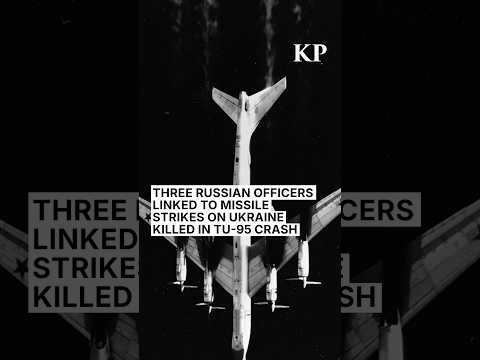
Accidents add to the attrition. On 29 September 2026 a Tu-95MS crashed near Krasnoyarovo in Amur Oblast, about 30 km from Ukrainka air base, during what Russia’s defence ministry called a training flight with no weapons aboard. The ministry said six of the seven crew were killed, according to Ukrainska Pravda and Al Jazeera. Some early reports gave a higher toll.
What is left
There were 55 Tu-95MS in Russian service in 2020. Wikipedia cites an estimate of only 36 airworthy by September 2026. The fleet has been dispersed, and The Barents Observer reports tyres laid on parked bombers’ wings, apparently to confuse drones that navigate by matching images. Russia’s ability to mass Kh-101 strikes now depends partly on how many of these old airframes it can keep flying and protected. Tupolev and its parent, United Aircraft Corporation, have been under US sanctions since June 2022.
Combat experience
The Tu-95MS made its combat debut over Syria on 17 November 2015, and fired Kh-101 cruise missiles at targets there on 17 November 2016, according to Wikipedia. Against Ukraine it has been a mainstay of the long-range missile campaign since 24 February 2022, launching Kh-101 and Kh-555 missiles from Russian airspace over the Saratov region and the Caspian Sea. In the mass strike of 17 November 2024, nine or ten Tu-95MS flew from Olenya and Ukraine’s Air Force counted 16 active, The Barents Observer reported.
The fleet has taken heavy losses on the ground: two aircraft damaged at Engels on 5 December 2022, seven or eight destroyed in Operation Spiderweb on 1 June 2025, and one destroyed at Engels in July 2026. On 29 September 2026 a Tu-95MS crashed on a training flight in Amur Oblast; Russia’s defence ministry said six of the seven crew were killed and no weapons were aboard (Ukrainska Pravda).
Effectiveness
The Tu-95MS is a launch platform, not a penetrating bomber: its value lies in carrying cruise missiles to release points over Russian territory and the Caspian Sea, out of reach of Ukrainian air defence. That stand-off makes the aircraft itself almost invulnerable in the air and moves the contest to two other places — the missiles in flight, which Ukraine intercepts at high rates on many nights, and the airfields, where the bombers are exposed.
Losses matter disproportionately because the type has not been built since the Soviet era. Wikipedia’s estimate of 36 airworthy aircraft by September 2026, against 55 in service in 2020, reflects Spiderweb, the Engels strikes and accidents; each airframe lost removes up to eight Kh-101 from any single raid. Russia has answered with dispersal to Olenya and the Far East and passive measures such as tyres laid on wings, which The Barents Observer reports are meant to confuse drones that navigate by image matching.
Warhead upgrades
| Warhead | Type | Mass | Since | Notes |
|---|---|---|---|---|
| Kh-101 cruise missile (carried weapon) | conventional air-launched cruise missile | not given in these sources | 2016 | Up to eight carried on four double underwing pylons by modernised aircraft; first combat launch from a Tu-95MS against targets in Syria on 17 November 2016; the main weapon used against Ukraine. See the Kh-101 page source |
| Kh-55 / Kh-55SM / Kh-555 cruise missiles (carried weapon) | air-launched cruise missile (Kh-555 is the conventional conversion) | not given in these sources | 1981 | Six internally on the MS6; the MS16 could take up to 16 Kh-55 or 14 Kh-55SM with underwing pylons. Ukrainian Air Force reports name Kh-555 alongside Kh-101 in strikes from the Caspian area source |
Variants
- Tu-95MS61981
Six Kh-55-family missiles on an internal rotary launcher only; 32 built source
- Tu-95MS161981
Adds four underwing pylons for a maximum of 16 Kh-55 or 14 Kh-55SM; 56 built source
- Tu-95MS with Kh-101 pylons2015
First modernisation step — four double underwing pylons for eight Kh-101/102, keeping six Kh-55-family missiles internally; Tupolev delivered aircraft with improved avionics in December 2014 and January 2015 source
- Tu-95MSM2020
Novella NV1.021 PESA radar, S021 navigation, Meteor-NM2 defensive complex, NK-12MPM engines and AV-60T propellers; tail turret removed. Sources disagree on the first-flight date (end of 2019 or 22 August 2020); serial upgrades at Aviakor run at about three aircraft a year source
Countering it
As reported publicly; each line links its source.
- Long-range drone strikes on bomber bases — The SBU said its drones flew about 800 km to hit a Tu-95 at Engels-2, severing its tail; Planet Labs imagery published by Schemes (RFE/RL) on 19 July 2026 showed the aircraft broken apart source
- Covert FPV attack on parked aircraft (Operation Spiderweb) — On 1 June 2025 drones launched from trucks near the bases struck aircraft at Olenya and Belaya; Umbra satellite imagery analysed by Chris Biggers confirmed strikes on four Tu-95s and four Tu-22M3s at Belaya source
- Early warning from bomber movements — Ukraine's Air Force publicly tracks Tu-95MS take-offs from Olenya and Engels and their launch manoeuvres over the Saratov region and the Caspian Sea, giving hours of warning before missiles arrive source
- Intercepting the missiles — Ukrainian air defence engages the Kh-101 and Kh-555 missiles rather than the launch aircraft, which stays out of range; on the night of 26 May 2024 the Air Force reported shooting down all 12 Kh-101/Kh-555 fired by three Olenya-based Tu-95MS source
- Sanctions on the manufacturer — The US Treasury designated Tupolev and parent United Aircraft Corporation in June 2022, restricting access to Western parts and finance source
Sources
- en.wikipedia.org/wiki/Tupolev_Tu-95
- www.airforce-technology.com/projects/tu-95ms-strategic-bomber/
- www.thebarentsobserver.com/security/ten-tu95ms-bombers-from-olenya-took-part-in-mass-missile-attack-on-ukraine/420634
- thebarentsobserver.com/en/security/2024/05/all-missiles-olenya-based-bombers-shut-down-overnight-attack-ukraine
- euromaidanpress.com/2025/06/02/satellite-images-reveal-wreckage-of-russian-strategic-bombers-after-ukraines-spiderweb-drone-operation-deep-in-russia/
- kyivindependent.com/ukraine-strikes-russian-tu-95-bomber-in-saratov-oblast-inflicting-critical-damage/
- www.pravda.com.ua/eng/news/2026/09/29/8055634/
- www.aljazeera.com/news/2026/9/29/russian-nuclear-capable-bomber-plane-crashes-killing-six-people
- www.ch-aviation.com/news/117035-us-sanctions-all-russian-aircraft-manufacturers