Tryzub
Trailer-mounted AI-guided high-energy laser that autonomously detects, tracks, and burns through drones — from FPV to Shahed-class loitering munitions.
systemby Celebra TechIntroduced 2025
Photos: www.thedefensenews.com · www.tomshardware.com · defence-blog.com
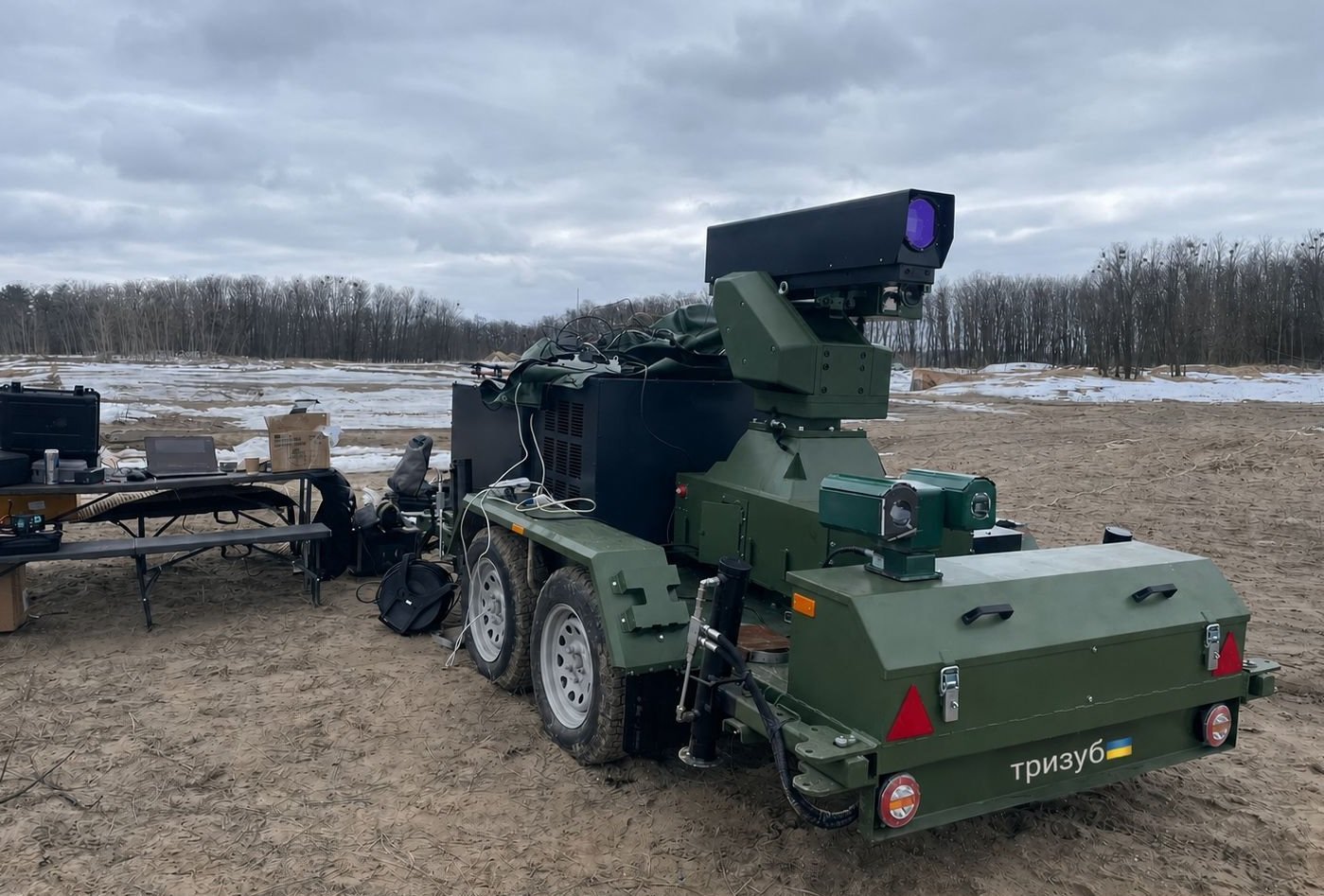
Tryzub is a Ukrainian trailer-mounted directed-energy weapon built to shoot down drones. Named for the trident on Ukraine’s coat of arms, the system was disclosed publicly in December 2024 by Vadym Sukharevskyi, then commanding the country’s Unmanned Systems Forces, who described it as the first Ukrainian laser capable of engaging air targets. The developer is Celebra Tech, and the system reached fielded status in 2025. Kyiv has framed it as part of a broader push to bring cost-per-shot economics into a war where Russian Shahed-136 strikes arrive nightly in wave sizes that make interceptor missiles economically ruinous.
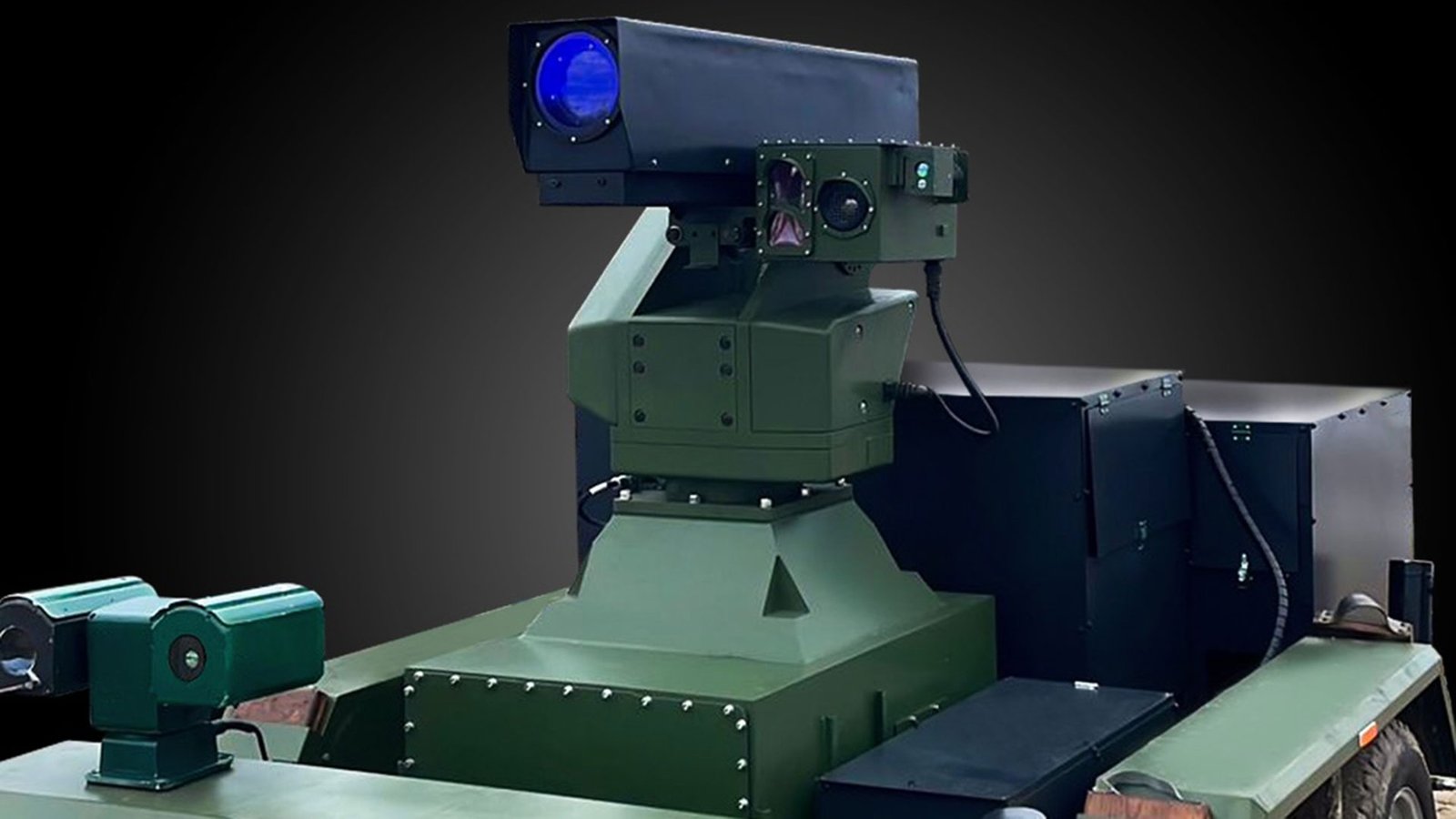
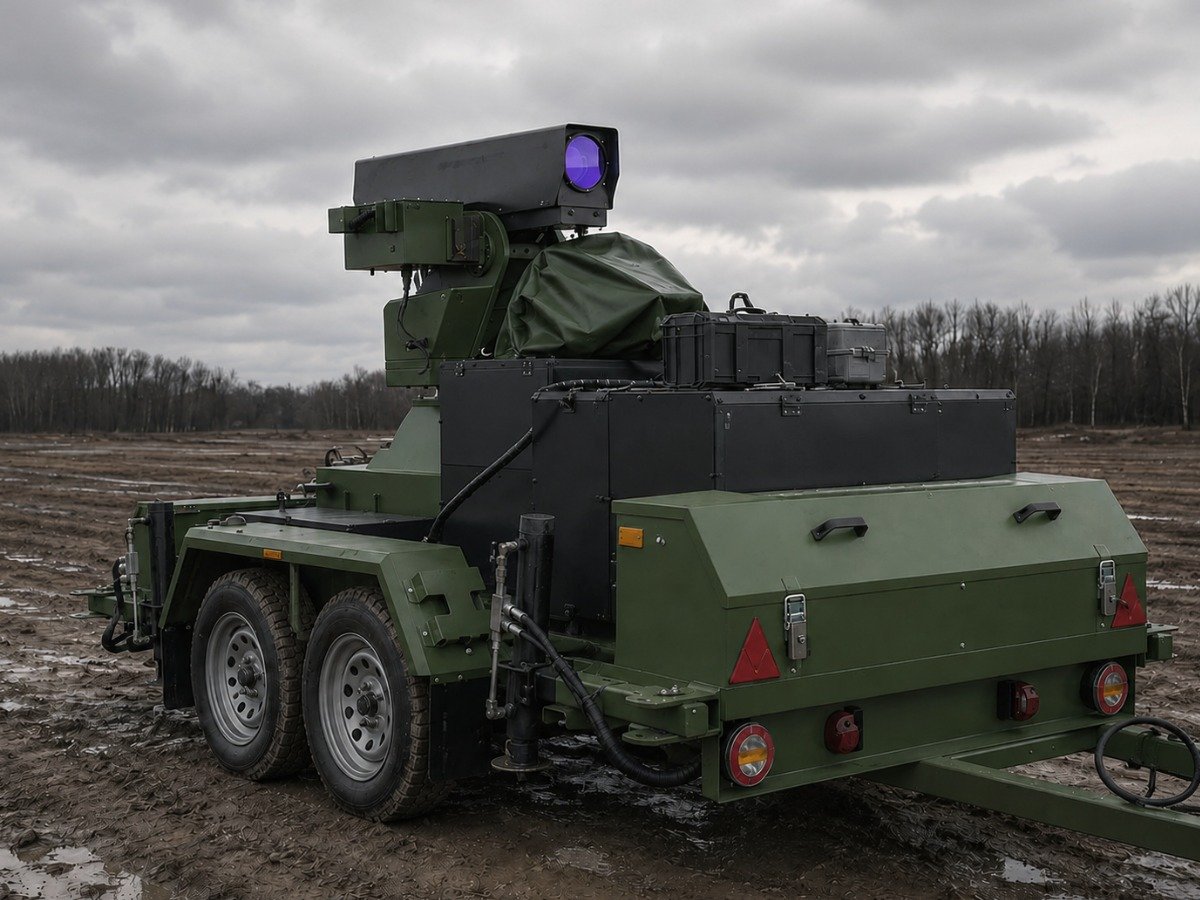
The weapon pairs a high-energy laser on a towed trailer with a radar cue and an AI-driven optical tracker that closes on the target once the beam is on axis. According to the manufacturer, engagement ranges reach roughly 5 km against Shahed-class loitering munitions, around 1.5 km against medium reconnaissance drones, and 800–900 m against small first-person-view drones. Those numbers describe the maximum burn range under favourable conditions — as with every laser air-defence system, effectiveness collapses in fog, heavy dust or rain, and each kill requires several seconds of continuous dwell on the target, which in turn depends on the tracker holding the aimpoint through the drone’s manoeuvring. The autonomy claim is the notable software element: an operator can hand a track from search radar into the fire-control loop, with the AI keeping the beam locked as the platform engages. Neither the laser’s output power nor the beam-director optics have been disclosed in open sources, and the developer has not published imagery detailed enough for outside analysts to reason about them.
Ukraine is currently the only operator. Officials have said the system will be produced and fielded domestically, but no serial-production numbers or contract values have been made public. Independent verification of a combat engagement — footage of a Tryzub burning down a Shahed or an FPV drone in the field — has not surfaced in open OSINT reporting, and until it does the claims about range and kill probability remain vendor and government statements rather than observed performance.
Tryzub places Ukraine in the same small club of laser air-defence programs as the UK’s DragonFire, the US Army’s DE M-SHORAD, and Israel’s Iron Beam, but with a sharper operational driver: it exists to answer a specific, ongoing Russian air campaign. Whether it delivers on that promise will be measured in the coming year by whether Shahed attrition rises where the systems are deployed.