Storm Shadow / SCALP-EG
Long-range stealthy cruise missile with terrain-matching and image-scene-matching terminal guidance, air-launched from combat jets.
Missile / loitering munitionby MBDAIntroduced 2003
Photos: defencesecurityasia.com · www.defencetalk.com · www.newsweek.com · militarnyi.com · fity.club
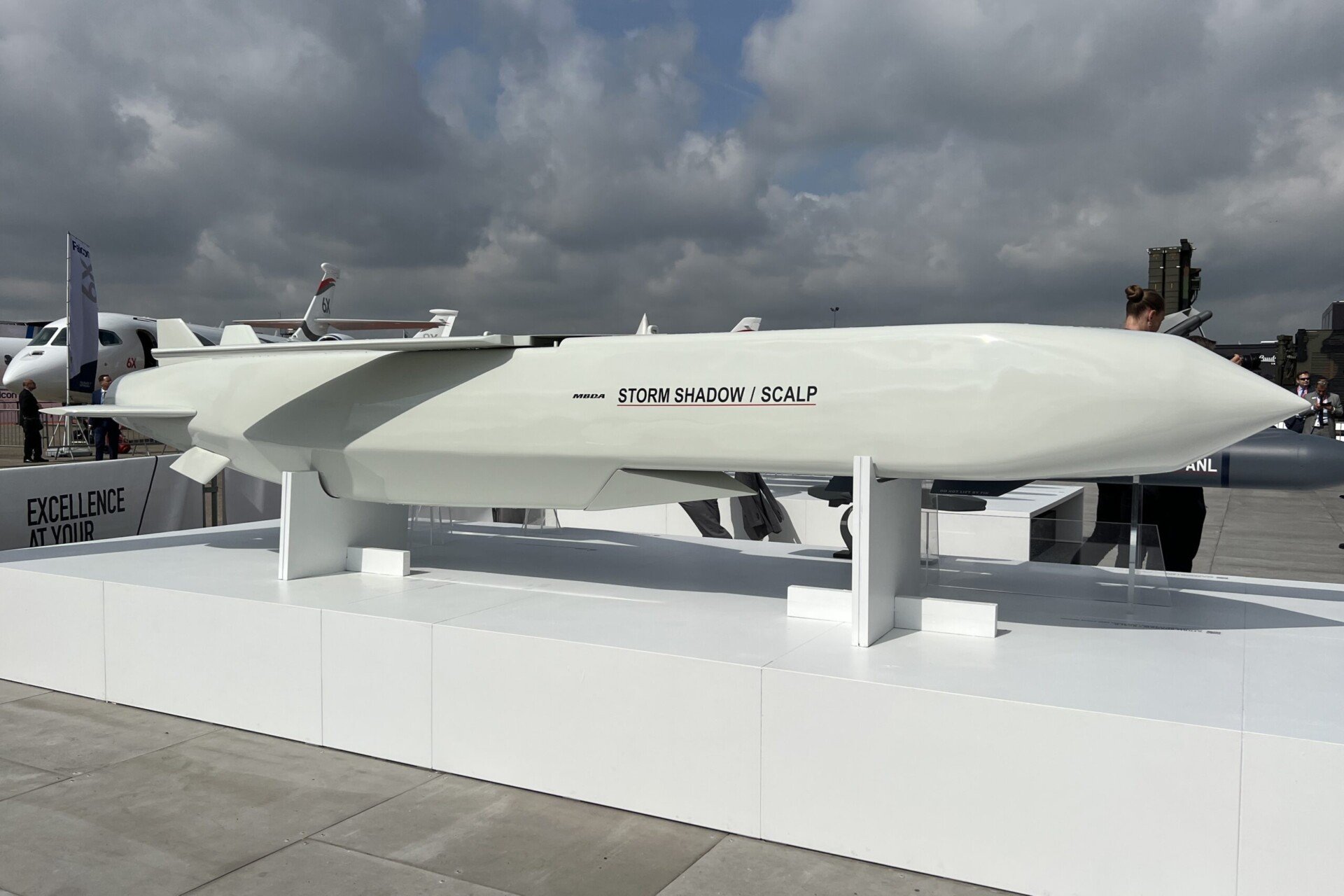
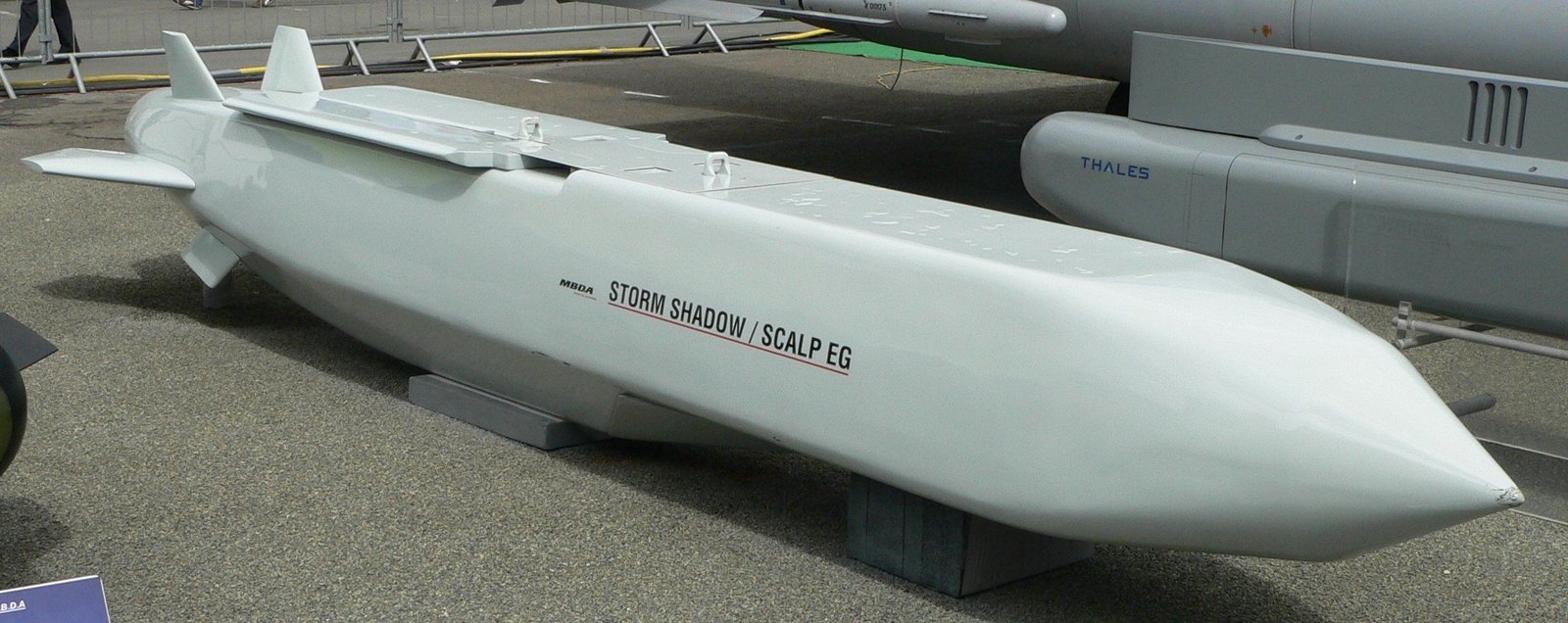
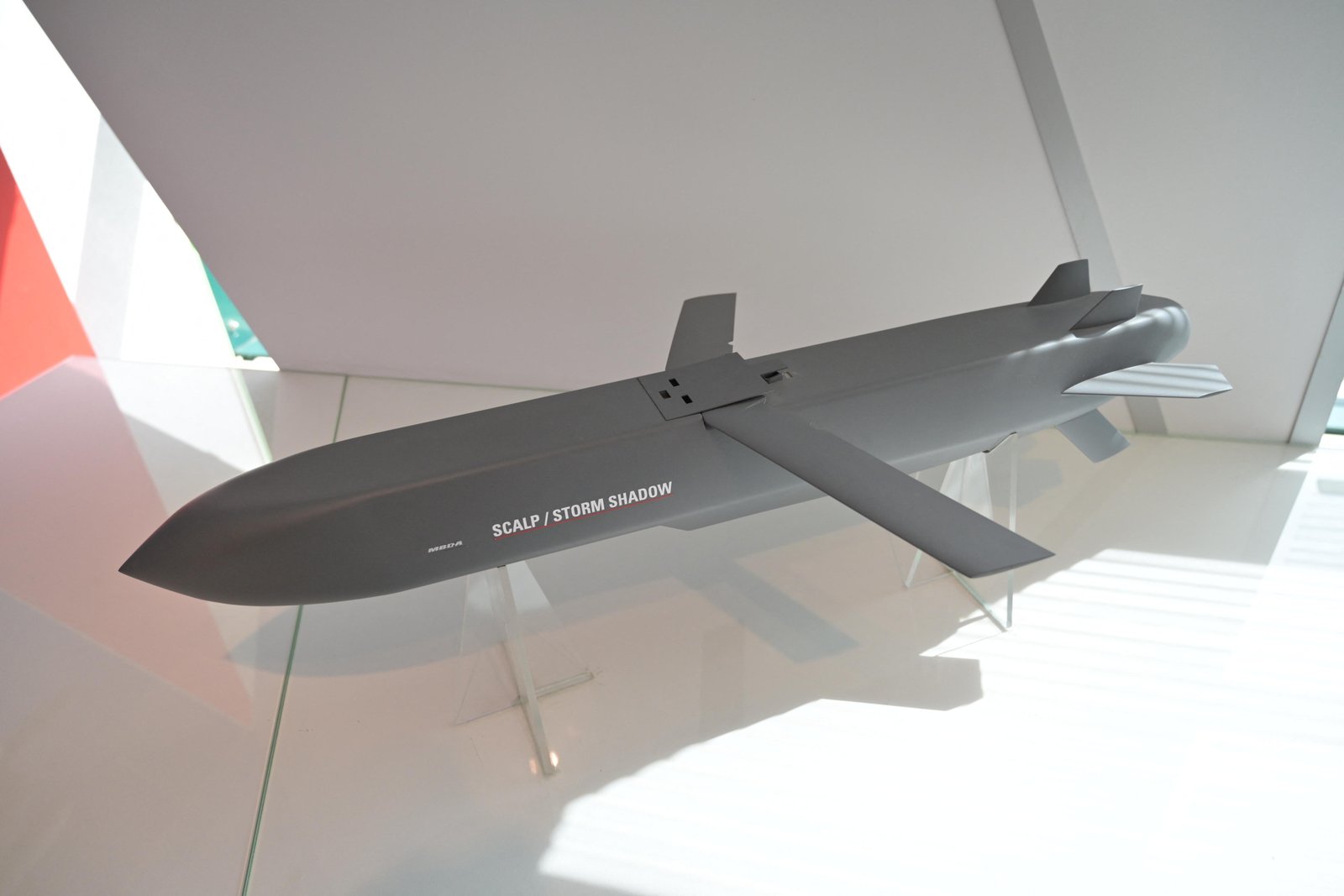
Storm Shadow — known in French service as SCALP-EG — is a Franco-British air-launched cruise missile designed for pre-planned deep strikes against hardened, high-value fixed targets such as command bunkers, bridges, and key infrastructure. Development began in 1994 under Matra and British Aerospace; both lineages were absorbed into MBDA, which now manufactures and sustains the weapon. The missile entered service with the Royal Air Force in 2003 and is derived from the earlier French Apache anti-runway system, inheriting its airframe and low-observable shaping but swapping Apache’s cluster payload for a single penetrating warhead.
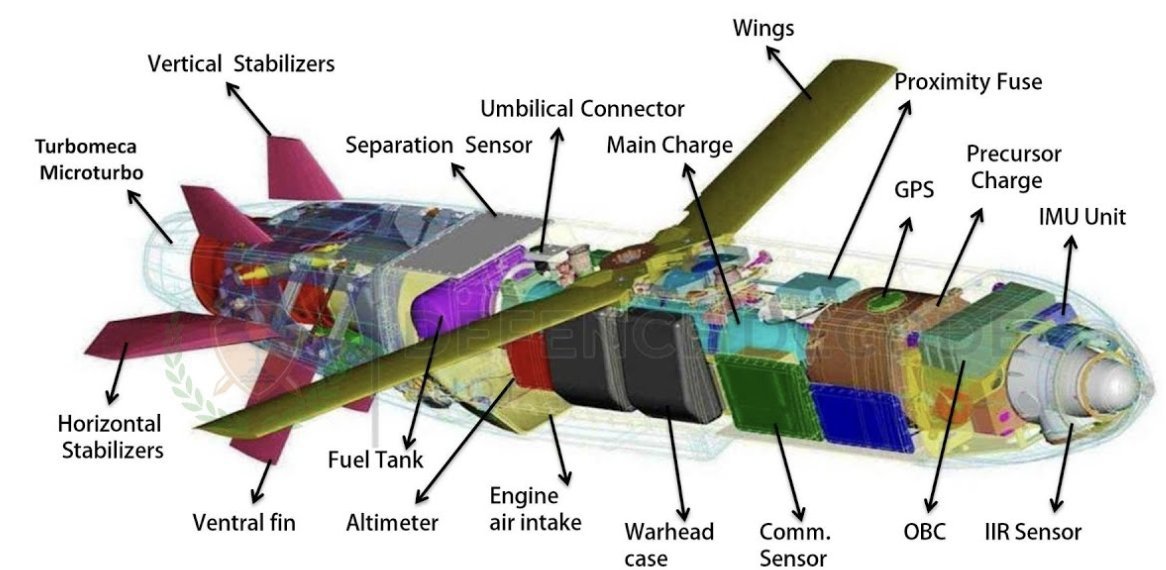
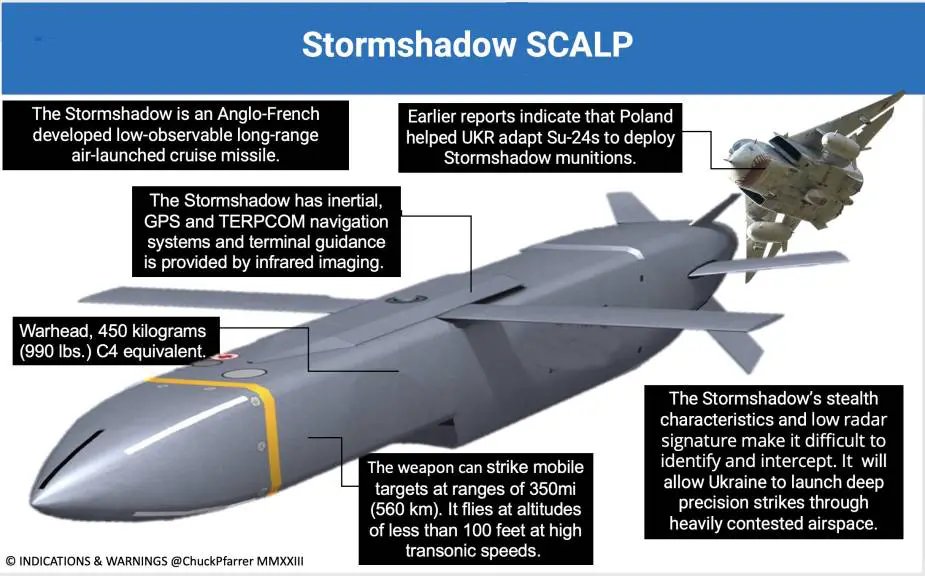
The weapon is subsonic, roughly 5.1 metres long, and weighs around 1,300 kilograms at launch. MBDA says precision comes from a layered navigation stack combining inertial guidance, GPS, and terrain-reference matching (TERPROM), with a digital scene-matching area correlator in the terminal phase: an onboard infrared imager compares the target scene against a pre-loaded reference, giving the missile a measure of resilience to GPS jamming once close to its aimpoint. The BROACH warhead is dual-stage, with a precursor charge opening a path for a follow-on penetrator to detonate inside the structure. Range is quoted as “over 250 km” in the export-restricted form and 500 km or more in full-specification variants. Certified launch platforms include the Eurofighter Typhoon, Rafale, Mirage 2000, and Tornado.
The missile is operated by the United Kingdom, France, Italy, Greece, Saudi Arabia, Egypt, Qatar, and the United Arab Emirates in various export configurations. It saw its combat debut with the RAF in Iraq in 2003 and has since been used by British and French aircraft over Libya, Iraq, and Syria. In May 2023 the United Kingdom became the first country to transfer stocks to Ukraine, with France following shortly after, and the weapon has since been fired against Russian command posts, ammunition depots, and logistics nodes — including strikes on the Chonhar bridge linking occupied Crimea to Kherson oblast and the Black Sea Fleet headquarters in Sevastopol in September 2023. Russian channels regularly claim interceptions; independent assessment from post-strike imagery suggests many missiles reach their targets, though several have also been recovered largely intact by Russian forces, with components reportedly examined for countermeasure development.
An extended-range successor is being developed jointly by the United Kingdom and France under the Future Cruise/Anti-Ship Weapon programme, intended to replace Storm Shadow and the French-navy Exocet toward the end of the decade. Until then, the missile remains Europe’s principal non-nuclear stand-off strike weapon, and the only one of its class to have been transferred to a non-NATO combatant.