ScanEagle
Long-endurance small tactical ISR UAV launched by catapult and recovered by SkyHook, operated by Boeing subsidiary Insitu.
Droneby BoeingIntroduced 2004
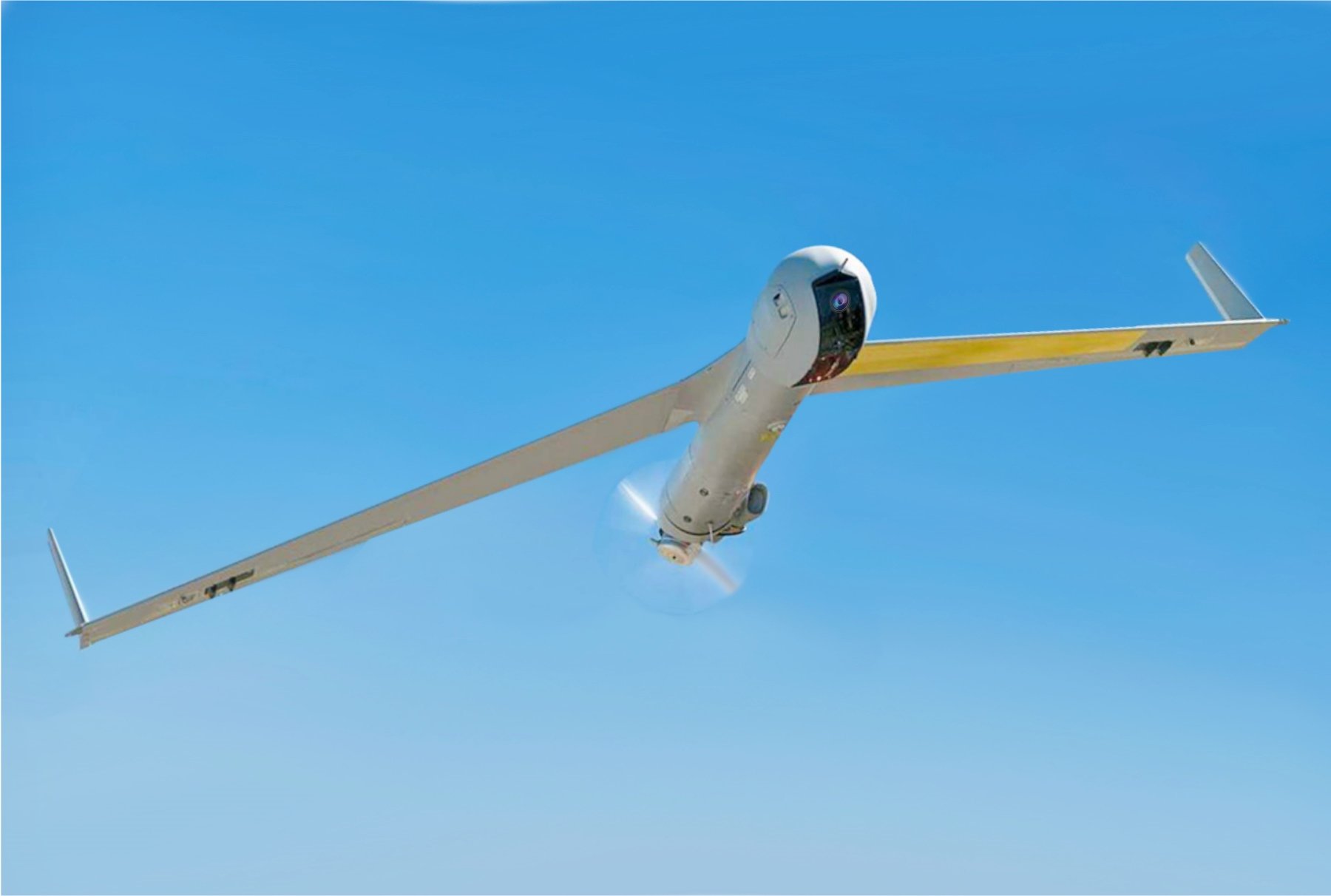
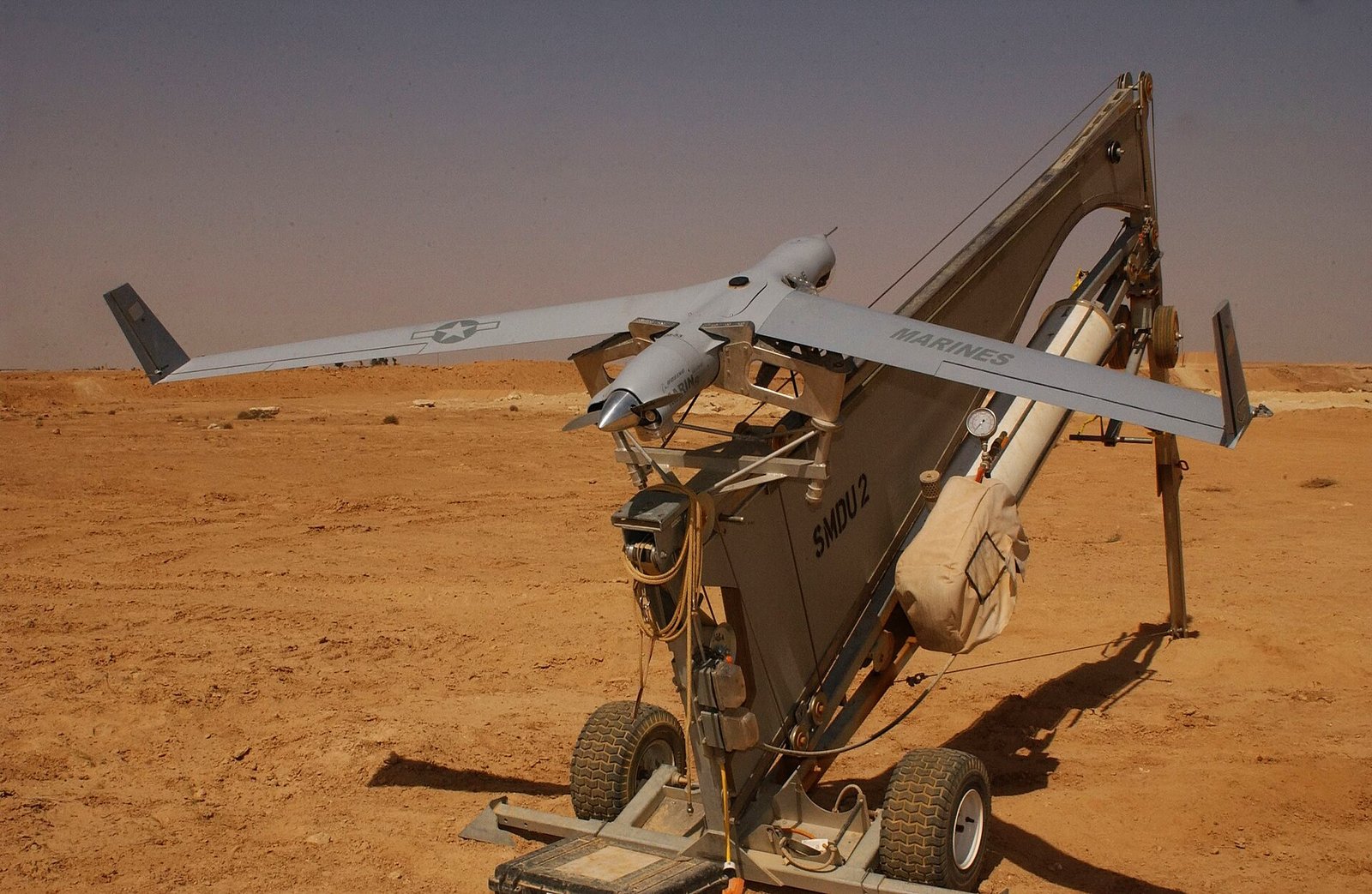
Photos: Wikipedia · Gunnery Sergeant Shannon Arledge of the 2nd Marine Aircraft Wing
ScanEagle is a small long-endurance reconnaissance drone built by Insitu, a wholly-owned subsidiary of Boeing based in Bingen, Washington. Insitu originally developed the airframe in the late 1990s for spotting tuna at sea, and the militarised variant entered US Navy and Marine Corps service in 2004, seeing extensive use in Iraq and Afghanistan through the following decade. Its distinctive profile — a three-metre wing, a pusher propeller, and no landing gear — reflects the recovery method rather than any battlefield preference: the aircraft is fired from a pneumatic catapult and later caught in flight by a hook that snags a rope suspended from a boom, the SkyHook. That launch-and-recover system lets it operate from ships, small clearings, or the beds of pickups, without a runway.
The airframe weighs around 22 kilograms at maximum take-off in current blocks, cruises at roughly 90 kilometres per hour, and endures for more than 24 hours on a single tank of heavy fuel. Its primary sensor is a stabilised gimballed turret carrying an electro-optical camera and a mid-wave infrared imager, with laser rangefinding and target designation added on later variants. Insitu offers a modular payload bay, and customers have fitted signals-intelligence receivers, communications relays, and the ViDAR wide-area maritime surveillance system from Sentient Vision, which uses machine vision to flag vessels the operator has not asked it to look at. The autopilot and ground control station are Insitu-proprietary rather than built on the open flight stacks common in newer small drones.
Operators include the US Navy, Marine Corps and Army, and the air forces or navies of Australia, Canada, the Netherlands, the United Kingdom, Japan, Poland, and Malaysia; Yemen fielded them before the war. Ukraine received an initial batch of RQ-27As from the United States in 2022 under a Foreign Military Sales package announced at roughly $27 million, followed by further deliveries. Insitu has publicly cited more than a million cumulative flight hours across the fleet since introduction. Iran displayed a reverse-engineered variant it calls the Yasir after recovering pieces of ScanEagles brought down over the Persian Gulf, and Chinese analogues have surfaced in the same period.
Successive blocks have kept the airframe in production while shifting the payload rather than the outer mould line; Insitu markets a heavier Integrator as the natural upgrade path, and that airframe forms the basis of the US Marine Corps RQ-21A Blackjack. ScanEagle sits in a crowded catapult-launched ISR segment alongside AeroVironment’s Puma and Elbit’s Skylark, but its endurance and shipboard SkyHook recovery keep it in a niche the others have not displaced.