Ruta
Low-cost jet-powered cruise missile from Dutch-headquartered Destinus, built in Hengelo and used by Ukraine; the maker claims seven Rutas hit the Kerch Bridge on 17 November 2026.
Missile / loitering munitionby DestinusIntroduced 2024 · Updated 2026
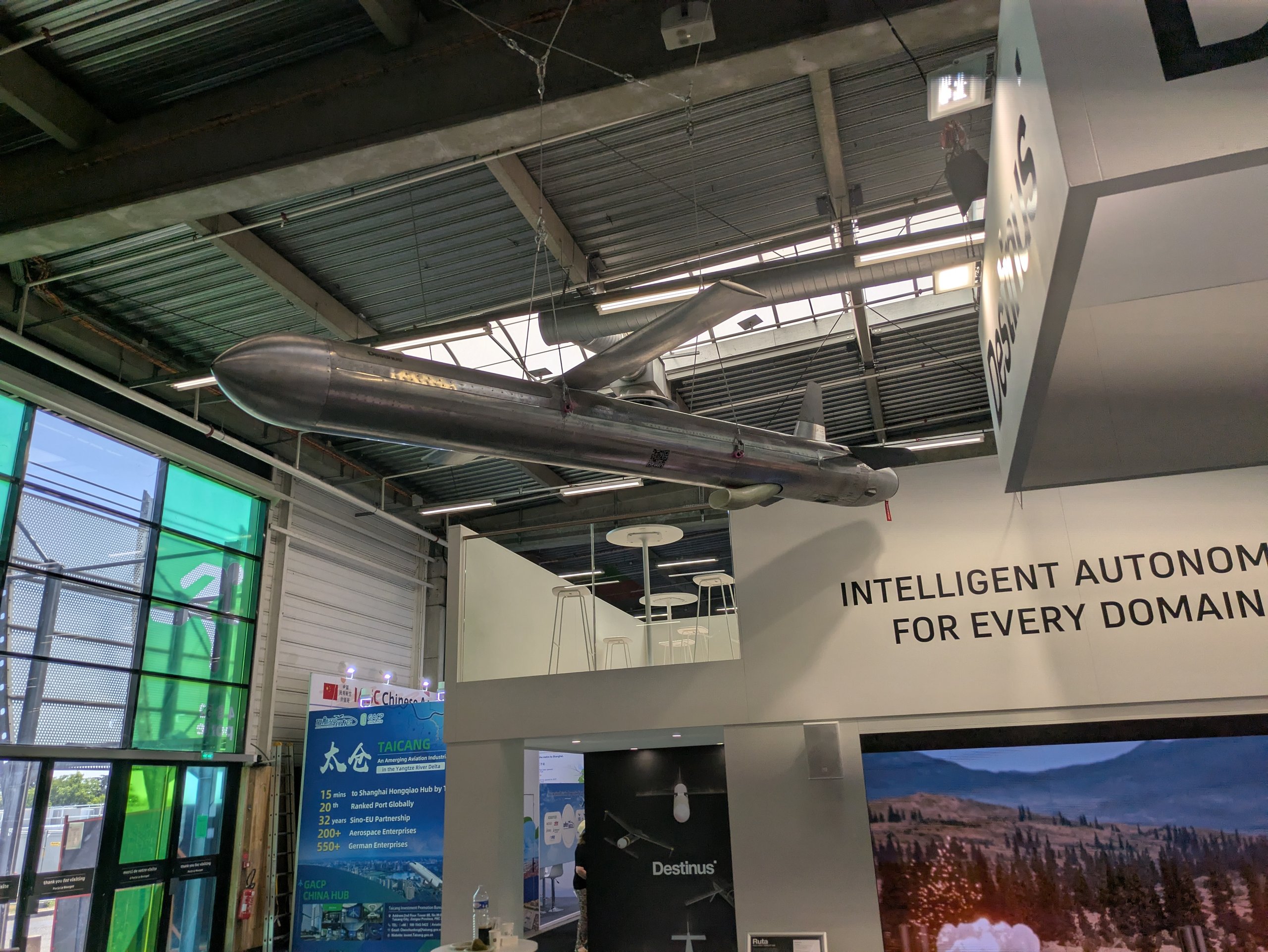
- Ruta on the Destinus stand at the Paris Air Show, June 2025
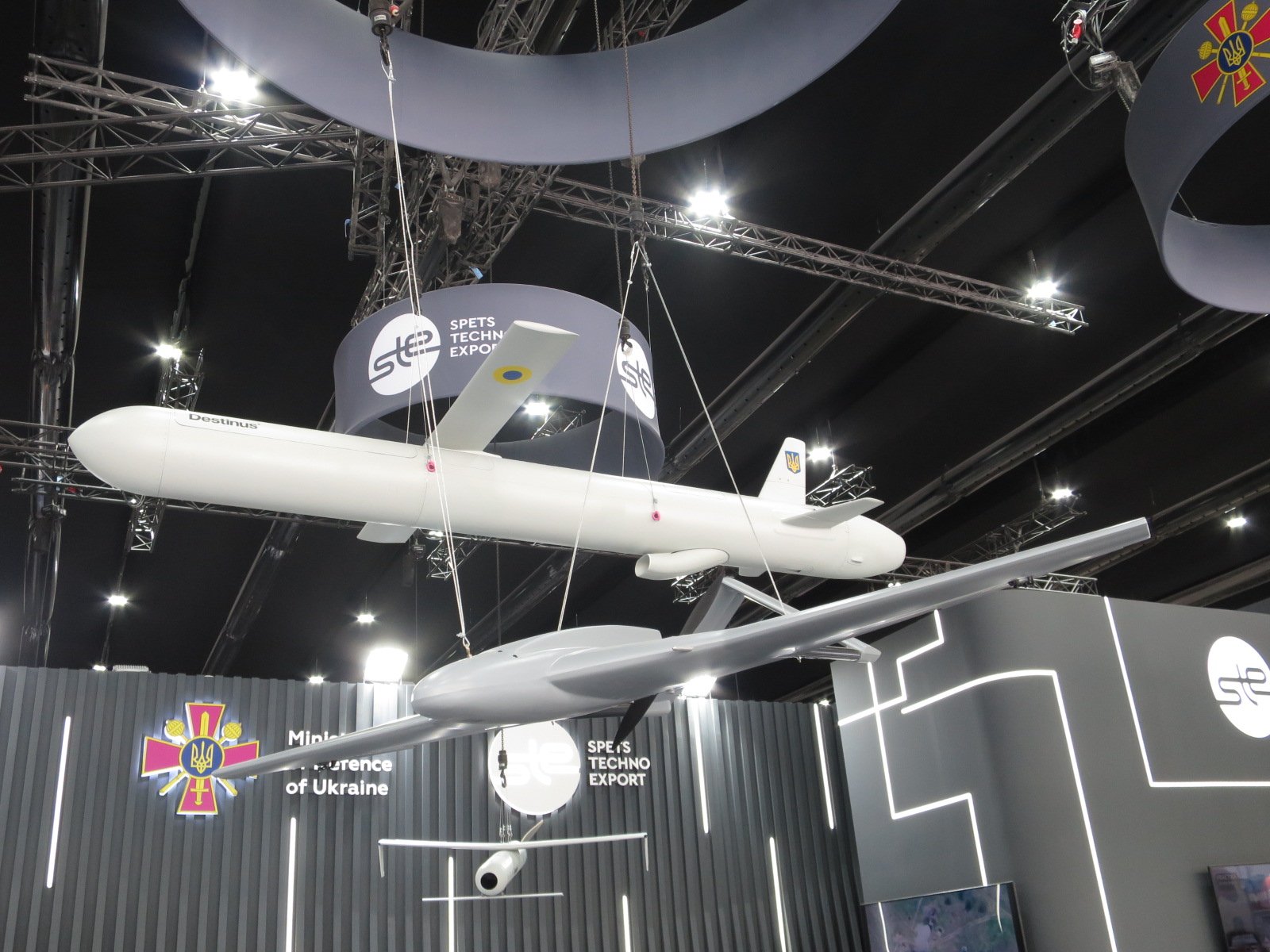 Ruta in Ukrainian markings on the Ukrainian Defence Ministry stand at IDEX 2025, Abu Dhabi, above a Chaklun drone
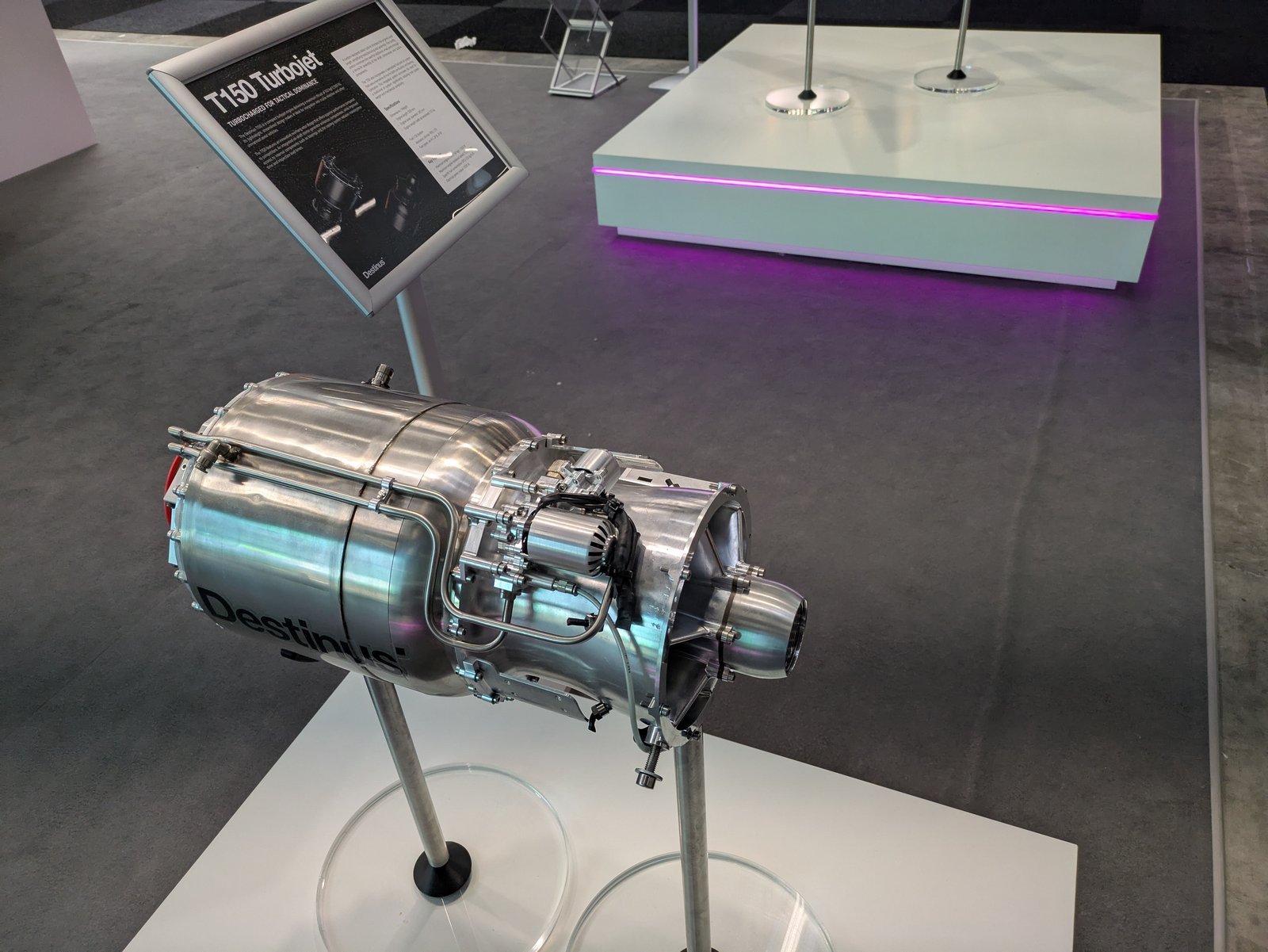 The T150 turbojet that powers Ruta, Paris 2025
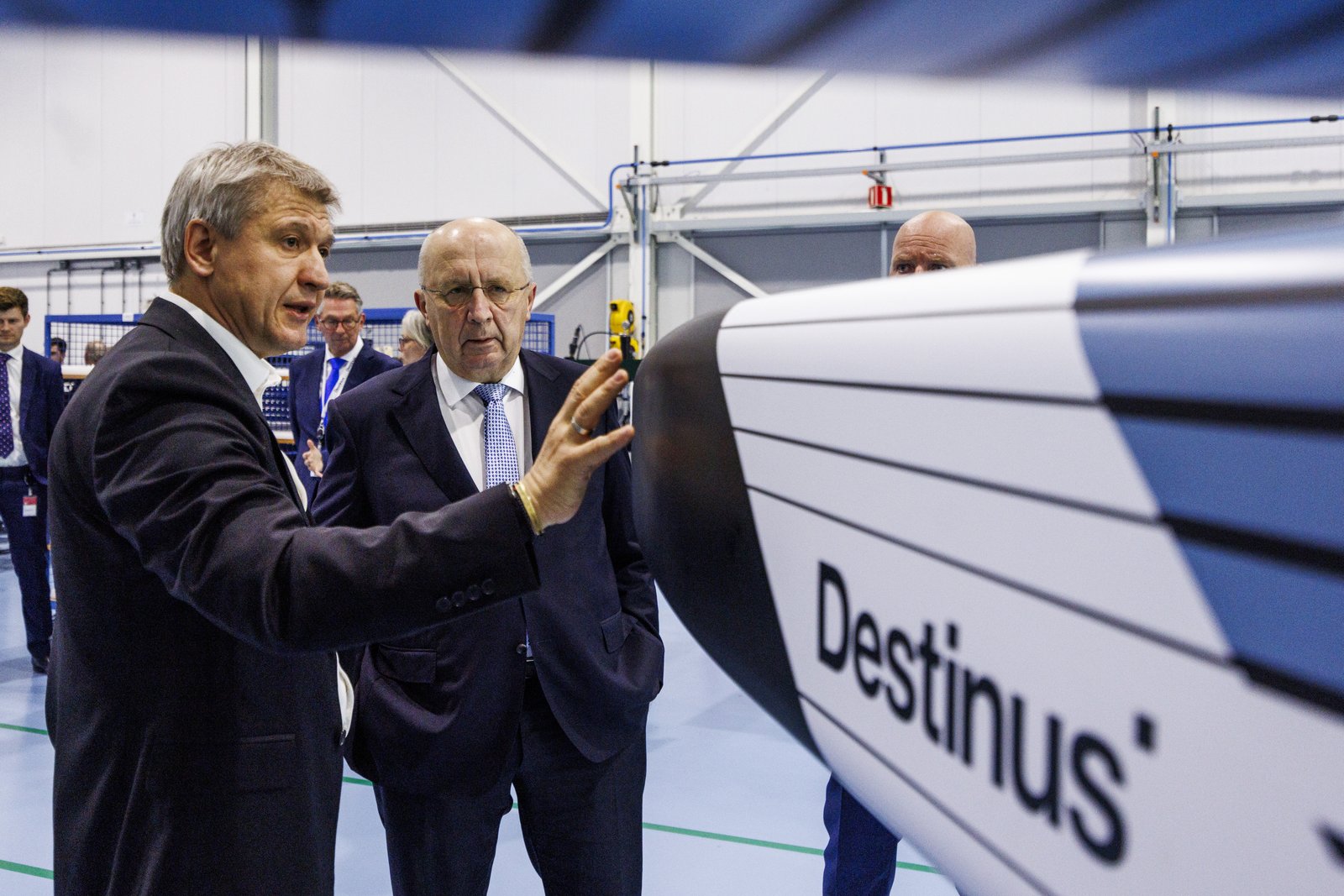 Destinus's Hengelo plant during EU Commissioner Kubilius's visit, 24 September 2026
Photos: Artvill / Wikimedia Commons (CC BY 4.0) · Mztourist / Wikimedia Commons (CC BY 4.0) · Robert Meerding / European Commission (CC BY 4.0)
Videos


Ruta is a small, jet-powered cruise missile made by Destinus, a Dutch defence company with its head office in Valkenburg and its missile plant in Hengelo, founded in Switzerland in 2021. Ukraine flies it. Ukrainian officials often call it a drone and Destinus calls it a missile; the Dutch defence minister told parliament in September 2026 that it “can be characterised both as a drone and as a cruise missile”. It is the weapon that, according to its maker, brought down part of the Kerch Bridge on 17 November 2026.
The Kerch claim
On 17 November Destinus posted on its LinkedIn page that “Destinus RUTA missiles struck the Kerch (Crimean) Bridge on two consecutive days”. The first night’s strikes “damaged the bridge’s upper load-bearing structure”, it said, and “today, seven RUTA missiles hit the bridge, causing one span to collapse”. It added that its LORD drones, known in Ukraine as Da Vinci, helped suppress Russian air defences. The quotes were reported by The War Zone and by the Dutch news agency ANP. The company’s president, Oleksandr Danyliuk, told Reuters that Ukraine launched nine Ruta Block 1, of which seven reached the bridge, and that they were the only foreign-made weapons in the operation: “For such important missions, you send something which is actually proven to work.”
Ukraine’s own account differs in one important respect. President Zelensky said that Palianytsia missile-drones hit the road section, the part that collapsed, while Neptune missiles, “Ruta drones” and the FP-5 Flamingo hit the rail section, which still stands. The SBU also credits the road span to the Palianytsia. Nobody outside Destinus has confirmed the number seven. Full story: the Kerch bridge special report.
How it works
Ruta is launched from a rail by a rocket booster, then cruises on a turbojet at about Mach 0.8. The engine is Destinus’s own T150, built in-house; the company completed its 1,000th in June 2026 and says Ruta uses no Chinese components. Block 1 navigates by combining inertial, satellite and visual navigation and follows the terrain to stay low. It carries a 150 kg warhead over 300 km and weighs roughly 300 kg at launch.
Three blocks make up the family:
| Block 1 | Block 2 | Block 3 | |
|---|---|---|---|
| Range | 300 km | 700+ km | 2,000 km |
| Warhead | 150 kg | 250 kg | 250 kg |
| Engine | T150 turbojet | T150 turbojet | T220 turbojet (in development) |
| Launch | booster, open rail | canister, folding wings | air and ground launch planned |
| Seeker | pre-programmed terminal guidance | EO/IR with AI-assisted target recognition | thermal imaging (reported) |
| Status | series production | flight-tested April 2026, in use | flight tests 2027 |
Block 2 doubles Block 1’s take-off weight and range and fits a canister that stacks in a 40-foot container. Its electro-optical and infrared seeker with AI-assisted target recognition lets it find the target at the end of the flight rather than fly to a coordinate. Block 3 is being developed with Rheinmetall through a joint venture, Rheinmetall Destinus Strike Systems, 51% Rheinmetall, at Unterlüß in Germany. Spain’s Grupo Oesía works on the guidance, navigation and control.
Made in the Netherlands, paid for by the Netherlands
Ruta was first seen on the Ukrainian stand at Eurosatory in Paris in June 2024, in Ukrainian Air Force markings, and Zelensky announced its tests that December. Destinus had moved its headquarters from Switzerland to the Netherlands in November 2024, as Swiss export rules began to get in the way of military work. Block 1 is now built in series in Hengelo. In October 2026 Destinus said it had completed its 1,750th Ruta Block 1 and was making nearly 300 a month, more than Europe produced in cruise missiles a year before the war (Reuters via Defense News).
In June 2026 the Dutch government announced €250 million for “Dutch-produced one-way-attack drones” for Ukraine. After questions from the PVV, Defence Minister Dilan Yeşilgöz-Zegerius confirmed on 1 September that the weapon is the Ruta Block 2 (answer to parliament). Ukraine’s defence minister, Mykhailo Fedorov, spoke of about 700 missiles when he visited the Hengelo plant in June; the Dutch government has not confirmed the number. Whether the Rutas used at Kerch were the Dutch-funded ones is not known.
In Russia
Moscow singled out the Ruta and its factory long before Kerch. In April 2026 Russia’s Defence Ministry published a list of European plants making weapons for Ukraine that included “Destinus in the Netherlands (Hengelo): Ruta” (Kommersant); Dmitry Medvedev called it a list of potential targets and added: “Sleep well, European partners!” The Russian embassy in The Hague named “the company Destinus, based in Hengelo” among those helping Ukraine commit “terrorist acts”, and in July said the Dutch €250 million buys 700 Rutas, “closer to modified drones” than to cruise missiles.
After the Kerch strike, the Russian embassy in The Hague wrote on 18 November that Moscow “has been informed of the Dutch involvement” and that “the confession has been noted”, and asked whether The Hague was openly joining the conflict. Foreign Minister Tom Berendsen replied in parliament that Russia wants “to drive us apart” and that Ukraine may use Dutch-made weapons within the laws of war (NOS). The pro-war channel Two Majors called the Ruta “another sign of NATO countries’ direct participation” and suggested that “some drone or missile that lost control could calmly hit” the plants that make it in Europe. Military Informant wrote of “cheap Dutch RUTA missiles”. Russian outlets have also gone after the company’s founder, Mikhail Kokorich: he is named in a Russian terrorism case against the exiled Anti-War Committee and is on the financial-monitoring list of “terrorists and extremists”.
Combat experience
Effectiveness
Variants
- Ruta Block 12024
Baseline. 300 km, 150 kg warhead, T150 turbojet, rail launch, INS/GNSS/visual navigation. In series production in Hengelo source
- Ruta Block 22026
Twice the take-off weight and range of Block 1. 700+ km, 250 kg warhead, canister launch with folding wings, EO/IR seeker with AI-assisted target recognition. Flight-tested April 2026; the variant the Netherlands funds for Ukraine source
- Ruta Block 32026
Long-range deep-strike version, 2,000 km with a 250 kg warhead and a T220 engine, developed with Rheinmetall (joint venture Rheinmetall Destinus Strike Systems, Unterlüß). Announced May 2026 source
Media
Articles
European-made Ruta missiles only foreign weapons used in Ukraine's Crimean Bridge strike, company says
Reuters · 2026-11-17
Russische ambassade reageert op Krimbrugaanval: doet Den Haag mee aan conflict?
NOS · 2026-11-18
Nederlandse wapenfabrikant laat wereld weten: onze raketten troffen Krimbrug
NOS · 2026-11-17
What we know about Ukraine's strikes that cut Russia's Kerch Bridge road vehicle span
The War Zone · 2026-11-17
Nederlandse rakettenbouwer claimt grote rol bij slopen Krimbrug
ANP / Reformatorisch Dagblad · 2026-11-17
Destinus monthly output tops Europe's pre-war annual cruise missile production
Defense News (Reuters) · 2026-10-29
Evidence of Ukraine using Dutch Ruta Block 1 cruise missiles emerges
The War Zone · 2026-07-24
Sources
- www.destinus.com/products/ruta-block-1 (2026-11-17) — Destinus product page, Ruta Block 1 — 300 km, 150 kg payload, multi-sensor navigation (INS/GNSS/VNS), terrain following.
- www.destinus.com/products/ruta-block-2 (2026-11-17) — Destinus product page, Ruta Block 2 — 700+ km, 250 kg, canister launch, EO/IR terminal guidance with AI-assisted target recognition.
- www.tectonicdefense.com/destinus-and-rheinmetall-unveil-new-deep-strike-missile/ (2026-11-17) — Ruta Block 3, 2,000 km, 250 kg; Rheinmetall partnership; work split NL / Ukraine / Germany; Grupo Oesía GNC.
- www.rheinmetall.com/en/media/news-watch/news/2026/04/2026-04-13-rheinmetall-and-destinus-form-joint-venture-for-missile-systems (2026-11-17) — Rheinmetall Destinus Strike Systems, 51/49, Unterlüß; "advanced cruise missiles and ballistic rocket artillery".
- www.defensenews.com/global/europe/2026/10/29/destinus-monthly-output-tops-europes-pre-war-annual-cruise-missile-production/ (2026-11-17) — Reuters — 1,750th Ruta B1 completed, nearly 300 a month; no Chinese components.
- www.prnewswire.co.uk/news-releases/engine-no-1000-destinus-reaches-industrial-scale-turbojet-production-in-europe-302803526.html (2026-11-17) — Destinus press release, 1,000th T150 turbojet; T220 in development.
- www.tweedekamer.nl/downloads/document?id=2026D40292 (2026-11-17) — Minister Yeşilgöz-Zegerius, 1 Sep 2026 — €250m of Dutch-made one-way-attack drones for Ukraine; "De one-way-attack drone (OWA) Ruta Block 2 kan zowel als een onbemenst systeem (drone) en als een kruisvluchtwapen gekarakteriseerd worden."
- militarnyi.com/en/news/baptised-in-fire-ruta-drone-missile-hits-an-offshore-rig-for-the-first-time-at-a-distance-of-more-than-250-km/ (2026-11-17) — Zelensky, 8 Oct 2025 — first reported Ruta hit, offshore rig >250 km.
- militarnyi.com/en/news/ukraine-successfully-tests-ruta-missile/ (2026-11-17) — Ruta on the Ukrainian stand at Eurosatory 2024; Zelensky announces tests, 10 Dec 2024.
- www.twz.com/news-features/what-we-know-about-ukraines-strikes-that-cut-russias-kerch-bridge-road-vehicle-span (2026-11-17) — Quotes the Destinus LinkedIn post — "Today, seven RUTA missiles hit the bridge, causing one span to collapse."
- Telegram channel:t.me/V_Zelenskiy_official/21848 (2026-11-17) — Zelensky — Palianytsia hit the road section; Neptune missiles, Ruta drones and FP-5 the rail section.
- www.kyivpost.com/post/27513 (2026-11-17) — Kyiv Post (Feb 2024, from Challenges) — Destinus supplied Ukraine with hundreds of drones; Ruta mass production planned.
- live.euronext.com/en/financial-news/european-made-ruta-missiles-only-foreign-weapons-used-ukraines-crimean-bridge-strike (2026-11-18) — Reuters, 17 Nov 2026 — Danyliuk, nine Ruta Block 1 launched, seven hit; only foreign-made weapons in the operation.
- nos.nl/artikel/2640005-russische-ambassade-reageert-op-krimbrugaanval-doet-den-haag-mee-aan-conflict (2026-11-18) — NOS, 18 Nov 2026 — Russian embassy "De bekentenis is genoteerd"; Berendsen's reply; Destinus HQ in Valkenburg.