REMUS 6000
Full-ocean-depth AUV for deep seabed survey, submarine wreck search, and strategic undersea infrastructure surveillance.
Droneby Kongsberg DiscoveryIntroduced 2009
Photos: ess.globecomposite.com · www.yumpu.com · www.globecomposite.com · nauticos.com
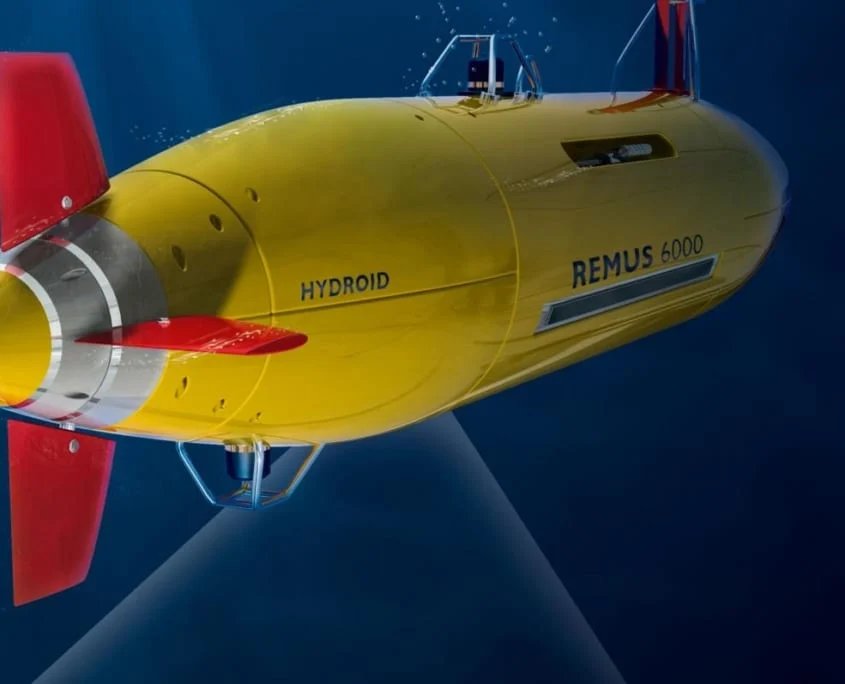
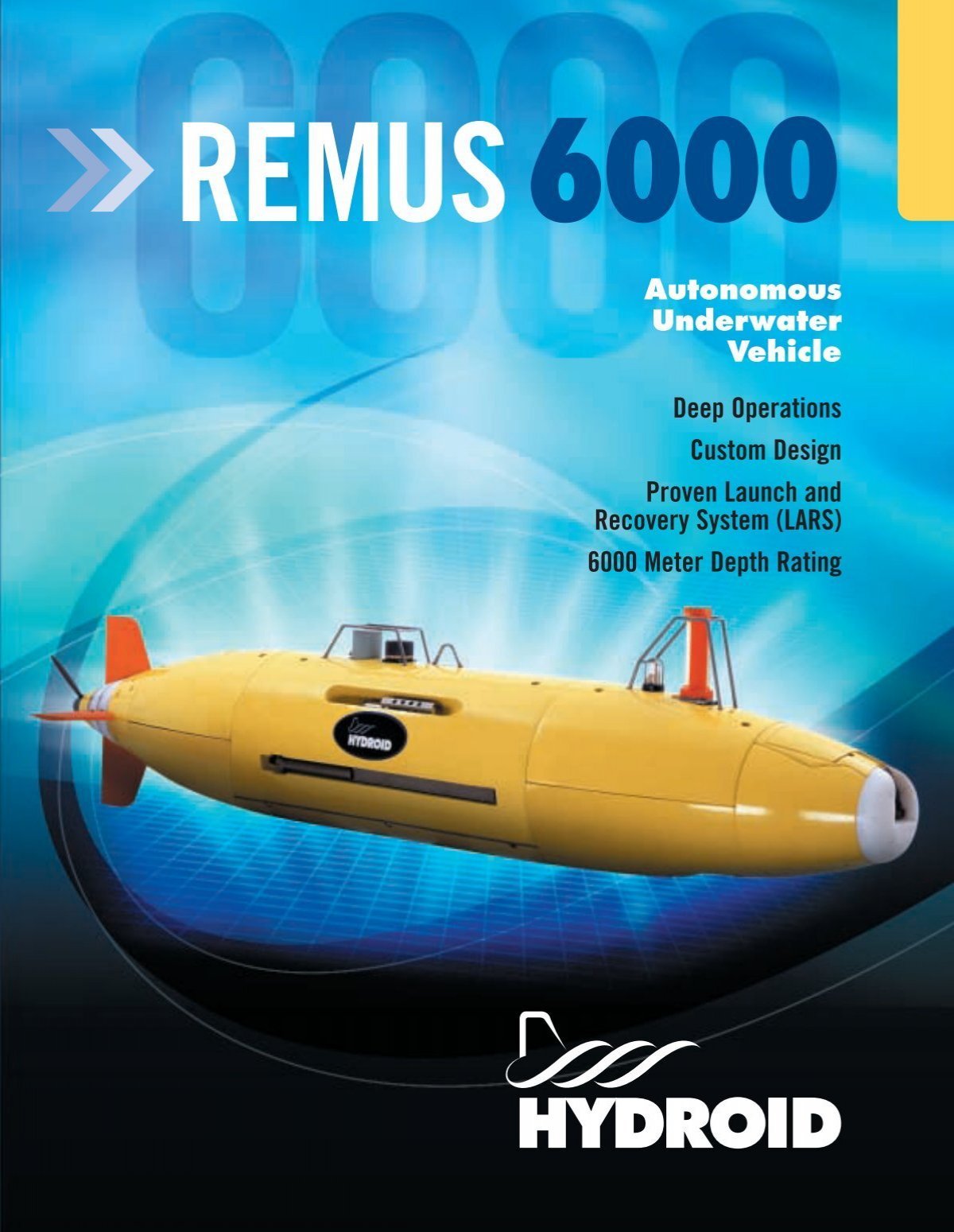
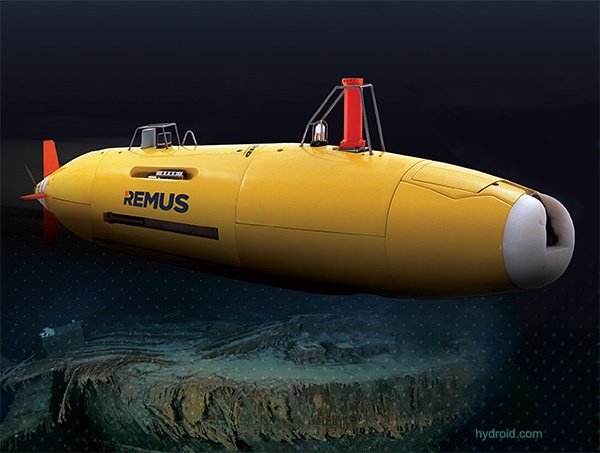
The REMUS 6000 is a full-ocean-depth autonomous underwater vehicle (AUV) developed by Hydroid, which is now part of Kongsberg Discovery. Designed for deep seabed survey, submarine wreck search, and strategic undersea infrastructure surveillance, the system entered service in 2009. It is the largest member of the REMUS family, built to operate in depths ranging from 25 meters to 6,000 meters. The vehicle was developed through a cooperative program involving the Naval Oceanographic Office, the Office of Naval Research, and the Woods Hole Oceanographic Institution (WHOI) to support deep-water autonomous operations.
The REMUS 6000 is powered by an 11 kWh rechargeable lithium-ion battery pack, providing up to 22 hours of endurance. Propulsion is handled by a direct drive DC brushless motor connected to an open 2-bladed propeller, allowing a maximum velocity of 2.6 meters per second. Navigation relies on an Inertial Navigation Unit (INU) comprising accelerometers and gyros, supplemented by an Acoustic Doppler Current Profiler (ADCP) for altitude and ground speed. For collision avoidance, the vehicle uses a Pencil-Beam Sonar system. Communication capabilities include an acoustic modem for underwater data transmission, Iridium satellite connectivity for surface “phone home” functions, and 802.11B Wi-Fi for shipboard data exchange.
Survey instruments on the REMUS 6000 include a dual-frequency side-scan sonar that creates 2D images of the seafloor and a custom digital camera with a strobe light for high-resolution imaging within 10 meters of the bottom. The vehicle utilizes acoustic navigation to independently survey areas, and once points of interest are identified, it can gather detailed close-up images. The system employs Long Baseline Transducers to communicate with pre-laid Deep Ocean Transponders (DOTs), enabling precise positioning relative to a pre-programmed route.
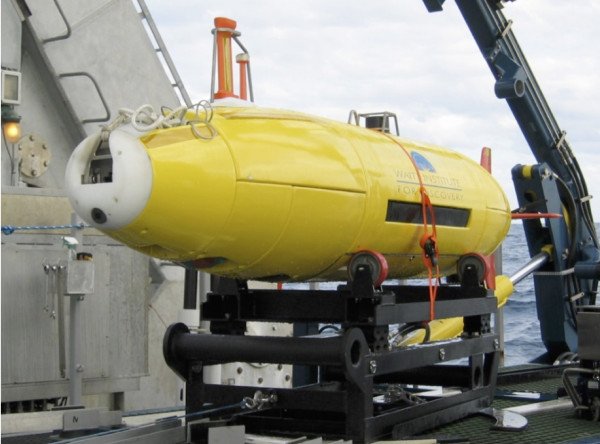
The United States and France are among the operators of the REMUS 6000. The vehicle gained significant recognition during the search for Air France Flight 447, which crashed in the Atlantic Ocean in 2009. In 2011, three REMUS 6000 AUVs—two owned by the Waitt Institute for Discovery and one by the Leibniz Institute of Marine Sciences (IFM-GEOMAR)—aided in the discovery of wreckage nearly 2.5 miles below the surface. The search team, led by WHOI, used the vehicles’ side-scan sonar and digital cameras to locate debris including wings, engines, and fuselage parts. Over 200 REMUS vehicles have been deployed globally, with systems used by thirteen NATO and other navies for hydrographic surveys, harbor security, and scientific research.