Raybird UAS
Long-endurance fixed-wing reconnaissance UAV with 28+ hour flight time, SAR and EO/IR payloads, and real-time fire-control integration — the primary ISR platform of the Ukrainian Armed Forces.
Droneby SkyetonIntroduced 2018
Photos: euro-sd.com · nextgendefense.com · www.unmannedsystemstechnology.com · www.commercialuavnews.com · thedefender.media
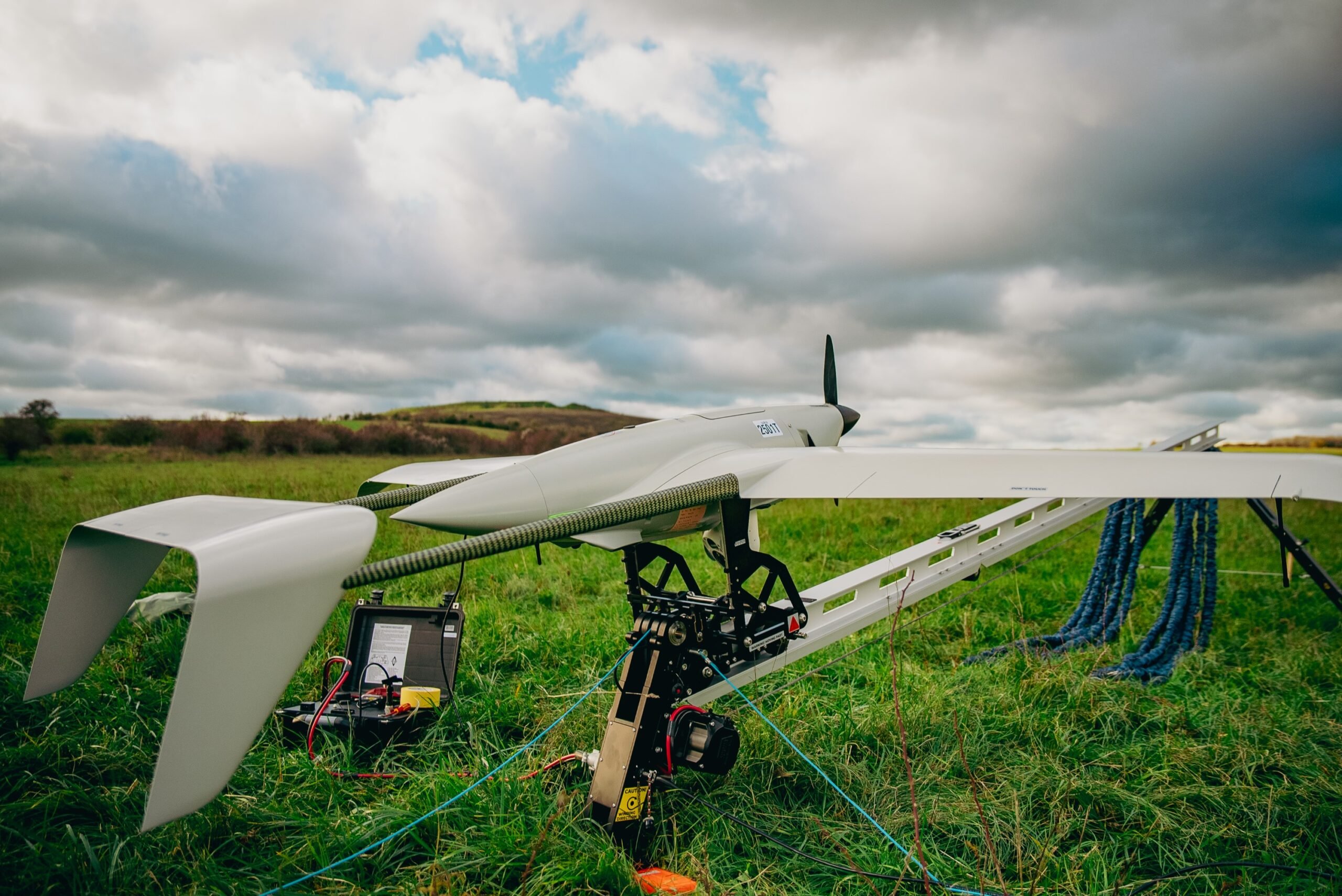
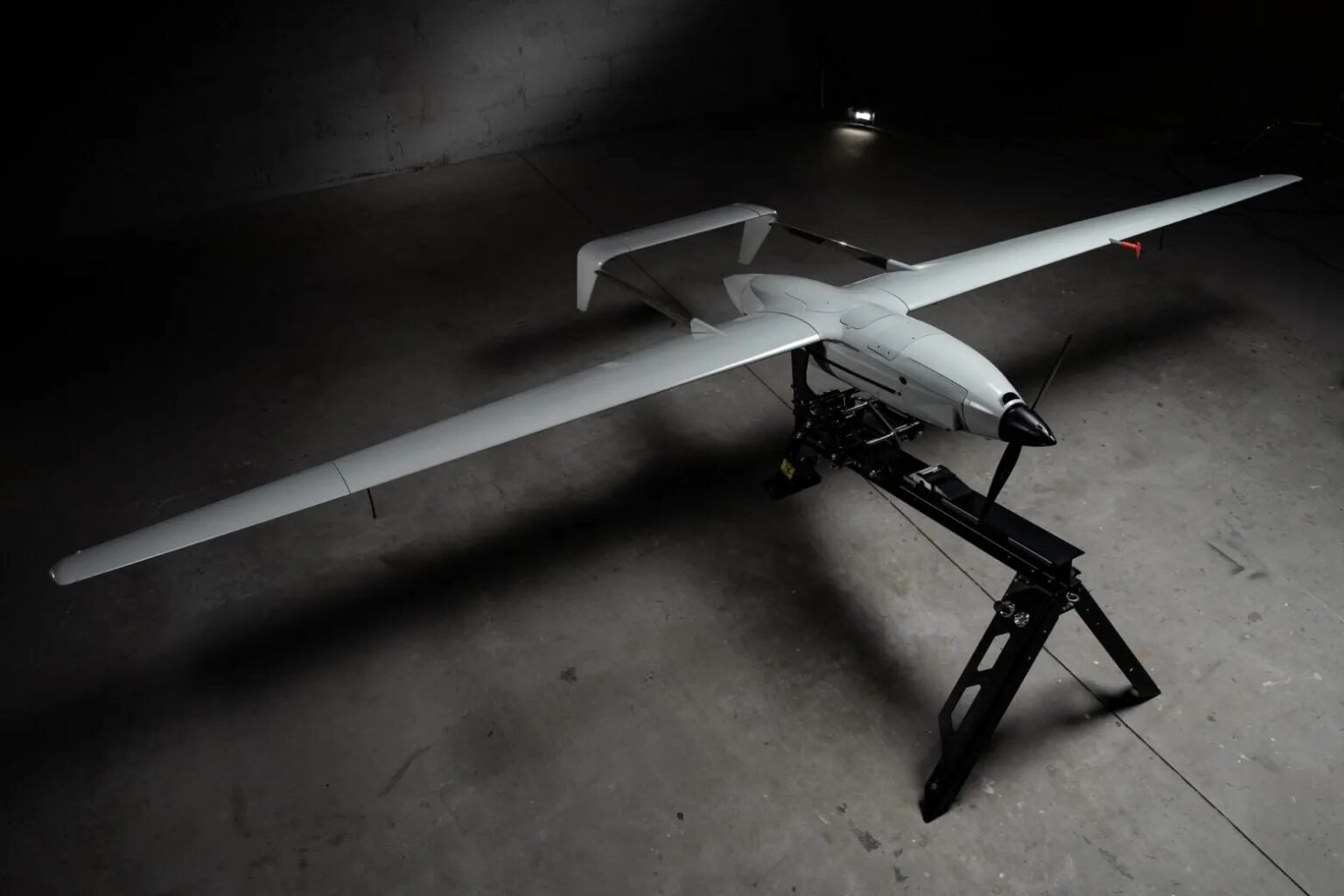
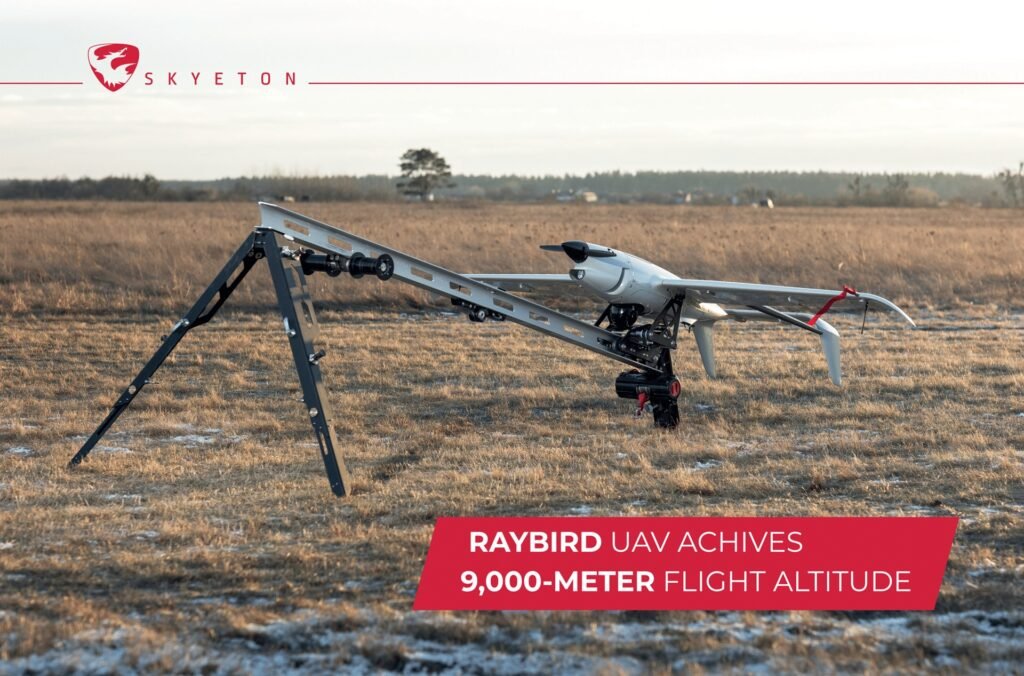
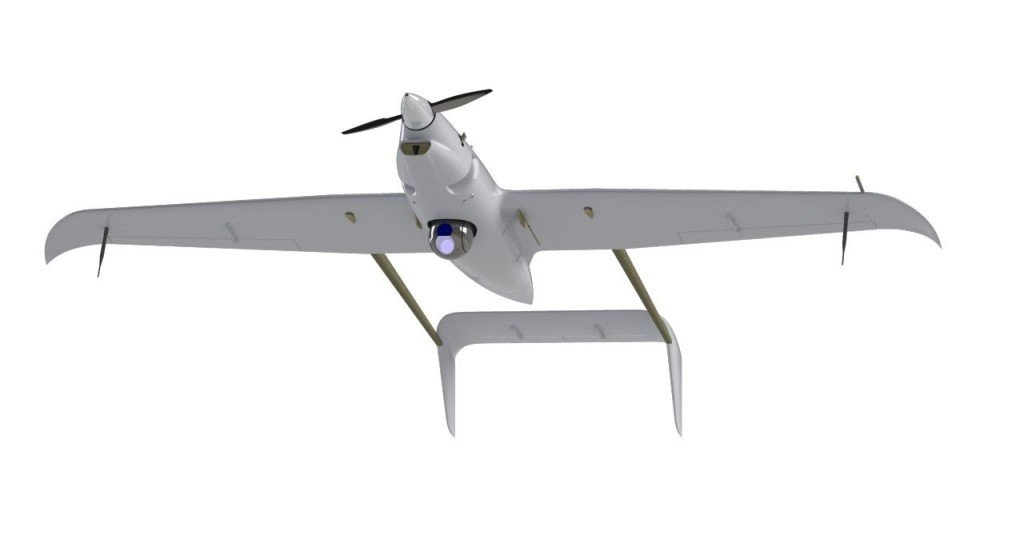
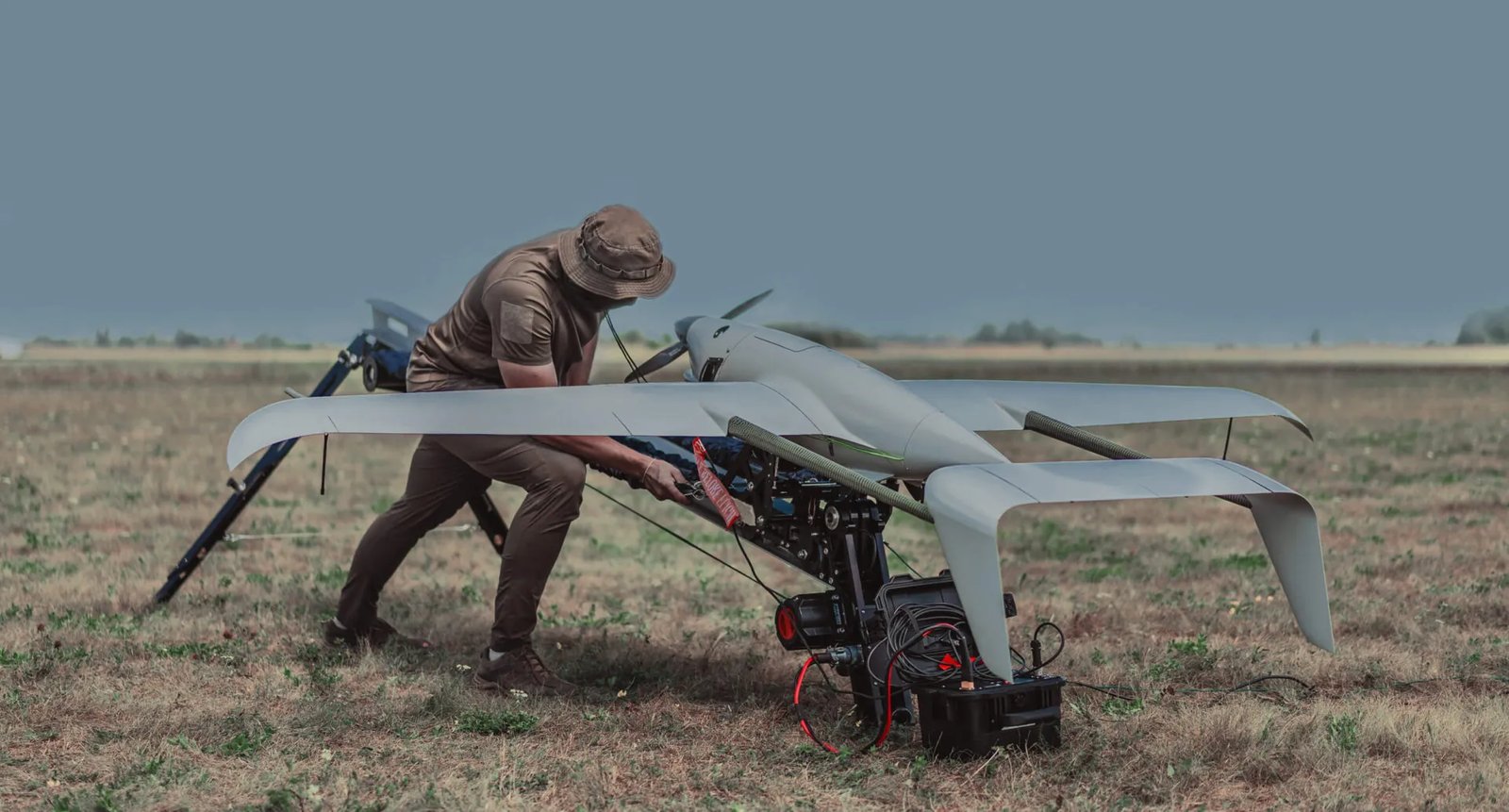
The Raybird is a long-endurance tactical unmanned aircraft built by Skyeton, a Ukrainian firm founded in 2006 that pivoted hard to military work after the 2022 full-scale invasion. Fielded since 2018 and now one of the main intelligence, surveillance and reconnaissance platforms flown by the Ukrainian Armed Forces, it sits in NATO Class I / DoD Group 2 — a catapult-launched fixed-wing with a wingspan of up to 4.2 metres, a maximum take-off weight of 23 kilograms, and, per the manufacturer, an endurance of up to 24 hours over a route of 2,500 kilometres.
The aircraft is powered by an electronic fuel-injected four-stroke engine running on AI-95 gasoline, cruising between 80 and 140 km/h at altitudes up to 5,500 metres. Launch is from a mechanical catapult; recovery uses a parachute paired with a pneumatic airbag, with the airframe mechanically flipped mid-descent so the payload bay lands upward on the cushion. Skyeton states that deploying the ground station, catapult and antenna takes up to twenty-five minutes. The data link reaches past 200 kilometres and, in a role the manufacturer calls data-link extension, one Raybird can act as a relay for another, pushing control range an additional 50–80 kilometres over terrain or electronic-warfare interference. A gyro-stabilised multi-sensor gimbal carries electro-optical and medium-wave infrared sensors with onboard image stabilisation and target tracking. Interchangeable payloads include a synthetic-aperture radar module (0.3–10 m resolution, imaging range to 20 km, moving-target detection to 15 km) and a radio-frequency locator for triangulating hostile emitters — radars, air-defence sets, electronic-warfare units — at distances the company puts above 25 kilometres.
In Ukrainian service the Raybird is used for deep reconnaissance behind the lines and for real-time targeting of long-range fires. Skyeton describes integration with HIMARS, the Polish AHS Krab and the French CAESAR self-propelled howitzers, holding the target in frame from above 2,000 metres until the round arrives. The manufacturer puts cumulative combat flight hours past 350,000 — a figure drawn from its own fleet data rather than from an independent audit. Russian forces struck Skyeton’s Kyiv office in May 2026, which the company publicly confirmed.
The platform is still being iterated. Skyeton added an anti-interceptor capability in early 2026, integrated a radiation-surveillance payload shortly before, and is developing hydrogen-hybrid and satellite-communications variants to extend endurance and remove the data-link horizon. Export conversations have followed in parallel — a Bundestag delegation visited the company in August 2026, and partnerships with the German firm ONBERG and Czech defence group INTEC were announced the same year.
Among Western Class I ISR aircraft, the Raybird competes with systems like the AeroVironment Puma 3 AE and Textron Aerosonde. What sets it apart on the sheet, and in the service record Skyeton publishes, is that both grew out of a shooting war rather than a procurement cycle.