Patriot
The principal Western ground-based air and missile defence system, firing both PAC-2 and PAC-3 interceptors from one launcher.
systemby RaytheonIntroduced 1984 · Updated 2026-09-10
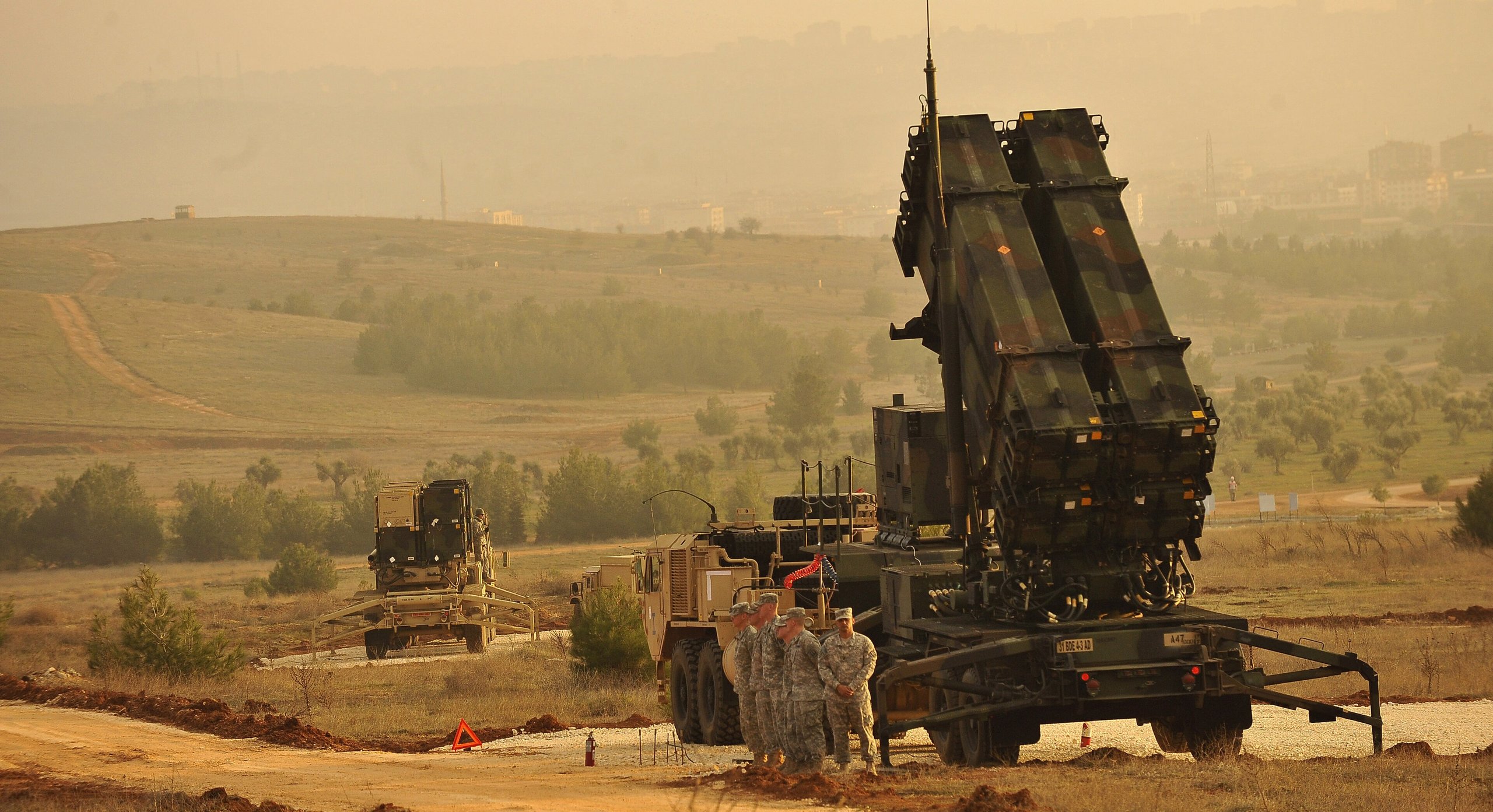 Patriot battery with launchers elevated.
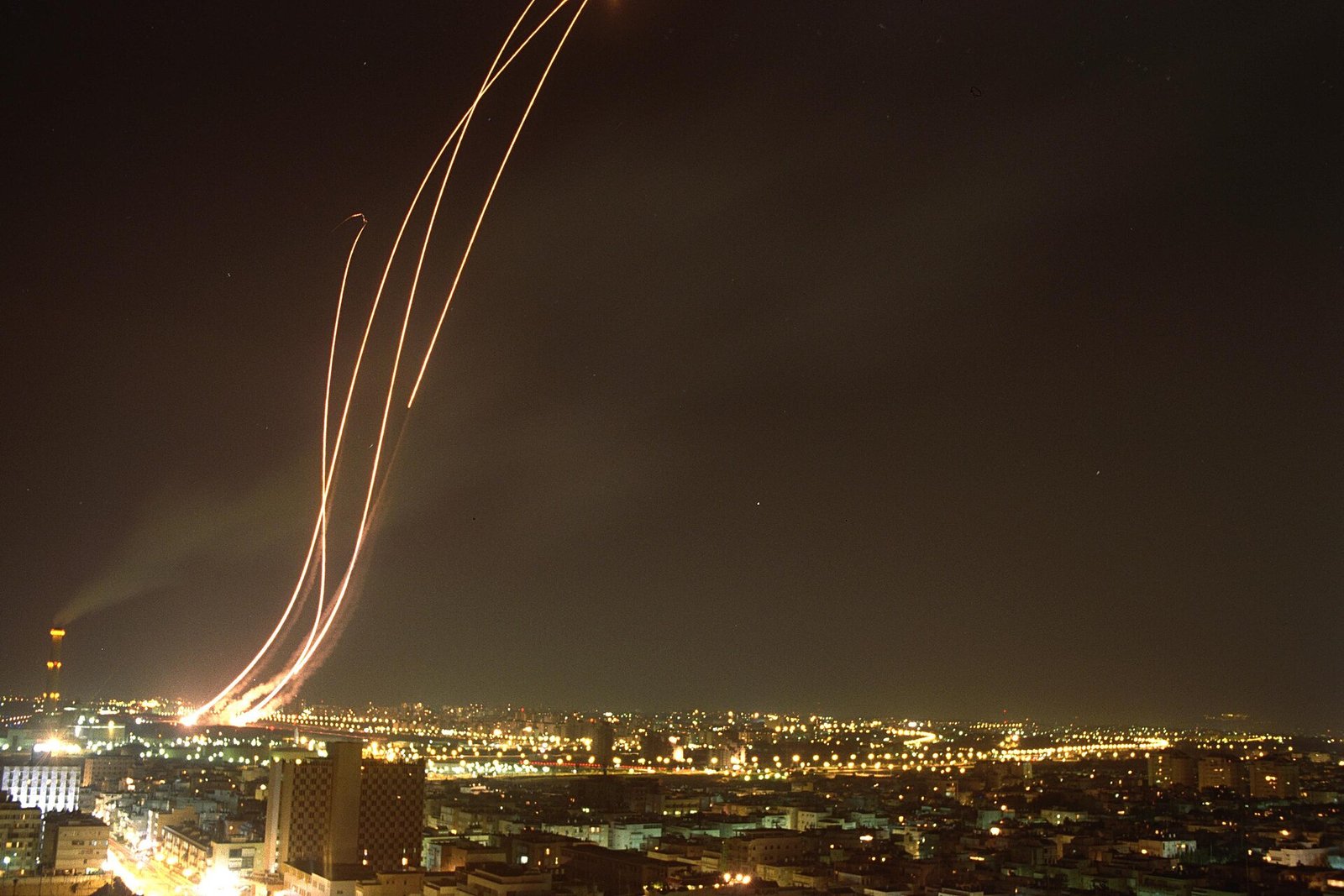 Patriot rounds launched against an Iraqi Scud, 1991 — the system's combat debut.
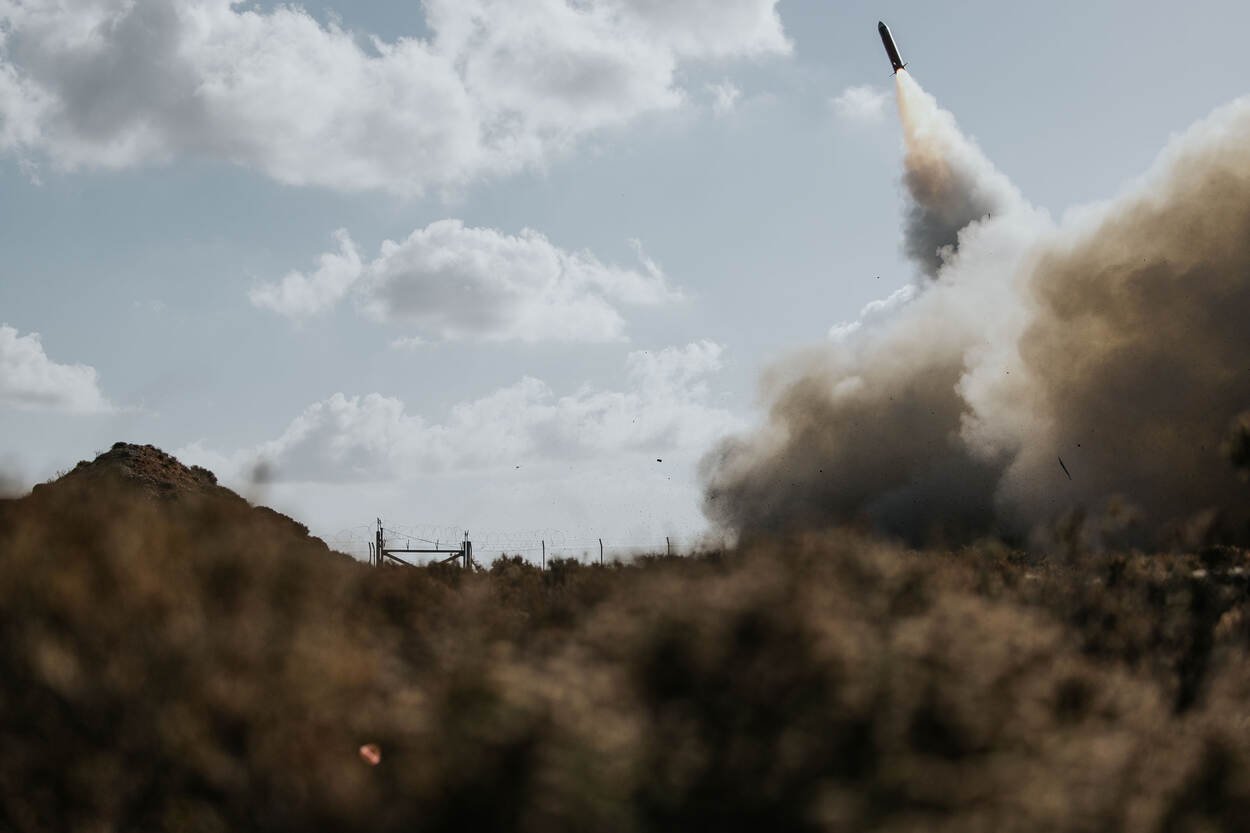 Dutch Patriot battery deployed in Poland.
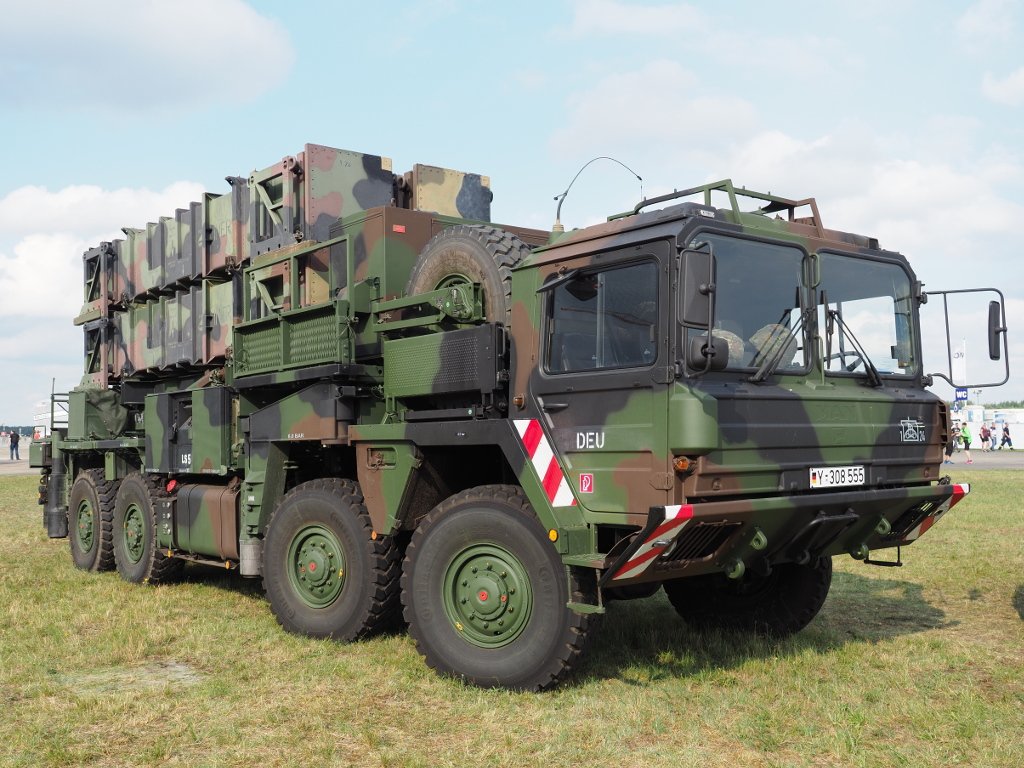 German Patriot launching station at Fassberg, 2019.
Photos: Wikimedia Commons · Government Press Office (Israel) via Flickr / Wikimedia Commons (CC BY-SA 3.0) · Defensie / Wikimedia Commons (CC BY-SA 4.0) · Boevaya mashina / Wikimedia Commons (CC BY-SA 3.0 de)
Videos


Patriot is a ground-based surface-to-air missile system built by Raytheon — now part of RTX — that entered US Army service in 1984. Originally conceived as an anti-aircraft replacement for the Nike Hercules and Improved Hawk, it has been adapted through successive upgrades into the principal Western system for intercepting tactical ballistic missiles, cruise missiles, and aircraft. A battalion fire unit combines a phased-array radar, an engagement control station, an antenna mast group, an electric power plant, and up to eight launcher stations mounted on M901 trailers.
The radar is the AN/MPQ-53 on early configurations and the AN/MPQ-65 on Configuration-3 and later batteries, a passive electronically-scanned array that performs search, track, identification, and missile guidance from a single aperture. Two interceptor families are fielded from the same launchers. The PAC-2 line — including the GEM and GEM-T variants — carries a blast-fragmentation warhead and uses track-via-missile guidance, in which the ground radar illuminates the target and the missile relays return signals for command corrections. The PAC-3, built by Lockheed Martin, is a smaller hit-to-kill interceptor with an active Ka-band seeker and side-thrusters for terminal manoeuvring; four PAC-3 rounds fit into the canister space of one PAC-2, and the PAC-3 MSE adds a larger dual-pulse motor for extended range. Software revisions delivered through the Army’s Post-Deployment Build cycle have progressively added track filters, cooperative-engagement data, and updated threat libraries.
Patriot is fielded by around eighteen countries, among them the United States, Germany, the Netherlands, Japan, Israel, Saudi Arabia, the United Arab Emirates, Kuwait, South Korea, Taiwan, Greece, Spain, Poland, Romania, Sweden, Bahrain, Qatar, and Ukraine. Its combat debut came in 1991 against Iraqi Scud missiles fired at Saudi Arabia and Israel; the US Army initially claimed high intercept rates, but subsequent independent analyses by MIT researchers and the US General Accounting Office concluded the actual success rate was substantially lower. Saudi Arabia has used the system repeatedly against Houthi ballistic and cruise missiles fired from Yemen. Since 2023, Ukraine has operated donated batteries against Russian ballistic, cruise, and hypersonic weapons; Ukrainian air force officials reported the first intercept of a Russian Kh-47M2 Kinzhal in May 2023, a claim disputed by Russian sources but supported by wreckage analysis published by independent open-source researchers.
Production remains a bottleneck. Lockheed Martin has publicly targeted 650 PAC-3 MSE rounds per year by 2027, up from roughly 500 in 2024, working down a backlog driven by orders from Poland, Germany, Romania, and follow-on US and Ukrainian requirements. Within the Western air-defence stack Patriot sits between shorter-range systems such as IRIS-T SLM or NASAMS and the higher-altitude THAAD, and competes for orders with the Franco-Italian SAMP/T. Russian state media routinely claim destroyed launchers and radars in Ukraine; some strikes have been documented via satellite imagery, others remain unverified.
Combat experience
Sources
- en.wikipedia.org/wiki/MIM-104_Patriot (2026-09-10) — Encyclopedic overview citing primary reporting — 1984 entry into service, the AN/MPQ-53 and AN/MPQ-65 radar sets, engagement control station, M901/M903 launchers, the PAC-2 and PAC-3 interceptor families, the operator list and the 1991 Gulf War performance dispute.
- www.missiledefenseadvocacy.org/defense-systems/patriot-missile-defense-system/ (2026-09-10) — Describes the battery architecture and the track-via-missile guidance chain.
- www.dote.osd.mil/Portals/97/pub/reports/FY2018/army/2018patriot.pdf (2026-09-10) — US Director of Operational Test and Evaluation report on Patriot, describing the mixed PAC-3 hit-to-kill and PAC-2 blast-fragmentation load.
- www.armyrecognition.com/news/aerospace-news/2026/poland-buys-pac-2-gem-t-interceptor-missiles-to-expand-patriot-air-defense-shield-on-nato-eastern-flank (2026-09-10) — Gives the composition of Poland's Wisła Phase I batteries and the 2026 GEM-T purchase.