PAC-2 GEM-T
Blast-fragmentation Patriot interceptor, cheaper than PAC-3 and back in production as stocks run down.
Missile / loitering munitionby RaytheonIntroduced 2002 · Updated 2026-09-10
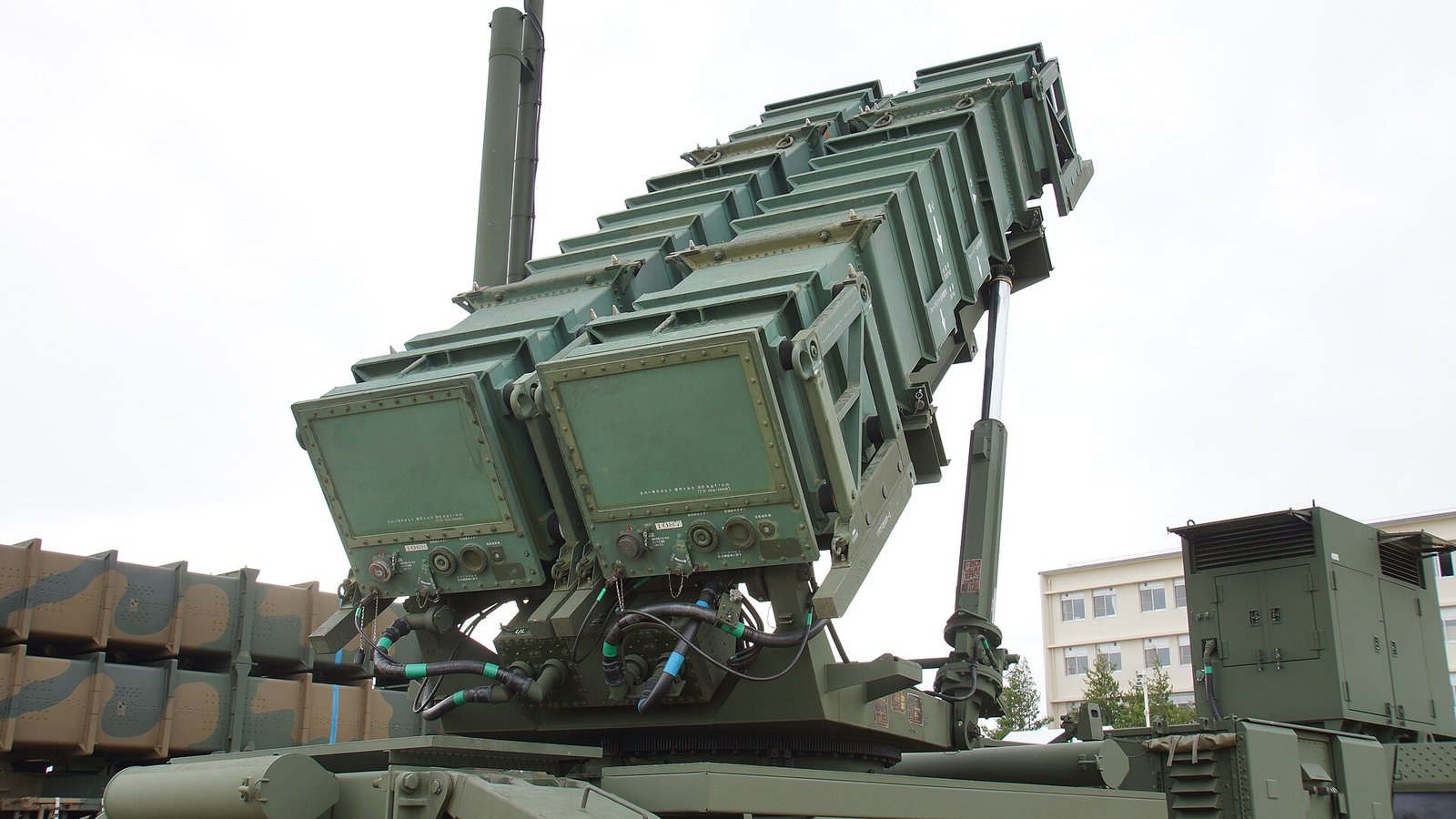 PAC-2 canisters on an M901 launching station raised to launch position, Japan, 2017.
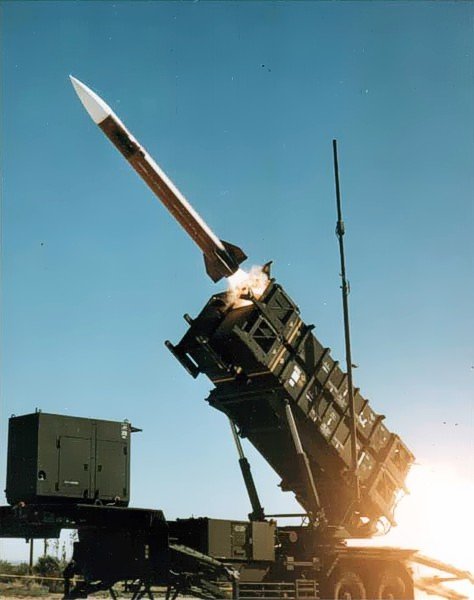 Patriot interceptor leaving the launcher.
Photos: Hunini / Wikimedia Commons (CC BY-SA 4.0) · Bernd vdB / Wikimedia Commons (public domain)
Videos



PAC-2 is the older half of the Patriot magazine, and 2026 has been the year it stopped looking obsolete. Built by Raytheon, the missile is a single-stage solid-fuel round about 5.3 m long weighing some 900 kg, carrying a blast-fragmentation warhead of roughly 90 kg. It does not need to hit anything. It needs to get close and detonate, throwing a shrapnel cloud through the target.
Guidance is track-via-missile. The ground radar illuminates the target, the missile picks up the reflected energy and relays what it sees back to the engagement control station, which computes corrections and commands the missile. The intelligence stays on the ground; the round itself is comparatively simple. The GEM-T variant, fielded from 2002, added a modernised digital fuze and a more sensitive seeker aimed specifically at low-signature targets — the “T” is for TBM, tactical ballistic missiles, though in practice its best work is against aircraft, cruise missiles and drones. Reach is about 160 km with a ceiling near 32 km, both greater than the newer PAC-3 MSE manages, because a bigger missile carries more propellant.
The two interceptors are complements rather than rivals. PAC-3 MSE is the hit-to-kill round for ballistic threats and costs about $5.3 million each; GEM-T costs somewhere between $2 million and $4 million and is the sensible answer to a subsonic cruise missile or a Shahed-type drone. An M903 launcher takes four GEM-T or twelve PAC-3 MSE, and a battery mixes the load according to what it expects to face.
That economics argument reasserted itself under wartime consumption. Air campaigns against Iran and the sustained defence of Ukraine drew down Patriot stocks faster than the PAC-3 line could replace them, and spending a $5 million hit-to-kill interceptor on a cheap one-way attack drone is a losing exchange even when it works. In 2026 the US Army ordered PAC-2 GEM-T rounds for the first time in some thirty years, a $441.6 million award covering an estimated 110 to 220 interceptors.
Poland became a significant GEM-T customer in the same period. On 18 June 2026 the NATO Support and Procurement Agency signed a $988 million contract covering several hundred missiles for Poland, deliveries running through 2031, drawn against a Foreign Military Sale of up to 788 rounds worth $5.8 billion cleared in May 2025. That purchase sits alongside Poland’s PAC-3 MSE holdings from the Wisła programme and reflects the same layered logic: the expensive hit-to-kill round for ballistic missiles, the cheaper fragmentation round for everything else arriving in volume.
Combat experience
Sources
- en.wikipedia.org/wiki/MIM-104_Patriot (2026-09-10) — Comparative specification table giving PAC-2 and GEM-T range, ceiling, mass, warhead type and the 2002 GEM-T introduction date.
- www.armyrecognition.com/news/army-news/2026/us-army-pac-2-gem-t-patriot-interceptor-order (2026-09-10) — Reports the first US Army GEM-T order in about thirty years — $441.6m for an estimated 110-220 rounds — and the per-round costs of $2-4m against $5.3m for PAC-3 MSE.
- www.armyrecognition.com/news/aerospace-news/2026/poland-buys-pac-2-gem-t-interceptor-missiles-to-expand-patriot-air-defense-shield-on-nato-eastern-flank (2026-09-10) — Gives the $988m NSPA contract of 18 June 2026, deliveries through 2031, the May 2025 FMS clearance for up to 788 rounds at $5.8bn, and the four-GEM-T-or-twelve-MSE launcher load.
- www.dote.osd.mil/Portals/97/pub/reports/FY2018/army/2018patriot.pdf (2026-09-10) — US Director of Operational Test and Evaluation report describing the mixed PAC-3 hit-to-kill and PAC-2 blast-fragmentation load-out.