Otter
Compact autonomous surface vessel for coastal survey, littoral monitoring, and multi-sensor payload operations.
Droneby Kongsberg MaritimeIntroduced 2019
Photos: drone.jp · eemshavenonline.nl · www.drone-actu.fr
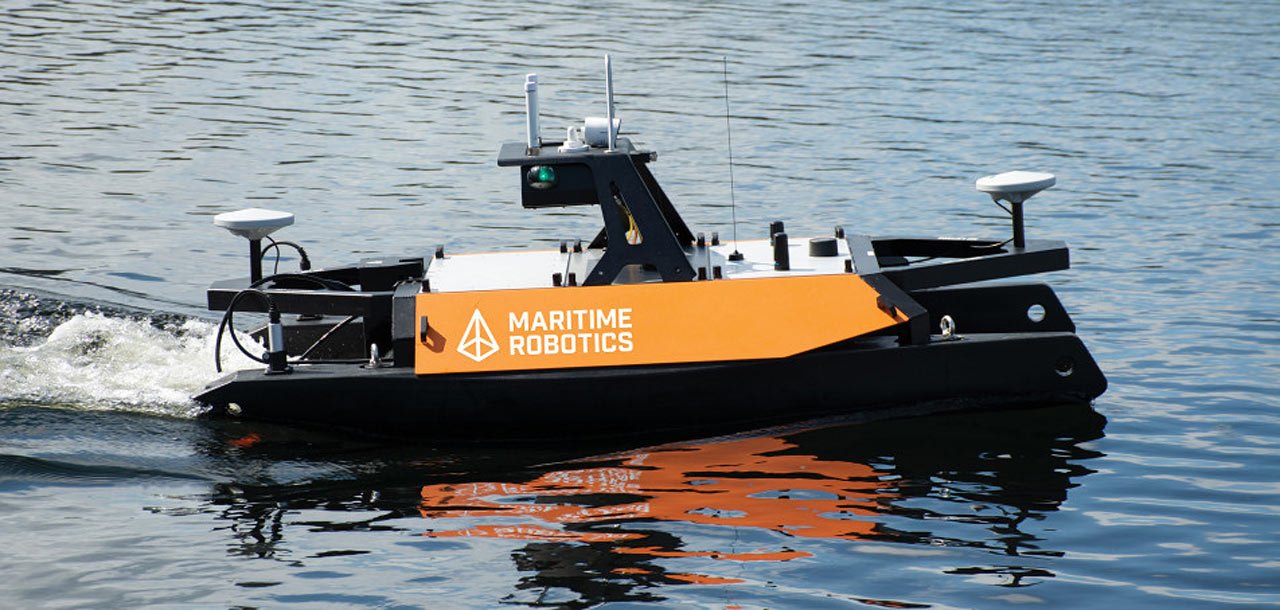
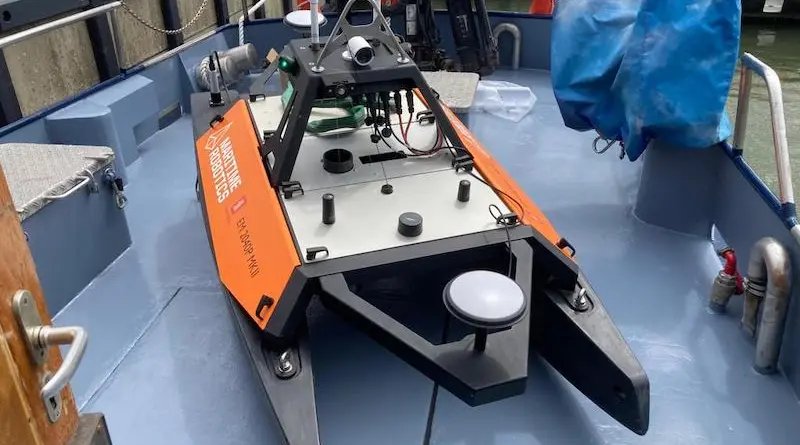
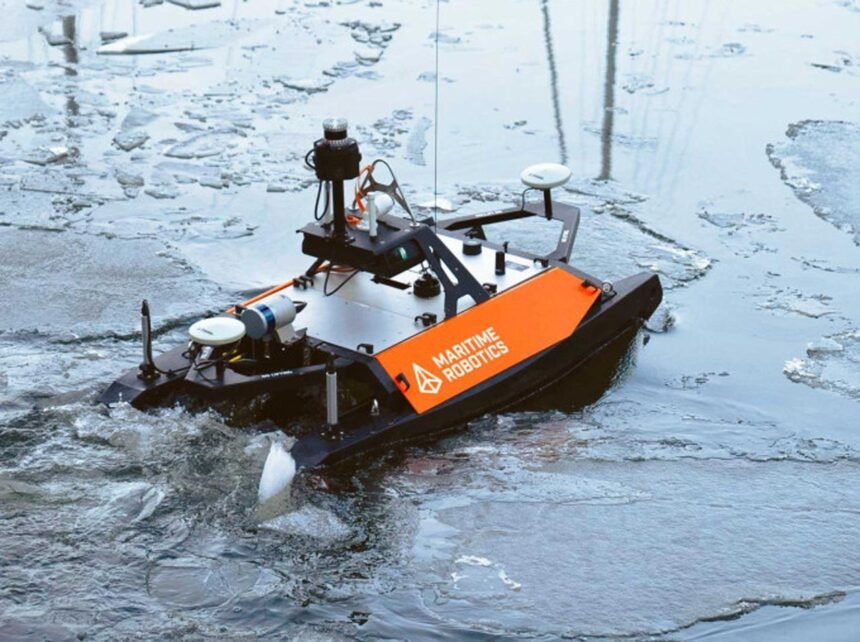
The Otter is an unmanned surface vessel (USV) developed by Maritime Robotics, a subsidiary of the Norwegian defense and technology group Kongsberg Maritime. Introduced in 2019, the system is designed for operations in sheltered and coastal waters, serving roles in marine mapping, oceanographic data collection, and maritime surveillance. The vessel is a compact, modular catamaran with a hull length of 2,000 mm and a dry weight of 62 kg. It is powered by four battery packs and two electric thrusters, allowing for emission-free operation with an endurance of up to 20 hours at a speed of 2 knots, or a top speed of 4.5 knots depending on payload and conditions. The system supports a payload capacity of 30 kg, enabling the integration of various sensors for hydrographic surveying or environmental monitoring.
The Otter’s autonomy is driven by a ROS-based software architecture, specifically utilizing the Autonomous Navigation System provided by Maritime Robotics. This system includes a Vehicle Control Station (VCS) that allows for remote and autonomous navigation, waypoint planning, and real-time data visualization. The vessel communicates via 5GHz MIMO radio and Wi-Fi, with optional links including MBR, VHF, and 4G. It is equipped with situational awareness tools such as cameras and an AIS Class B transponder. The modular design allows for rapid deployment and assembly by a single operator, with components weighing less than 20 kg, facilitating transport in small cargo vans. The system is often paired with Kongsberg’s SeaCapture data capturing software and SeaSight for enhanced situational awareness.
While primarily marketed for civilian and commercial applications such as harbor inspection and scientific data collection, the vessel has been tested in operational environments. In July 2022, Kongsberg Maritime conducted tests with the Otter in the Eemshaven in the Netherlands, in collaboration with Groningen Seaports. The objective was to evaluate the drone’s capabilities for flexible and sustainable bathymetric and hydrographic surveying, aiming to complement existing multibeam echosounder systems like the Kongsberg EM2040. The tests highlighted the vessel’s ability to access difficult-to-reach locations and provide a cleaner alternative to traditional survey vessels. There is no public evidence of the Otter being deployed in combat zones or used as a weaponized system. The vessel remains a tool for data acquisition and monitoring, distinct from the armed autonomous systems fielded in active conflict zones.
The Otter represents Kongsberg Maritime’s entry into the compact autonomous surface market, leveraging its expertise in marine systems and sonar technology. Unlike larger, ocean-going USVs, the Otter is optimized for enclosed waters such as lakes, rivers, canals, and harbors. Its development reflects a broader industry trend toward modular, electrically powered platforms that can be rapidly deployed for specialized tasks. The system’s reliance on open-source robotics frameworks and commercial off-the-shelf components underscores its design for accessibility and ease of maintenance. As maritime authorities seek more flexible and sustainable methods for monitoring infrastructure and water quality, the Otter offers a scalable solution that bridges the gap between manual surveying and fully autonomous offshore operations.