Orca XLUUV
Extra-large autonomous submarine capable of long-duration ISR, minelaying, and strike missions without a crew.
navalby BoeingIntroduced 2022
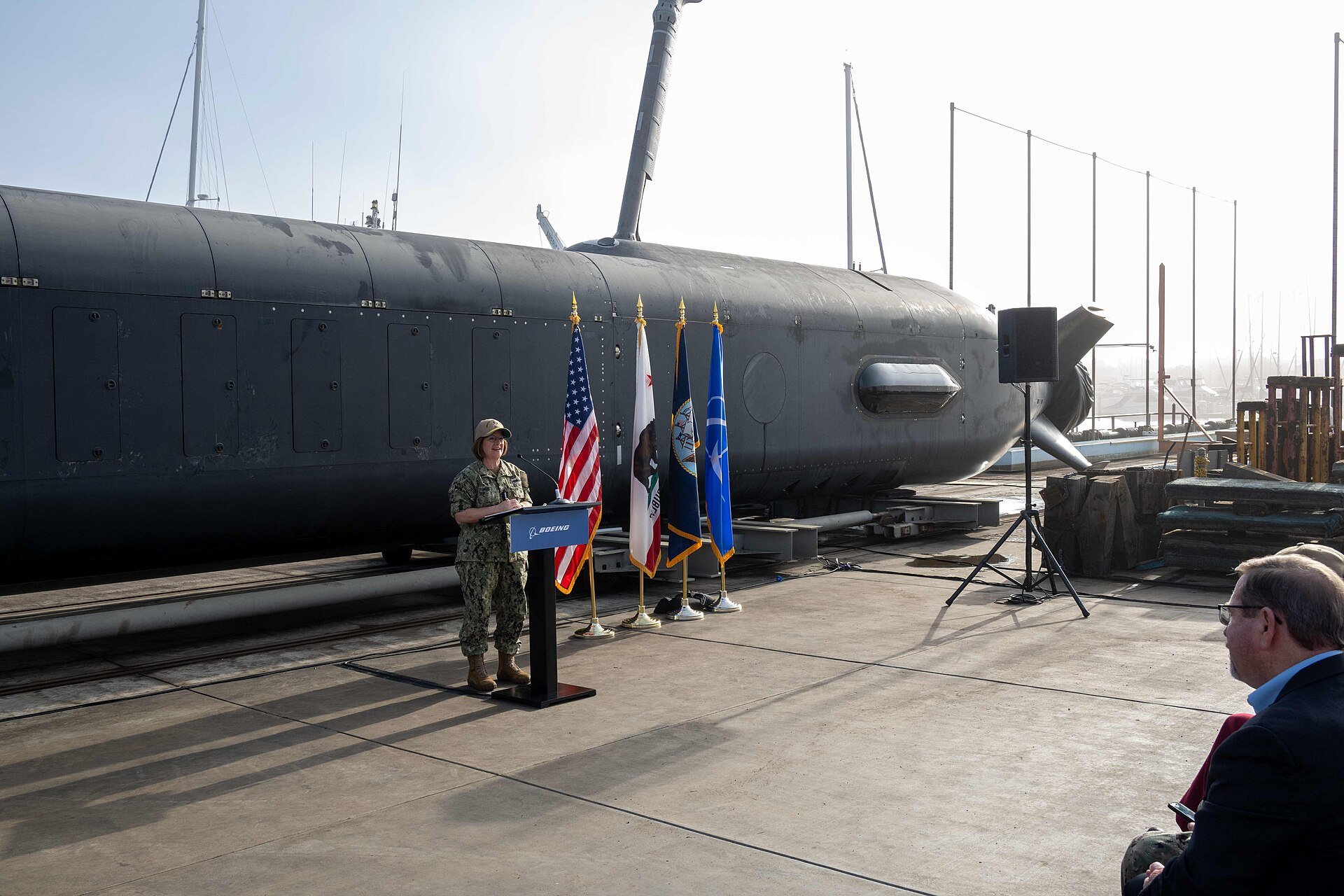
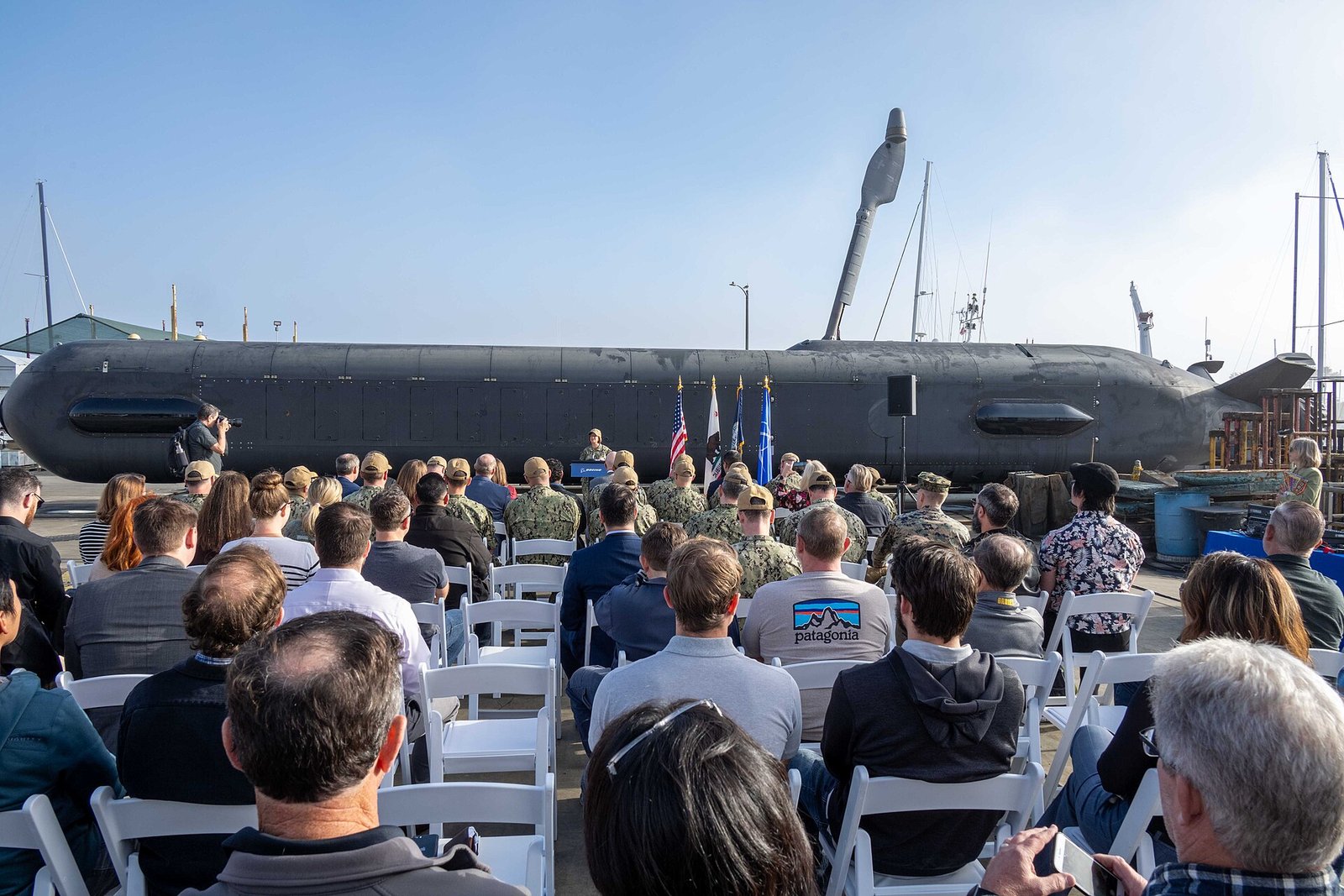
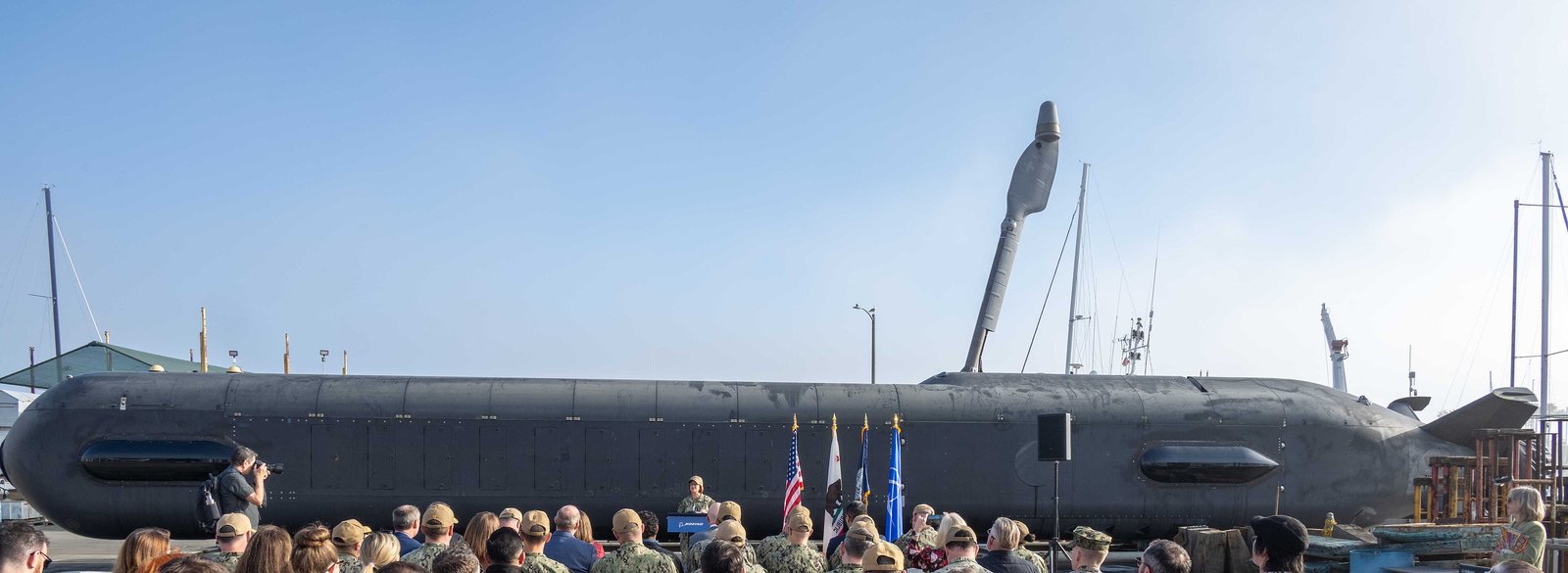
Photos: U.S. Navy photo by Chief Mass Communication Specialist William Spears · Wikipedia
Orca is an extra-large unmanned undersea vehicle developed by Boeing for the United States Navy, designed to carry out long-duration missions — intelligence, surveillance, reconnaissance, mine countermeasures, minelaying, anti-submarine warfare and, in later configurations, strike — with no crew aboard. The programme grew out of Boeing’s Echo Voyager technology demonstrator, and the company was awarded a Navy contract in February 2019 for an initial four vehicles, with an option for a fifth, at a reported value of around $43 million. The first test article, designated XLE0, was delivered to the Navy in December 2023, several years behind the original schedule; cost growth and slippage have been acknowledged in successive Navy budget submissions.
The base vehicle is roughly 51 feet long, with a modular payload section that can be inserted to lengthen it substantially and carry mission-specific equipment in a reconfigurable bay. Boeing states the design is capable of a 6,500-nautical-mile transit range and multi-month endurance on a single sortie, using a diesel-electric propulsion plant with lithium-ion battery banks that surface periodically to recharge via a snorkel. The vehicle handles its own navigation, obstacle avoidance and mission execution between check-ins; the Navy has described the autonomy stack as sufficient to operate in commercial shipping lanes and to loiter on station without a support ship. Public reporting has said little about the specific onboard compute, sensor suite or software architecture, and Boeing has not published component-level detail; teardown-style open-source reporting of the kind available on smaller drones does not yet exist for Orca.
Only the United States operates the system, and only in prototype form so far. The four contracted vehicles are being built at Boeing’s Huntington Beach facility in California, with in-water testing off the Southern California coast. Navy officials have described Orca as a pathfinder rather than a fielded capability, feeding lessons into the service’s broader unmanned-undersea programme and into requirements for a future, larger family of autonomous submarines. No combat use has been reported, and the type is not deployed operationally.
Orca sits at the top end of the unmanned-undersea market by size, alongside smaller medium-class UUVs from HII, L3Harris and Anduril, and the emerging Ghost Shark being built for the Royal Australian Navy by Anduril. Its distinguishing feature is scale: enough payload volume and range for missions that would otherwise demand a manned submarine, at a fraction of the crewing cost, if the autonomy and reliability targets can be met over sustained deployments.