Products NPO Mashinostroyeniya
P-800 Oniks
Supersonic ramjet anti-ship missile, fired from Bastion coastal launchers in Crimea at Odesa, Kyiv and other Ukrainian land targets.
Missile / loitering munitionAdversary capabilityby NPO MashinostroyeniyaIntroduced 2002 · Updated 2026
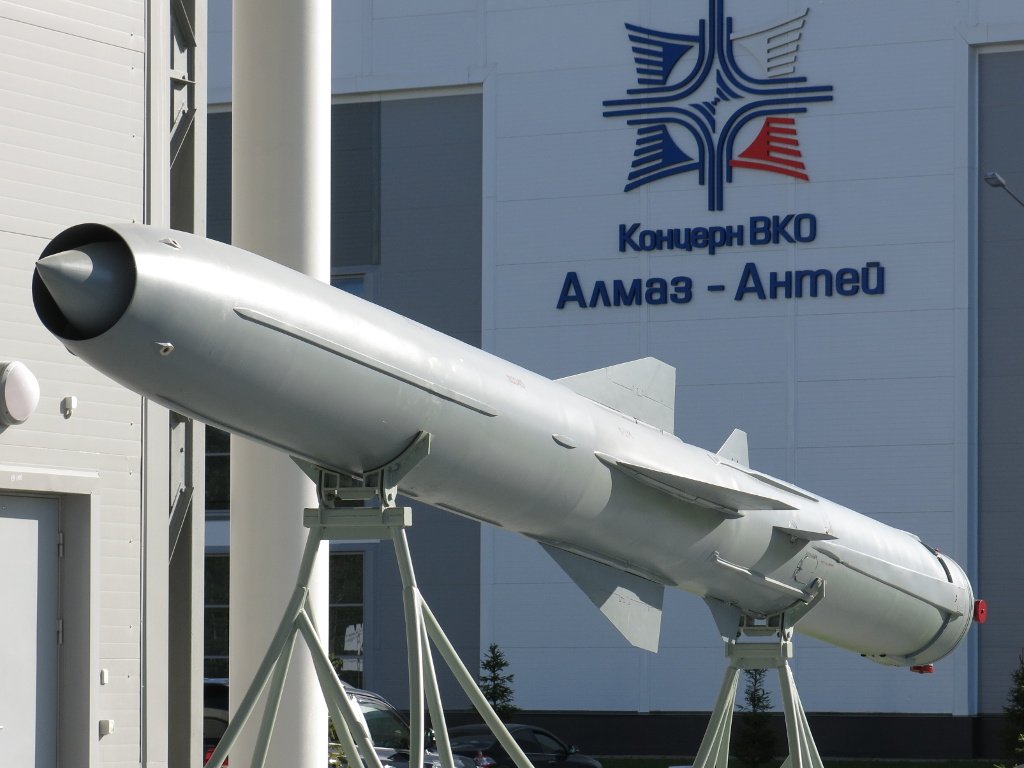
Photo: Boevaya mashina / Wikimedia Commons
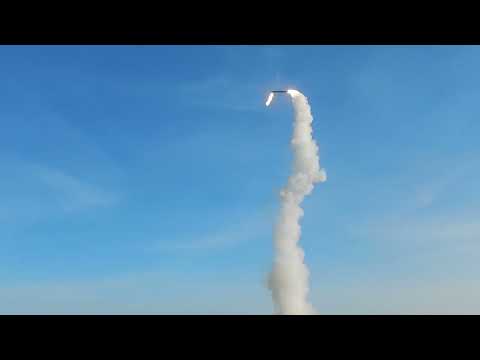
Videos



Overview
The P-800 Oniks (П-800 «Оникс», GRAU index 3M55, NATO reporting name SS-N-26 Strobile) is a supersonic anti-ship cruise missile developed by NPO Mashinostroyeniya in Reutov, near Moscow. Its export version is called Yakhont. It was built to sink large warships at sea. In Russia’s war on Ukraine it has mostly been used against targets on land: ports, airfields, energy sites and cities, usually fired from Bastion coastal batteries in occupied Crimea.
Oniks matters to air-defence planners because of its flight profile. According to CSIS Missile Threat, it cruises at up to 14 km altitude at around Mach 2.2 and then drops to 10–15 m above the surface for the final approach at about Mach 2. A missile that flies that low and that fast leaves defenders only seconds between detection and impact.
Design and propulsion
The missile is about 8.6–8.9 m long and 0.7 m in diameter, and weighs roughly 3 tonnes at launch. A solid-propellant booster gets it off the launcher and up to speed. A kerosene-fuelled ramjet then takes over for the cruise phase (CSIS). A ramjet has no moving compressor; it only works once the missile is already travelling fast, which is why the booster is needed.
Range depends on the flight path. CSIS gives the export Yakhont 300 km on a high-low profile and 120 km if it flies low the whole way. Wikipedia quotes up to 600 km for Russia’s own Oniks and 800 km for the upgraded Oniks-M; those figures come from Russian statements and are not independently confirmed.
Guidance and the seeker question
Midcourse navigation is inertial. In the terminal phase an active-passive radar seeker takes over. Wikipedia gives that seeker an active acquisition range of about 50 km and a mass of 85 kg.
That seeker was designed to pick out a large ship against an empty sea, which is a different task from finding a building among other buildings. In March 2024 the Russian state agency TASS claimed that Bastion missiles had received a new active homing head with “increased accuracy of ground target acquisition” and less sensitivity to interference. Militarnyi, which relayed the report, noted that there was no official confirmation. Work on the longer-range Oniks-M, with its own new seeker, has been reported since 2019.
No detailed teardown of a recovered Oniks has been published so far in the way Ukraine’s defence intelligence (HUR) has documented drones and ballistic missiles. HUR’s War&Sanctions portal does list PO Strela in Orenburg, part of the NPO Mashinostroyeniya group, as a producer of the missile; it is under US, Canadian, Swiss and EU sanctions.
Launchers and variants
Oniks is carried by surface ships and Yasen-class submarines, but in Ukraine it is mainly a coastal weapon. The Bastion system comes in a mobile version, Bastion-P, on wheeled launchers, and a fixed version, Bastion-S. CSIS dates Russian Bastion deployment to 2015. The first known land-attack use came in Syria in November 2016, when Oniks were fired from a Bastion at ground targets.
Export customers include Syria, which bought Bastion-P with 72 Yakhont missiles under a 2009 deal, as well as Vietnam and Indonesia (CSIS). The best-known relative is India’s BrahMos, developed by a joint venture of Indian and Russian partners from the same design.
The same Bastion launchers in Crimea are reported to fire the hypersonic Zircon as well. Ukrainian Air Force reports sometimes list the two together, which makes per-type counts uncertain.
Use against Ukraine
Russia’s Defence Ministry claimed Oniks strikes near Odesa as early as 1 May 2022. Odesa and its ports remained the main target. During the July 2023 strikes on Odesa that followed Russia’s exit from the Black Sea grain deal, Ukrainska Pravda reported Oniks launches against the region. In September 2023, according to Wikipedia, one missile missed its military target and destroyed a recreation area, and Ukrainian officials said “something affected its flight”.
By 2026 Oniks was a routine part of combined raids alongside drones, ballistic missiles and air-launched missiles. On the night of 23–24 August 2026 Russia fired two Oniks from Crimea at Odesa Oblast with Kh-59 and Kh-31P missiles and 143 drones; the Air Force said one Oniks was downed or jammed (Ukrainska Pravda). The Air Force also listed “Zircon/Onyx” anti-ship missiles among 28 missiles fired at Kyiv Oblast on the night of 5 August, with none shot down (LIGA.net).
How Ukraine counters it
Interception is possible but rare. The Kyiv Independent reported two Oniks shot down over Odesa on 17 December 2022. In August 2024 Ukraine’s commander-in-chief Oleksandr Syrskyi was reported to have put the total at 12 intercepted out of 211 launched, under 6%. Air Force reports now usually say “downed or jammed” without separating the two.
Increasingly the answer is to hit the launchers before they fire. In March 2026 HUR published video of drones striking a column of Bastion launchers in Crimea, and said one was destroyed and another damaged (Ukrainska Pravda). The Ukrainian Navy reported further hits on Bastion launch sites on 15–16 August 2026 (Ukrainska Pravda). Neither claim has been independently verified.
Combat experience
Russia’s Defence Ministry said it used Oniks against Ukraine from the first weeks of the full-scale invasion, including a claimed strike on 1 May 2022 near Odesa, and launches from Bastion batteries in occupied Crimea against Odesa and its ports have recurred since, notably during the July 2023 strikes on Odesa that followed Russia’s exit from the grain deal (Ukrainska Pravda).
By 2026 the missile was a regular part of combined raids. On 23–24 August 2026 two Oniks were fired from Crimea at Odesa Oblast alongside Kh-59/Kh-31P missiles and 143 drones; one was reported downed or jammed (Ukrainska Pravda). Ukraine’s Air Force also listed “Zircon/Onyx” missiles among the 28 missiles that struck Kyiv Oblast on the night of 5 August, none of them intercepted (LIGA.net). Before Ukraine, Oniks saw its first known land-attack use from a Bastion in Syria in November 2016 (CSIS).
Effectiveness
Oniks is hard to stop. Speed near Mach 2 at very low altitude in the final phase leaves little time for engagement, and Ukraine’s commander-in-chief Oleksandr Syrskyi was reported in August 2024 to have put interceptions at 12 of 211 launched (Wikipedia, citing Syrskyi). Accuracy against land targets is the weaker side: it was designed to find large ships on open water, and Russian claims of a new ground-attack seeker in 2024 have not been independently confirmed.
Ukraine’s answer has shifted from interception to striking the launchers. HUR and the Navy have both reported hits on Bastion batteries in Crimea in 2026.
Warhead upgrades
| Warhead | Type | Mass | Since | Notes |
|---|---|---|---|---|
| Semi-armour-piercing HE (Russian service) | semi-armour-piercing high explosive | ~250–300 kg (sources differ) | 2002 | CSIS gives 250 kg semi-armour-piercing; Wikipedia gives 300 kg for the national version source |
| High-explosive (export Yakhont) | high explosive | ~200 kg | 1999 | Export-standard warhead fitted to Yakhont rounds source |
Variants
- Yakhont1999
Export version limited to about 300 km range and a 200 kg warhead; sold with Bastion-P to Syria and Vietnam source
- Bastion-P / Bastion-S coastal systems2015
Mobile (P) and fixed (S) coastal launchers; each mobile launcher carries missiles in vertical canisters. Russia began deploying them in 2015 and first fired Oniks at land targets from a Bastion in Syria in November 2016 source
- Oniks-M
Upgrade reported since 2019 with range up to 800 km, a new active homing head and better resistance to jamming source
- BrahMos
Indian-Russian derivative developed by BrahMos Aerospace, a joint venture with NPO Mashinostroyeniya source
Countering it
As reported publicly; each line links its source.
- Strikes on Bastion launchers — Ukraine's defence intelligence (HUR) said drone operators destroyed one Bastion launcher and damaged another near Furmanivka in Crimea in March 2026; Ukraine's Navy said it hit Bastion launch and deployment sites again on 15–16 August 2026. Neither claim is independently verified source
- Ground-based air defence — Southern Operational Command said Ukrainian air defence shot down two Oniks fired from Crimea at Odesa on 17 December 2022; later Air Force tallies list Oniks among missiles "shot down or suppressed" source
- Interception or jamming (combined tallies) — Ukrainian Air Force tallies group Oniks under targets "downed or jammed" without separating the two (e.g. 23–24 August 2026, one of two) source
- Electronic warfare (reported effect) — After a September 2023 Oniks strike missed its military target and hit a recreation area, Ukrainian officials said "something affected" the missile's flight source
Sources
- missilethreat.csis.org/missile/ss-n-26/
- en.wikipedia.org/wiki/P-800_Oniks
- militarnyi.com/en/news/russians-announced-the-development-of-a-new-seeker-for-the-oniks-missile/
- war-sanctions.gur.gov.ua/en/sanctions/companies/363
- kyivindependent.com/two-russian-oniks-missiles-shot-down-over-odesa
- www.pravda.com.ua/eng/news/2023/07/20/7412093
- www.pravda.com.ua/eng/news/2026/08/24/8050010/
- news.liga.net/en/war/news/russia-launched-onyx-and-iskander-missiles-not-a-single-missile-was-shot-down
- www.pravda.com.ua/eng/news/2026/03/24/8026975
- pravda.com.ua/eng/news/2026/08/16/8048867
- en.wikipedia.org/wiki/BrahMos