Neptune (R-360)
Subsonic anti-ship cruise missile with land-attack capability, publicly credited with sinking the Russian cruiser Moskva in April 2022.
Missile / loitering munitionby Luch Design BureauIntroduced 2021
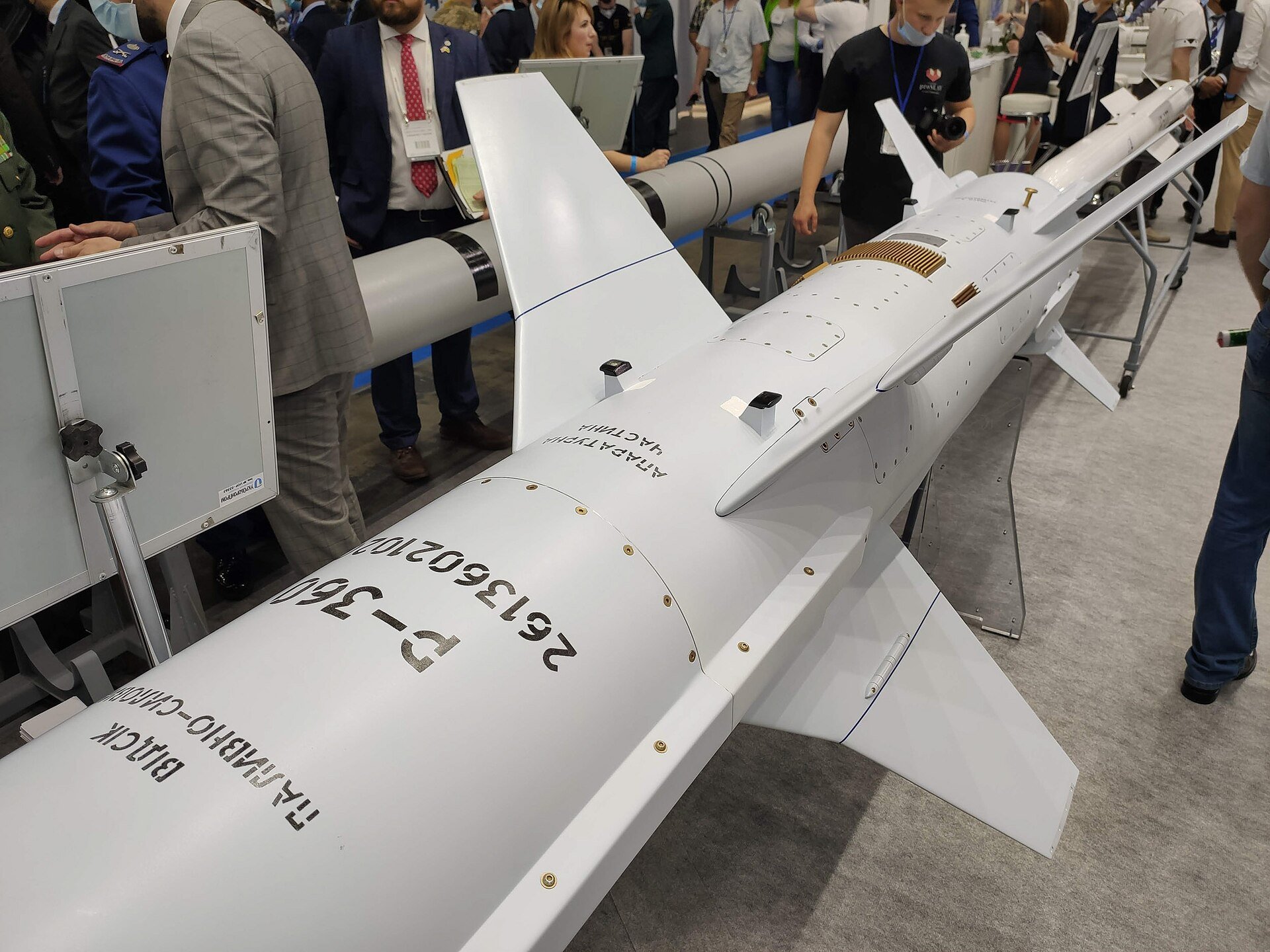
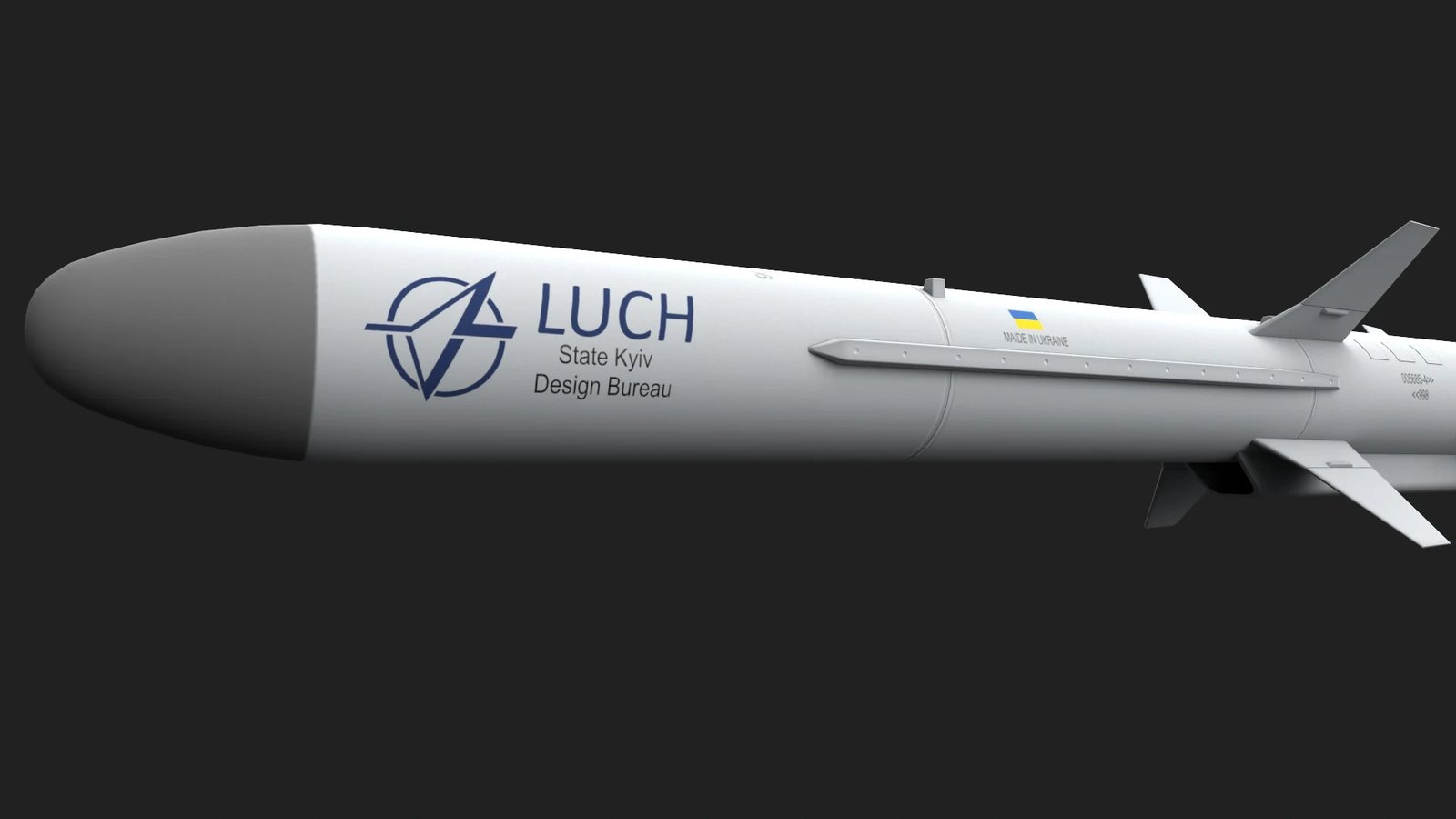
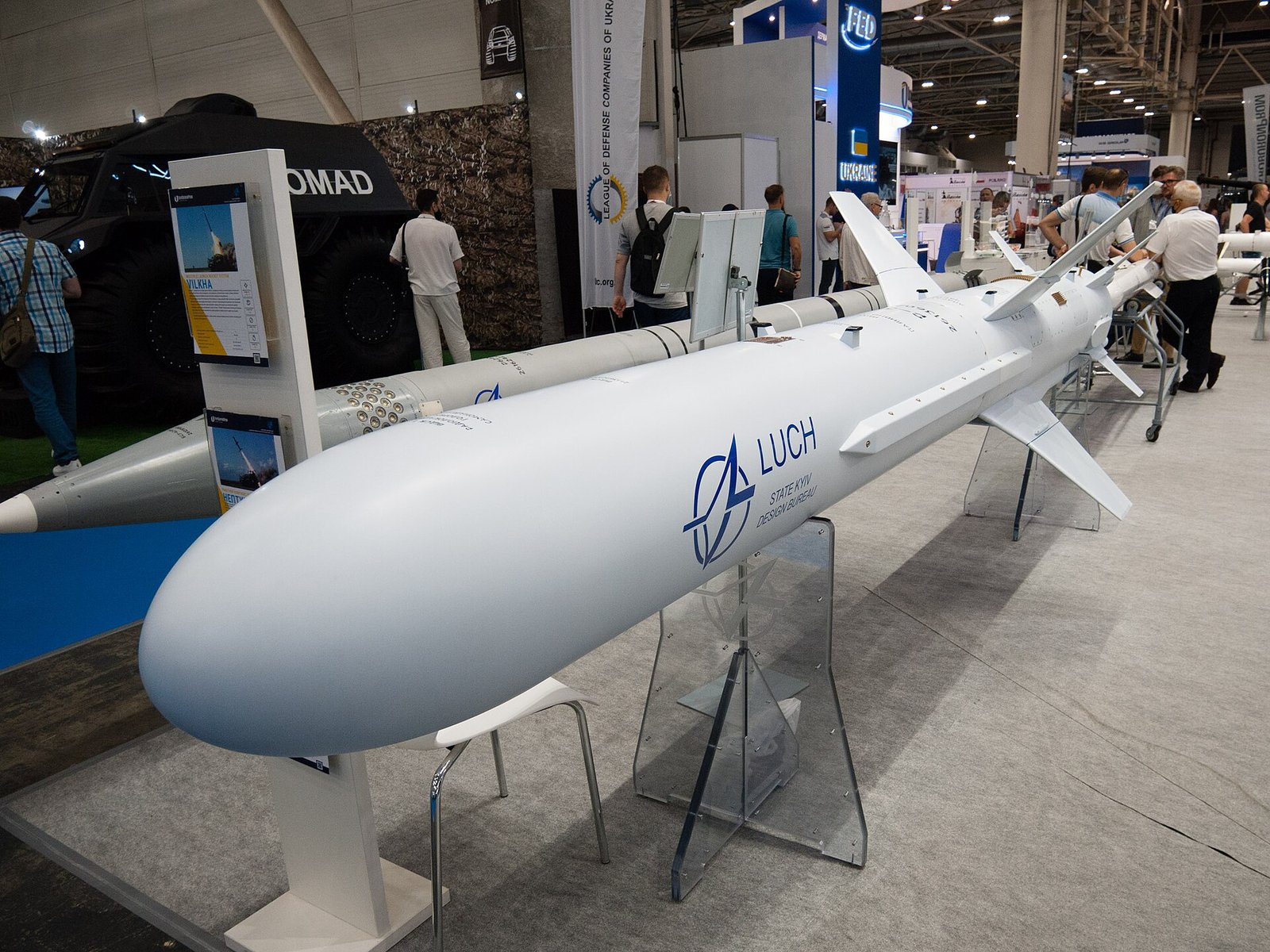
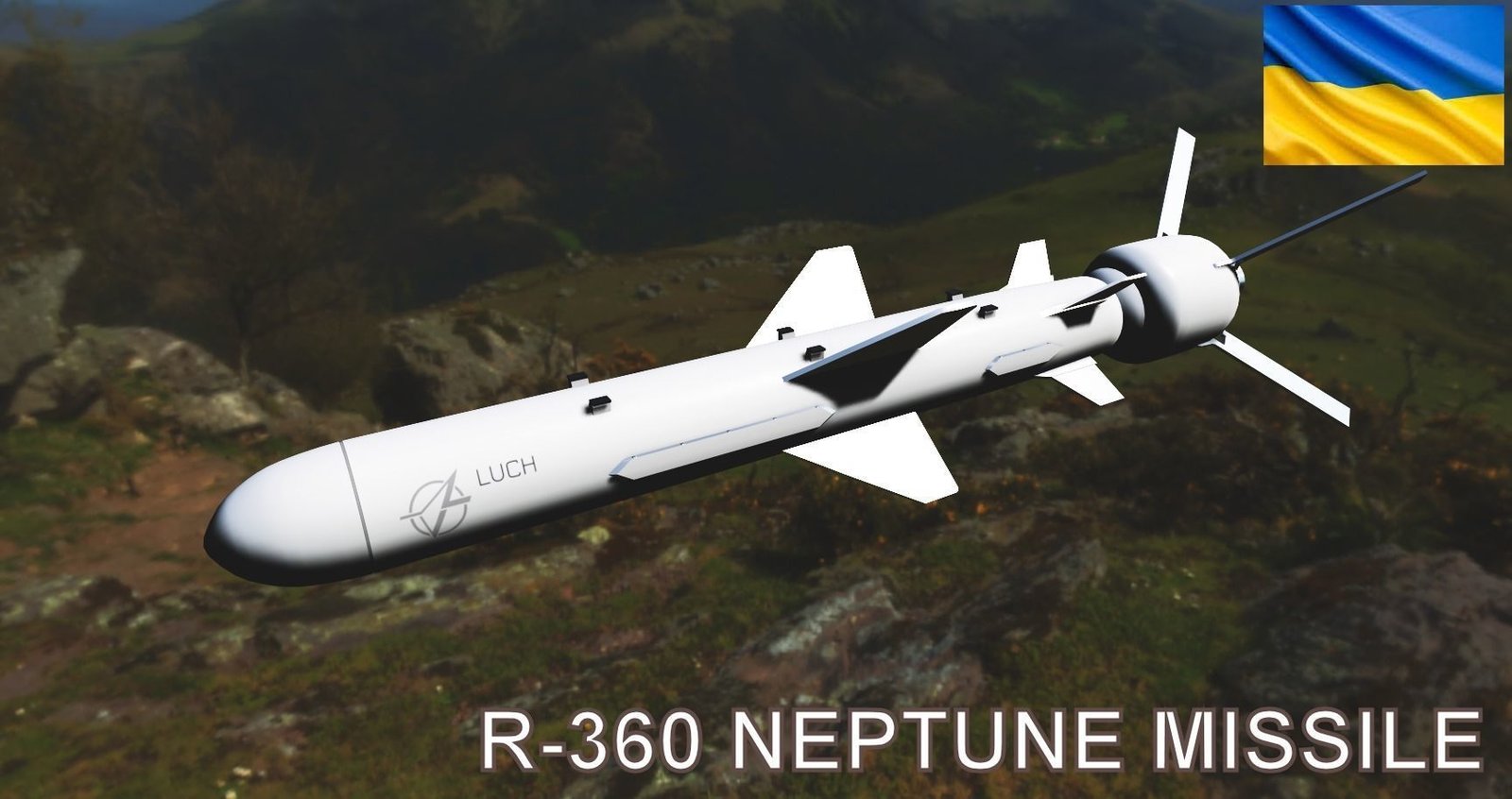
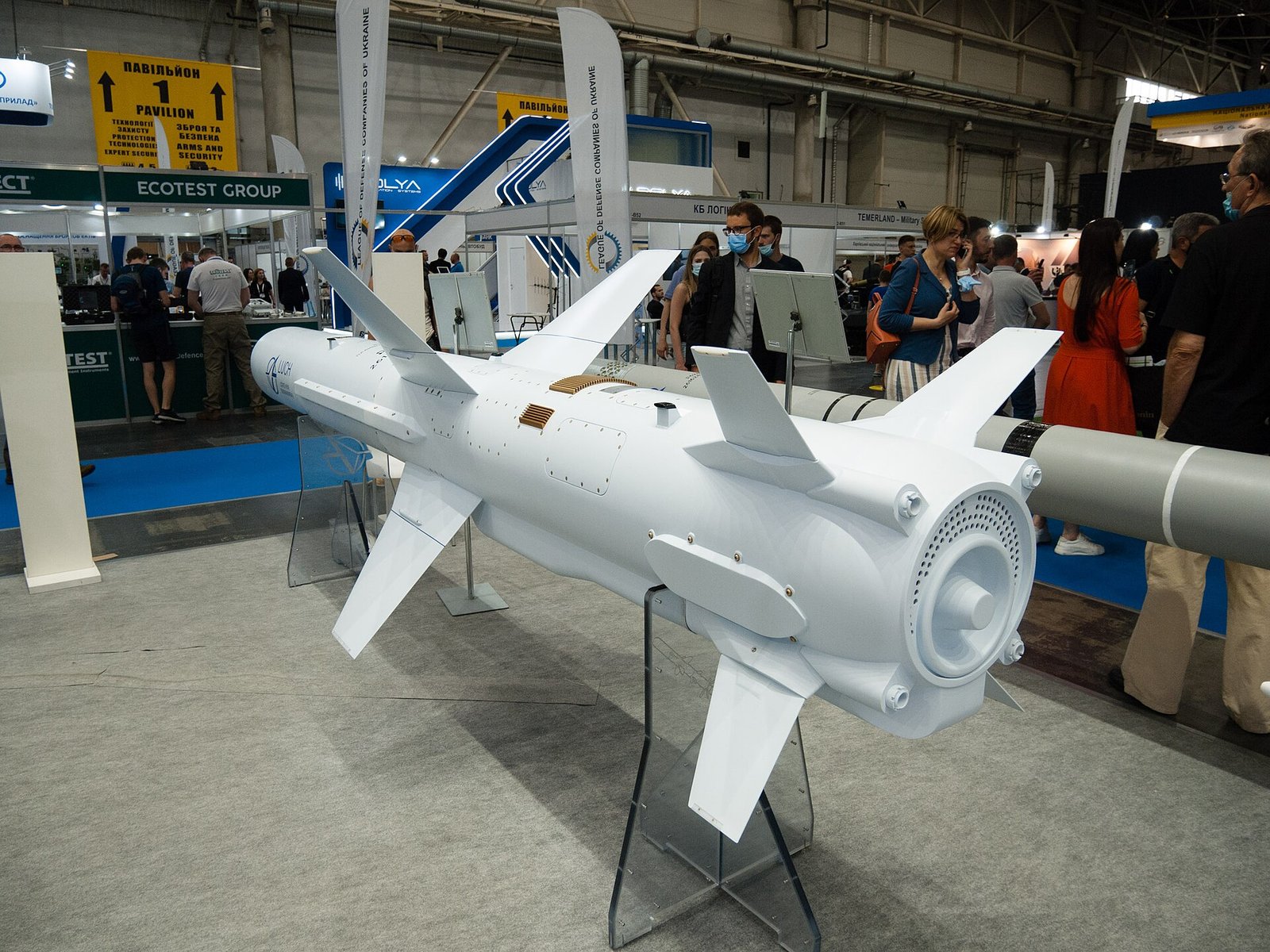
Photos: VoidWanderer · www.turbosquid.com · www.cgtrader.com
Neptune, designated R-360, is a Ukrainian subsonic cruise missile developed by Luch Design Bureau in Kyiv. The system entered service with the Ukrainian Navy in 2021 as a coastal-defence anti-ship weapon and has since been adapted for land attack. Its design draws on the Soviet-era Kh-35, with reworked electronics, guidance and range according to the manufacturer and Western defence press.
The baseline missile is 5.05 metres long with a diameter of 38 cm and a launch weight of 870 kg. It carries a 150 kg warhead — 260 kg on the extended-range Long Neptune variant — and flies a sea-skimming profile at subsonic speed, with an active radar terminal seeker handling the final run on the target. Propulsion comes from a Motor Sich MS400 turbofan, a Ukrainian-built engine, which matters for a weapon intended to be produced inside the country rather than depend on imported subsystems. Range is quoted at over 280 km for the standard round; Ukrainian officials claim the Long Neptune reaches up to 1,000 km, achieved by adding a booster stage and reworking the airframe. Launches are from truck-mounted canister batteries, with a separate radar and command vehicle completing the shore battery.
Ukraine is the sole operator. The weapon’s best-known combat use is the sinking of the Russian Black Sea Fleet flagship Moskva in April 2022; Ukrainian authorities credited two Neptune missiles with the strike, a claim later supported by Western defence analysts and tacitly confirmed by the ship’s loss, though Moscow attributed the fire aboard the cruiser to an ammunition explosion. The missile has since been used against Russian naval assets and coastal radars in Crimea and, with the land-attack adaptation, against targets inside occupied territory and Russia. Defence Minister Rustem Umerov said in November 2024 that Ukraine had completed serial production of its first 100 upgraded missiles that year, part of a broader push to grow domestic missile output under wartime pressure.
Development continues at Luch, where the Neptune family sits alongside the Sokil-300 long-range strike UAV. The Long Neptune variant and the hybrid Palianytsia drone-missile programme, mentioned by Umerov in the same November 2024 briefing, reflect the same trajectory — pushing stand-off reach further and building weapons at scale, with the engineering centred on what Ukrainian industry can source and assemble itself.