MQ-25 Stingray
Carrier-based autonomous aerial refuelling tanker drone designed to extend the combat radius of carrier air wings.
Droneby BoeingIntroduced 2021
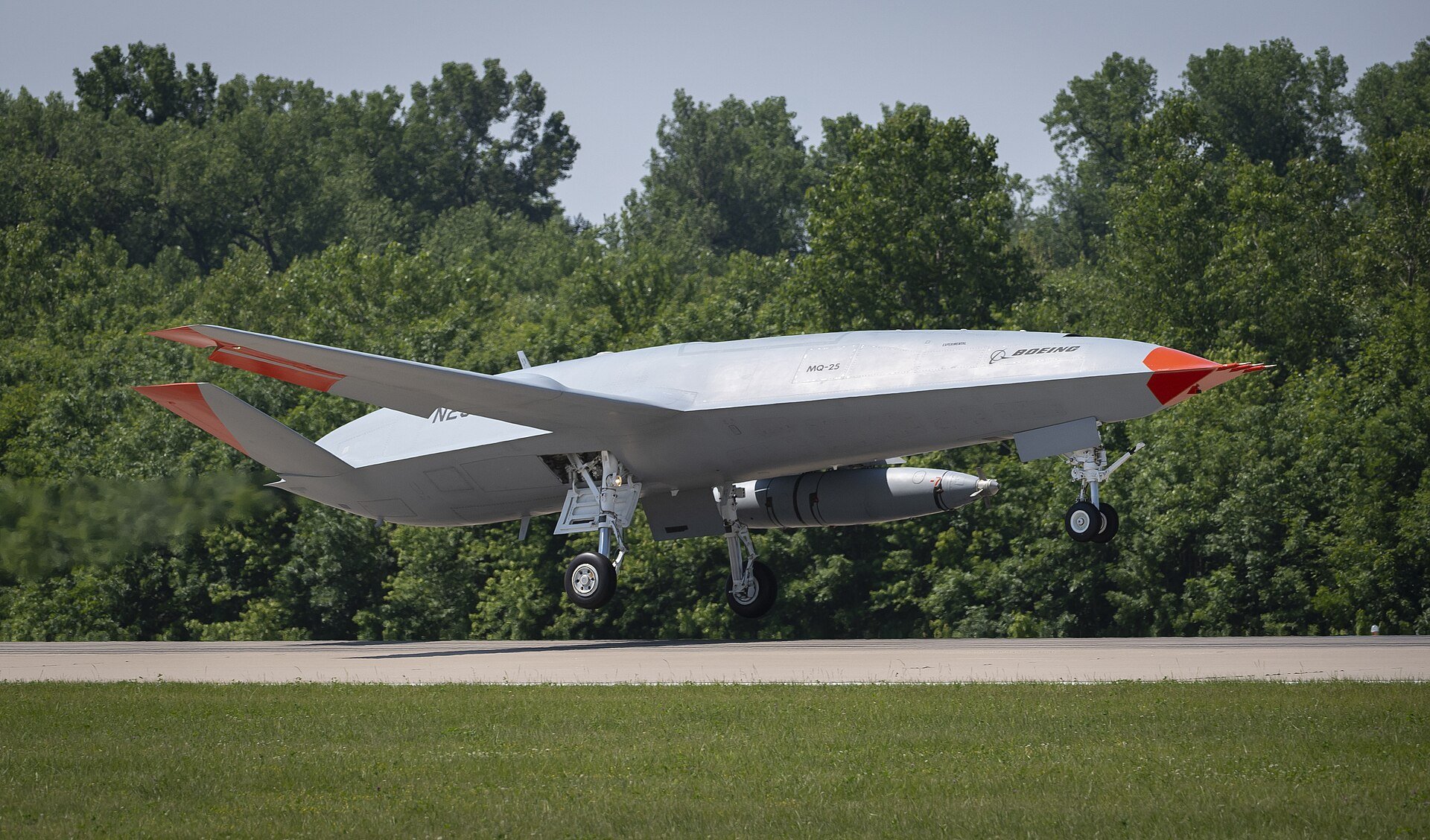
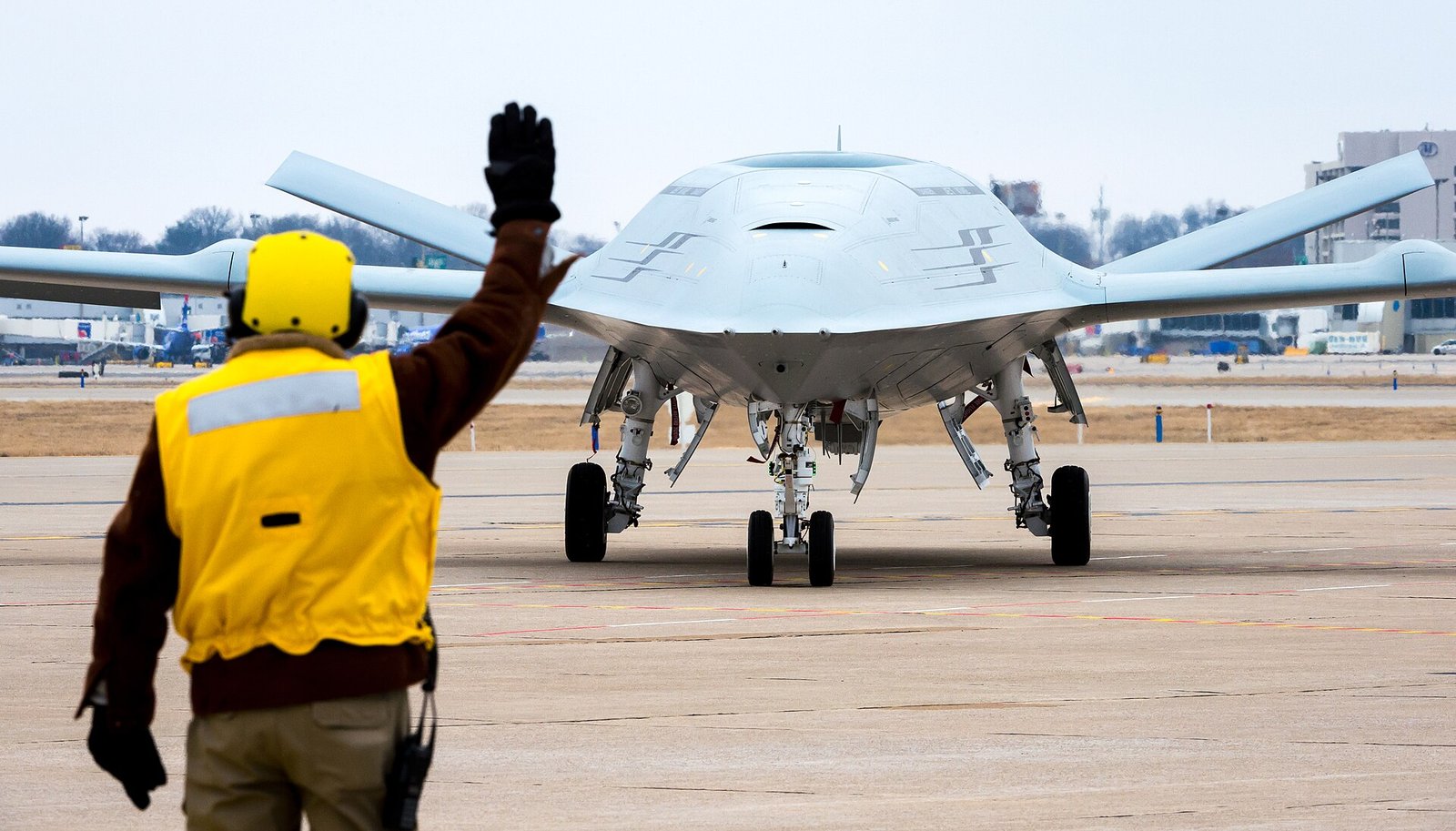
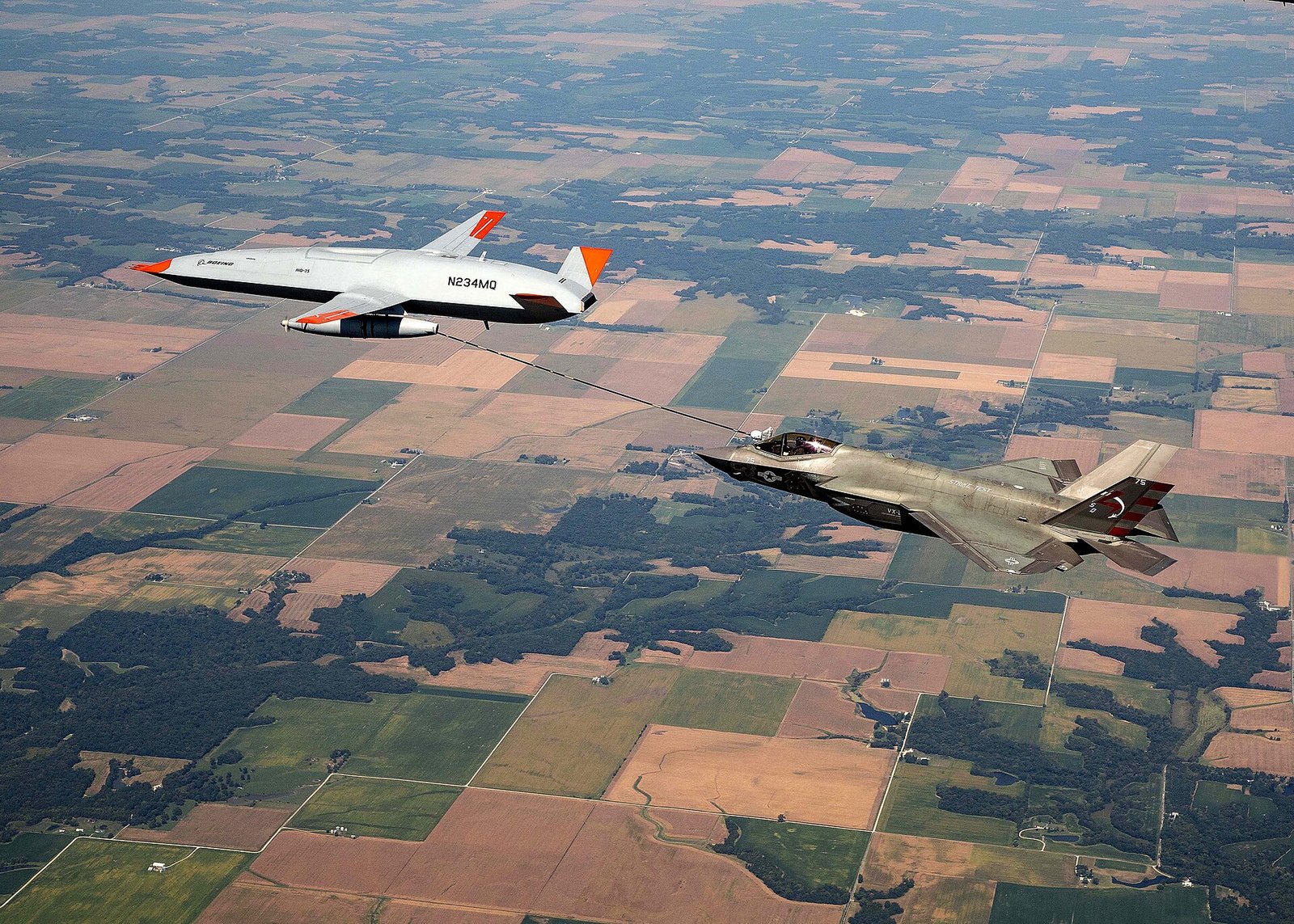
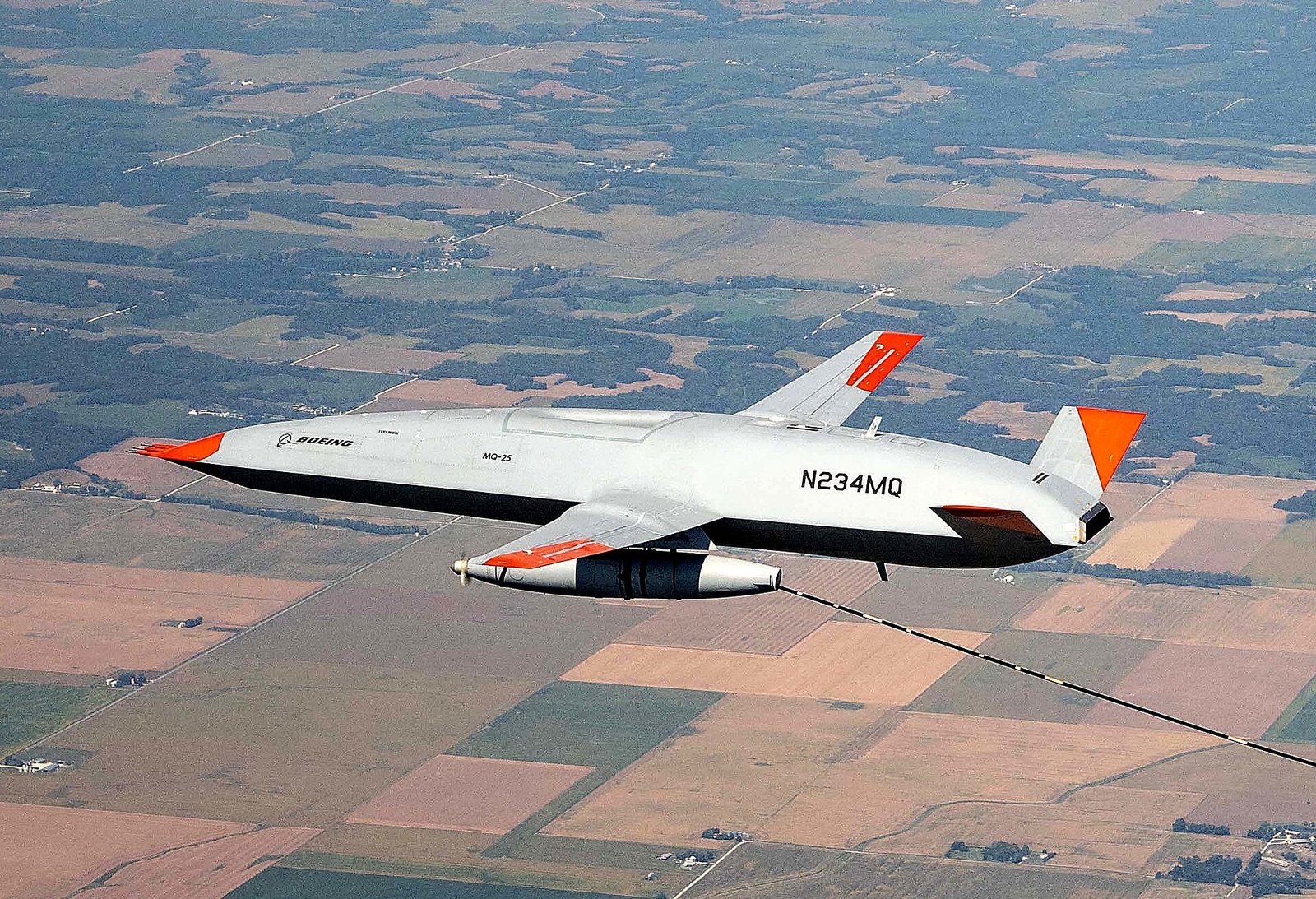
Photos: U.S. Navy photo courtesy of Boeing · U.S. Navy photo courtesy of The Boeing Co. · United States Navy photo courtesy of Boeing
Boeing’s MQ-25 Stingray is the US Navy’s first carrier-based uncrewed aircraft, developed to take on the aerial refuelling role currently absorbed by F/A-18E/F Super Hornets. The programme grew out of the Navy’s CBARS (Carrier-Based Aerial-Refueling System) competition, which Boeing won in August 2018 with an $805 million contract for the first four airframes. The award was a deliberate narrowing of ambition after the earlier UCLASS effort collapsed under disagreement about how much strike capability an unmanned carrier aircraft should carry. Boeing builds the aircraft at its St. Louis facility, with flight testing at MidAmerica St. Louis Airport and, subsequently, on the deck.
The airframe is a wing-body-tail design powered by a single Rolls-Royce AE 3007N turbofan and equipped with a Cobham centreline aerial refuelling store — the same pod family the Super Hornet already carries in the tanker role. Boeing has stated the aircraft is designed to offload roughly 15,000 pounds of fuel at 500 nautical miles from the carrier, a figure meant to extend a Super Hornet’s combat radius by several hundred miles. Autonomy is limited by design: the MQ-25 flies pre-planned missions under supervision from an air vehicle operator seated at a ground control station on the carrier, using a Deck Handling System that the Navy has demonstrated on the USS George H.W. Bush to taxi the aircraft on a live flight deck. Boeing conducted the first air-to-air refuelling by an unmanned aircraft in June 2021, when the T1 test asset passed fuel to a Super Hornet; follow-on tests refuelled an E-2D Hawkeye and an F-35C.
The US Navy remains the sole customer on order. Initial operational capability has slipped repeatedly — the Navy said in 2023 it would not arrive before 2026, and the Government Accountability Office reported further schedule pressure the following year tied to airframe weight, software integration and supplier delays. The service’s current programme of record is 76 aircraft, intended for deployment aboard Nimitz- and Ford-class carriers, with the first operational squadron slated to stand up at Naval Base Ventura County.
The MQ-25 is narrower in ambition than the UCLASS programme it replaced but occupies a role no rival currently fills: a carrier-recoverable unmanned aircraft cleared to operate inside the deck cycle. Its progress is being watched closely as a template for future uncrewed carrier aviation, including the strike and reconnaissance variants that Navy leadership has said it may pursue once tanking operations are established.