Molniya-2
Russia's cheap catapult-launched fixed-wing FPV strike drone of plywood, foam and Chinese hobby electronics; the twin-motor Molniya-2 flies further with a bigger charge.
DroneAdversary capabilityby Atlant AeroIntroduced 2024 · Updated 2026
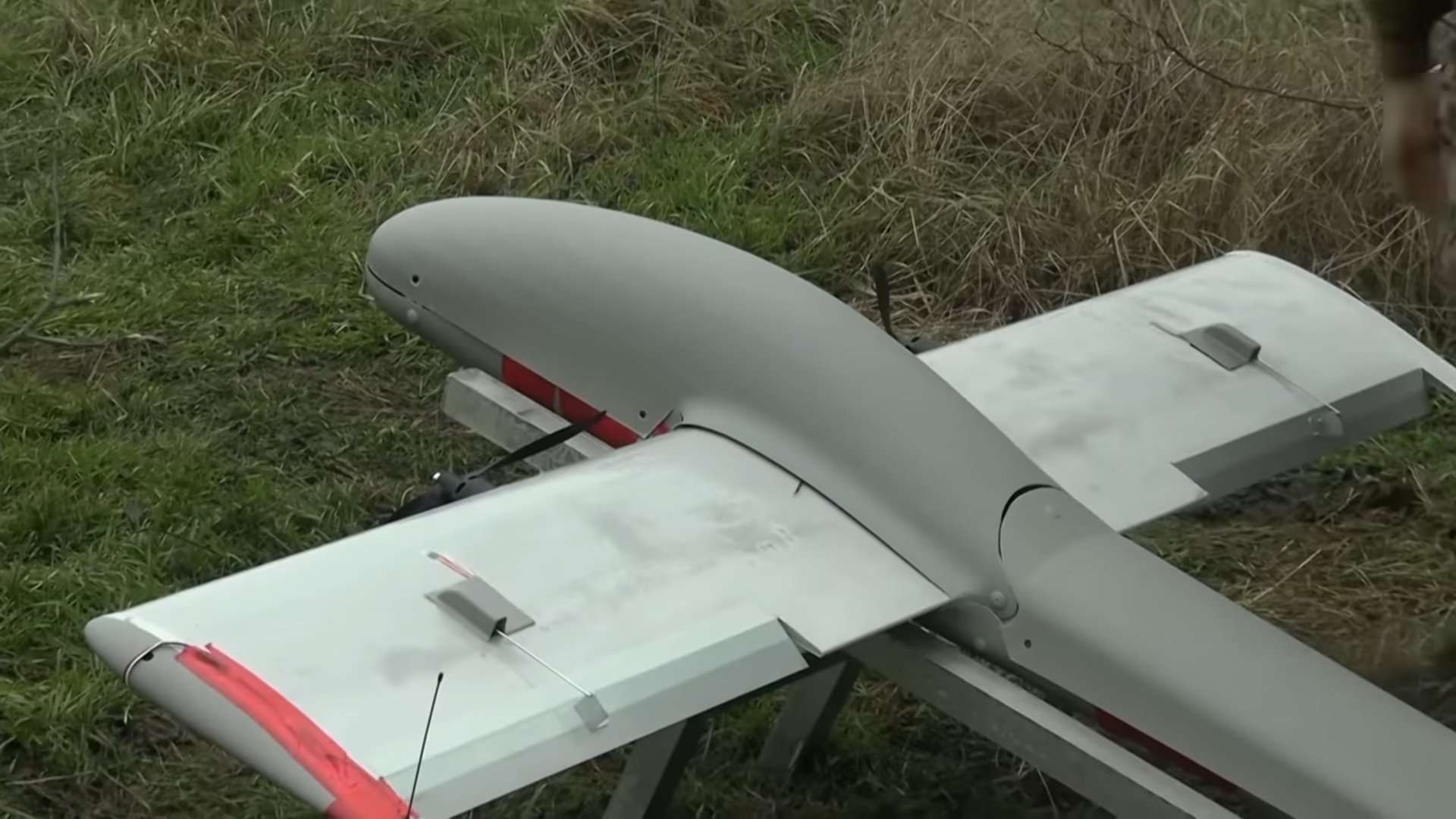 Molniya-2 of the 80th Arctic Motorised Rifle Brigade (Dnipro grouping), Kherson direction
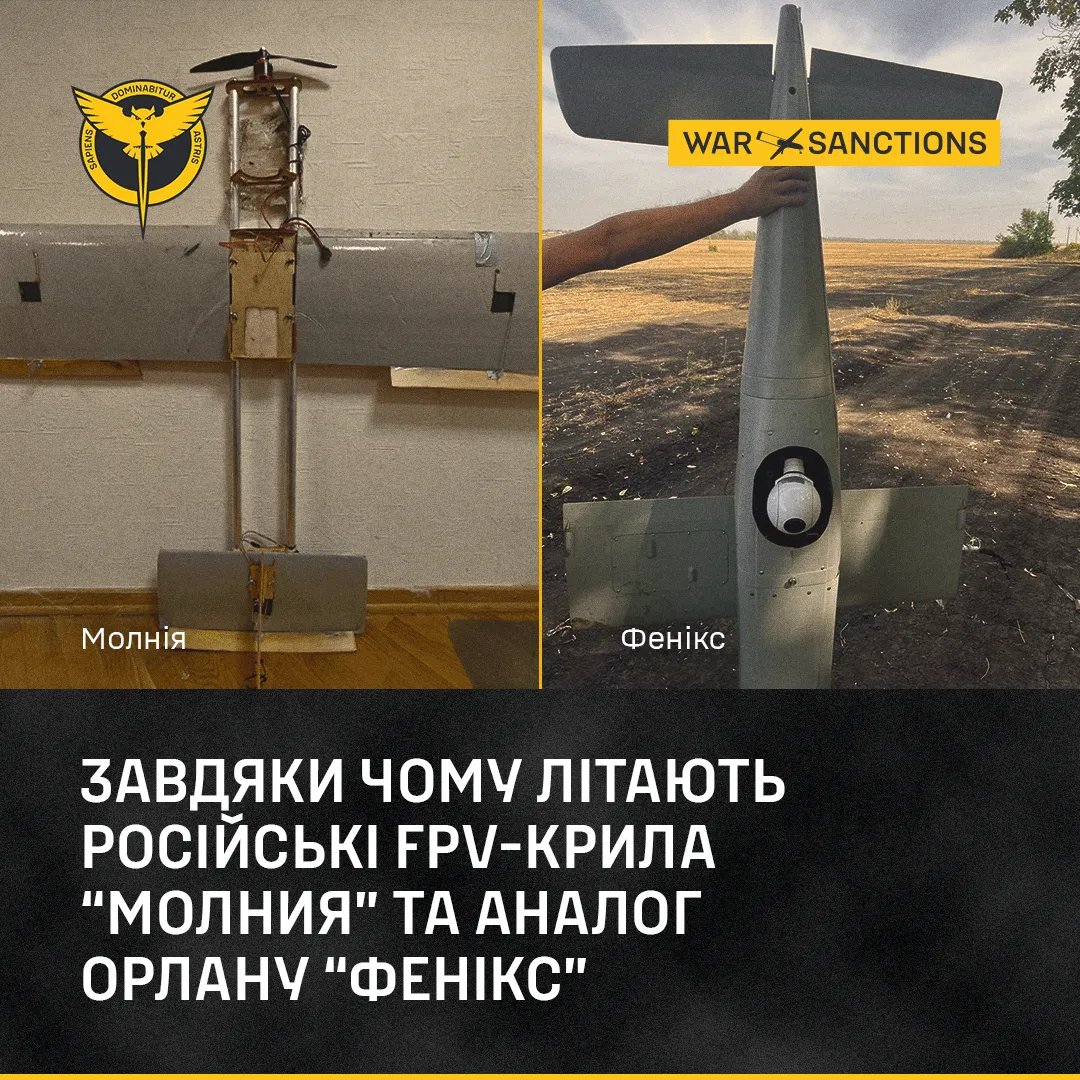 HUR teardown of a Molniya — photo 1 (Molniya section)
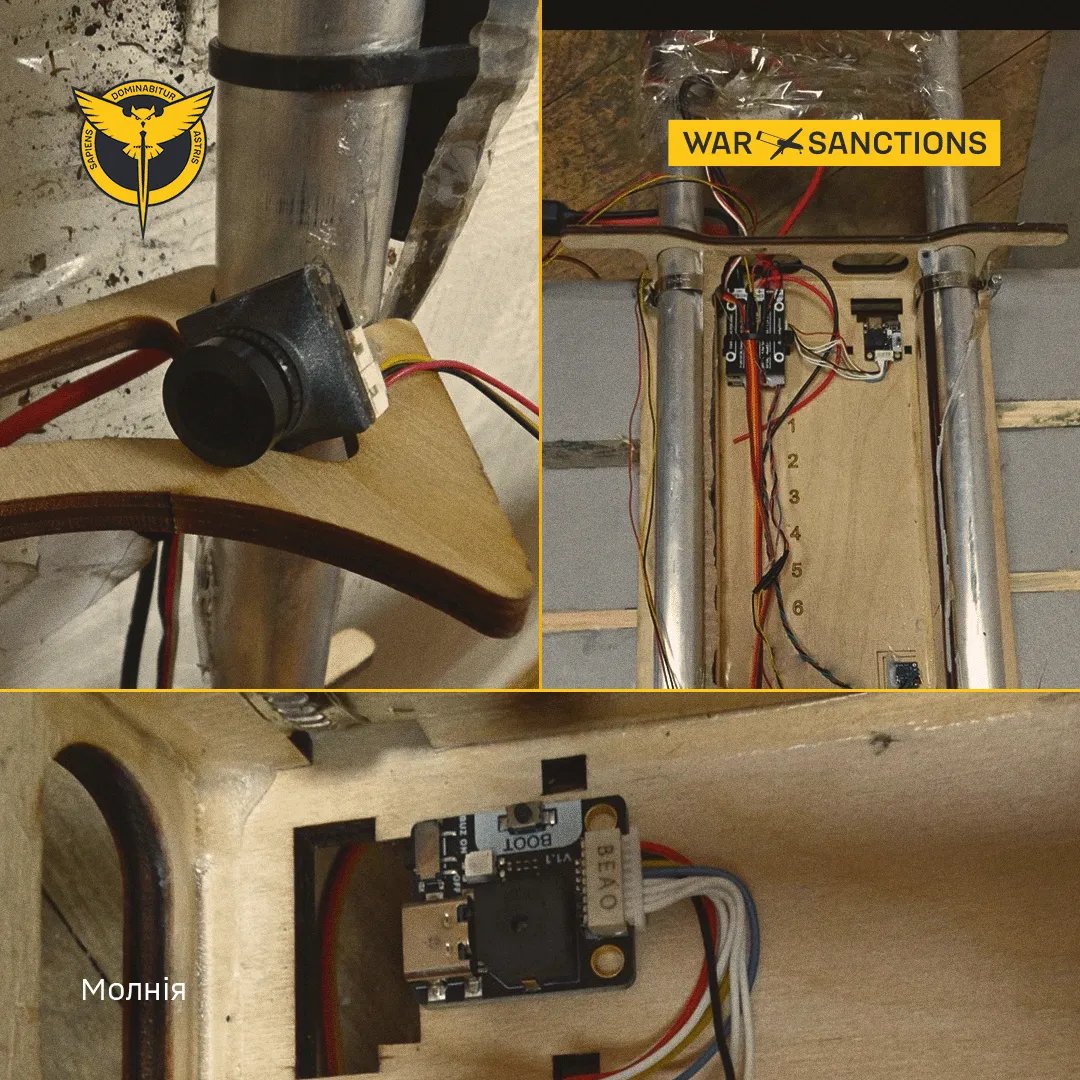 HUR teardown of a Molniya — photo 2 (components)
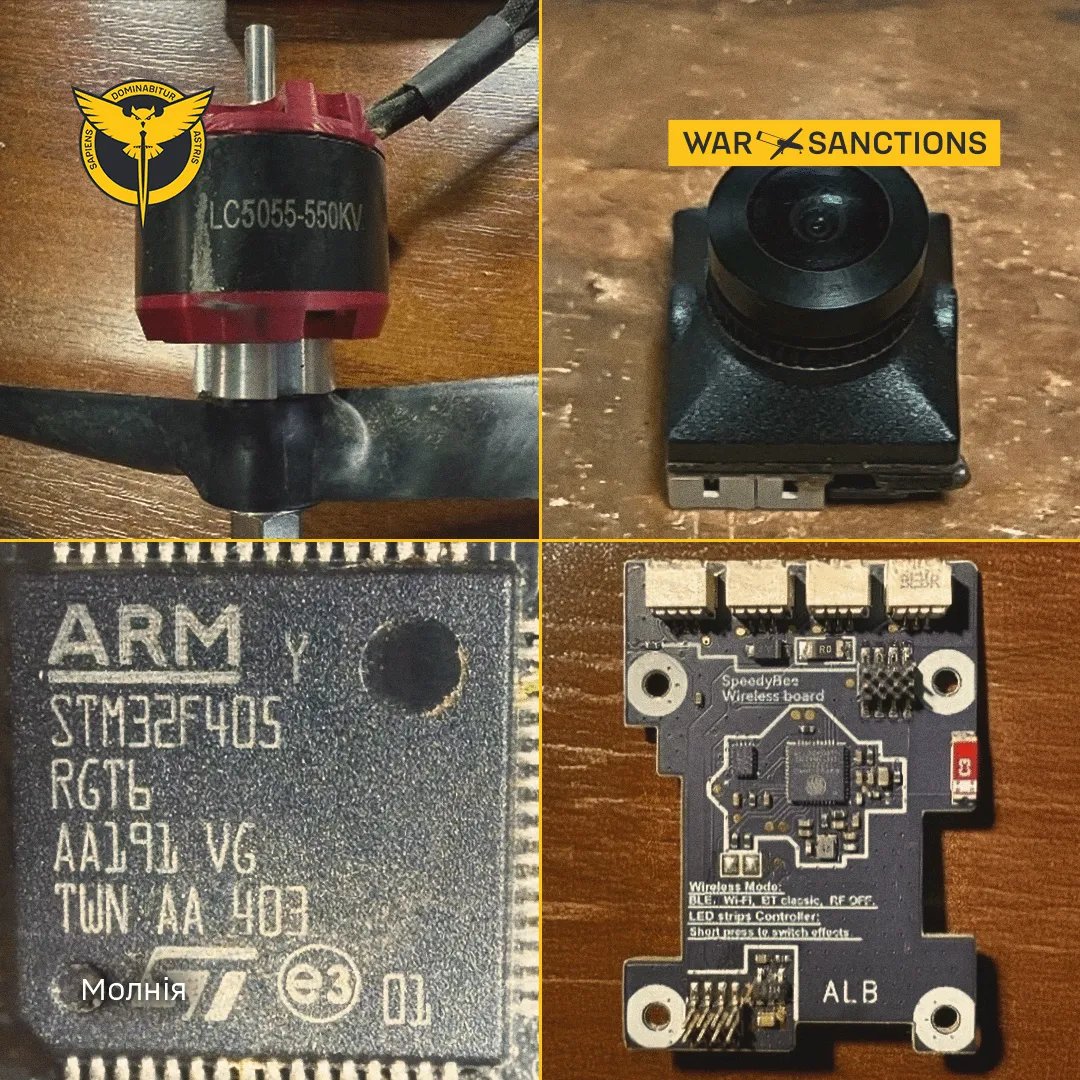 HUR teardown of a Molniya — photo 3 (components)
Photos: Russian Ministry of Defence via Wikimedia Commons · Defence Intelligence of Ukraine (HUR), War&Sanctions
Videos


Overview
The Molniya (Молния, “Lightning”) is a small Russian fixed-wing strike drone. It is launched from a pneumatic catapult and flown into its target by an operator wearing FPV goggles. In effect it is an FPV drone with wings, which lets it carry a quadcopter-sized warhead several times farther than a quadcopter can fly. The airframe is plywood wings and a centre section mounted on two aluminium tubes, and three soldiers can carry it in pieces in their backpacks (Forces News).
The original Molniya has a single electric motor. The Molniya-2 has two motors on the wings, a redesigned fuselage, longer range and a heavier warhead (HUR via Ukrinform). Published figures vary by source and version: a range of 30 to 50 km, a payload of 5 to 10 kg, a speed of about 80 km/h and a span of about 1.2 to 1.5 m. Serhii Beskrestnov puts its price at about $1,600 (Kyiv Independent).
Who builds it
According to research by Ukraine’s Center for Defense Strategies, reported by the Kyiv Independent in September 2026, the maker is Atlant Aero LLC, whose main plant in Taganrog, Rostov Oblast, expanded quickly in 2025. Its controlling shareholder is Prominvest JSC. Atlant Aero is sanctioned by the EU and Canada but not by the UK or US, and most of its Russian and Chinese suppliers are not sanctioned at all. A Russian outlet reporting a 2025 defence-ministry release named Kronstadt as the producer instead. Ukraine has acted on the Taganrog attribution: its forces struck the plant in January and again in April 2026, the second time with Neptune missiles (Ukrainska Pravda).
What it is made of
HUR’s War&Sanctions portal examined a Molniya in December 2024 and found mostly hobby-grade Chinese parts. The motor, flight controller, camera and most electronics carried the marks of FATJAY, SpeedyBee, Caddx, Huayi Microelectronics and Trex Technologies. The flight controllers ran on STMicroelectronics microcontrollers, and the motor-control board used Vishay converters and Rubycon capacitors. The drone’s mesh-network radios come from China’s Shenzhen Xingkai Technology, according to the Center for Defense Strategies.
The Molniya-2R reconnaissance version, described by HUR in December 2025, goes further. It replaces the warhead with a Raspberry Pi 5, a Chinese Mini PC F8 sold under the Russian Raskat label and running Windows 11, a SIYI ZR10 camera with 10x zoom and three-axis stabilisation, and a Starlink terminal. The Starlink link carries video from both cameras along with telemetry and control commands.
Warheads
HUR gives the standard charge as up to 5 kg, about a tenth of a Shahed’s. It also notes that some Molniyas fly without a warhead to load up Ukrainian air defences. In July 2025 Russia’s defence ministry said airborne troops were fitting TM-62 anti-tank mines to Molniyas. The Kyiv Independent gives up to 10 kg for current versions.
How it is evolving
The Molniya’s weak point has always been its radio link, and most of the changes since 2025 address it. Starlink came first, on the 2R. In July 2026 Beskrestnov reported Molniyas with no control antenna at all, carrying only a camera and an onboard computer for autonomous terminal guidance; Russian channels said they were being used in numbers in Zaporizhzhia. The same month, Ukrainian analysts described a Molniya-2 used as a carrier for an FPV drone, relaying its signal so that the small quadcopter saves its battery for the final attack. They estimated this extends strike depth to 30–40 km.
Then, on 22 July 2026, Beskrestnov reported the first Molniyas controlled through a Gerbera. The Gerbera is the foam decoy that flies with Geran-2 raids. The two drones’ mesh modems share a Chinese manufacturer and a frequency band, but a licence restriction had kept them incompatible until then. His advice to air-defence crews was to shoot down the Gerbera, and the Molniyas would fall on their own. In August a Russian channel claimed, citing footage from a Ukrainian interceptor drone, that Molniyas now carry systems to evade interceptors.
On the battlefield
Russia’s defence ministry said in November 2024 that Sever grouping units in Kursk region were using both the Molniya and the Molniya-2 against vehicles and small groups of troops (TASS via news.mail.ru). That same month a Molniya hit a high-rise and a shopping centre in Kharkiv. HUR pointed out that because an operator steers the drone all the way to impact, such hits on civilian buildings are deliberate. Ukrainian forces have studied captured examples closely enough to build their own copy (Forces News).
Combat experience
The Molniya appeared at the front in 2024. Russia’s defence ministry said in November 2024 that units of its Sever grouping were flying both the Molniya and the Molniya-2 against Ukrainian vehicles and troops in Kursk region (TASS via news.mail.ru). That same month a Molniya hit a high-rise and a shopping centre in Kharkiv’s Saltivka district. HUR noted that because a person guides the drone all the way to impact, strikes on civilian buildings are deliberate (HUR).
It has since become one of Russia’s most widely used strike drones against front-line and near-rear targets, including towns within tens of kilometres of the line. On 7 July 2026, for example, a Molniya hit a petrol station in Semenivka, Chernihiv Oblast (Ukrainska Pravda).
Effectiveness
Warhead upgrades
| Warhead | Type | Mass | Since | Notes |
|---|---|---|---|---|
| Standard charge | high explosive | up to 5 kg | 2024 | About a tenth of a Shahed's warhead; versions without a warhead have been used to overload air defence (HUR) source |
| TM-62 anti-tank mine | anti-tank blast mine used as a warhead | not stated (drone payload given as up to 7 kg) | 2025 | Russian MoD said airborne troops of the Ivanovo formation fit TM-62 mines to Molniyas source |
| Reinforced charge (Molniya-2) | high explosive | up to 10 kg reported | 2024 | HUR says the Molniya-2 carries a reinforced warhead; the Kyiv Independent gives up to 10 kg source |
Variants
- Molniya-12024
Original single-motor version, catapult-launched and flown by an operator in FPV goggles source
- Molniya-22024
Two wing-mounted motors, redesigned fuselage, longer range, reinforced warhead; Russian MoD reported both versions in use in Kursk region in November 2024 source
- Molniya-2R (reconnaissance)2025
Warhead replaced by Raspberry Pi 5, Mini PC F8, SIYI ZR10 zoom camera and Starlink terminal source
- Antenna-free autonomous version2026
Only a camera and onboard computer, no control antenna; flagged by Serhii Beskrestnov and said to be used in numbers in Zaporizhzhia source
- FPV carrier ("mothership")2026
Molniya-2 carrying an FPV drone under the airframe and relaying its control signal, assessed to extend strike depth to 30–40 km source
- Mesh-relayed via Gerbera2026
Molniyas controlled through a Gerbera relay drone over a shared mesh network, first reported 22 July 2026 source
- Evasion-equipped version2026
Russian channel UAVDEV says footage from a Ukrainian interceptor shows Molniyas now fitted with systems to evade interceptor drones; mechanism not described source
Countering it
As reported publicly; each line links its source.
- Strikes on production — Ukraine struck the Taganrog plant that makes Molniya drones in January and April 2026, the latter with Neptune missiles source
- Destroy the relay — When Molniyas are controlled through a Gerbera, Beskrestnov advises shooting down the Gerbera so the Molniyas lose their link source
- Sanctions — Atlant Aero is sanctioned by the EU and Canada but not the UK or US; most of its Russian and Chinese suppliers are unsanctioned source
Sources
- gur.gov.ua/en/content/war-sanctions-zavdiaky-chomu-litaiut-rosiiski-fpv-kryla-molnyia-ta-analoh-orlanu-fenyks
- www.ukrinform.net/rubric-ato/4072217-diu-russia-adapts-molniia-drone-for-aerial-reconnaissance.html
- armyinform.com.ua/en/2025/12/22/enemy-adapted-the-molniya-drone-for-aerial-reconnaissance-hur
- kyivindependent.com/exclusive-majority-of-companies-involved-in-russian-molniya-drone-production-unsanctioned-research-shows/
- www.pravda.com.ua/eng/news/2026/04/19/8030787/
- www.forcesnews.com/ukraine/molniya-wooden-fpv-drone-thats-made-russia-and-copied-ukraine
- www1.ru/news/2025/07/21/besposhhadnye-udary-molnii-rossiiskie-voennye-ustanavlivaiut-miny-tm-62-na-bespilotniki-samoletnogo.html
- news.mail.ru/svo/63702601/
- www.pravda.com.ua/eng/news/2026/07/08/8042990/
- t.me/VictoryDrones/60698
- t.me/VictoryDrones/59058
- t.me/milinfolive/175380
- t.me/UAVDEV/12446