Mi-24
systemAdversary capabilityby Kamov
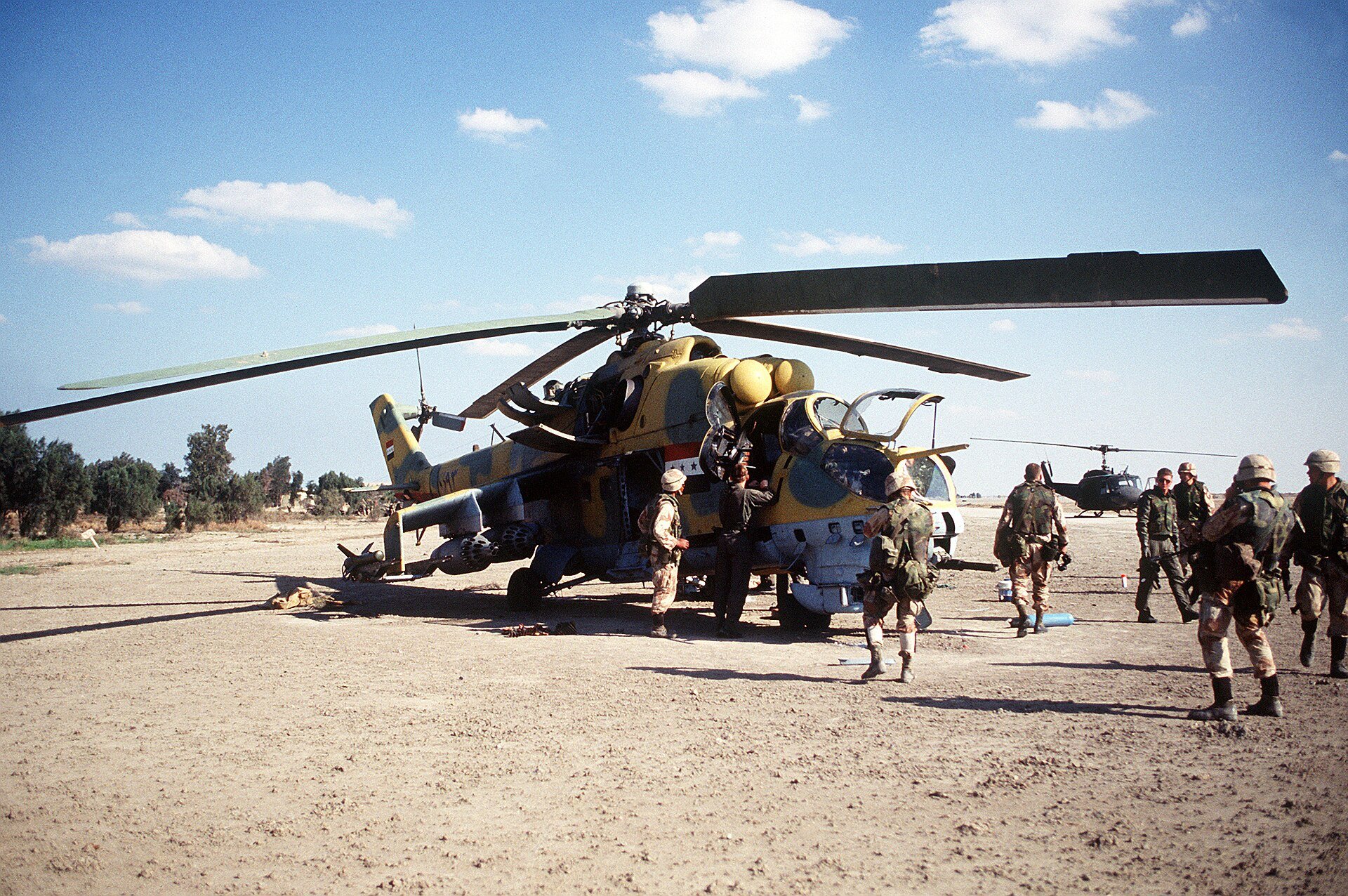
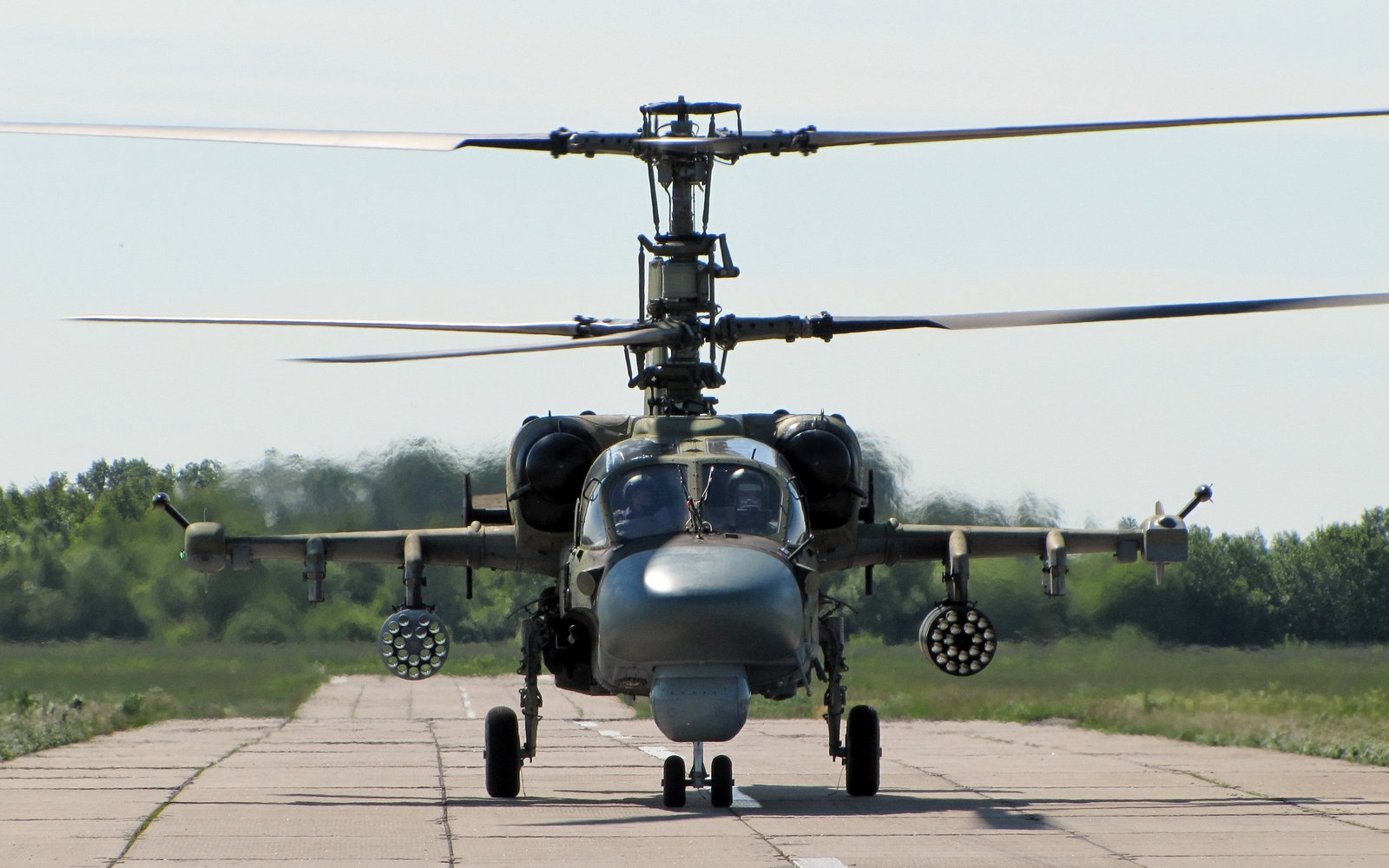

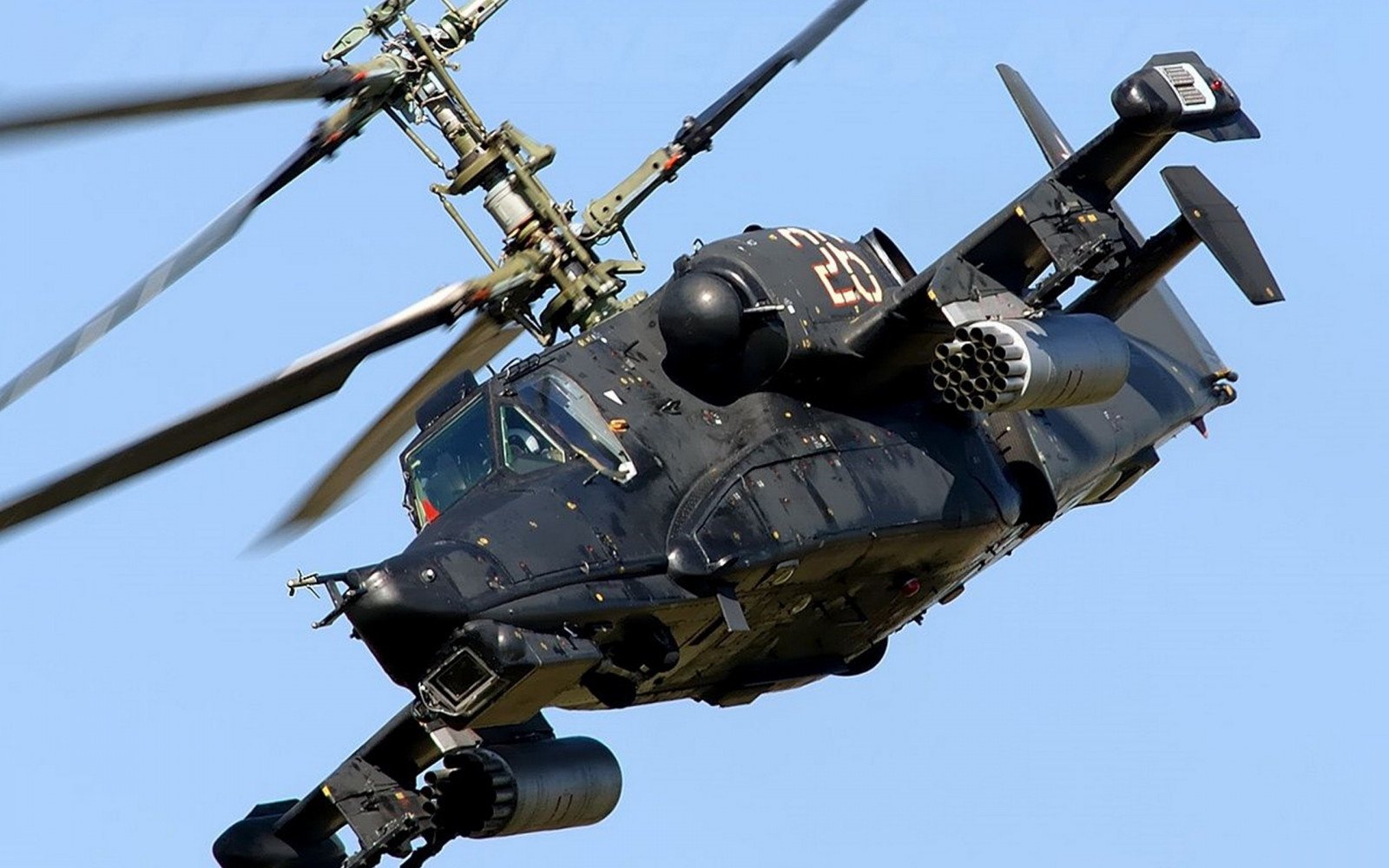

Photos: Staff Sgt. Dean Wagner, US Army · wallhere.com · wall.alphacoders.com · WarGonzo (Telegram)
The Mi-24 is a Soviet-era attack helicopter and troop transport designed by the Mil Moscow Helicopter Plant and introduced into Soviet Air Force service in 1972. More than five decades later it remains in use with roughly 52 air forces worldwide, including both Russia and Ukraine, who inherited large fleets from the Soviet era and continue to field the type in the current war.
The Mi-24 is distinctive among gunships for pairing a two-seat tandem cockpit with an armoured cabin that can carry up to eight troops — a hybrid role Soviet doctrine described as a “flying infantry fighting vehicle.” Power comes from a pair of Isotov TV3-117 turboshafts driving a five-blade main rotor. Armament varies by variant: the Mi-24V carries a chin-mounted four-barrel 12.7mm YakB machine gun, while the Mi-24P substitutes a fixed twin-barrel 30mm GSh-30K cannon on the fuselage side. Six underwing hardpoints carry S-5, S-8 and S-13 rocket pods, UPK-23 gun pods, iron bombs, and anti-tank guided missiles — originally the radio-guided 9M114 Shturm, later the 9M120 Ataka with a reported range beyond eight kilometres. The cockpit, engine bay and critical systems are protected by titanium plating and bulletproof glass, giving the Mi-24 a reputation for absorbing small-arms and even heavy machine-gun fire that lighter gunships cannot.
Operationally the Mi-24 has seen more combat than almost any other helicopter type, from the Soviet-Afghan war through conflicts across Africa, the Middle East and the former Yugoslavia. In Ukraine both sides use it: the Ukrainian Air Force operates a mix of Mi-24V and Mi-24P airframes, typically flying nap-of-the-earth lofted-rocket attacks to minimise exposure to short-range air defence, while Russian forces field the modernised Mi-35M alongside newer Ka-52 and Mi-28N designs.
The export derivative Mi-35M, built by Rostvertol, adds a non-retractable undercarriage, shorter stub wings, improved night-attack avionics and integration of the Ataka missile. It has been supplied to Brazil, Venezuela, Iraq, Nigeria and others. Russia has preferred incremental upgrades to in-service airframes over fielding wholly new variants.
Russian channels and the Russian Ministry of Defence claimed on 23 October 2026 that a Geran one-way attack drone destroyed a Ukrainian Mi-24 parked at Myrhorod airfield in Poltava region, reported alongside video they described as objective control footage. Independent confirmation of the strike, or of the aircraft’s identity, has not been published.
Sources (13)
- en.wikipedia.org/wiki/Mil_Mi-24
- en.wikipedia.org/wiki/Mil_Mi-24
- Telegram channel, Russian side:t.me/wargonzo/37841
- Telegram channel, Russian side:t.me/voenkorKotenok/76832
- Telegram channel, Russian side:t.me/Voenacher/97979
- Telegram channel, Russian side:t.me/rybar_in_english/35206
- Telegram channel, Russian side:t.me/rybar/84112
- Telegram channel, Russian side:t.me/RVvoenkor/125540
- Telegram channel, Russian side:t.me/mod_russia/68486
- Telegram channel, Russian side:t.me/epoddubny/29579
- /osint-hetzner/2026-10-23--russian-drone-strikes-hit-vilkove-naval-drone-bases/
- /osint-hetzner/2026-10-23--russian-drone-strike-hits-vilkove-naval-drone-bases/
- /osint-hetzner/2026-10-23--russian-drone-strike-hits-poltava-rail-depot/