Meteor
Beyond-visual-range air-to-air missile with ramjet propulsion and a no-escape zone that outranges every comparable weapon in service.
Missile / loitering munitionby MBDAIntroduced 2016
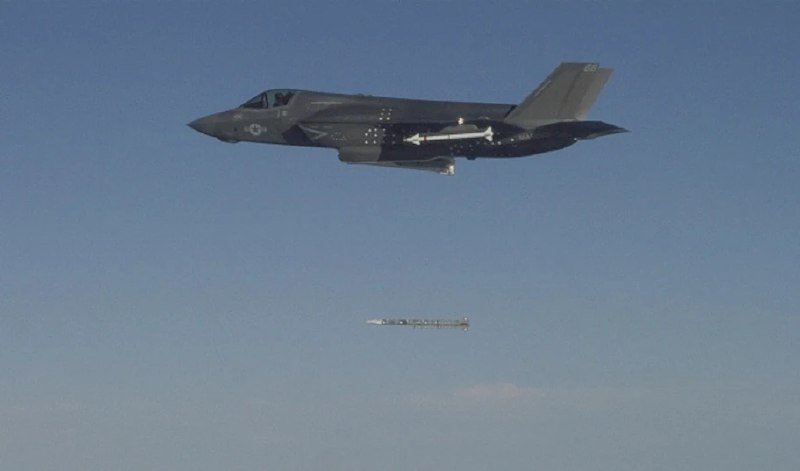
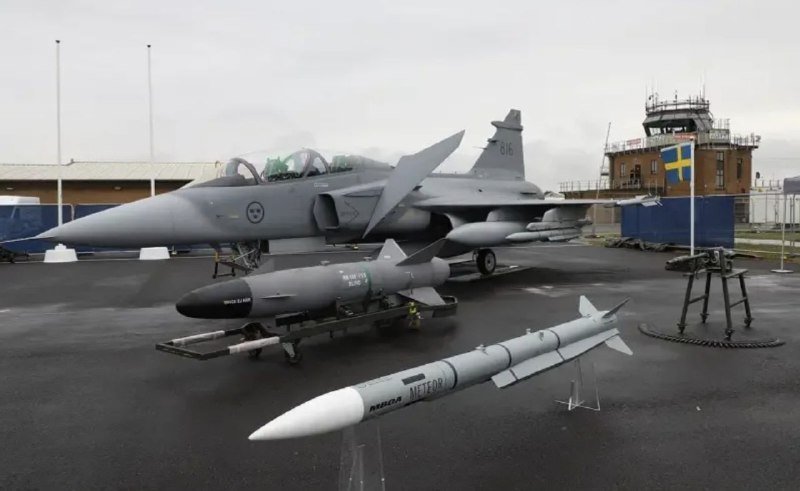
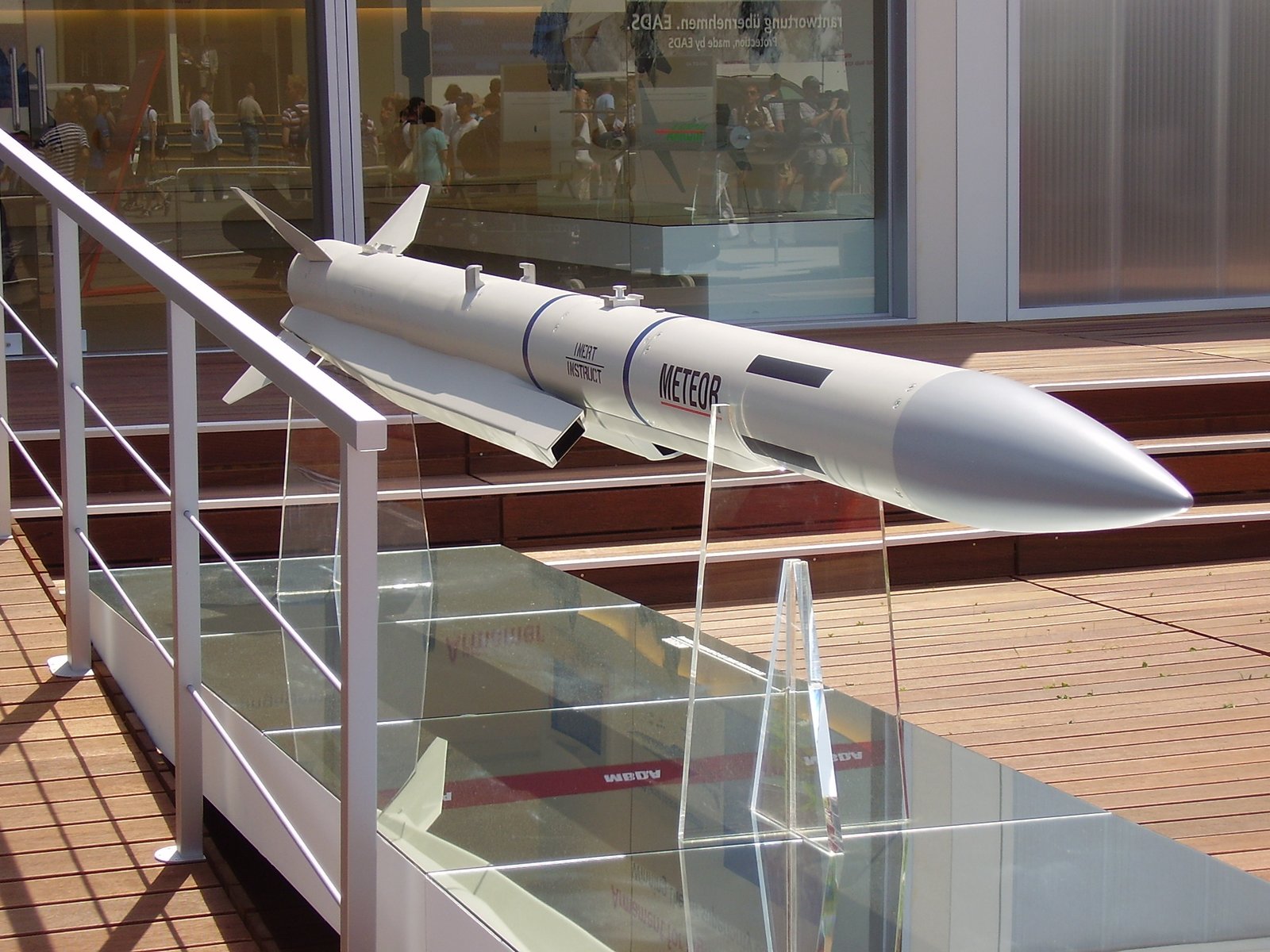

Photos: Історія_Зброї (Istoria Zbroi) (Telegram) · Поддубный |Z|O|V| edition (Telegram) · Wikipedia · Kotsnews (Александр Коц) (Telegram)
Meteor is a beyond-visual-range air-to-air missile built by MBDA, the pan-European missile house, and fielded by the air forces of the United Kingdom, France, Germany, Italy, Sweden, and Spain. It entered operational service in 2016 after a programme launched in the late 1990s to give European fighters a weapon that could match or outrange the long-range missiles then entering US and Russian service. The round is cleared on the Eurofighter Typhoon, Dassault Rafale, and Saab Gripen, with integration on the F-35 Lightning II now in flight testing.
Meteor’s defining feature is its propulsion. Instead of the solid-fuel rocket motor used by every previous Western air-to-air missile, it carries a throttleable ducted rocket — a ramjet sustainer, developed by Bayern-Chemie in Germany, that keeps the airframe under power deep into the engagement. The result is a weapon that retains kinetic energy at ranges where rocket-powered missiles coast and decelerate, producing what MBDA describes as a large “no-escape zone.” Guidance is handled by an active radar seeker with a two-way datalink for mid-course updates from the launching fighter or a networked platform; the warhead is a blast-fragmentation design triggered by proximity and impact fuzing. Open-source figures put the range above 100 kilometres and terminal speed above Mach 4, though manufacturer-quoted performance should be read with the usual caution for vendor data.
Development and deployment have continued since fielding. On 7 October 2026 a British F-35B carried out the first inert separation of a Meteor from the aircraft’s internal weapons bay at Naval Air Station Patuxent River — a prerequisite for the Block 4 armament package the F-35 is scheduled to receive across the late 2020s and early 2030s. France has committed to arming the sixteen export Rafales ordered by Ukraine in July 2026 with Meteor alongside the shorter-range MICA; Paris expects first deliveries in 2028-2029, with Ukrainian pilot training beginning in November 2026.
The most prominent recent development is Ukraine’s acquisition for its incoming Gripen fleet. The Swedish Ministry of Defence announced on 17 November 2026 that Sweden and the United Kingdom had signed a memorandum of understanding to supply Meteor rounds with the 32 Gripen E/F and C/D fighters pledged to Kyiv earlier in the year. Ukrainian officials have cited the missile as a priority for countering Russian Su-34 strike aircraft that launch glide bombs from inside Russian airspace. Russian milbloggers have reported the deal with a mixture of alarm and claims that upgraded infrared sensors on modernised Su-57M variants will track the Meteor through the continuous heat signature of its ramjet exhaust; those claims come from Russian-side channels and have not been independently verified. The missile has not been publicly reported in combat use to date.
Sources (14)
- en.wikipedia.org/wiki/Meteor_%28missile%29
- en.wikipedia.org/wiki/Meteor_%28missile%29 not found
- Telegram channel, Russian side:t.me/swodki/635541
- Telegram channel, Russian side:t.me/swodki/635149
- Telegram channel, Russian side:t.me/swodki/622280
- Telegram channel, Russian side:t.me/sashakots/65549
- Telegram channel:t.me/osintdefender/20166
- Telegram channel:t.me/Istoria_zbroi/9845
- Telegram channel:t.me/Istoria_zbroi/10235
- Telegram channel, Russian side:t.me/epoddubny/30054
- Telegram channel, Russian side:t.me/epoddubny/30052
- Telegram channel, Russian side:t.me/epoddubny/29751
- Telegram channel:t.me/DeepStateUA/23891
- Telegram channel:t.me/baltic_signal_monitor/787