Ka-52
systemAdversary capabilityby Kamov
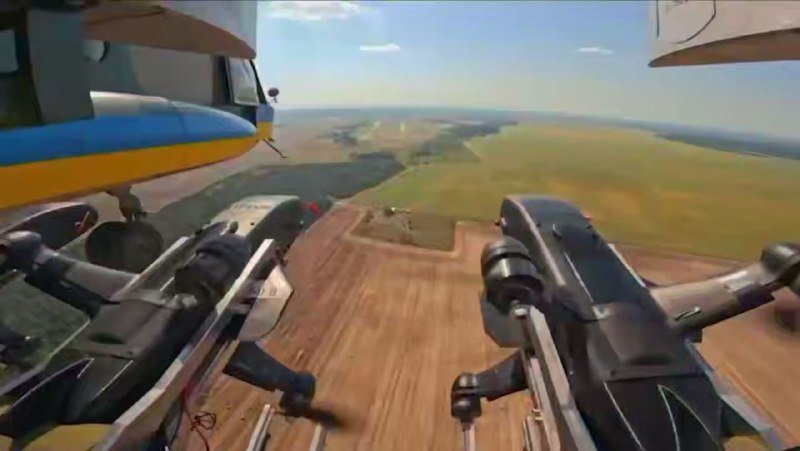
Photos: wallup.net · wallpapercave.com · wall.alphacoders.com · Victory Drones (Telegram)
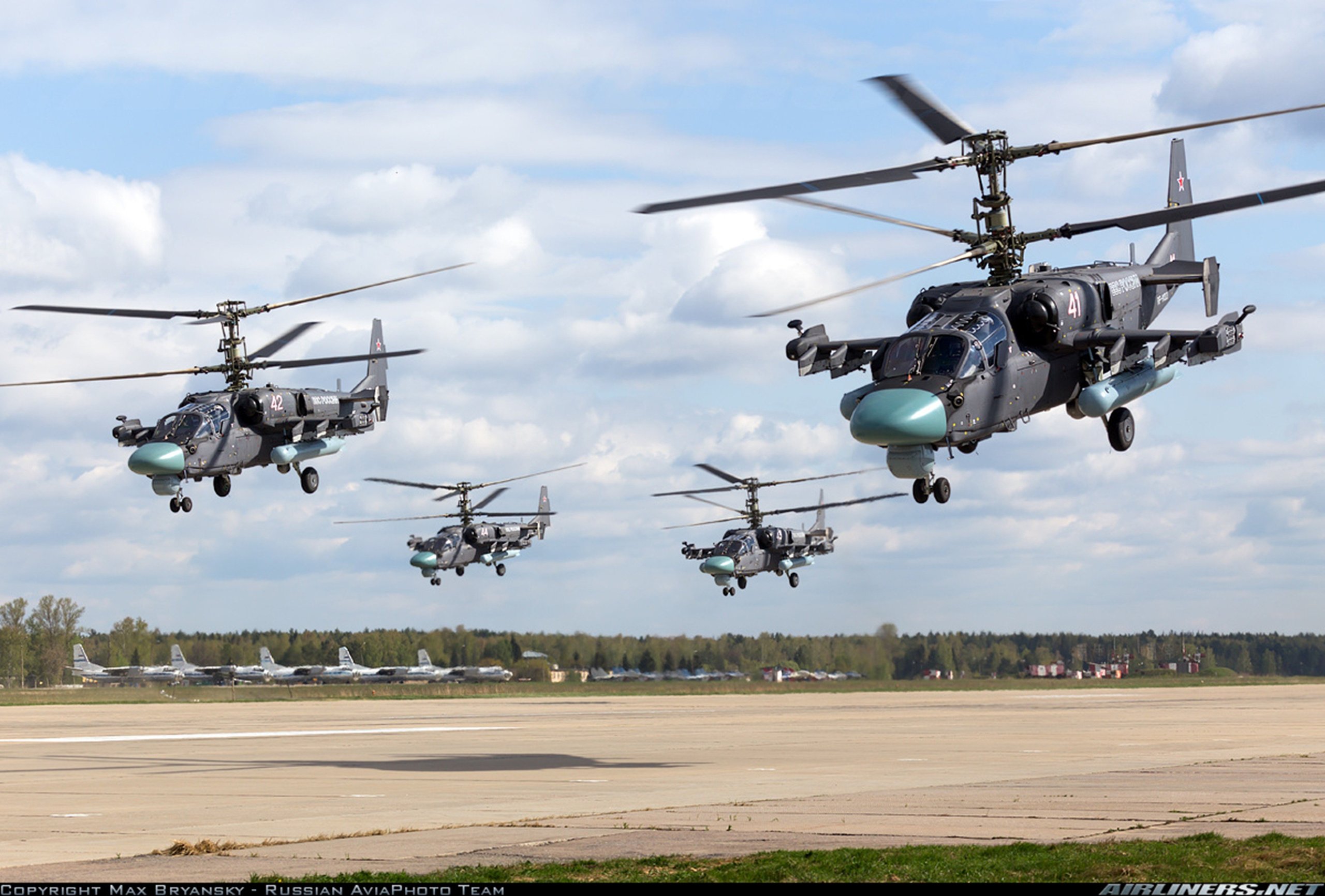
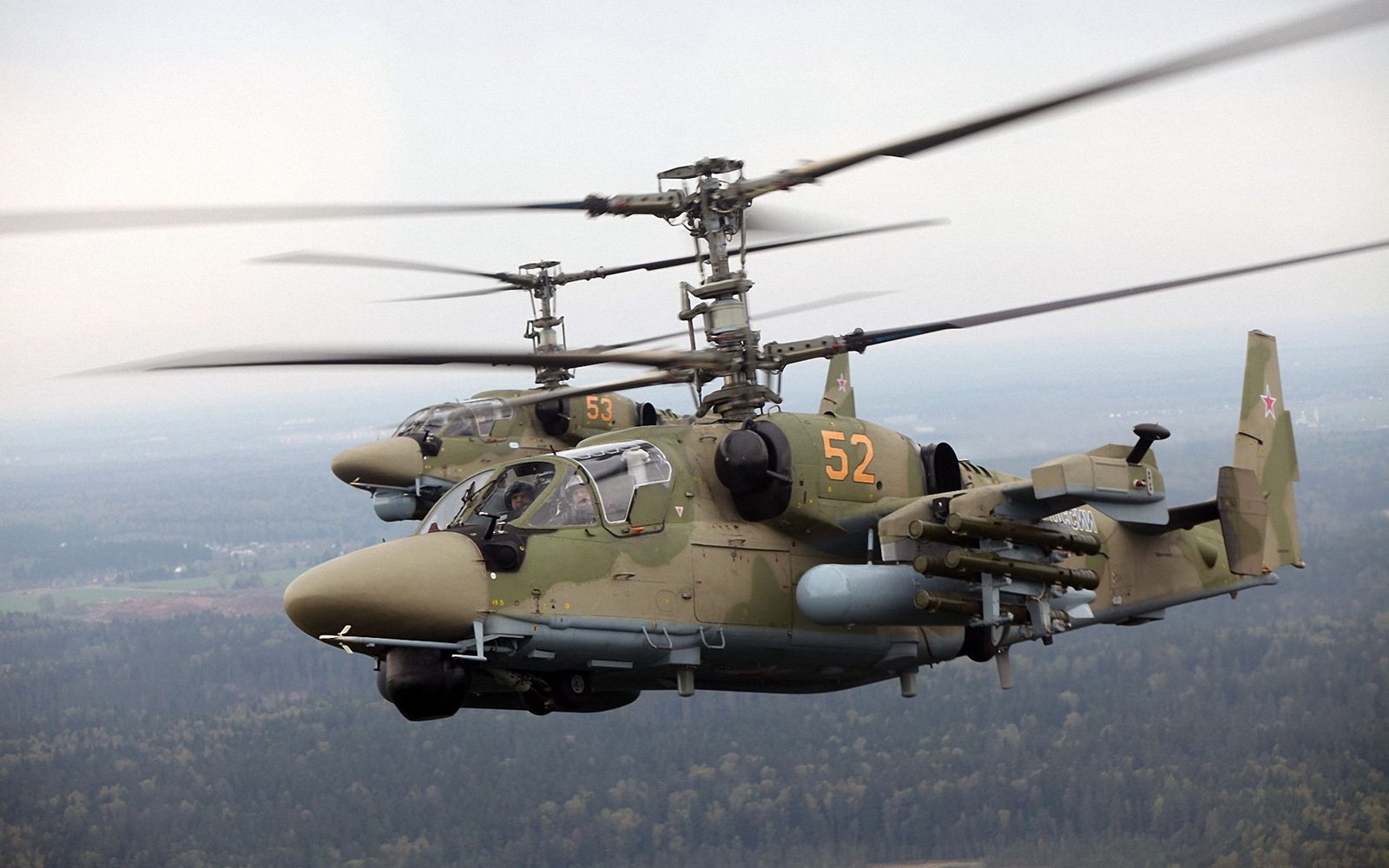
Ka-52 is a two-seat Russian attack helicopter developed by Kamov as a further iteration of the single-seat Ka-50 “Black Shark.” The twin-seat variant first flew in June 1997 and entered service with the Russian Aerospace Forces in 2011, under the NATO reporting name Hokum-B. More than 196 airframes had been built by 2022, assembled at the Progress aircraft plant in Arsenyev. The aircraft was designed as both a heavily armed strike platform and a combat reconnaissance machine, able to direct other helicopters onto targets from standoff range.
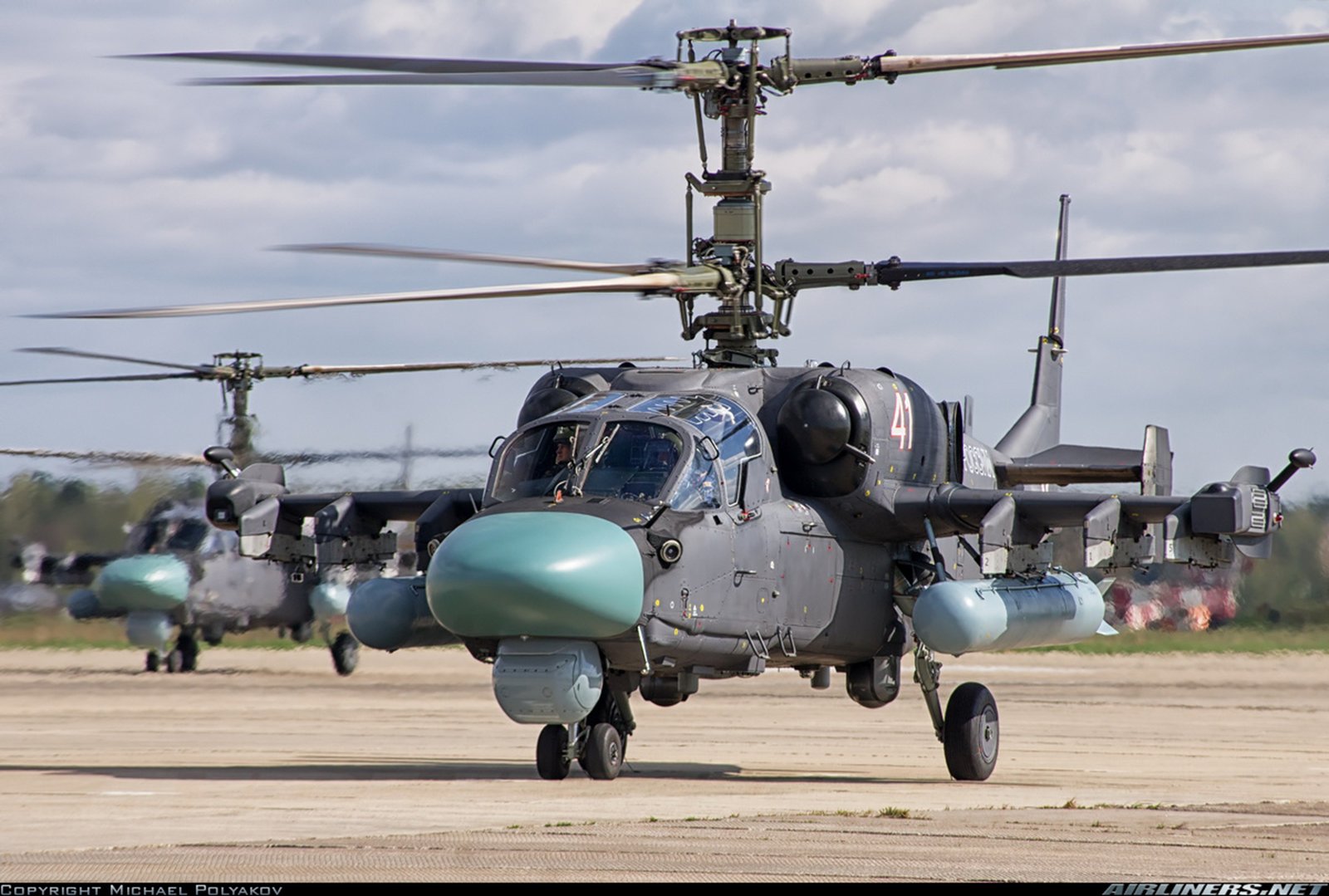
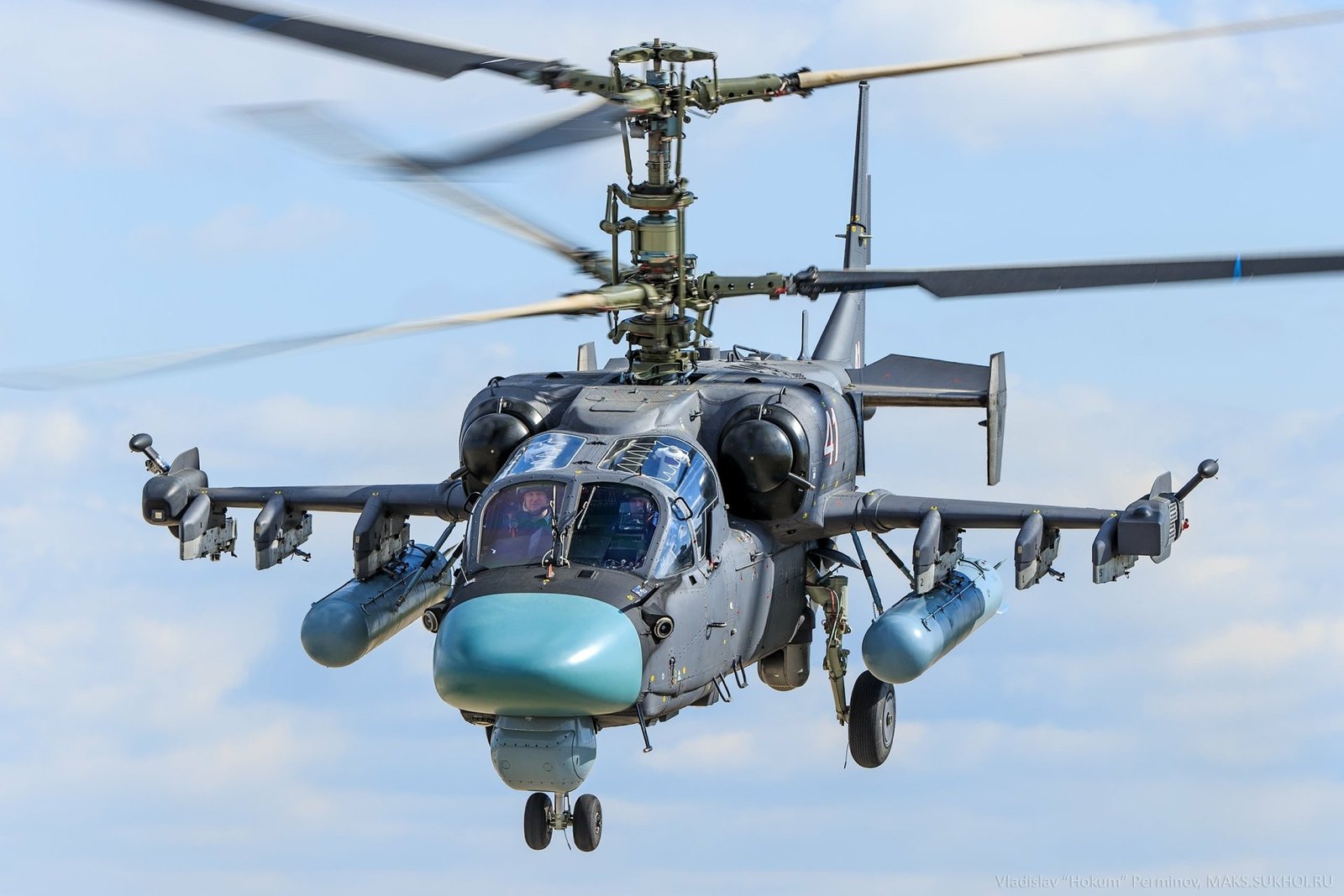
The Ka-52 is immediately recognisable for its coaxial contra-rotating main rotors and the absence of a tail rotor — a Kamov signature that trades mechanical complexity for compactness and tight, high-rate turning. Its two pilots sit side by side rather than in tandem, which is unusual among dedicated attack helicopters. Fixed armament is a single 30 mm Shipunov 2A42 autocannon with 460 rounds in a fuselage mount. Six stub-wing hardpoints can carry Vikhr-1 or Ataka laser-beam-riding anti-tank missiles, S-8 or S-13 rocket pods, UPK-23 cannon pods or external fuel tanks; wingtip rails take Igla-V air-to-air missiles. Sensors centre on the FH01 Arbalet millimetre-wave radar in the nose and the GOES-451 electro-optical turret with a TV camera, thermal imager and laser rangefinder. The L-370 Vitebsk electronic-warfare suite — a laser-warning receiver, missile-launch detector and infrared countermeasure projector — was added across the fleet from 2010. K-37 ejection seats, extremely rare on a helicopter, give the two-man crew a chance of surviving a catastrophic rotor failure. Twin Klimov VK-2500 turboshafts drive the type to roughly 300 km/h in level flight, with a combat radius of about 460 km.
The Ka-52 is operated by the Russian Aerospace Forces and Russian Naval Aviation, and has been exported only to Egypt, which fields the type as the “Nile Crocodile” and operates it from its two Mistral-class amphibious ships. The helicopter saw combat in the Second Chechen War and during Russia’s intervention in Syria, but its most intensive use has been in the war against Ukraine. Independent open-source tallies such as the Oryx project have documented the loss of dozens of Ka-52s to Ukrainian air defences, man-portable missiles and shoulder-launched systems since February 2022 — the heaviest attrition suffered by any Russian rotary type in the conflict. Ukrainian sources say the airframe’s armour and ejection system have at times allowed downed crews to survive.
Development continues. The naval Ka-52K “Katran” was ordered originally for the cancelled Mistral deal and is now operated from Russian shipping. The Ka-52M, an upgrade informed by combat lessons from Ukraine, first flew in August 2022; Russian state media reported the army taking delivery of ten of the variant from the Progress plant in January 2023. According to Kamov, the Ka-52M carries a longer-range Vikhr-derivative missile, revised sighting systems and tighter integration with reconnaissance drones.
Among contemporary attack helicopters the Ka-52 remains distinctive for its coaxial rotor system and side-by-side cockpit. Within the Russian inventory it operates alongside the more conventional Mil Mi-28 “Havoc,” the two platforms often tasked together in Ukraine.