Products Diehl Defence
IRIS-T
systemby Diehl Defence
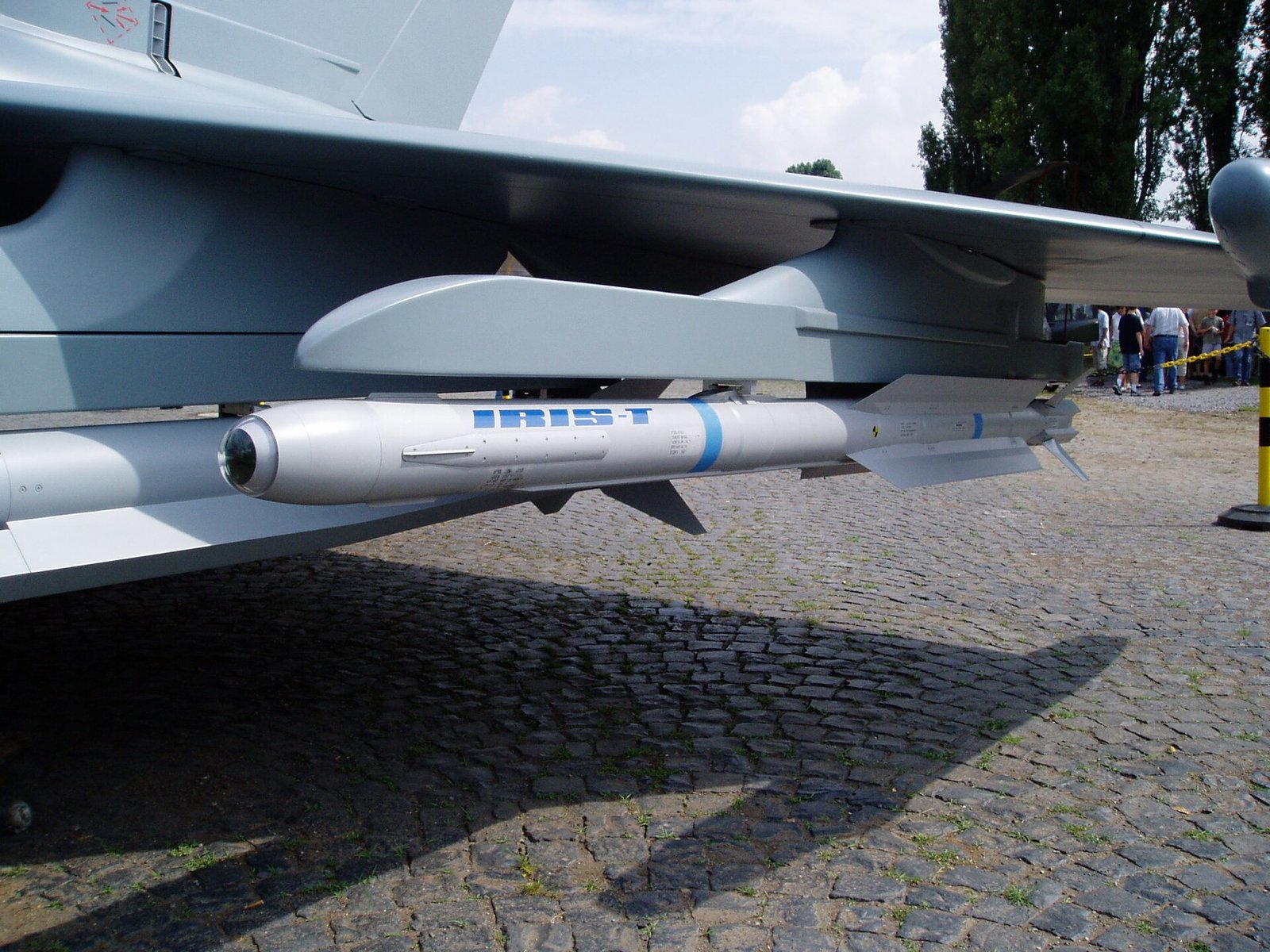
Photos: www.armyrecognition.com · oboronka.mezha.ua · Victory Drones (Telegram) · Photo taken 2005-07-16 in Koblenz by Owly K
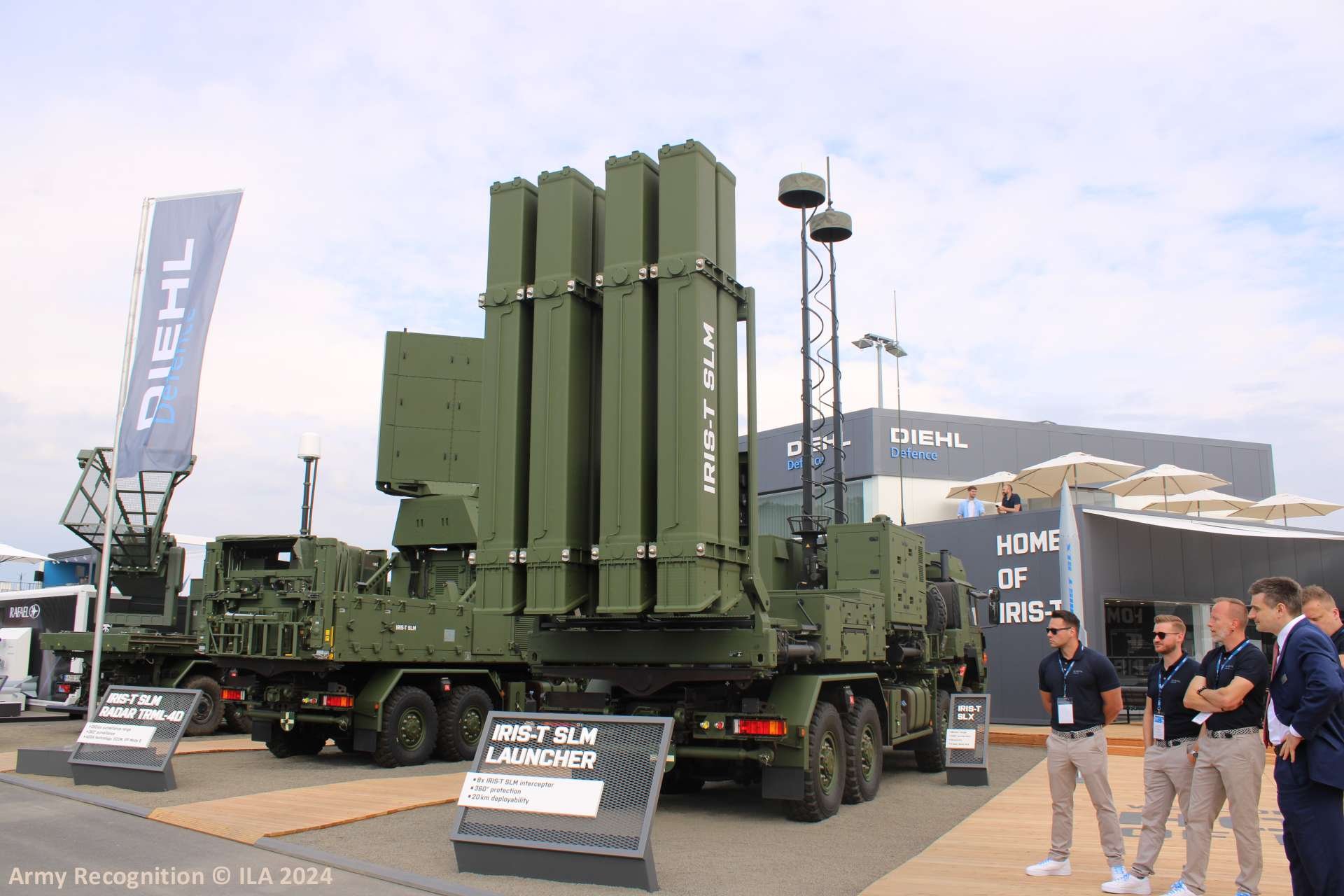
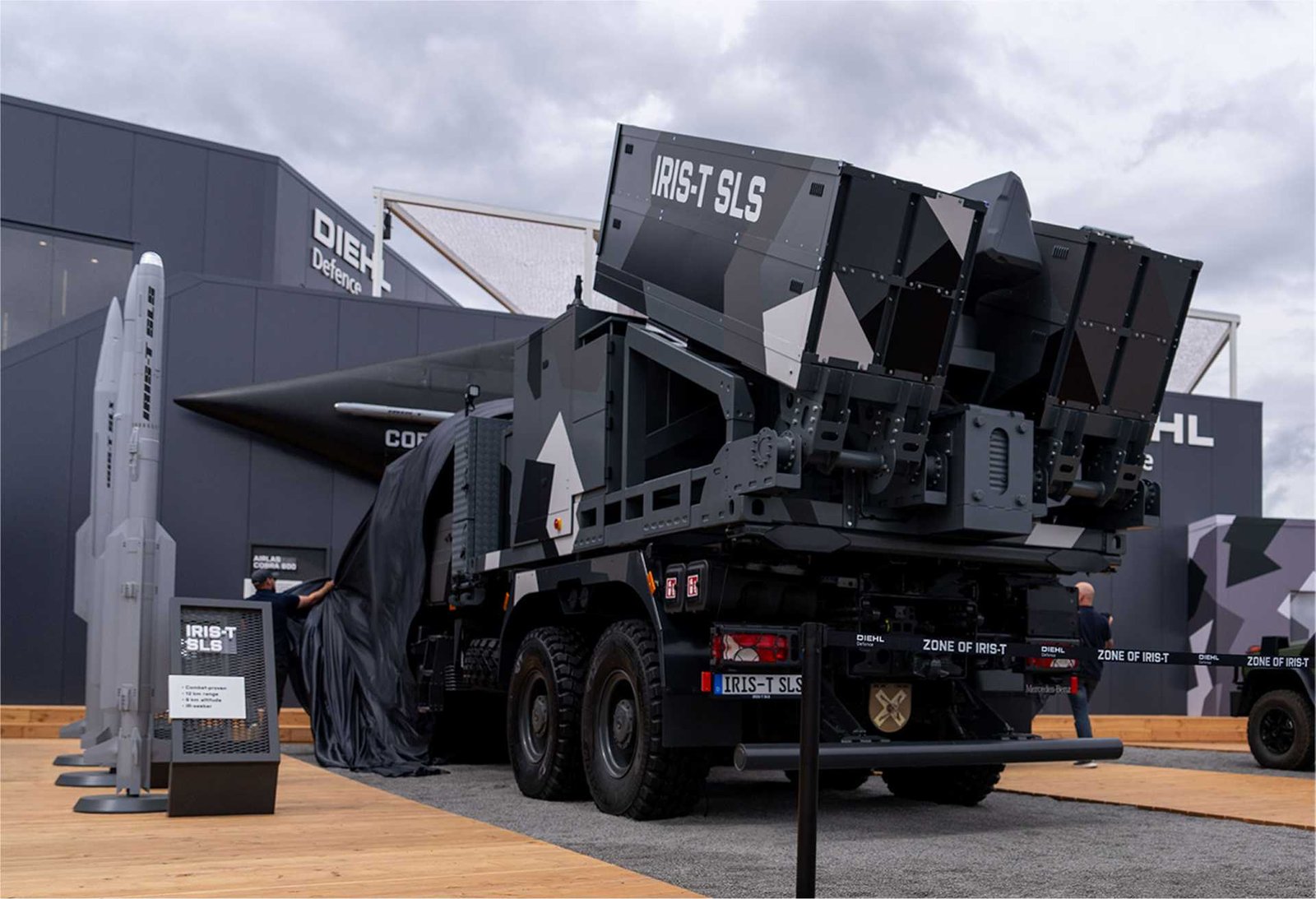
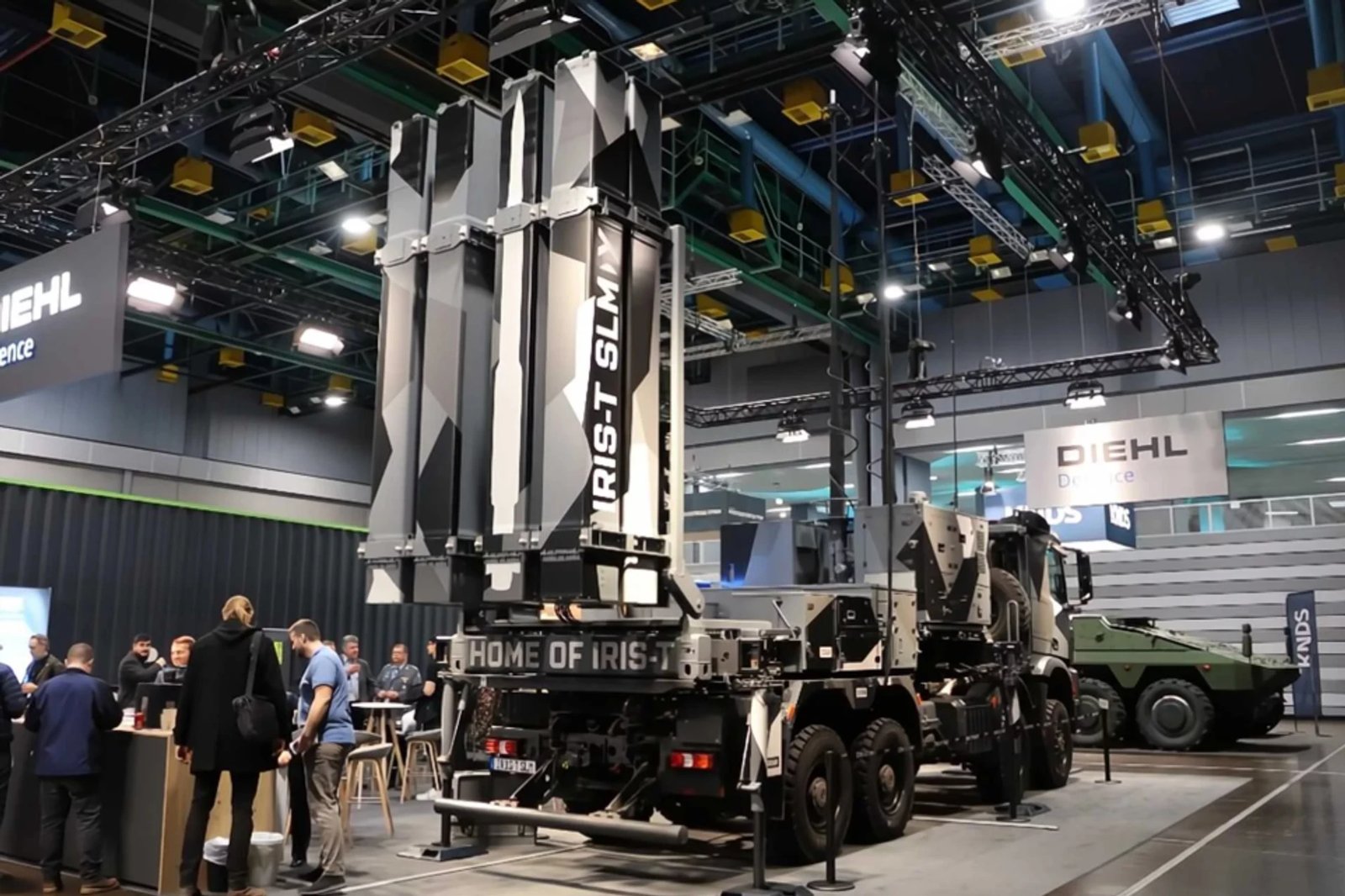
Diehl Defence’s IRIS-T began life as a short-range air-to-air missile that entered German service in December 2005, and has since grown into a family of ground-based air defence systems now central to European and Ukrainian airspace protection. The original IRIS-T (Infra-Red Imaging System — Tail/Thrust Vector-Controlled) was a multinational European replacement for the ageing AIM-9 Sidewinder, developed with industrial partners across six NATO states. The surface-launched derivatives — IRIS-T SLS, SLM, and SLX — repurpose the same missile family into layered air defence, and it is these variants that have made the system a visible fixture of the war in Ukraine.
The missile itself weighs 87.4 kg, is 2.94 m long, and runs a solid-fuel rocket with thrust-vectoring control that gives it a Mach 3 top speed and extreme off-boresight engagement angles. Guidance is by imaging infrared seeker, paired with an 11.4 kg dual-layer high-explosive and fragmentation warhead. Diehl states an air-to-air engagement range of 25 km and ceilings to 20 km. In the surface-to-air role the same missile is launched from a vehicle-independent canister launcher, its software updated during loading to suit the mission profile; the SLS variant is quoted by Diehl at 12 km range and 6 km altitude, the SLM at 40 km range (60 km with the full radar and command setup) and 20 km altitude, and the still-maturing SLX at 80 km range and over 25 km altitude. A naval demonstrator of the SLM was fired by the German Navy in 2025 from the frigate Baden-Württemberg.
Diehl reports more than 5,000 missiles produced across the family as of December 2023, at a unit cost of roughly €400,000 for the air-to-air round. Germany, which first fielded the type, has committed multiple SLM batteries to Ukraine, where the system has been credited by Ukrainian forces with engagements against Russian cruise missiles and drones. German media reported in September 2026 that Chancellor Friedrich Merz was preparing a further large tranche of IRIS-T systems and strike drones for Ukraine following a drone incursion at Leipzig airport, though the final package has not been independently confirmed. Beyond Ukraine, IRIS-T SLM has become the anchor interceptor of the European Sky Shield Initiative, the 24-nation NATO procurement framework launched in 2022.
Diehl is now working with Hensoldt and Rheinmetall under the ARGE NNbS consortium on Germany’s next short- and very-short-range air defence programme, where IRIS-T components are expected to feature alongside radar and command systems from the partners. With the SLX variant in test and a submarine-launched cousin (IDAS) still in development, the family remains one of the few Western short-to-medium range air defence lines being actively extended rather than sustained.