Integrated Battle Command System (IBCS)
Army's next-generation air and missile defense C2 — fuses sensors from any source to any interceptor through a single fire-control picture.
Softwareby CJADC2Introduced 2022
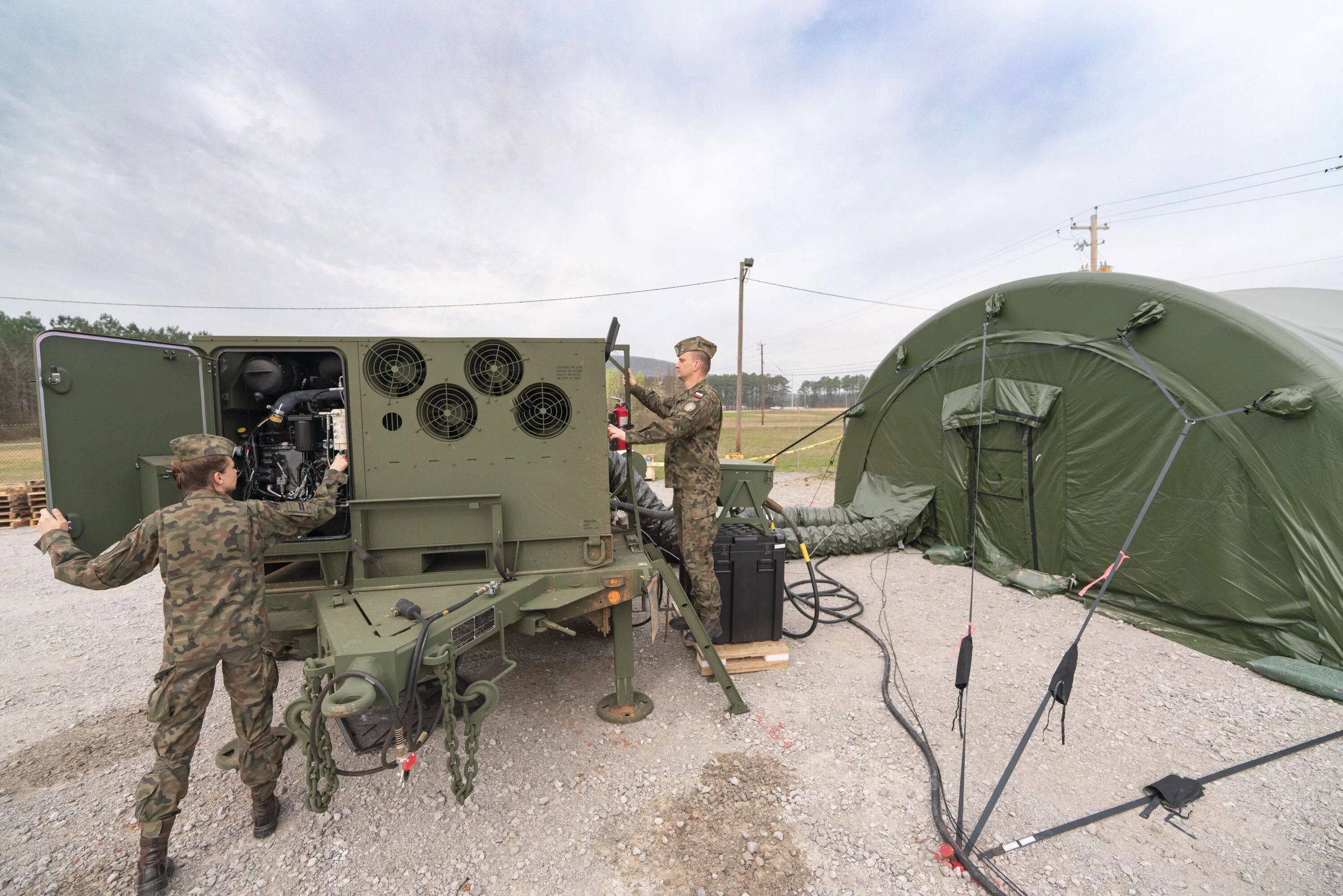
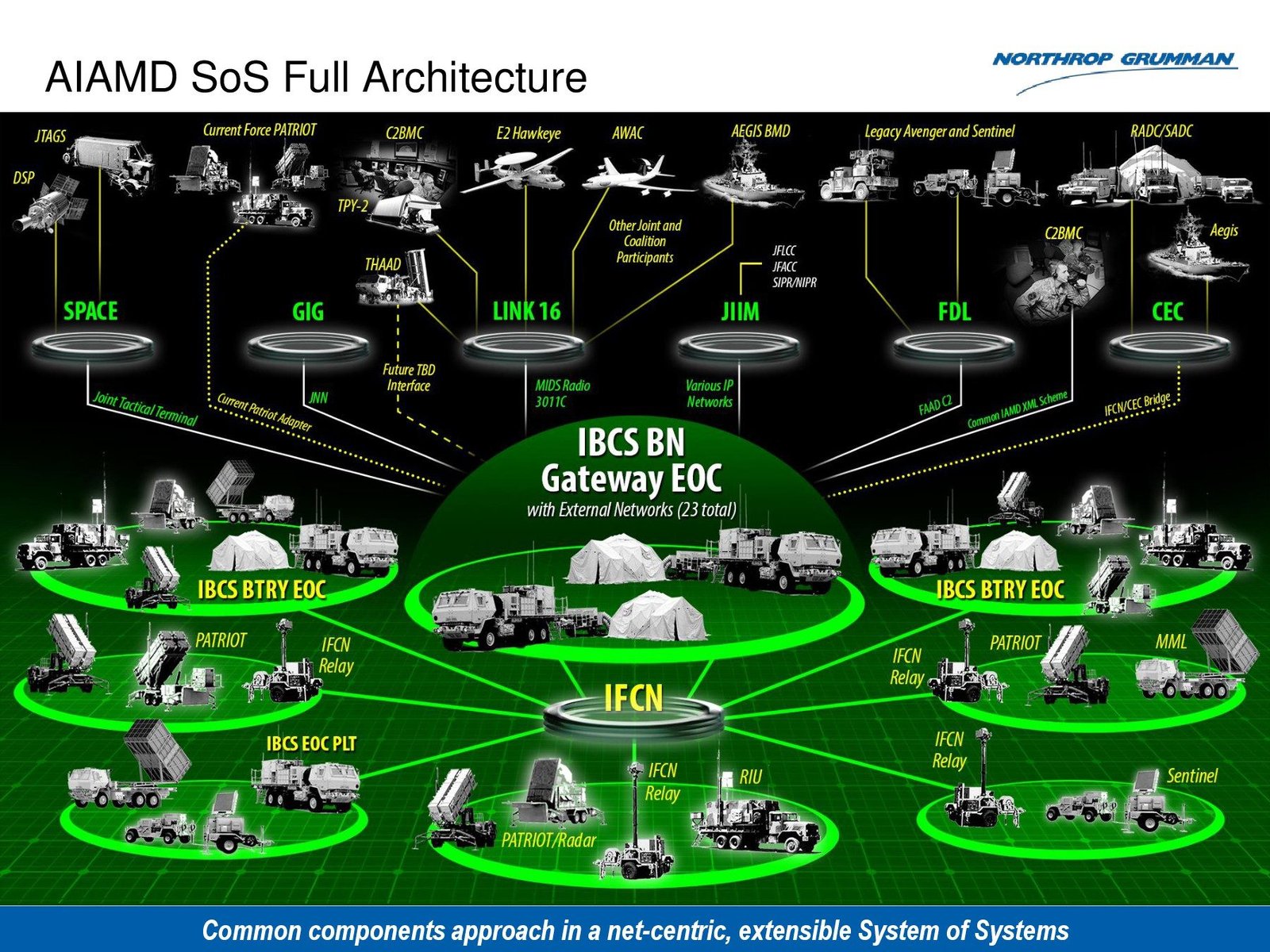
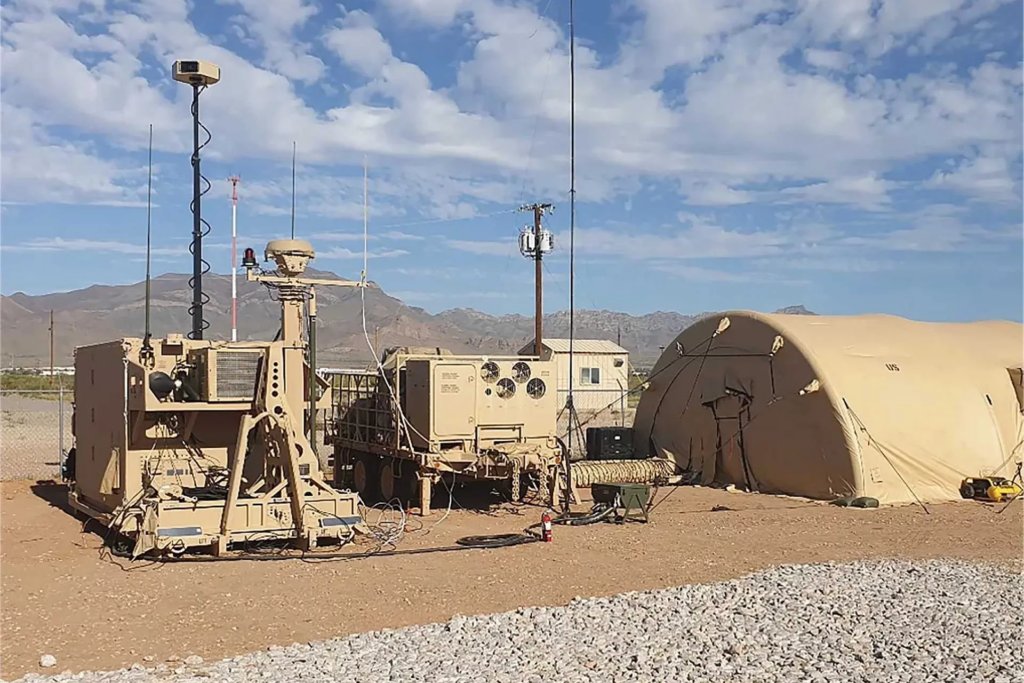
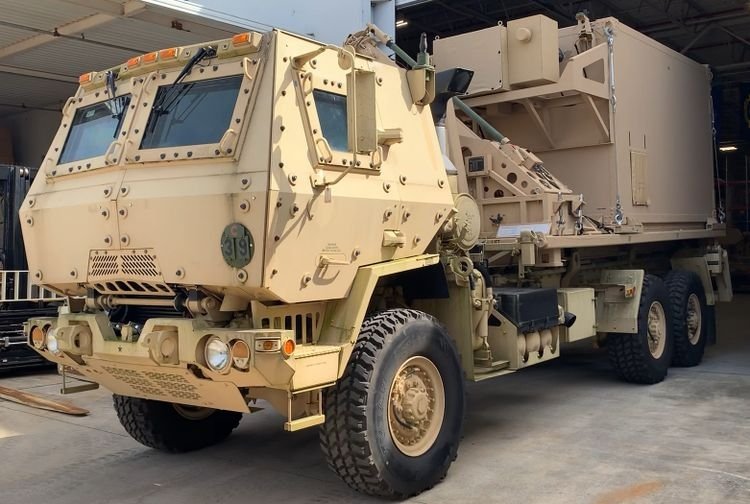
Photos: milmag.pl · idstch.com · www.overtdefense.com · dsm.forecastinternational.com
The Integrated Battle Command System is the U.S. Army’s next-generation command-and-control network for air and missile defense, developed by prime contractor Northrop Grumman under the Army Integrated Air and Missile Defense programme. It was fielded to the first operational unit — the 5th Battalion, 4th Air Defense Artillery Regiment at Fort Sill, Oklahoma — in 2022 after Initial Operational Test and Evaluation, and cleared for full-rate production in April 2023. Its purpose is to replace the stovepiped fire-control systems that have long defined the Army’s Patriot and Sentinel batteries with a single, sensor-agnostic engagement picture. IBCS sits inside the broader Pentagon push toward Combined Joint All-Domain Command and Control (CJADC2), which aims to link every sensor to every shooter across services and allies.
At the technical core is the Integrated Fire Control Network, a resilient IP-based mesh of relays that carries sensor tracks from any connected radar to any connected launcher. Rather than pairing a specific radar with a specific missile — the Patriot fire-control model since the 1980s — IBCS fuses tracks from Patriot’s own AN/MPQ-65, the newer Lower Tier Air and Missile Defense Sensor built by Raytheon, the Sentinel A4 short-range radar, and, in demonstrations, Marine Corps G/ATOR arrays and F-35 sensor feeds into a composite air picture. An engagement operations centre then assigns the best available effector to the track, which may be a PAC-3 interceptor, a Patriot GEM-T, or the Army’s inbound SM-6 batteries. Northrop Grumman describes the software architecture as open, allowing new sensors and effectors to be added without redesigning the battle-management logic.
Poland is IBCS’s first foreign operator. Warsaw selected the system as the C2 layer for its Wisła medium-range air-defence programme built around Patriot, took delivery of the first phase in 2023, and signed a second phase for eight further batteries the same year — a package the U.S. State Department valued at roughly $15 billion including missiles and radars. The U.S. Army plans to equip every air-defence battalion with IBCS and has designated the system as the C2 backbone of the Guam Defense System, which is scheduled to reach initial operational capability later this decade.
The programme has been developmentally troubled: IBCS ran years late through the 2010s, and the Pentagon’s Director of Operational Test and Evaluation reported that the 2020 limited user test surfaced cyber-resilience and network-stability issues that forced parts of the stack to be redesigned. Army officials say the mature software now performs the any-sensor-any-shooter role that Cold War air-defence concepts sketched and that no operational C2 has previously delivered at scale. Its distinctiveness lies less in any single subsystem than in what it enables: a Sentinel detecting a cruise missile, a Patriot battery engaging it, and, in principle, an F-35 handing off the track — all through the same software layer.