HAVOC
8x8 wheeled robotic combat vehicle developed jointly with US partners for the heavier robotic combat vehicle category.
vehicleby Milrem RoboticsIntroduced 2024
Photos: milremrobotics.com · news.ssbcrack.com · militaeraktuell.at · insideunmannedsystems.com · news.err.ee
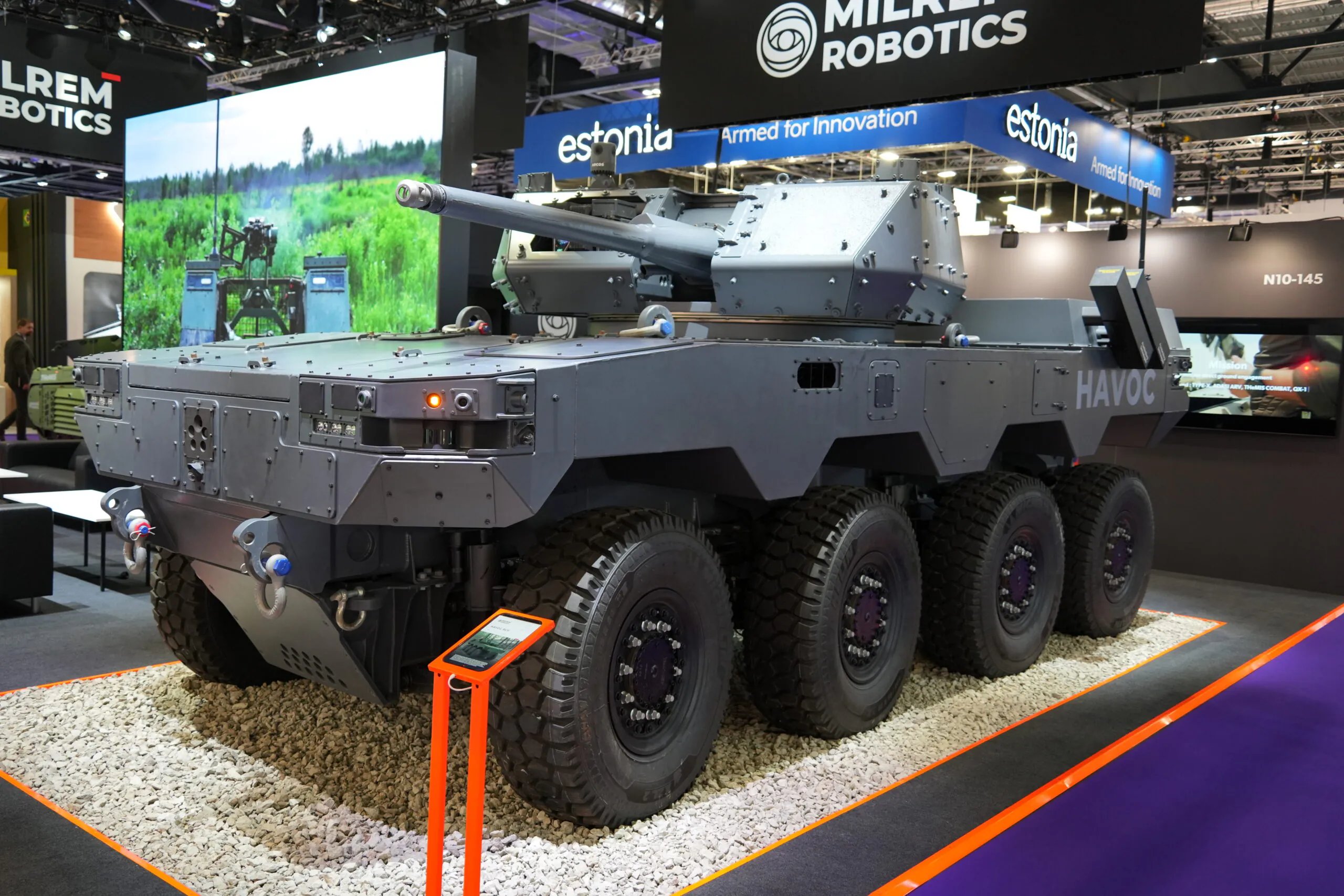
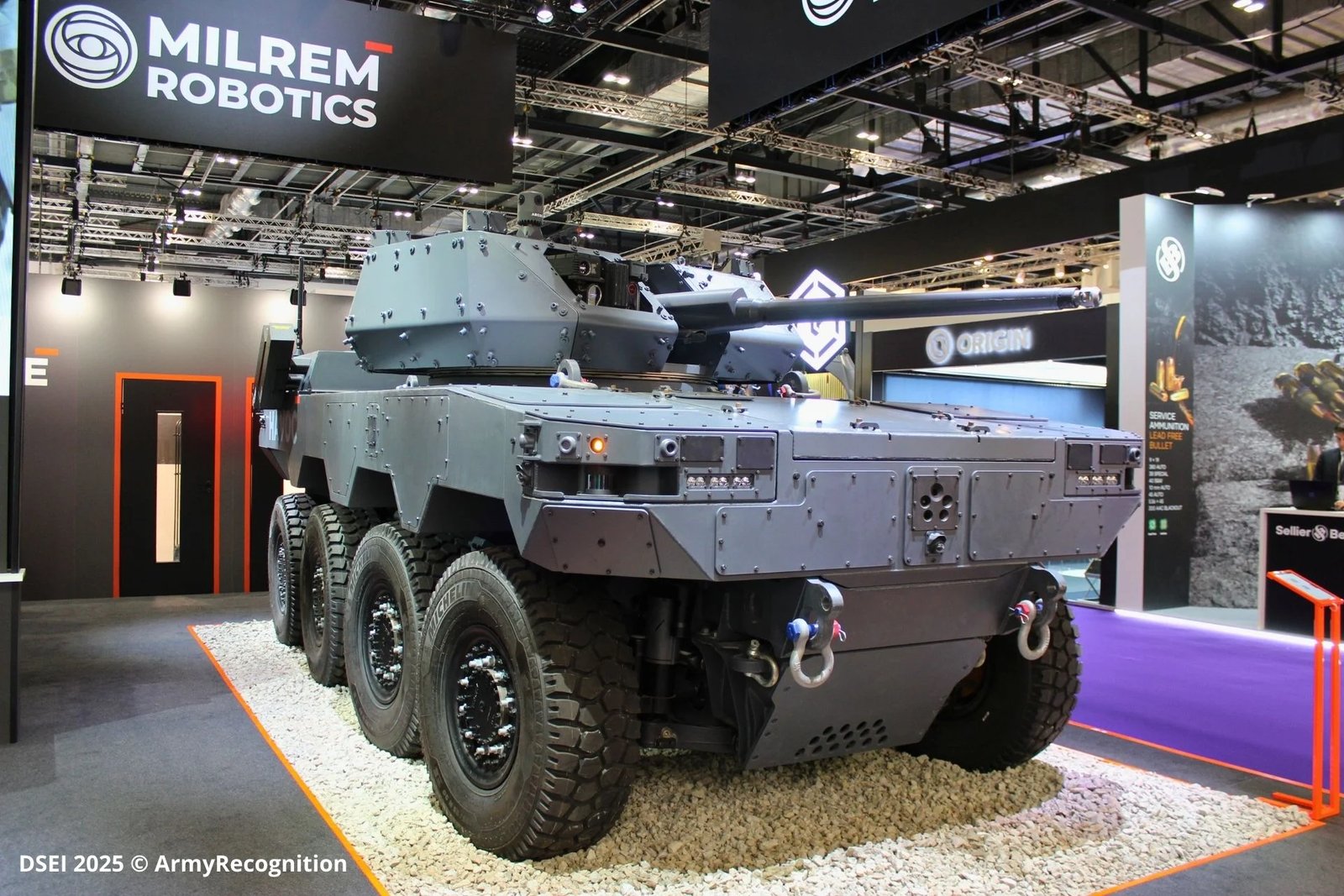
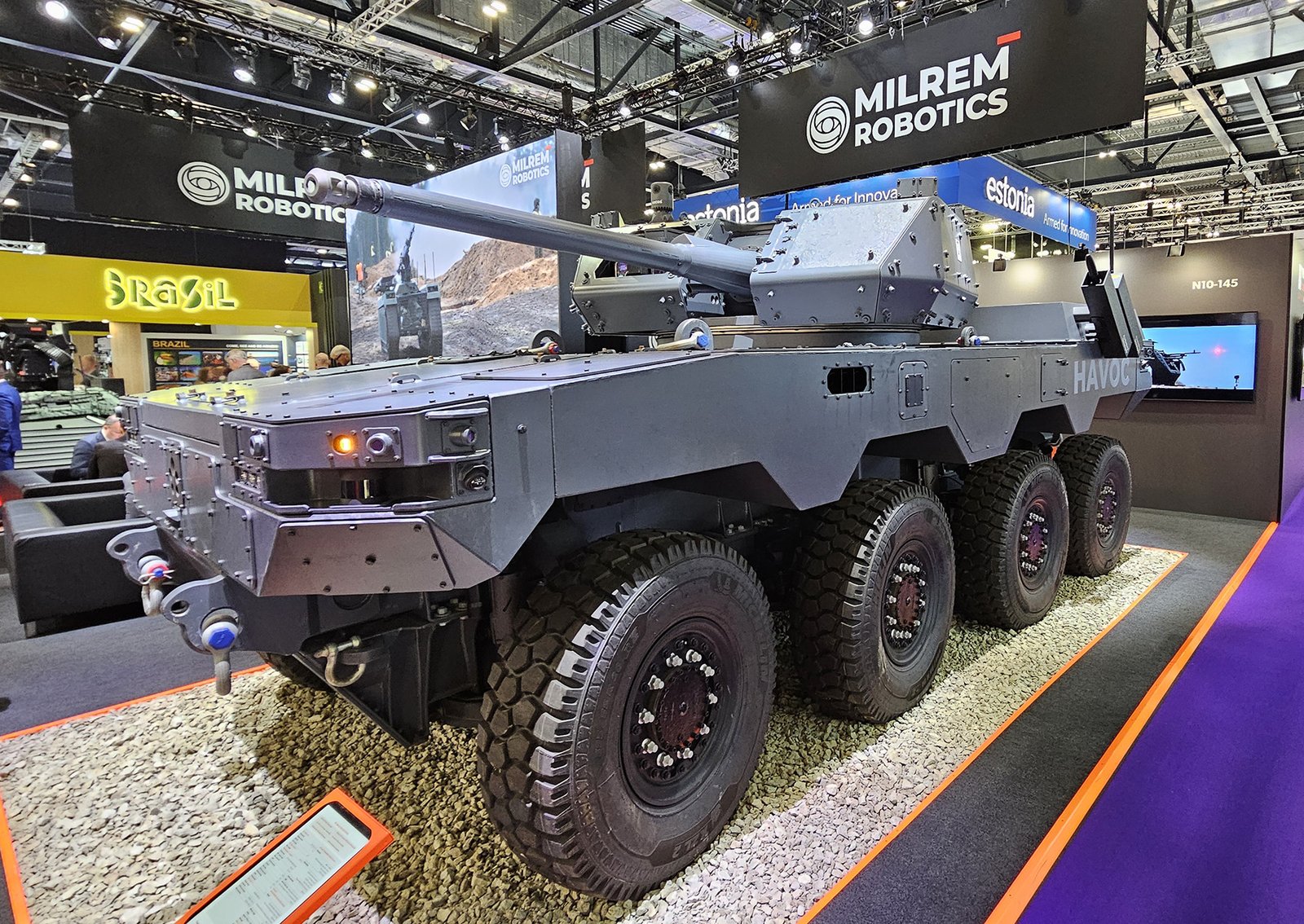
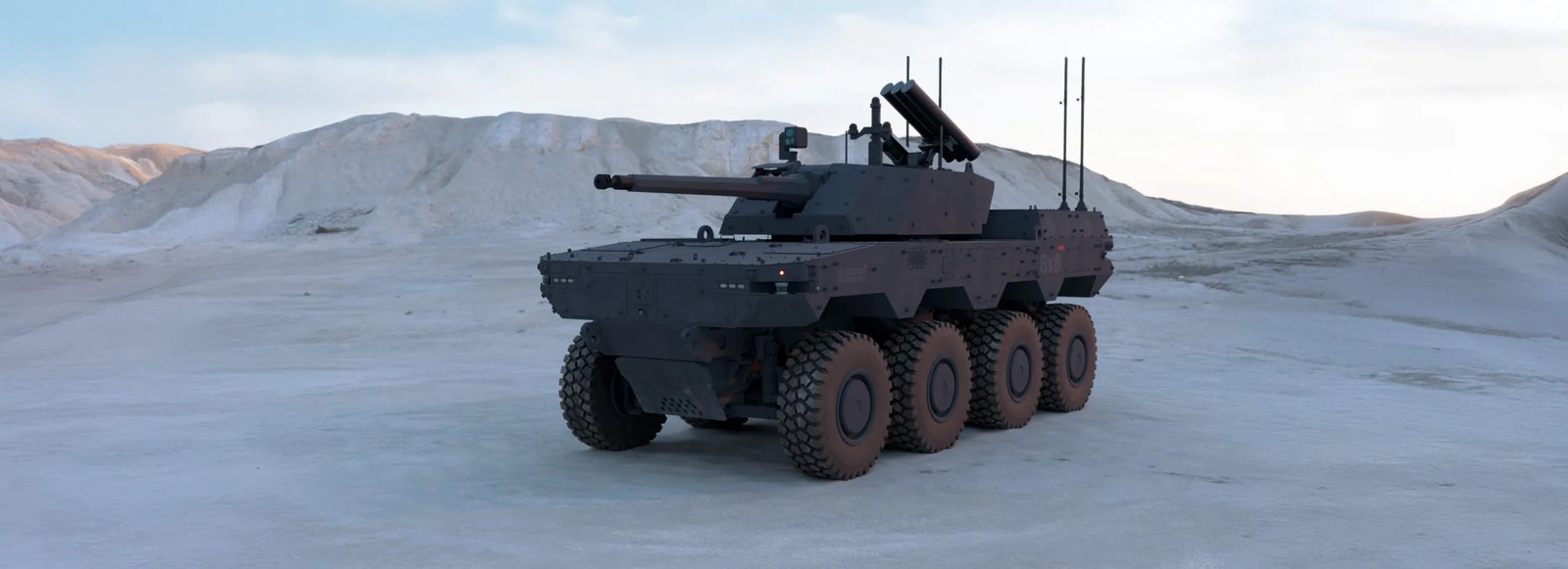
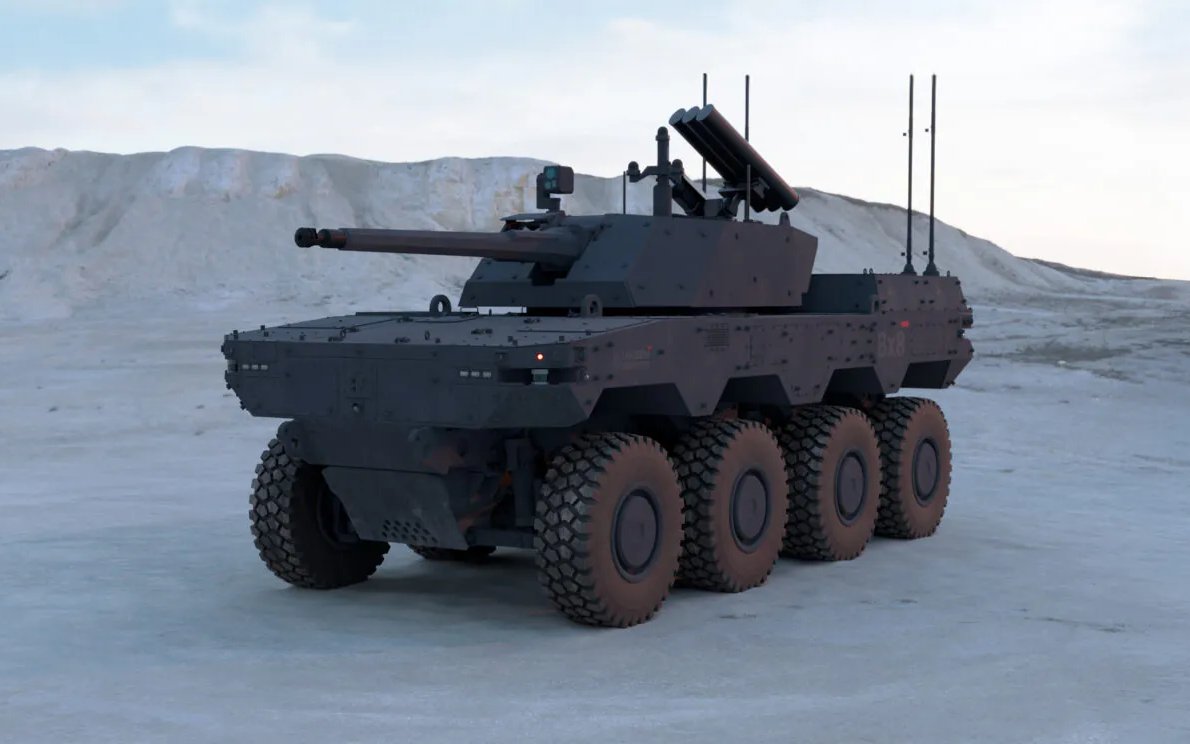
The HAVOC Robotic Combat Vehicle (RCV) is an 8x8 wheeled unmanned ground vehicle developed by the Estonian firm Milrem Robotics. Introduced in 2024, the system is designed to support mechanized units, acting as a “wingman” for infantry fighting vehicles and main battle tanks. It falls into the category of heavier robotic combat vehicles, distinguishing it from Milrem’s lighter tracked platforms like the THeMIS. The vehicle is engineered to extend standoff distances for manned crews, thereby reducing casualty risks in high-intensity conflicts.
Technically, the HAVOC 8x8 RCV is a hybrid-electric platform weighing approximately 15 tonnes without payload, with a maximum payload capacity of 5 tonnes. This modular payload bay allows for significant flexibility in mission configuration. Milrem lists several potential armaments, including a 30 mm turret with missile launchers supplied by Frankenburg, the Halcon HS2 air defense system by Kongsberg, a minelayer by KNDS, and the MCT-30 turret, also by Kongsberg. The vehicle’s mobility is supported by an all-wheel hybrid electric drive, enabling a maximum road speed of 110 km/h and an off-road speed of 50 km/h. It features a turning radius of 10 meters and can climb steps up to 60 cm. Protection standards are cited as STANAG 4569 Level 3 for kinetic energy and artillery threats, and Level 1 for mine protection. The manufacturer states the system utilizes advanced AI-driven navigation for autonomous mobility across diverse terrains.
Milrem Robotics markets the HAVOC as a solution for modern warfare, emphasizing its ability to operate in challenging environments while maintaining low maintenance requirements. The company highlights the vehicle’s role in enhancing operational effectiveness and troop survivability. While Milrem’s other systems, such as the THeMIS, have seen combat use in Ukraine, the HAVOC is presented as a newer addition to their portfolio. The company has engaged in partnerships to integrate advanced sensors and effectors, such as a memorandum of understanding with Hanwha Systems signed at Eurosatory 2026 to explore sensor integration on autonomous ground vehicles.
The HAVOC represents a shift toward larger, more heavily armed unmanned platforms that can keep pace with conventional armored formations. By offering a 5-tonne payload on an 8x8 chassis, it aims to fill the gap between light unmanned systems and manned heavy armor. Its hybrid-electric drive and modular design suggest a focus on long-range endurance and adaptability for various combat roles, from direct fire support to logistics and mine clearing. As the conflict in Ukraine continues to drive demand for unmanned systems, the HAVOC positions itself as a key component in the next generation of mechanized infantry support.