Ghost 4
Group 2 autonomous surveillance UAS delivering persistent ISR with silent electric flight and Lattice integration for contested environments.
Droneby Anduril IndustriesIntroduced 2019
Photos: www.suasnews.com · www.anduril.com · www.youtube.com · chat.whiskeyandwomenmusic.com
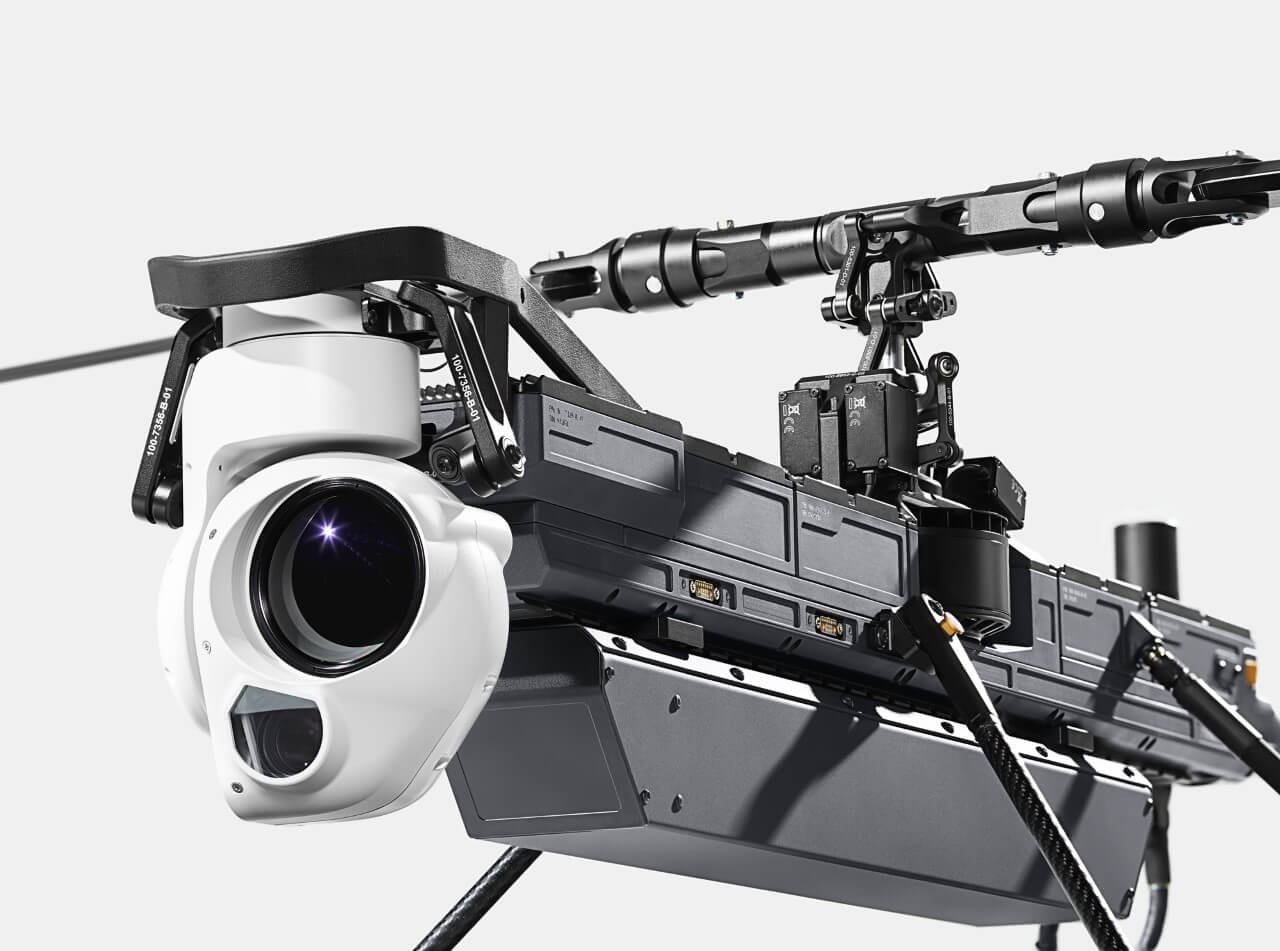
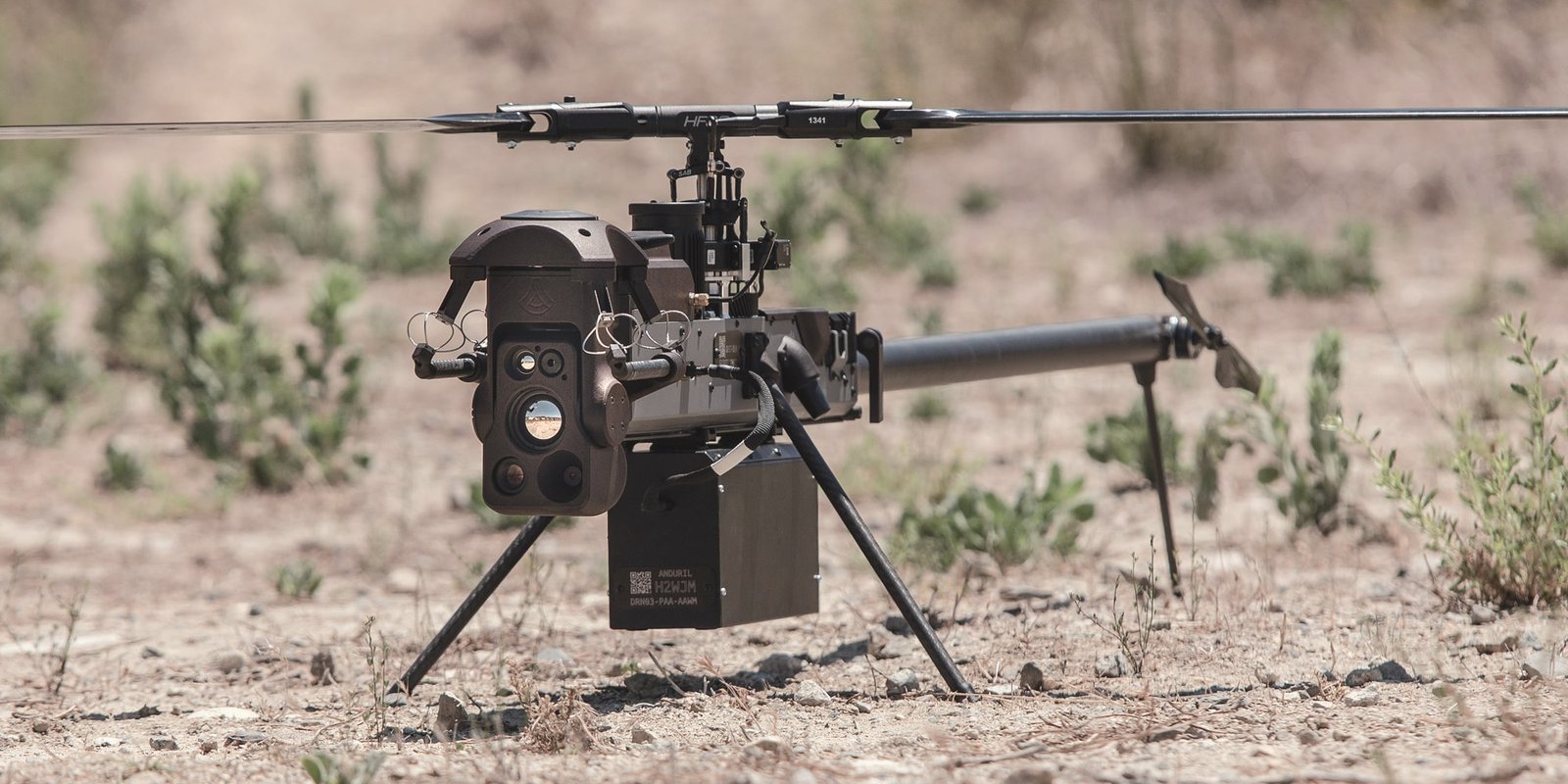
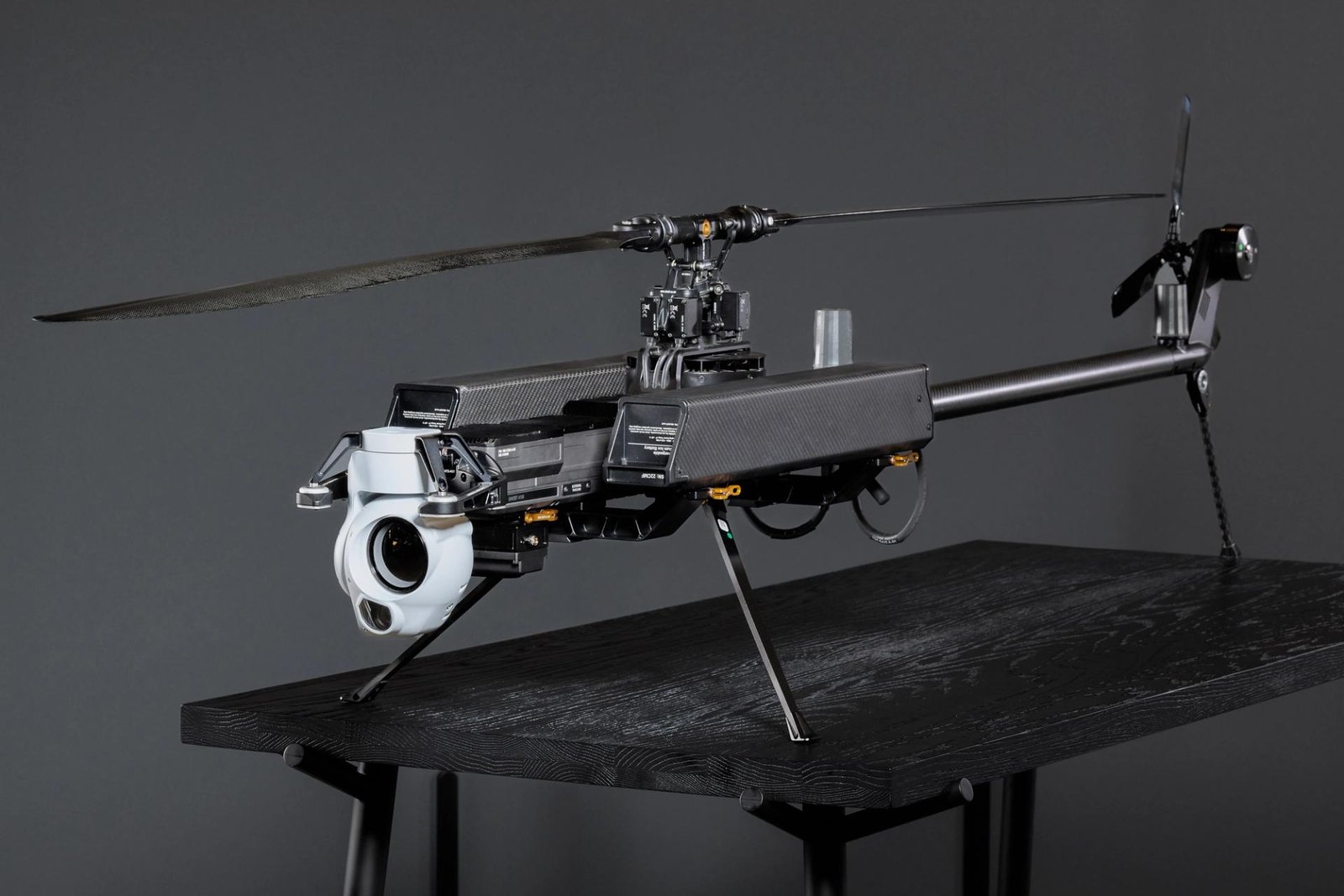
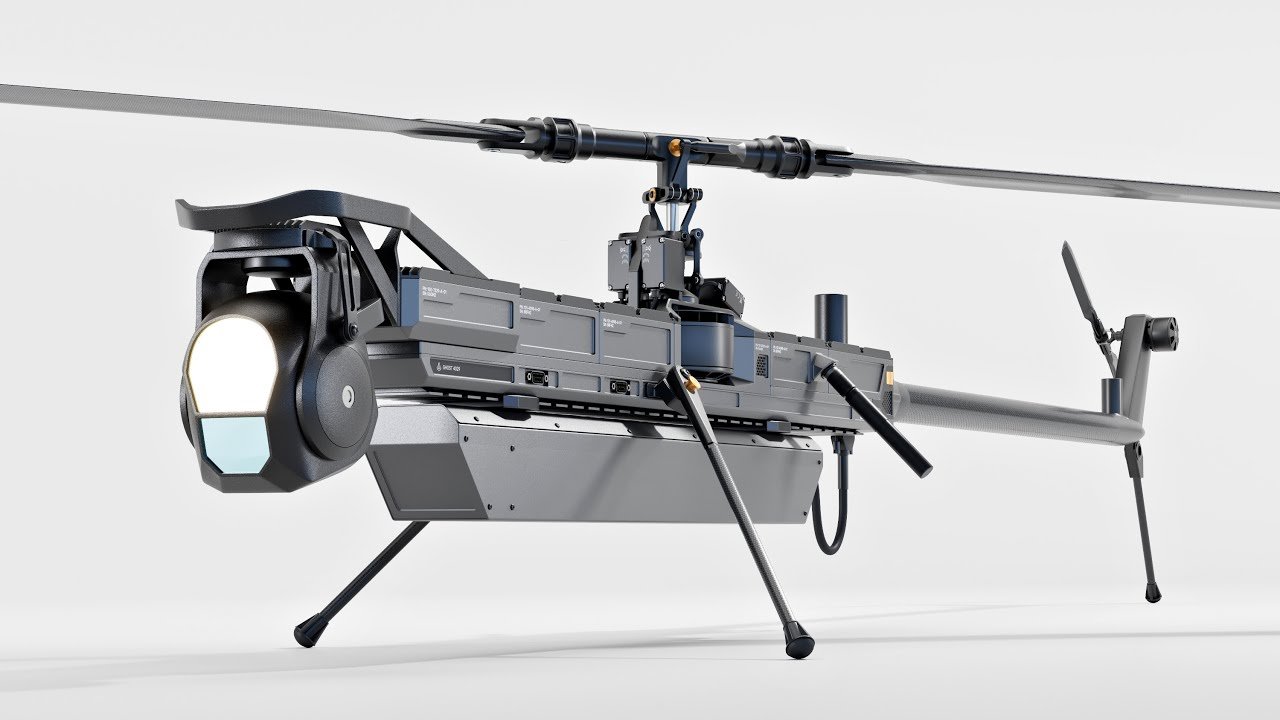
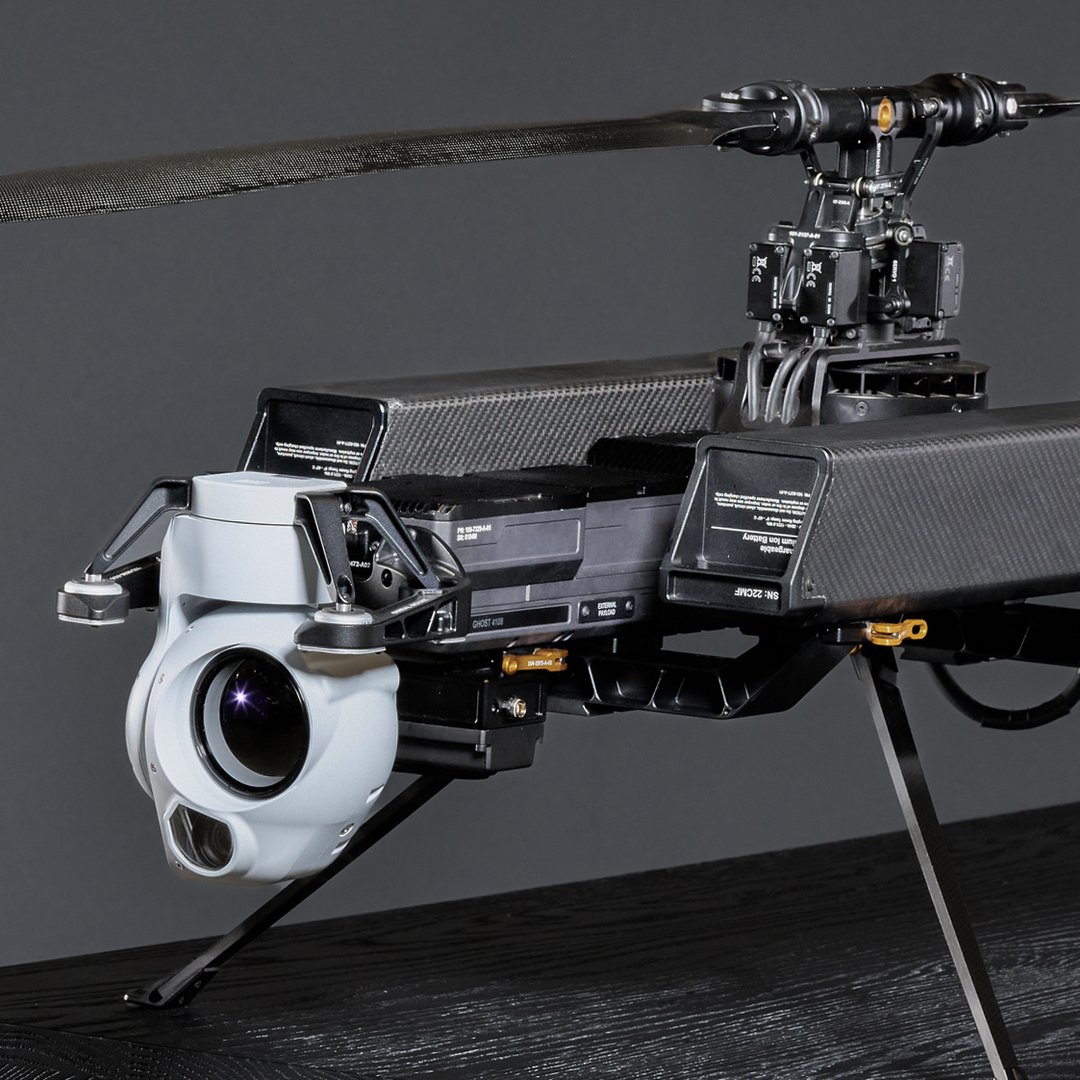
The Ghost 4 is a Group 2 unmanned aerial system built by Anduril Industries, the Costa Mesa-based defence-tech firm founded in 2017. Configured as a single-rotor helicopter rather than the more common multirotor layout, it entered service around 2019 as Anduril’s answer to short-range tactical intelligence, surveillance and reconnaissance work — the kind of mission a small unit needs done quietly, close in, and without a runway.
The airframe is electric and vertical take-off and landing, which Anduril says gives it a low acoustic signature and an endurance approaching 100 minutes on a swappable battery pack. A single main rotor and tail configuration replaces the whirring rotor arrays common in the class; the company argues this reduces both noise and part count. Payloads are modular via a common bay, most commonly an electro-optical / infrared gimbal for day-night imaging, though signals-intelligence and communications-relay fits have been referenced in company material. The system’s defining feature is its integration with Anduril’s Lattice command-and-control mesh, an AI-driven platform that fuses feeds from multiple Ghost aircraft, ground sensors and other Anduril assets into a single operator picture. Anduril’s pitch is that one operator can supervise several Ghosts autonomously rather than fly each one manually, and that the on-board autonomy stack handles waypoint navigation, target hand-off and return-to-base without continuous human input. Public teardown-style reporting on the airframe’s internals is thin — unlike the recovered Shahed and Lancet material that populates OSINT channels, a US special-operations asset stays largely un-photographed.
Ghost 4 was picked up by US Special Operations Command under a multi-year small-UAS contract awarded in early 2022, reported by defence trade press at roughly $100 million and positioned as a successor to the InstantEye family. It has also been trialled by the UK Ministry of Defence and evaluated by other allied services. Public deployment counts are not disclosed, and unlike the consumer-derived quadcopters saturating Ukrainian frontlines the Ghost has not featured in open-source combat footage — which fits the covert-ISR niche the platform was designed around rather than reflecting on its performance.
Anduril has since introduced Ghost-X as a heavier, longer-endurance derivative, marketed as extending the platform’s reach and payload capacity while retaining the Lattice tie-in. The Ghost line sits in a crowded Group 2 field alongside AeroVironment’s Jump 20 and Teal / Red Cat’s Black Widow, and its distinguishing bet has consistently been less the airframe than the software stack it flies inside.