Geran-5
Jet-powered, cruise-missile-shaped one-way attack drone built at Alabuga; 90 kg warhead, 450-600 km/h, used against Ukraine since January 2026.
DroneAdversary capabilityby AlabugaIntroduced 2026 · Updated 2026
 GUR rendering/3D model of the Geran-5 (overall layout, dorsal nacelle)
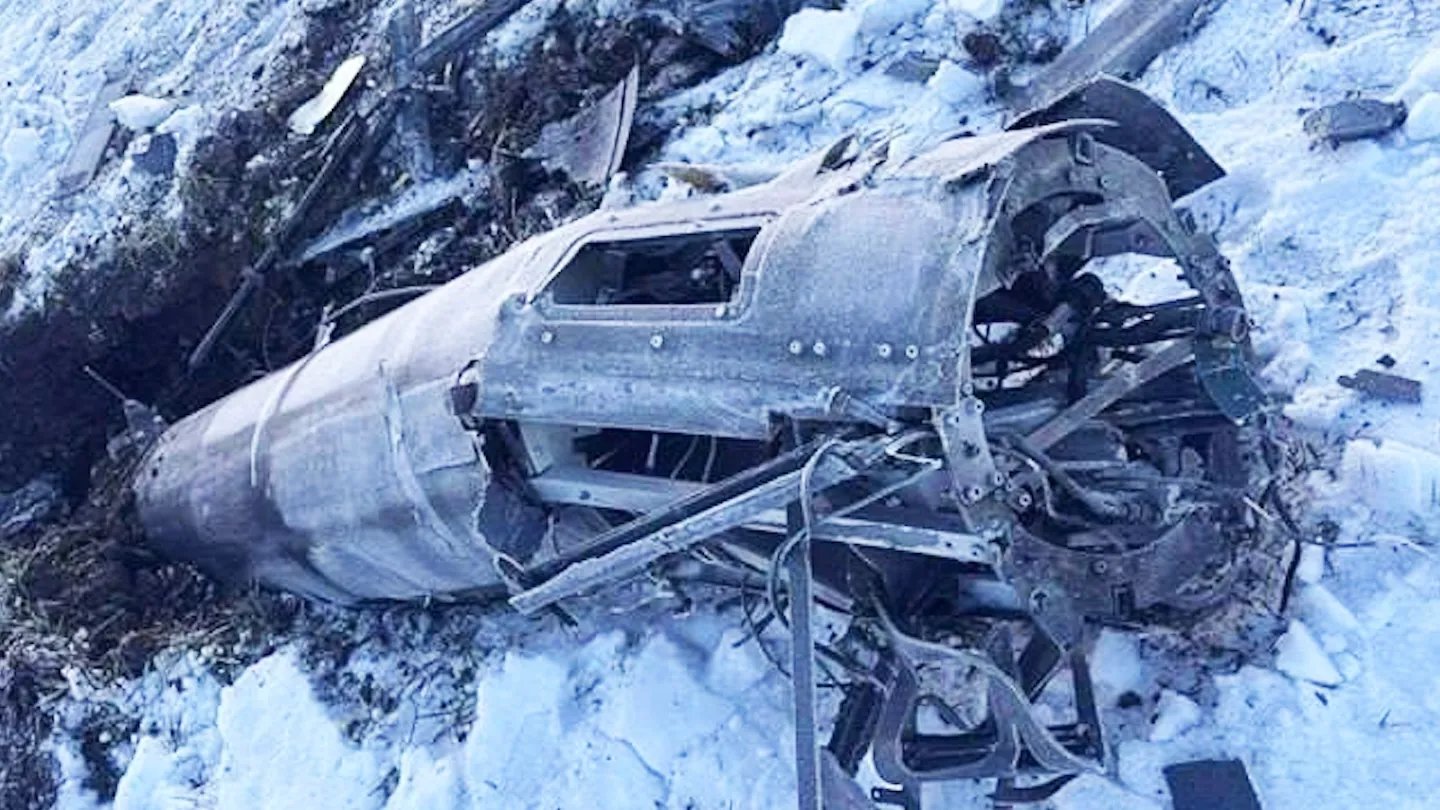 Wreckage overview: tubular fuselage, wing sections
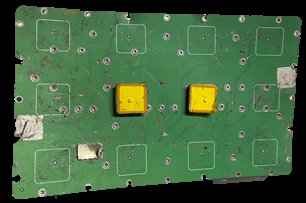 Kometa-M12 anti-jam GNSS module with 12-element CRP antenna array
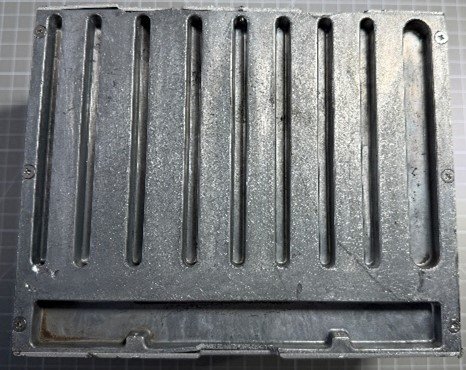 Flight controller unit (FCU) recovered from wreckage
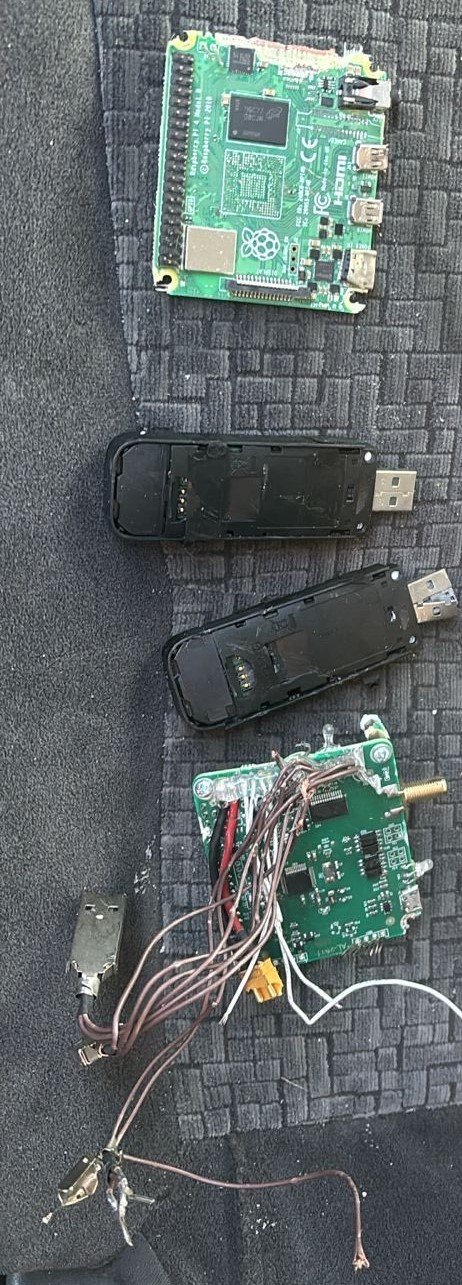 Borscht Tracker V3 (Raspberry Pi + 3G/LTE modems)
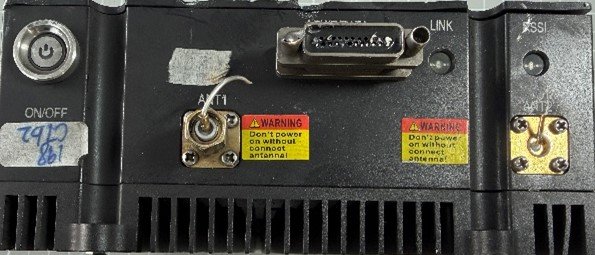 Xingkay Tech XK-F358 mesh modem
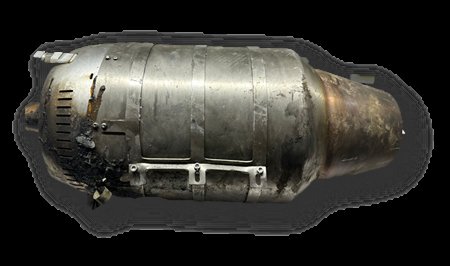 Telefly TF-TJ2000A turbojet engine
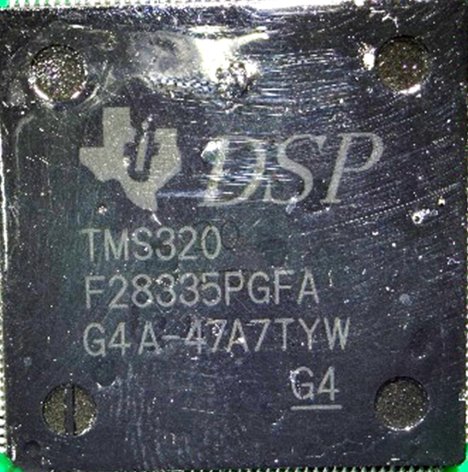 Texas Instruments TMS320F28335 DSP on PCB (close-up with markings)
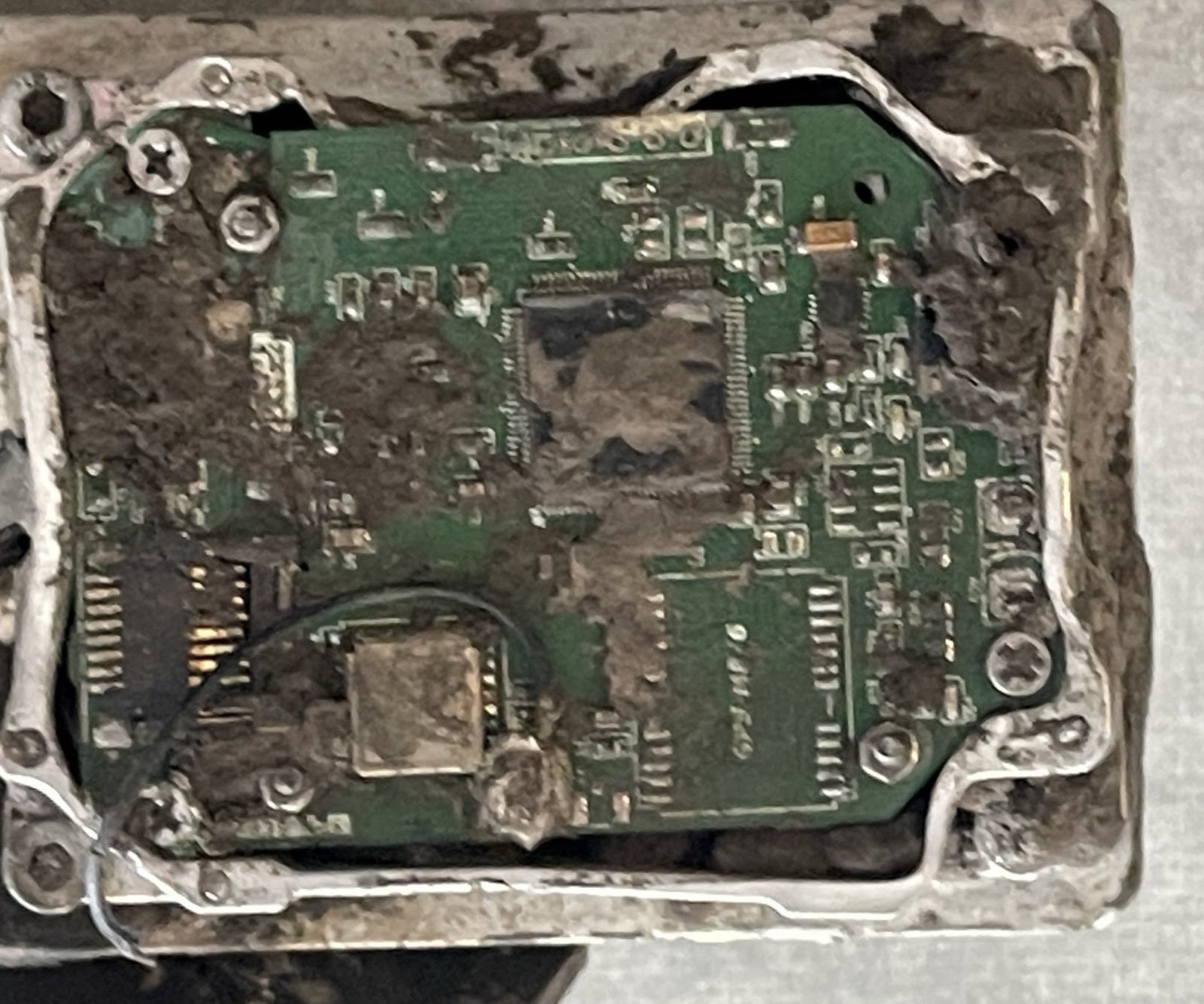 MINSOO V3 inertial navigation unit
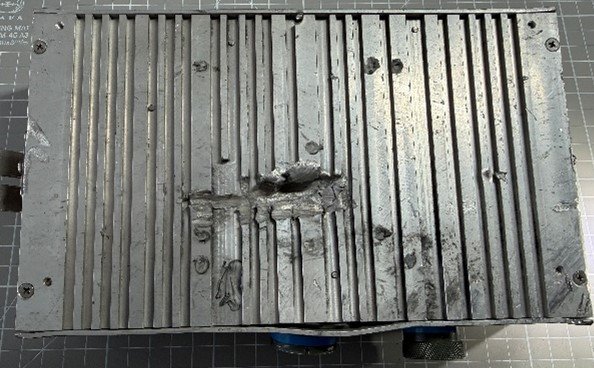 Power distribution unit (PDU) board
Photos: GUR via The War Zone · HUR (Defence Intelligence of Ukraine) · HUR
Videos


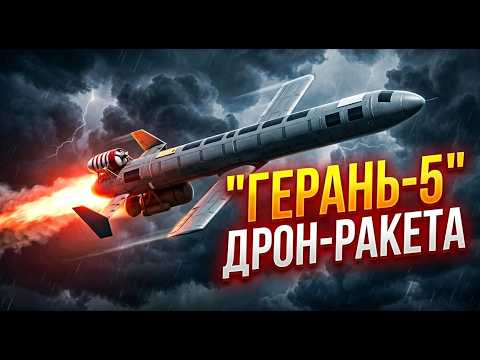


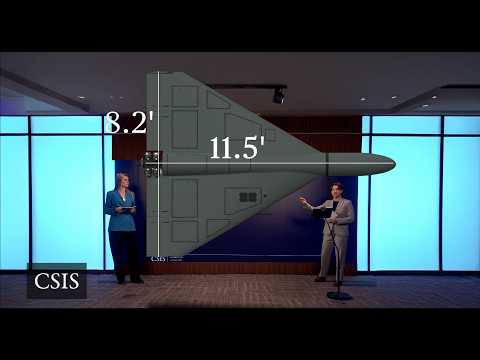
Overview
The Geran-5 is a jet-powered one-way attack drone built by Alabuga in Tatarstan. It shares a name with the Geran-2, Russia’s licensed copy of Iran’s Shahed-136, but very little of that drone’s shape. Instead of a delta wing it has a tubular fuselage, a straight mid-mounted wing and a tail with small end plates. Ukrainian analysts at Militarnyi and Defense Express call it a small cruise missile or “missile-drone”, the same class as the low-cost cruise missiles now being built in the West.
Ukraine’s military intelligence agency, HUR, reported its first combat use in early January 2026 (Ukrainska Pravda). On 19 January it published the wreckage, a 3D model and a component list on its War & Sanctions portal. The headline figures there are a length of 6.5 m, a wingspan of 3.2 m, a maximum take-off weight of 850 kg, a 90 kg warhead, a cruise speed of 450–600 km/h, a range of 950 km, about two hours’ endurance and a ceiling of 6,000 m. HUR’s verdict, quoted by The War Zone, was that “it is difficult to consider this UAV an in-house development of the Russian Federation.”
By August 2026 HUR told Militarnyi that Russia was building about 3,000 Geran-4 and Geran-5 drones a month at Alabuga and had stopped making the Geran-3. Russia’s two jet types now account for a large share of each attack, and in some daytime raids for two-thirds of the drones launched (Kyiv Independent).
Design and propulsion
The design draws on Iran’s Karrar target-and-strike drone, which is itself widely seen as a derivative of the American MQM-107 Streaker (Defense Express). HUR says the wing layout was copied, though the wing shape differs slightly. According to HUR, as reported by ArmyInform, the skin, wings and tail are carbon fibre over a load-bearing frame of aluminium profiles and steel. Recovered parts carry an “E” marking, the experimental series designation already seen on Geran-2s fitted with R-60 missiles and MANPADS.
The engine is a Chinese Telefly TF-TJ2000A turbojet rated at 200 kgf (1,960 N), listed by HUR with the maker Telefly Telecommunications Equipment Co. Early Ukrainian accounts relayed by The War Zone named a smaller Telefly JT80. HUR’s later component list settles on the TF-TJ2000A, and the same engine has since turned up in some Geran-4 airframes. HUR also lists a separate launch engine. The drone leaves the ground from a rail launcher about 80 m long, roughly three times the size of a Geran-2 launcher. Satellite imagery published by the Telegram channel Strategic Aviation of the Russian Federation shows these launchers at the Tsymbulova drone base in Oryol Oblast. Russia showed the same launcher in its “virtual” Victory Day parade on 9 May 2026.
On the first examples the engine sat in an external nacelle on top of the fuselage. In September 2026 Militarnyi studied interceptor footage released by the SBU and the Wild Hornets group and concluded that the engine had been moved inside the rear fuselage. That would cut drag and the nose-down pitching moment of a high thrust line, at the cost of internal volume that could otherwise hold fuel. Ukrainian commentators have read the change as a push towards 600–700 km/h. This is an assessment from imagery, not an official finding.
The figures are not fully settled. HUR’s portal gives a 3.2 m wingspan, while Militarnyi and other outlets citing Ukrainian intelligence give “up to 5.5 m”. Range appears as 950 km on the portal and “about 1,000 km” elsewhere. The Kyiv Independent puts the unit cost at about $115,000, with the imported turbojet alone at around $40,000.
Electronics and navigation
HUR’s teardown found that most of the avionics are the same modules used across Alabuga’s Geran family:
- Kometa-M12, a jam-resistant satellite navigation system with a 12-element controlled reception pattern antenna (CRPA). HUR attributes it to the Russian firm VNIIR-Progress, with Pantes, PSB Technologies and Aviv Group named as involved companies (HUR).
- MINSOO V3 inertial navigation unit, which HUR describes as “probably SADRA MINSO type” (HUR).
- A flight controller unit (FCU), an air data unit, servo drives, a power distribution unit and a Li-ion 18650 battery pack.
The 16 foreign components HUR identified come from the United States, China and Germany. The flight controller and power unit each carry a Texas Instruments TMS320F28335 digital signal processor. Alongside them are a TI CAN transceiver (VP230 marking), a TI hex inverter, a TI voltage regulator, a TI LM258 op-amp, an Infineon power MOSFET and a Monolithic Power Systems step-down converter. Two CTS 50 MHz clock generators are dated 2024 and week 38 of 2025. China supplied a WCH CH343G USB-to-UART bridge and a Yantel PD150 RF power divider (HUR). The 2025 date code matters to sanctions enforcement. As DroneXL put it, it shows the flow of Western parts is live rather than old stock.
Datalink, video and mesh
The Geran-5 carries the Geran family’s “Borscht” Tracker V3, a Raspberry Pi microcomputer with 3G/LTE modems and external cellular antennas that reports the drone’s position over mobile networks. It also carries a Chinese Xingkay Tech XK-F358 mesh modem (HUR). Business Insider, cited by DroneXL, gave its retail price as about $8,100.
The mesh modem lets drones in the same wave relay control and video for one another, which extends the reach of a human operator well beyond line of sight. On 27 September 2026 Serhii “Flash” Beskrestnov, adviser to Ukraine’s defence ministry, described how this worked in practice (Telegram). A Geran-5 struck the Inkom business centre in Kyiv while a jet Shahed circled at almost 3 km, relaying the Geran-5’s radio signals and filming the strike live. That second drone then flew on and hit a warehouse outside the city.
Software and onboard AI
No flight-stack or operating-system details for the Geran-5 have been published. The open question is navigation autonomy. In late September 2026 the Ukrainian monitoring channel Colonel GSh reported a Geran-5 K5 with a new fuselage and an OEKS (DSMAC-class) module. Such a module navigates by matching camera images of the ground against stored reference imagery, as the Kh-101 cruise missile does. The channel quoted a Russian war correspondent, Andrei Filatov, saying jet Gerans now use an autonomous optical system called “Susanin” that keeps them on route without satellite navigation or contact with the operator. Militarnyi stressed that the K5 name and the DSMAC-class module were not officially confirmed.
On 5 October HUR described an “electro-optical correlation system” called Susanin on an updated Geran-4. According to Interfax-Ukraine, HUR added that a similar system is used on the “new Geran-5 K5”. Citing Defense Express, UNITED24 Media notes the consequence: such a drone does not need a constant mesh link to reach its target. HUR’s Geran-5 component page, last updated in January, still lists no optical correlation unit.
Warheads
HUR lists one warhead, the BCh-90, at about 90 kg (HUR). Its filling is not specified. That is the same mass class as the largest Geran-2 and Geran-4 warheads, and small next to the 480 kg of an Iskander-K or the up to 800 kg of a Kh-101 (Kyiv Independent). The Wild Hornets group has said the Geran-5 carries a larger charge than other Gerans, which The War Zone could not verify.
Variants
- Initial “E”-series version (January 2026), with the engine in an external dorsal nacelle.
- Internal-engine version (reported September 2026), inferred from interceptor footage (Militarnyi).
- Geran-5 K5 (reported late September 2026), with a modified fuselage and the claimed Susanin optical correction (Colonel GSh).
- Air-launched version, under study. In January HUR said Russia was looking at launching the Geran-5 from Su-25 attack aircraft. Published diagrams show two drones under the wings, but no air launch has been confirmed (The War Zone).
- R-73-armed version, planned. Following Iran’s Karrar, which has carried an Azarakhsh missile, Russia is reported to be considering an R-73 infrared air-to-air missile for self-defence (Defense Express). No wreckage has shown one.
Combat use
After its January debut the Geran-5 was rarely filmed. In August 2026 the Russian channel Military Informant called footage of Geran-5 strikes “quite rare”. It credited the 50th unmanned systems brigade “Varyag” with hits on a Nova Poshta logistics hub and fuel depot in Novhorod-Siverskyi and on a gas compressor station, all Russian claims. Use rose sharply in September. Ukraine’s Air Force reported that on the night of 28 September Russia launched 165 attack drones, 79 of them jets (Air Force of Ukraine). That day a fast drone diving at a steep angle set the Presidium of the National Academy of Sciences in central Kyiv on fire, killing two people (Al Jazeera). The Kyiv Independent attributes the strike to a Geran-5. Russian channels have also claimed Geran-5 strikes on data centres and telecom nodes in Kyiv and Dnipro.
Countering it
The Geran-5 is the hardest Geran to stop. A senior defence engineer told the Kyiv Independent that it flies about 150 km/h faster than the Geran-4. As a result, interceptors have to engage it from the front instead of chasing it, “a much harder problem to solve.” Mobile fire groups and the cheap interceptor drones that defeated piston Shaheds are no longer enough. In September 2026 President Zelensky put Ukraine’s rate against all jet drones at about 55% of more than 2,730 launched, against over 90% for piston types (UNITED24 Media).
Purpose-built interceptors have started to score, so far in small numbers. In September a crew from the 1020th Anti-Aircraft Missile Regiment used a Wild Hornets STING S to bring down a Geran-5 over Chernihiv Oblast at 425 km/h and above 3 km (Euromaidan Press). SkyFall’s P1-SUN Jetkiller, Quantum WIY’s SPYS (a propeller interceptor that can sprint to 600 km/h briefly) and an SBU delta-wing jet interceptor have also downed Geran-5s. Serhiy Sternenko, a drone-warfare adviser, said “there is currently no mass produced effective product”. Footage shows Sky Sentinel AI-aimed gun turrets now standing guard in Kyiv. A Russian channel argues that their roughly 1.5 km reach leaves only seconds against a target this fast (Military Informant).
Electronic warfare has limits against this drone. The Kometa-M12’s 12-element CRPA is designed to resist GNSS jamming, and the reported Susanin optical correction would further reduce reliance on satellite signals and on the operator link. Two other points for defenders come from Militarnyi’s analysis. Moving the engine inside the fuselage may lower the infrared signature from the front and sides, though the exhaust plume remains the main IR source. The drone’s speed also gets it mistaken for jet missiles such as Ukraine’s Dan-T. Further back in the chain, Ukraine has struck VNIIR-Progress, the Kometa maker, with an FP-5 Flamingo missile, and the jet launch sites at Tsymbulova and Donetsk airport have been located from satellite imagery. Analyst Fabian Hoffmann told the Kyiv Independent the biggest weakness is that “Russia is not yet able to mass produce the engine on its own”.
What remains unknown
- Whether the K5 and its Susanin optical correction are a separate production version, a retrofit, or a module shared with the autumn 2026 Geran-4. HUR has not published a Geran-5 K5 component list.
- Whether the localised Russian turbojet that HUR reports in the newest Geran-4 has reached the Geran-5.
- The true wingspan (3.2 m or up to 5.5 m) and the warhead filling.
- Whether the Geran-5 is still launched only from fixed ground rails, or also from aircraft as HUR suggested.
- How many Geran-5s are built, as opposed to the combined Geran-4/5 figure of about 3,000 a month.
Combat experience
Effectiveness
Warhead upgrades
| Warhead | Type | Mass | Since | Notes |
|---|---|---|---|---|
| BCh-90 | Not specified by HUR (high-explosive class) | ~90 kg | 2026-01 | The only warhead HUR lists for the Geran-5; same mass class as the largest Geran-2/Geran-4 warheads source |
Variants
- Geran-5 initial ("E" series), external nacelle2026-01
Turbojet in an external dorsal nacelle with top intake; Kometa-M12, MINSOO V3, Tracker V3, XK-F358 mesh modem; experimental "E" marking source
- Internal-engine configuration2026-09
Turbojet moved from the external nacelle into the rear fuselage; inferred from SBU and Wild Hornets interceptor footage, not confirmed officially source
- Geran-5 K52026-09
Claimed new fuselage and an OEKS/DSMAC-class optical correction module ("Susanin"); HUR said on 5 Oct 2026 a similar system is used on the "new Geran-5 K5"; the K5 name is not otherwise officially confirmed source
- Air-launched (Su-25)
HUR said in January 2026 that Russia is studying launch from Su-25 attack aircraft; diagrams show two drones underwing; no confirmed air launch source
- R-73-armed (planned)
Russia reportedly considering an R-73 air-to-air missile for self-defence, as tested on Geran-2 with R-60; not seen in wreckage source
Countering it
As reported publicly; each line links its source.
- Purpose-built fast interceptor drones — Wild Hornets STING S (1020th AA Missile Regiment kill over Chernihiv Oblast at 425 km/h and above 3 km, Sept 2026), SkyFall P1-SUN Jetkiller, Quantum WIY SPYS (brief 600 km/h sprint) and an SBU delta-wing jet interceptor have each downed small numbers; no mass-produced effective product yet (Sternenko) source
- Head-on engagement geometry — Interceptors must engage from the front rather than chase from behind, described by a defence engineer as "a much harder problem" source
- Overall jet-drone interception rate — About 55% of 2,730+ jet drones neutralised in September 2026 (shot down or electronically suppressed), versus >90% for piston Shaheds source
- Electronic warfare limits — Kometa-M12 uses a 12-element CRP antenna to resist GNSS jamming; the reported Susanin optical correction is designed to reduce dependence on satellite signals and the operator link (Defense Express via UNITED24) source
- Infrared signature — Moving the engine inside the fuselage may cut forward and side IR contrast; the exhaust nozzle and plume remain the main IR sources source
- Identification — Its speed causes it to be confused with jet missiles such as Dan-T (Ukrainian monitoring channel) source
- Relay aircraft as a node — In the 27 Sept 2026 Kyiv strike a separate jet Shahed at ~3 km provided the mesh relay and filmed the hit source
- Striking the supply chain and launch sites — Ukraine struck Kometa antenna maker VNIIR-Progress with an FP-5 Flamingo; launch sites at Tsymbulova and Donetsk airport identified from satellite imagery source
- AI-controlled gun turrets (claimed) — Sky Sentinel AI-aimed 12.7 mm turrets, previously used against piston Geran-2s, reported deployed in Kyiv against jet Geran-4/5; a Russian channel argues a ~1.5 km reach leaves only seconds against a 400-500 km/h target (last-ditch point defence), while another Russian blogger calls them effective - unverified either way source
Media
Sources
- war-sanctions.gur.gov.ua/en/page-geran-5
- war-sanctions.gur.gov.ua/en/components/part/5137
- war-sanctions.gur.gov.ua/en/components/part/5142
- war-sanctions.gur.gov.ua/en/components/part/5149
- war-sanctions.gur.gov.ua/en/components/part/5150
- war-sanctions.gur.gov.ua/en/components/part/5138
- war-sanctions.gur.gov.ua/en/components/part/5144
- armyinform.com.ua/en/2026/01/19/intelligence-reveals-characteristics-and-component-base-of-russias-new-geran-5-uav/
- www.kyivpost.com/post/68327
- www.pravda.com.ua/eng/news/2026/01/11/8015558
- www.twz.com/air/russias-new-geran-5-long-range-kamikaze-drone-could-be-air-launched
- dronexl.co/2026/01/22/russia-geran-5-jet-drone/
- en.defence-ua.com/news/geran_5_cruise_missile_unveiled_in_russia_for_the_first_time_what_is_known_about_weapon_already_used_against_ukraine-18440.html
- militarnyi.com/en/news/geran-5-drones-deployed-near-oryol-for-strikes-on-ukraine/
- militarnyi.com/en/news/russia-produces-around-3-000-geran-4-5-kamikaze-drones-per-month/
- militarnyi.com/en/news/geran-5-cruise-missile-adopts-a-revised-engine-configuration-to-enhance-speed-and-range/
- militarnyi.com/en/news/russian-forces-begin-using-new-geran-5-version-with-autonomous-optical-navigation/
- united24media.com/war-in-ukraine/geran-5-gets-kh-101-like-guidance-as-russia-pushes-its-jet-drones-toward-full-autonomy-23108
- en.interfax.com.ua/news/general/1214324-amp.html
- kyivindependent.com/ukraines-interceptor-tech-outpaced-by-russias-jet-powered-geran-5-drones/
- www.twz.com/news-features/russias-jet-powered-shahed-drones-are-quickly-evolving-as-ukraine-scrambles-to-blunt-their-damage
- euromaidanpress.com/2026/09/29/ukraine-just-caught-a-geran-5-at-425-km-h-the-jet-drone-that-has-often-outrun-ukrainian-interceptor-drones-since-january/
- united24media.com/war-in-ukraine/ukraine-now-neutralizes-55-of-russias-jet-powered-shahed-drones-zelenskyy-says-22891
- www.aljazeera.com/news/2026/9/29/russian-strike-hits-ukraines-academy-of-sciences-in-kyiv-killing-2
- dronexl.co/2026/09/28/russia-geran-4-teardown-hobby-jet-texas-instruments/
- t.me/war_home/7689
- t.me/serhii_flash/7775
- t.me/milinfolive/177268
- t.me/StrategicaviationT/29981
- t.me/kpszsu/80852
- t.me/milinfolive/180911
- t.me/VictoryDrones/65807