Geran-3
Russia's jet-powered Shahed-238 derivative, with a Chinese Telefly JT80 turbojet and Kometa-M12 navigation. Fielded in 2025, now largely replaced by the Geran-4.
DroneAdversary capabilityby AlabugaIntroduced 2025 · Updated 2026
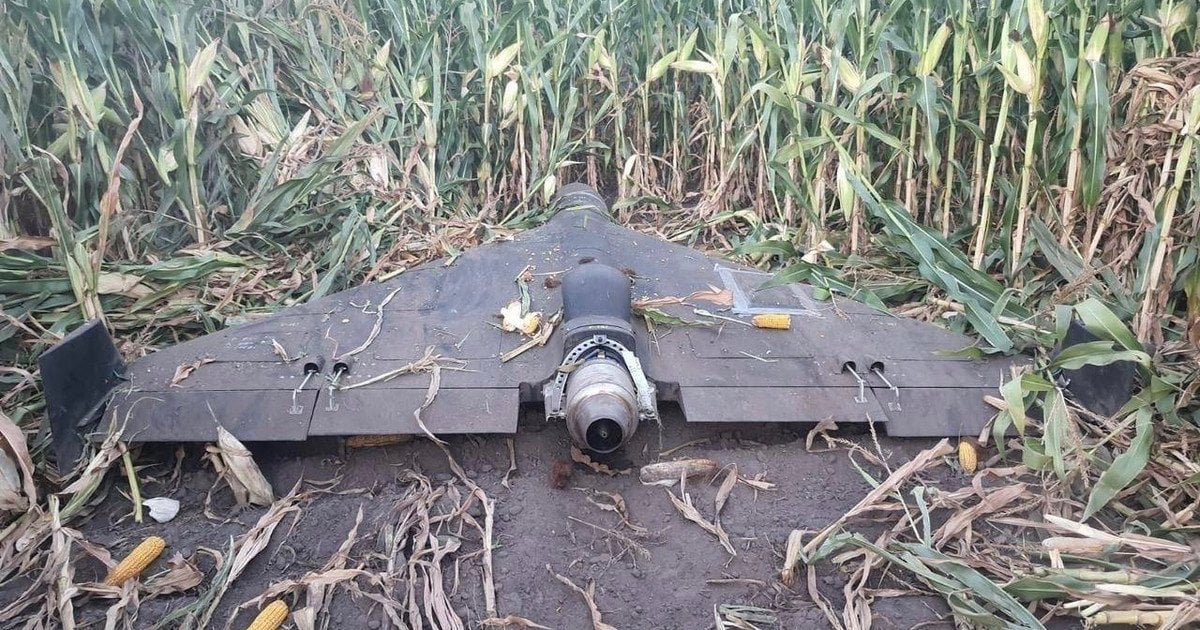 Intact Geran-3 jet drone recovered in a field, 16 September 2025 (camera/mesh-modem version)
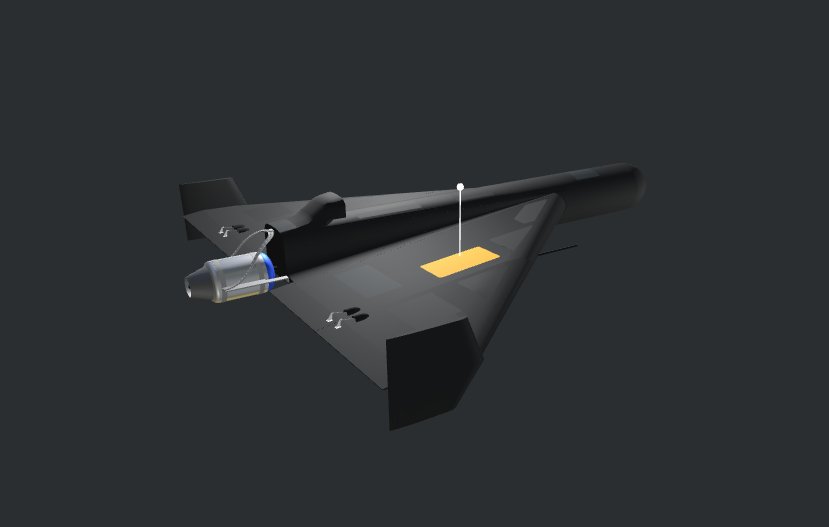 HUR teardown imagery of the Geran-3 "U" series (engine and component layout)
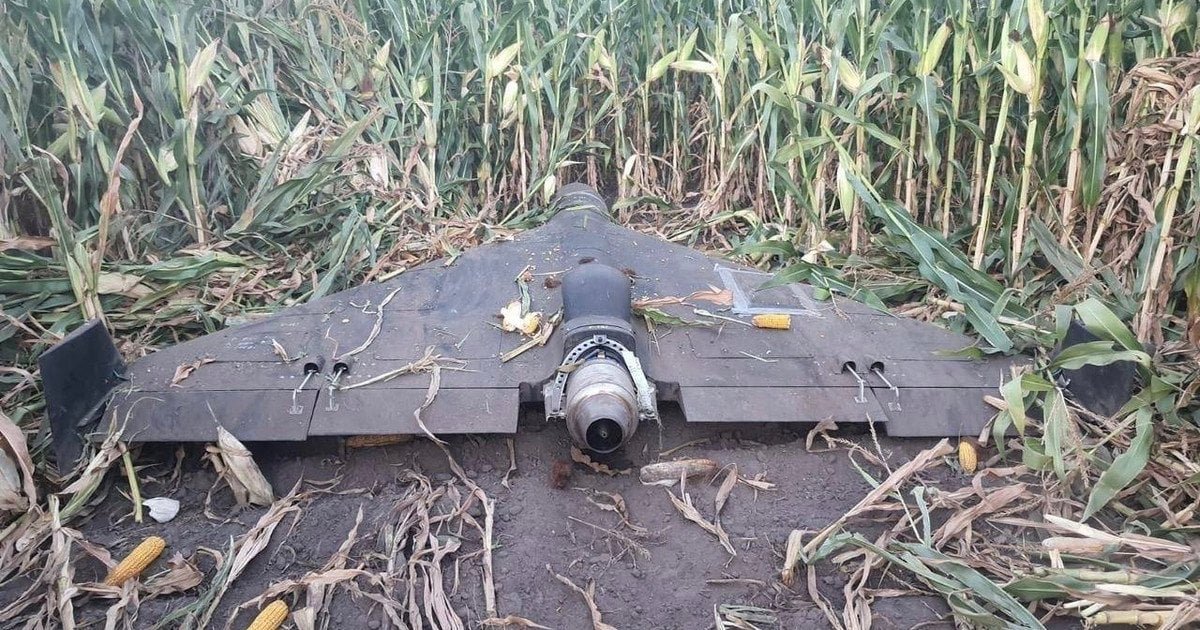 Geran-3 teardown lead photo (HUR release of 16 September 2025)
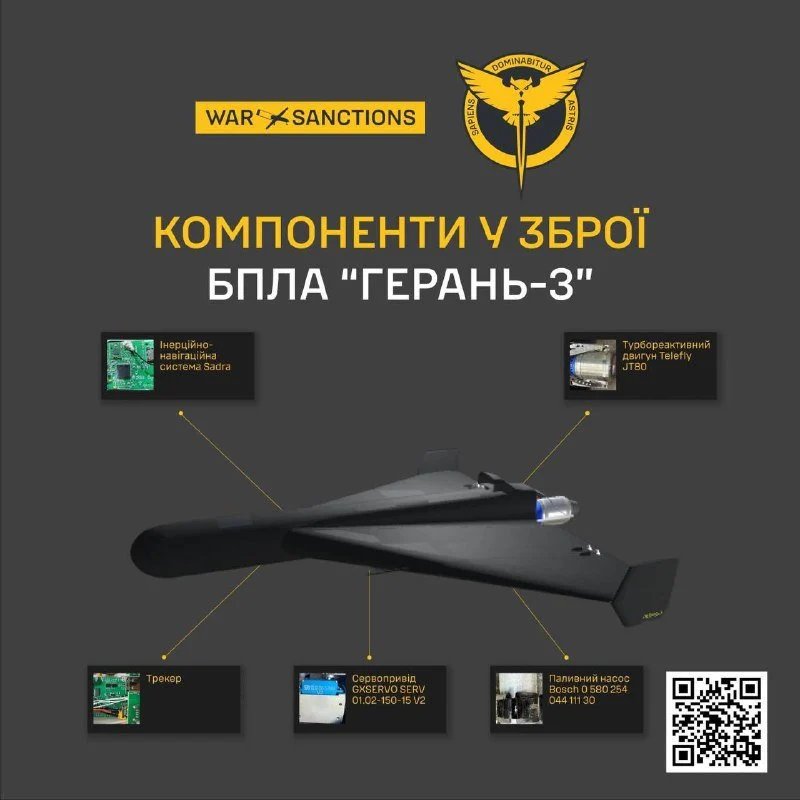 Geran-3 internal components (second image in the HUR set)
 Further Geran-3 teardown image from the HUR set
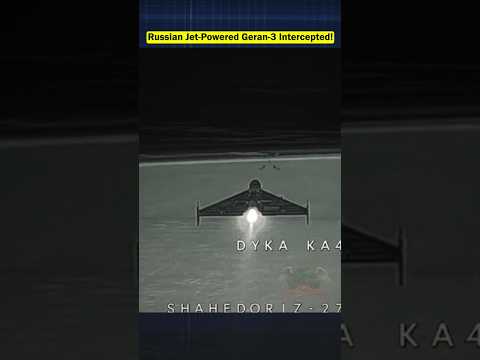
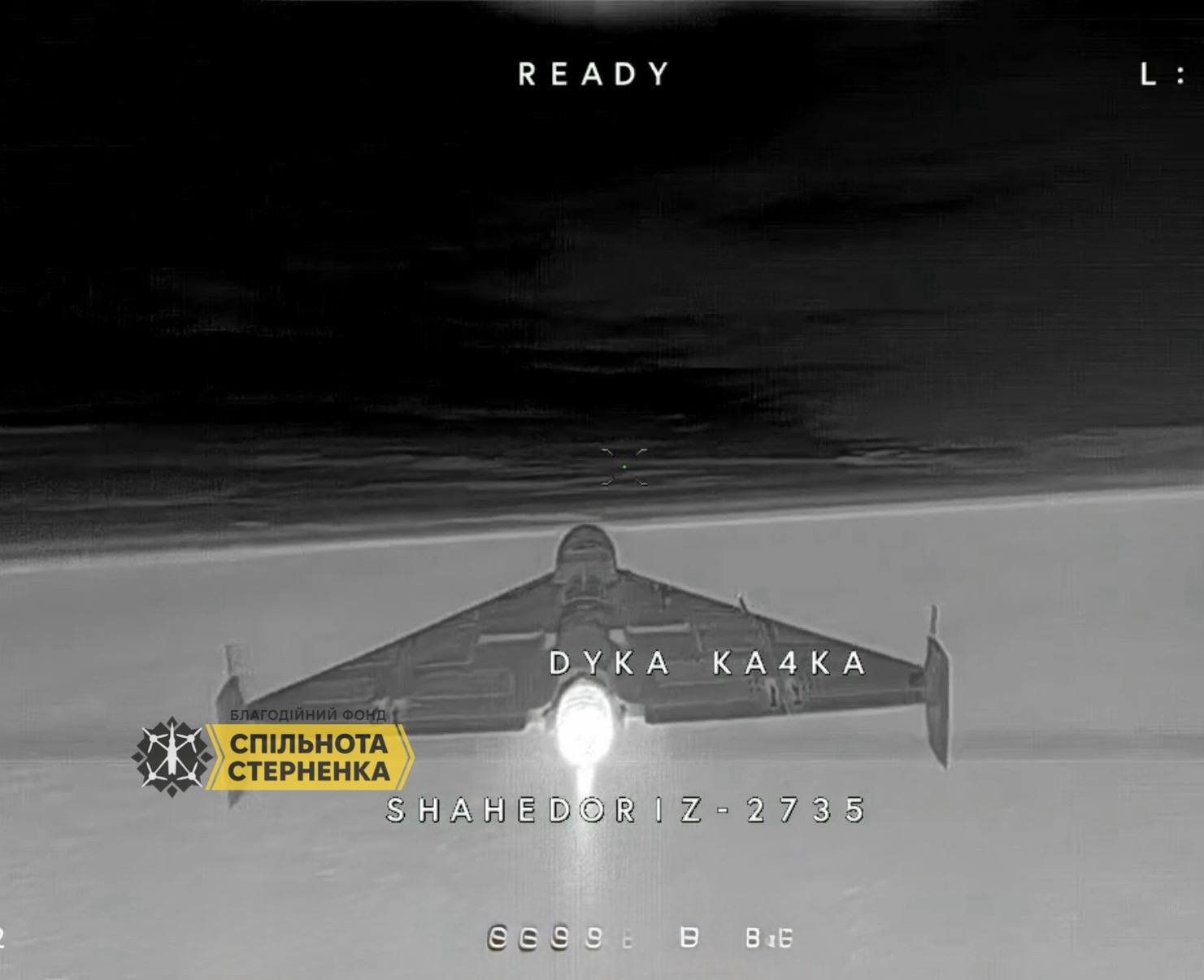 Interception of a Geran-3 by a Ukrainian Sting interceptor drone, 30 November 2025
Photos: Defence Intelligence of Ukraine (HUR MO) via Euromaidan Press · HUR via Euromaidan Press · HUR via TSN · Serhii Sternenko (Telegram) via Euromaidan Press
Videos



Overview
The Geran-3 (Герань-3) is Russia’s jet-powered one-way attack drone. It is a localised version of Iran’s Shahed-238, which is itself a turbojet development of the Shahed-136. It is attributed to the same production base at Alabuga that builds the piston-engined Geran-2. It flew in volume against Ukraine for about a year from mid-2025, and that experience shaped its successors, the Geran-4 and Geran-5.
Engine and airframe
On 16 September 2025 Ukraine’s military intelligence (HUR) published a teardown of a “U” series Geran-3. It was powered by a Chinese Telefly JT80 turbojet, and HUR gave a speed of 300–370 km/h and a range of up to about 1,000 km. HUR noted that the drone reaches its top speed mainly in zones covered by Ukrainian air defence and electronic warfare, and in the final dive. Militarnyi puts cruise speed at 280–330 km/h, take-off mass at about 350 kg and range at about 600 km. Other reporting describes versions with compact Iranian Tolou-10/13 turbojets and claims of 550–600 km/h. Ukrainian troops, however, recorded 300–350 km/h in combat, with higher speeds only in short bursts.
The airframe is the type’s limitation. According to HUR, as reported by The War Zone, the Geran-3 largely reused a modified Shahed-136 structure that was too weak for sustained high-speed flight or hard manoeuvring. The Geran-4 has a new airframe for that reason.
Electronics
The navigation stack is essentially the Geran-2’s. HUR counted 45 foreign components: about half from the United States, eight from China, seven from Switzerland, three from Germany, two from the UK and one from Japan. The most notable Russian-made part is the Kometa-M12, a jam-resistant satellite-navigation module with a 12-element adaptive antenna array. HUR’s component database also lists a Raspberry Pi 4 microcomputer.
An intact Geran-3 recovered from a Ukrainian field on 16 September 2025 carried a video camera, live-feed system and mesh-network modem. With the mesh link, an operator can control the drone remotely in real time, with commands relayed through other airborne drones. The same airframe had a SADRA inertial navigation system, a pressure-sensing unit, twin fuel tanks and video equipment matching the Geran-2 “Ъ” series.
Combat use
Ukraine reported a possible Shahed-238 in January 2024, but the report was never confirmed. HUR warned in February 2025 that Russia was setting up domestic production. Debris marked “У-36” was documented in mid-2025, and CSIS dates large-scale use to July 2025. The type was launched in mixed raids with Geran-2s and decoys. Russian channels reported new launch pads for jet Gerans at occupied Donetsk airport, a site Ukraine struck twice in late 2025, according to ISIS.
By late August 2026 the Geran-3 was fading from use. “Now, the Russians hardly launch jet-powered Geran-3 Shaheds and instead use Geran-4 Shaheds,” presidential adviser Serhii Beskrestnov told NV Radio, adding that Geran-3s had flown about 300–350 km into Ukraine.
Countering it
Speed was the whole point. Ukraine’s first interceptor drones were built for 170–200 km/h piston Shaheds, and many were too slow for jet types. On 30 November 2025 Ukrainian Sting interceptors brought down a Geran-3, reportedly the first such kill by an interceptor drone. Ukrainian F-16s have also downed jet Shaheds with cannon fire. A Ukrainian commander has said that on radar the Geran-3 looks like a cruise missile, which makes it harder to decide which weapon to assign. Ukraine has since turned to faster jet-powered interceptors, aimed more at the Geran-4 and Geran-5 that replaced it.
Combat experience
An unconfirmed Ukrainian report of a Geran-3 or Shahed-238 surfaced in January 2024. Ukraine’s military intelligence warned in February 2025 that Russia was setting up its own production. Debris marked “У-36” was documented in June–July 2025, and CSIS dates large-scale use to July 2025. The type flew in mixed raids alongside piston-engined Geran-2 drones and decoys. Ukrainian forces captured an intact example with a camera and mesh modem on 16 September 2025, and Sting interceptor drones downed one on 30 November 2025, reportedly the first such kill.
By August 2026 presidential adviser Serhii Beskrestnov told NV that “the Russians hardly launch jet-powered Geran-3 Shaheds and instead use Geran-4 Shaheds”.
Effectiveness
Warhead upgrades
| Warhead | Type | Mass | Since | Notes |
|---|---|---|---|---|
| Standard warhead | high-explosive fragmentation (Shahed-238 class) | ~50 kg | 2025 | Warhead class reported for the jet Shahed family; Ukrainian reporting on Geran-3 interceptions cites a 50 kg warhead source |
| Heavier payload option | not specified | up to ~90 kg | 2025 | CSIS lists payloads of up to 90 kg on some Russian variants; warhead type not published source |
Variants
- Geran-3 "U" series2025
Telefly JT80 turbojet, Kometa-M12, cameras and video kit adapted from Geran-2; the subject of HUR's 16 September 2025 teardown. Debris marked "У-36" reported in June–July 2025 source
- Camera and mesh-link version2025
Onboard video camera and mesh modem for real-time remote control and relay through other drones; intact example captured 16 September 2025 source
- Tolou-engined version (reported)2025
Compact Iranian Tolou-10/13 turbojet with claimed 550–600 km/h and 2,500 km range; Ukrainian troops recorded 300–350 km/h in combat source
Countering it
As reported publicly; each line links its source.
- Interceptor drones — First reported interceptor-drone kill of a jet Geran-3 by Ukrainian Sting drones on 30 November 2025; many earlier interceptors were too slow for jet types source
- Fighter cannon — Ukrainian F-16s have downed jet-powered Shaheds with M61 Vulcan cannon fire source
- Radar classification — A Ukrainian commander said its flight profile makes it look like a cruise missile on radar, complicating which weapon is assigned to it source
- Electronic warfare — HUR says the drone saves its top speed for zones with Ukrainian air defence and EW; the Kometa-M12 array is meant to keep satellite navigation working under jamming source
Sources
- euromaidanpress.com/2025/09/16/russias-new-attack-drone-full-of-american-european-chinese-components-ukrainian-intelligence/
- tsn.ua/en/ukrayina/defence-intelligence-reveals-inside-look-at-geranium-3-shocking-origin-of-components-photos-2913665.html
- war-sanctions.gur.gov.ua/en/components/6482
- euromaidanpress.com/?p=376974
- dev.ua/en/news/syly-oborony-zakhopyly-neushkodzhenyi-reaktyvnyi-dron-heran-3-z-kameroiu-ta-mesh-zviazkom-1764235139
- euromaidanpress.com/?p=377646
- militarnyi.com/en/news/russian-forces-use-geran-4-jet-powered-strike-drone-for-first-time/
- militarnyi.com/en/news/russians-demonstrate-jet-version-of-shahed-kamikaze-drone/
- www.twz.com/news-features/russias-jet-powered-shahed-drones-are-quickly-evolving-as-ukraine-scrambles-to-blunt-their-damage
- www.twz.com/irans-jet-powered-shahed-drone-could-be-a-problem-for-ukraine
- missilethreat.csis.org/missile/shahed-238/
- english.nv.ua/nation/russian-drones-getting-faster-flying-farther-50635994.html
- ukranews.com/en/news/1105832-intelligence-reveals-filling-of-russian-uav-geran-3-with-turbojet-engine
- www.fenixinsight.com/blog/situation-reports/development-of-the-shahed-and-geran-series-one-way-attack-uncrewed-aerial-vehicles
- isis-online.org/isis-reports/a-comprehensive-analytical-review-of-russian-shahed-type-uavs-deployment-against-ukraine-in-2025