FQ-44A Fury
systemby Anduril Industries
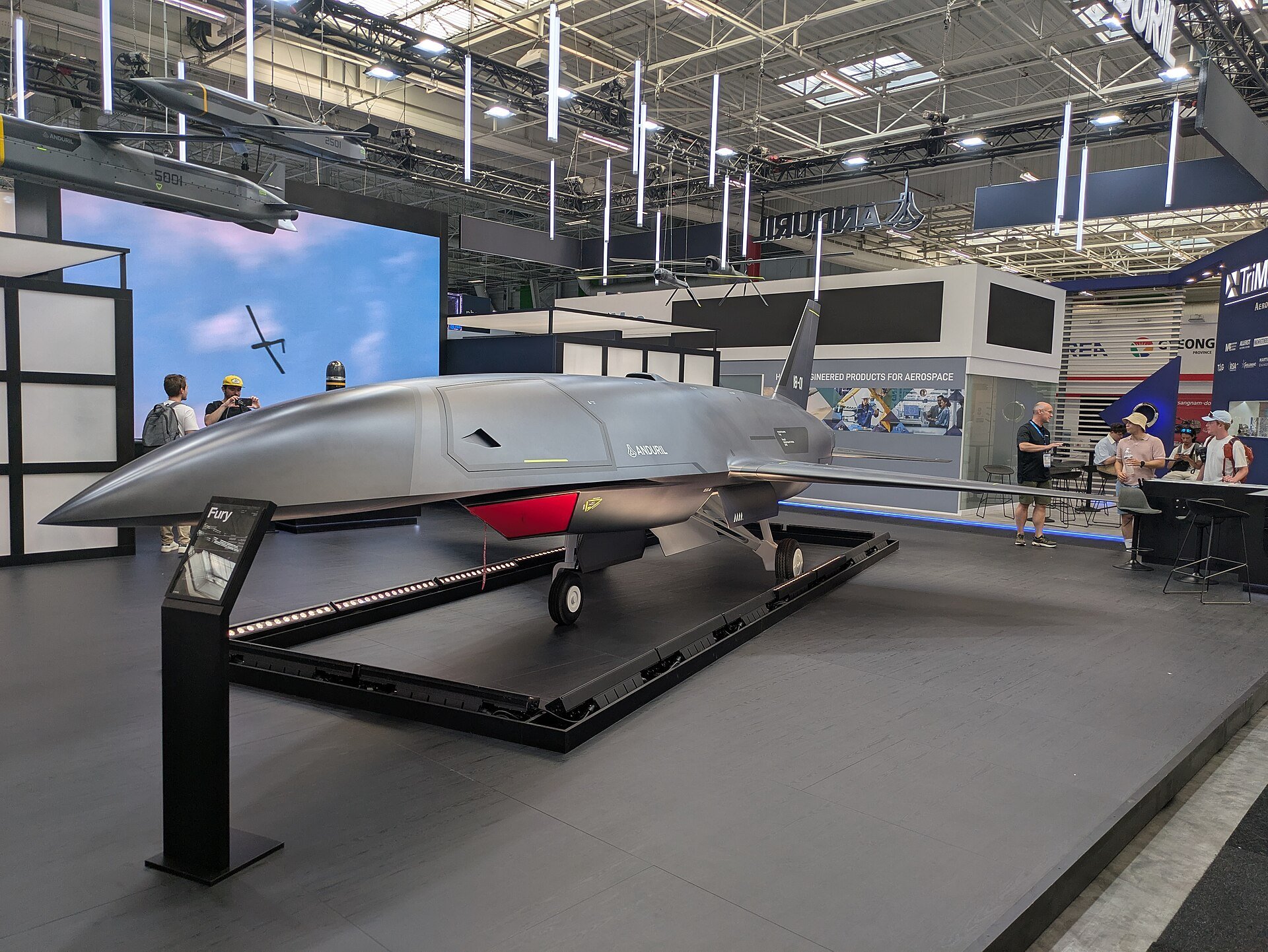
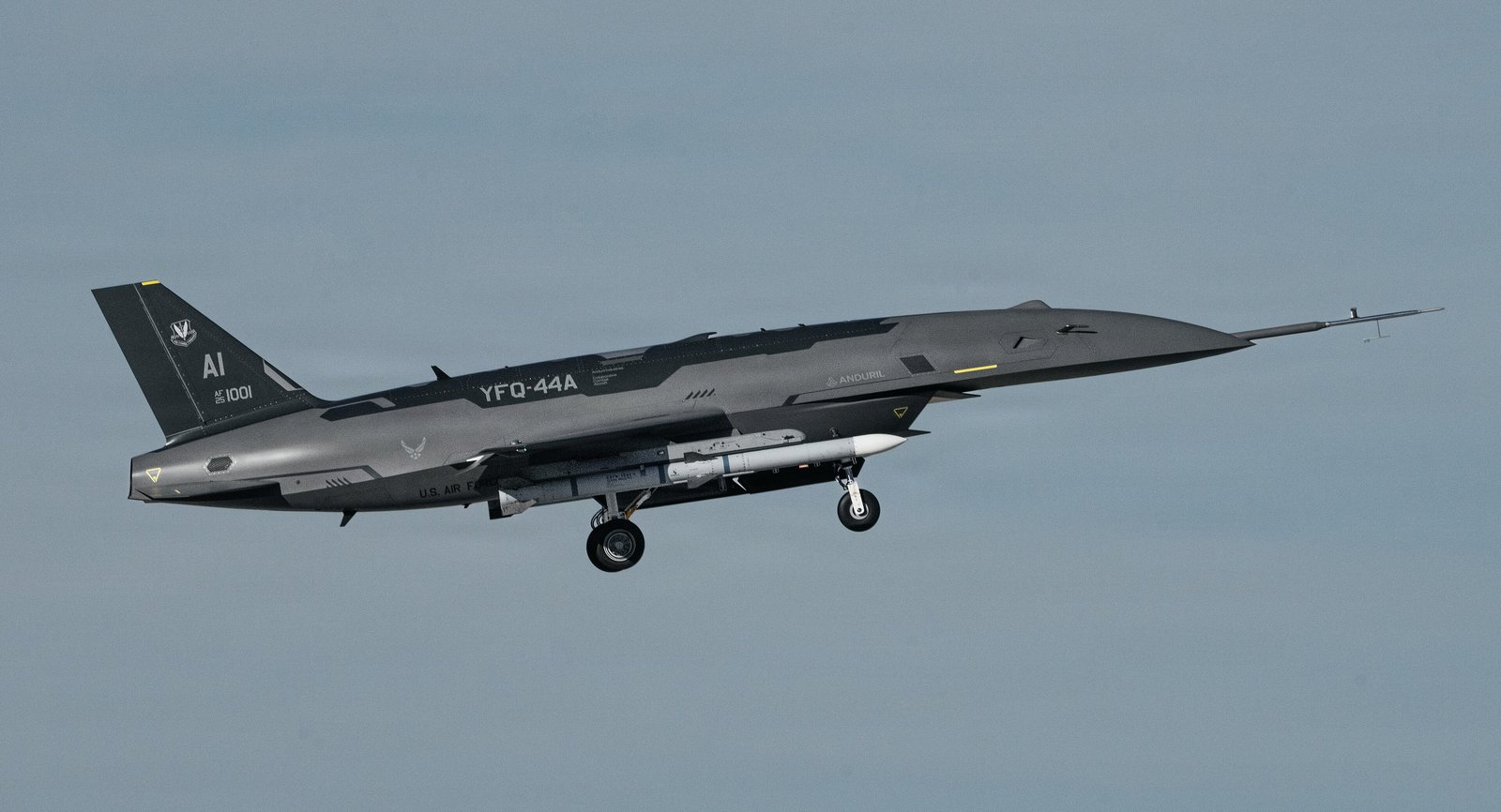

Photos: Artvill · Wikipedia · Anduril Industries
Fury is a jet-powered autonomous combat aircraft developed by Anduril Industries, entered under the US Air Force’s Collaborative Combat Aircraft (CCA) programme as an uncrewed wingman for crewed fighters such as the F-35 and the forthcoming Next Generation Air Dominance platform. The airframe originated at Blue Force Technologies, a small North Carolina firm Anduril acquired in September 2023; the company then submitted Fury as its entry for CCA Increment 1. In April 2024 the Air Force selected Anduril and General Atomics from a field that also included Boeing, Lockheed Martin and Northrop Grumman to build production-representative prototypes. The service subsequently assigned the airframe the designation YFQ-44A, with the “Y” marking a prototype and, per Air Force officials, representing the first fighter-series designation issued to an uncrewed aircraft.
Fury is a Group 5 unmanned system in the weight class of a light fighter, powered by a single Williams International FJ44 turbofan and configured for high-subsonic performance with 9g manoeuvre limits, according to Anduril’s public briefings. The company says the aircraft is designed to carry air-to-air missiles and to fly alongside crewed formations, providing additional sensors and shooters at a fraction of the per-unit cost of a manned fighter. Autonomy is provided by Anduril’s Lattice software stack, which the company also uses on its Roadrunner interceptor and its counter-drone systems; the intent, per Anduril, is that Lattice allows operators to task Fury by mission objective rather than fly it directly. The airframe is being manufactured at a purpose-built facility Anduril is standing up in Columbus, Mississippi, adjacent to its Arsenal-1 production complex.
Only the US Air Force has been named as an operator to date. The CCA programme envisions a fleet of at least 1,000 aircraft across multiple increments, with Increment 1 airframes intended to reach initial operational capability before the end of the decade; final production quantities and unit prices have not been publicly disclosed. Anduril has said first flight of the YFQ-44A is planned before the end of 2025. General Atomics’ competing YFQ-42A, derived from its earlier XQ-67A demonstrator, is being developed on the same timeline; the two designs are expected to compete for Increment 1 production orders and to inform the requirements for a larger Increment 2, for which the Air Force has said it will re-open the field to additional bidders.
Fury’s significance sits less in any single specification than in the procurement bet behind it: that a defence-technology entrant with no fighter heritage can build, fly and manufacture a fighter-class combat aircraft on a compressed timeline, and that autonomous wingmen can be fielded cheaply enough to be treated as attritable rather than as flagship platforms. The programme is the most visible current test of that thesis.