FP-7
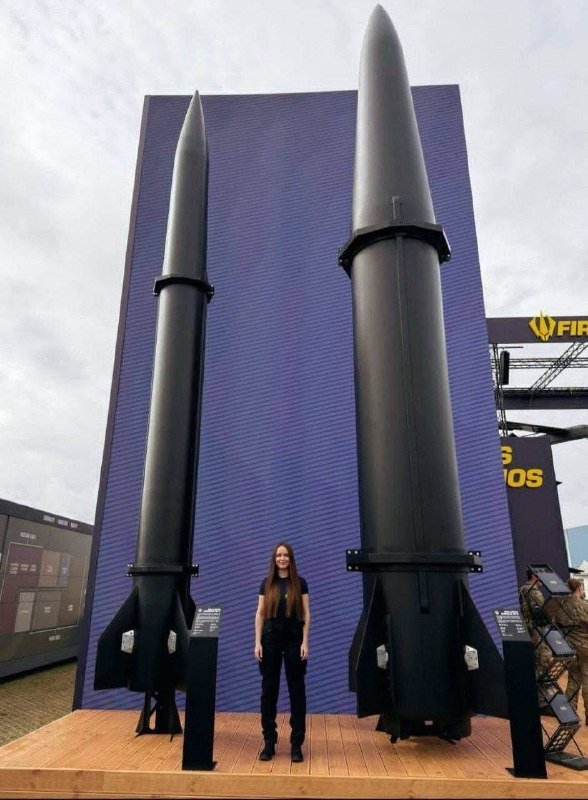
ATACMS-class short-range ballistic missile unveiled at MSPO 2025; basis for the FP-7.X air-defence interceptor.
Missile / loitering munitionby Fire PointIntroduced 2025 · Updated 2026


Photos: www.yahoo.com · УНИАН (Telegram) · Русский инженер (Russian Engineer) (Telegram) · www.nonproliferation.eu
Fire Point’s FP-7 is a Ukrainian short-range ballistic missile under development, publicly unveiled at Poland’s MSPO defence exhibition in Kielce in September 2025. Fire Point, previously known for the FP-1 and FP-2 deep-strike drones and the FP-5 Flamingo cruise missile, pitched the FP-7 as a lower-cost tactical answer in the ATACMS class — reported unit cost of up to roughly one million dollars, with chief designer Denys Shtilerman describing the system as high-speed, relatively cheap, and deliberately simple to manufacture under wartime conditions. First flight tests were conducted on 27 February 2026.
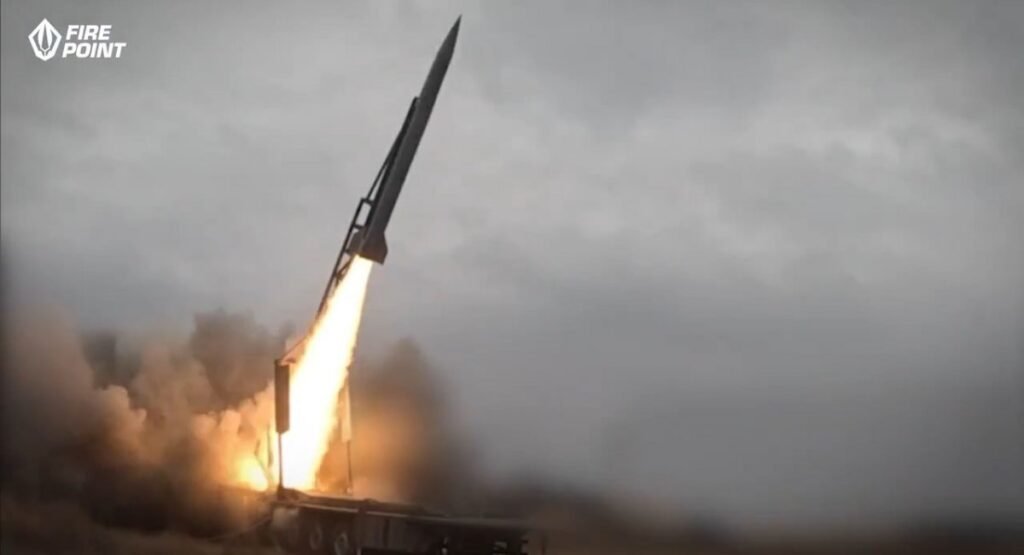
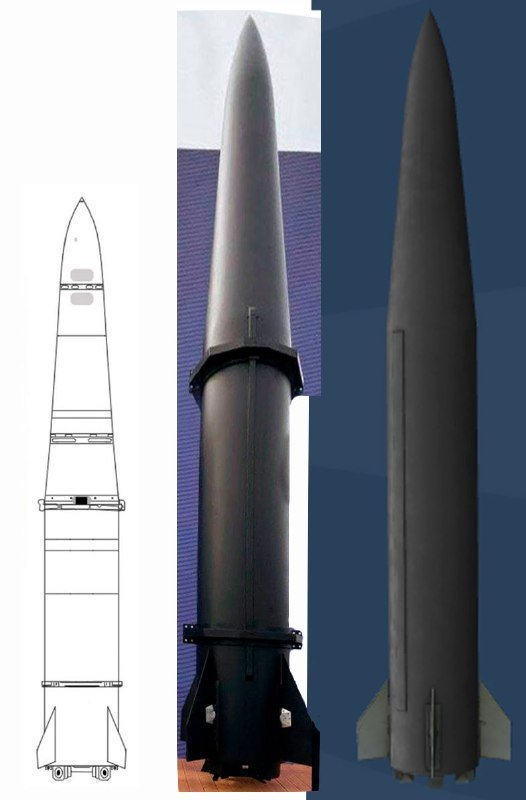
Aerodynamically the FP-7 is reported to draw from the Soviet 48N6 interceptor of the S-400 system, but with a composite body and Ukrainian-produced electronics. The missile is roughly 7.25 metres long and carries a 150 kg warhead powered by a solid-propellant rocket motor; guidance is inertial with GPS/GNSS correction, and the manufacturer claims a circular error probable of 14 metres. Reported peak speed is around 1,500 m/s — roughly Mach 4.5 — with a trajectory apogee reaching 65 km. Operational range is given as 200 km in independent reporting and up to 300 km elsewhere; Fire Point’s own product page cites a 200 kg warhead at 250 km, so figures should be read as developer claims that are still shifting. Launch is a “hot” start from an inclined rail on a trailer, chosen over the vertical cold-launch arrangement of the Russian analogue for ease and speed of production.
A derivative, the FP-7.X, extends the airframe into an interceptor role as part of the pan-European Freya anti-ballistic-missile programme. Fire Point conducted a first FP-7.X manoeuvring flight on 3 June 2026, which CEO Iryna Terekh described as successful. The interceptor variant trades the warhead for a carbon-composite body, a planned infrared or semi-active radar seeker, and a projected speed of 1,500–2,000 m/s to engage incoming ballistic threats at terminal phase up to 20 km altitude. The Freya architecture pairs it with Western long-range radars — Saab Giraffe 8A/4A, Thales Ground Master 400, Hensoldt TRML-4D — illumination from Weibel or Leonardo sets, and a Kongsberg fire-distribution centre built on open-architecture network modules.
As of mid-2026 the FP-7 has not been confirmed in combat use. Terekh said in September 2026 that the company’s ballistic missiles would strike targets on Russian territory within weeks, though no verified engagements had been reported at the time of writing. Alongside the parallel FP-9 — a longer-range ballistic missile with a reported 800 kg warhead and 850 km reach — the FP-7 marks Ukraine’s domestic ballistic programme moving from announcement to flight-testing within roughly a year.
Combat experience
Sources
- united24media.com/latest-news/ukraines-fire-point-unveils-fp-7-and-fp-9-ballistic-missiles-building-on-flamingo-success-11381 (2026-06-19) — United24 Media — FP-7 / FP-9 unveiled at MSPO 2025.
- www.defensenews.com/industry/techwatch/2026/04/06/ukraine-missile-maker-targets-game-changer-air-defense-system-by-2027/ (2026-06-19) — Defense News — FP-7 ~300 km ATACMS-class, nearing deployment; FP-7.X interceptor.
- www.euronews.com/my-europe/2026/06/10/kyiv-hit-russian-military-plant-using-ukrainian-made-flamingo-missile-zelenskyy-says (2026-06-19) — Euronews — FP-7 June 2026 test flight; interceptor variant framing.