F-35 Lightning II
Single-engine fifth-generation multirole stealth fighter built in CTOL, STOVL and carrier variants.
Aircraftby Lockheed MartinIntroduced 2015
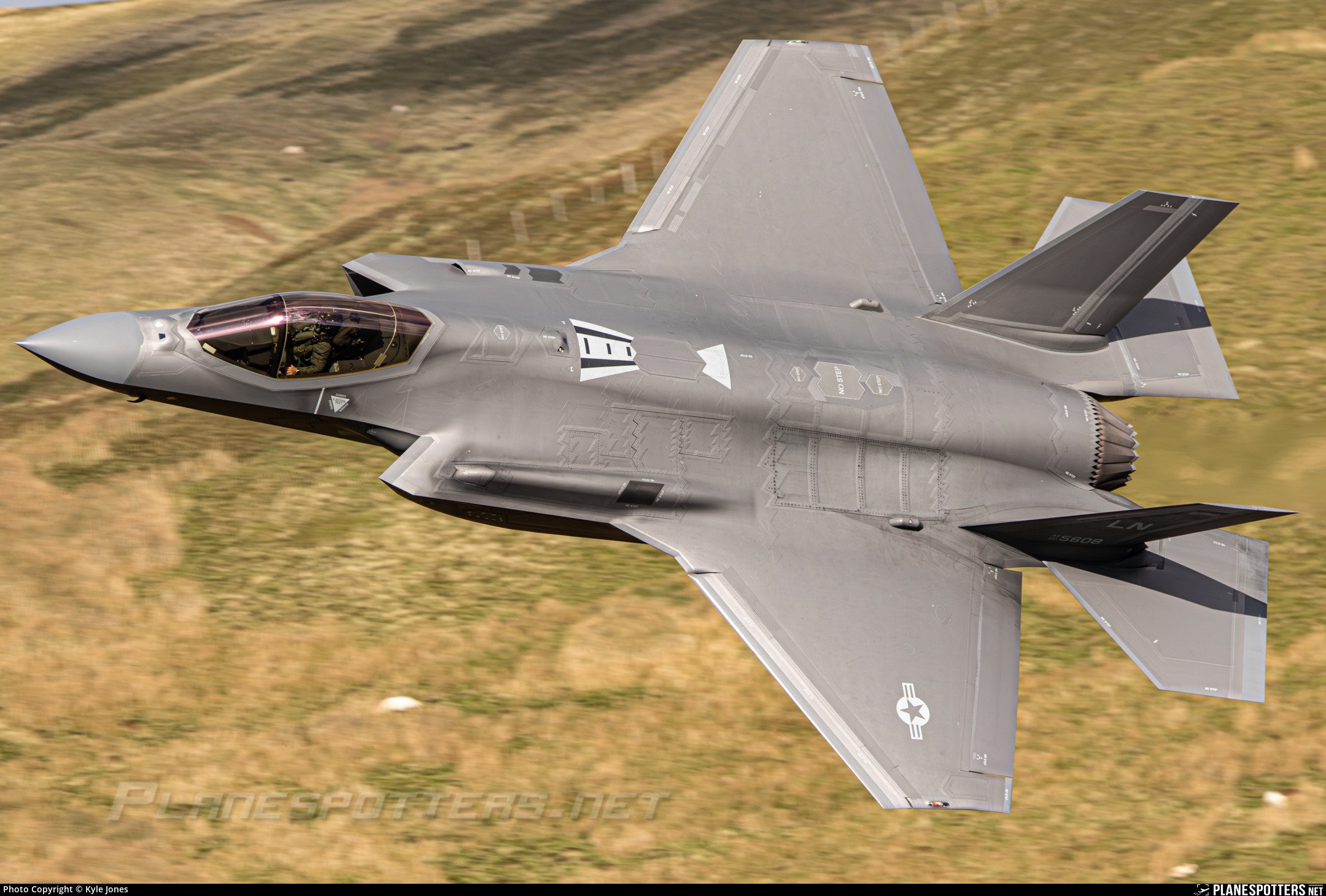
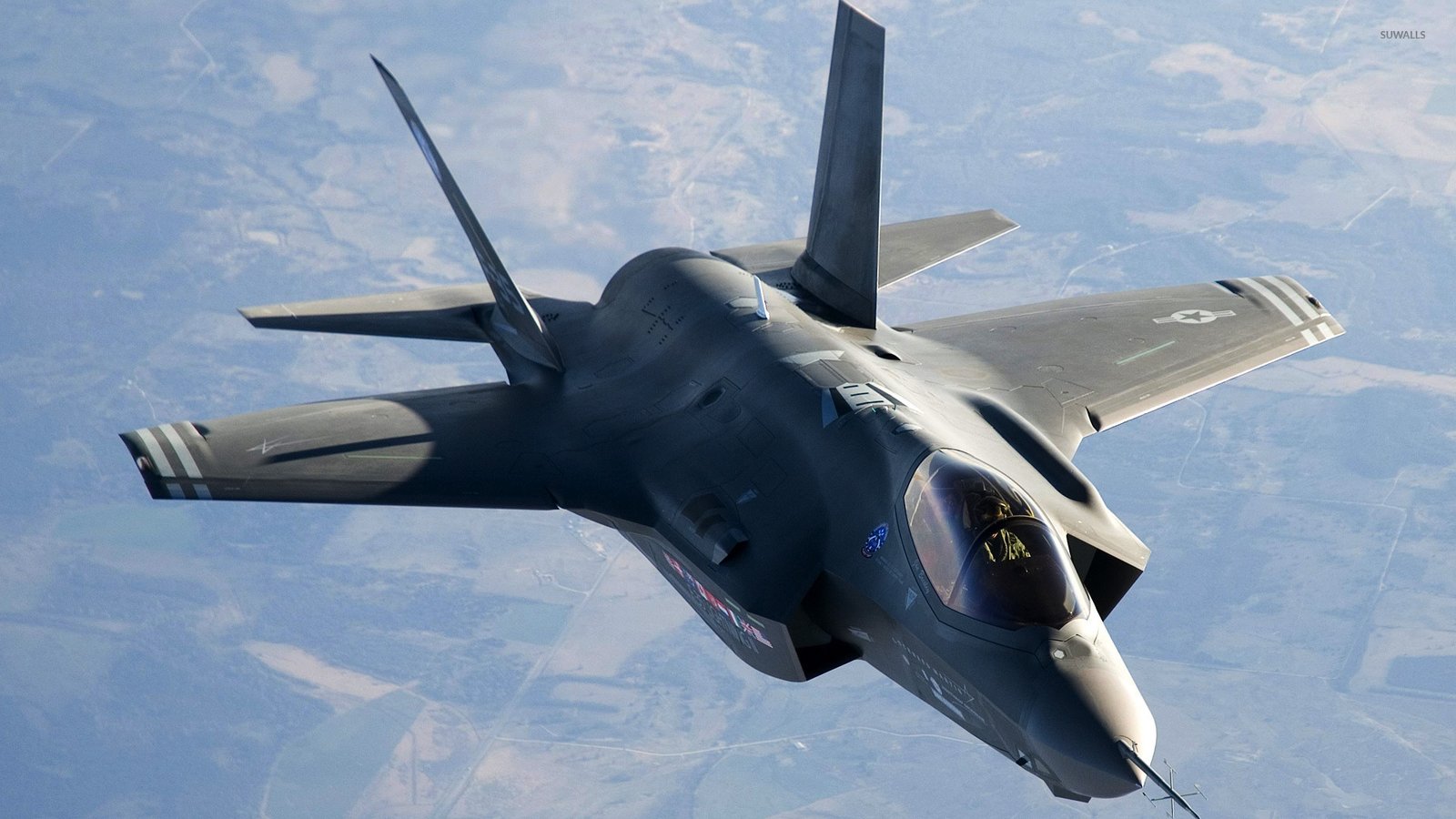
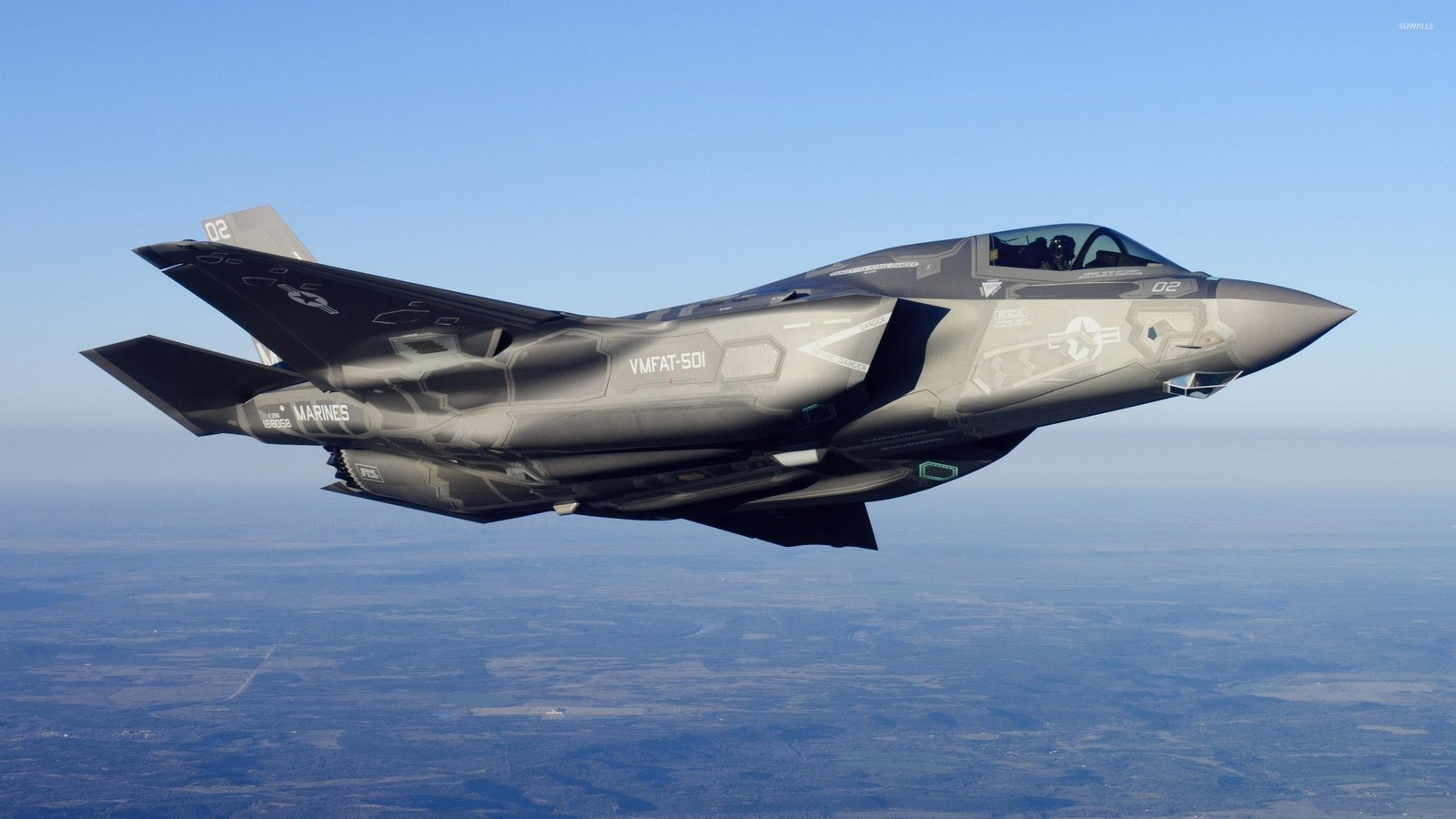
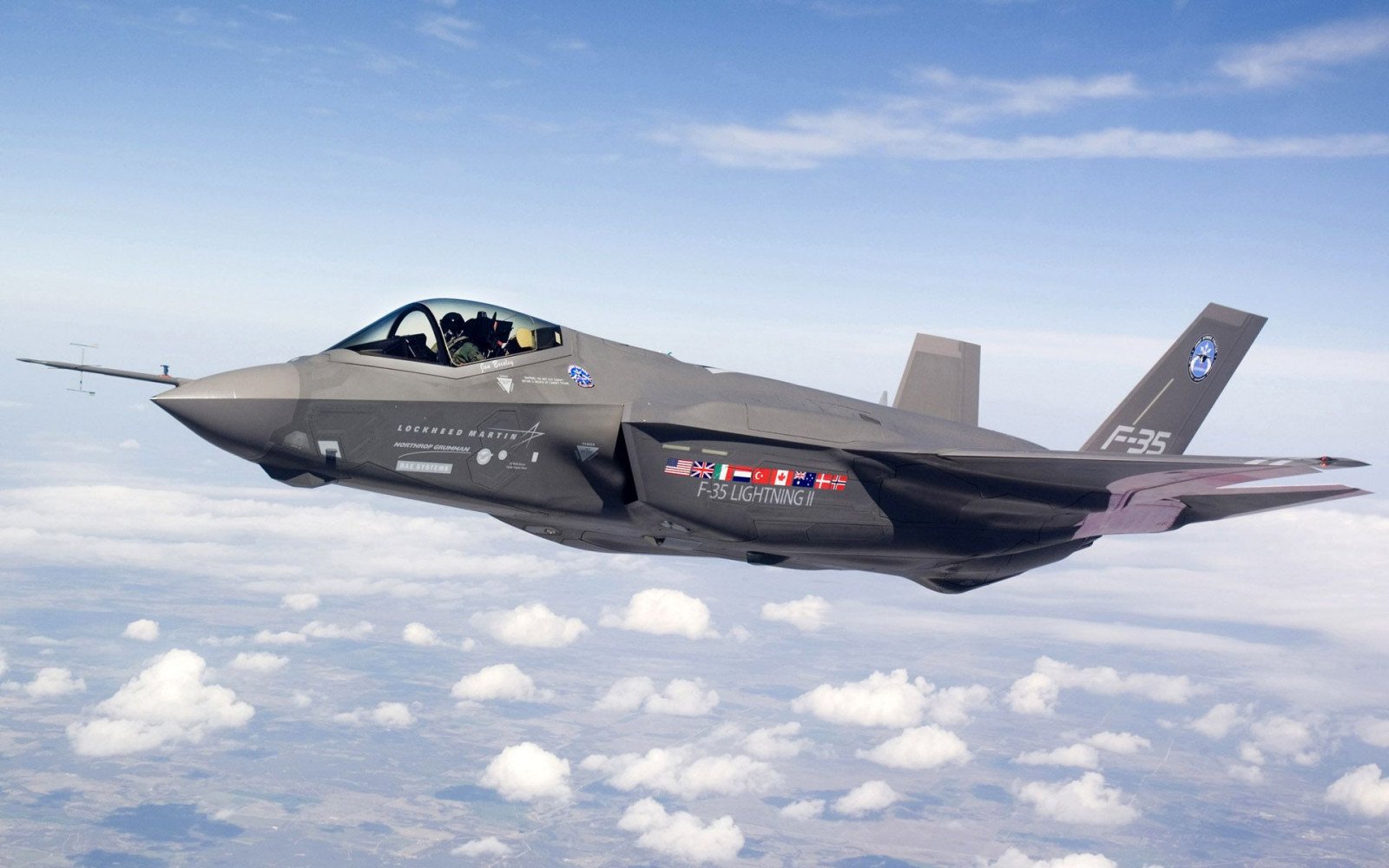
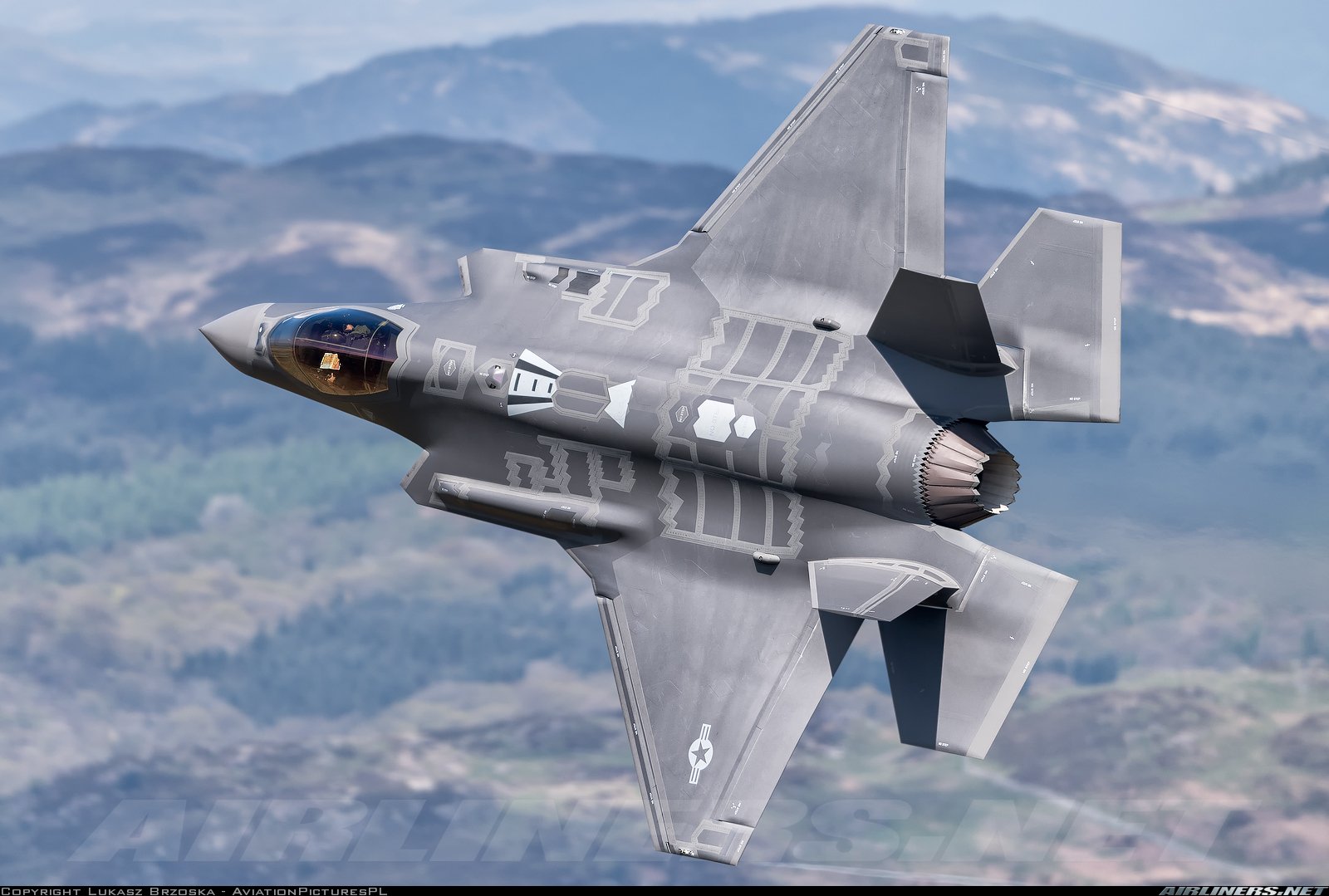
Photos: www.planespotters.net · ar.inspiredpencil.com · suwalls.com · wallhere.com · www.airliners.net
The F-35 Lightning II is a single-engine fifth-generation stealth multirole fighter built by Lockheed Martin in three variants: the F-35A conventional-takeoff model for air forces, the F-35B short-takeoff/vertical-landing version for the US Marine Corps and allied carrier operators, and the F-35C catapult-launched model for US Navy supercarriers. It emerged from the Joint Strike Fighter programme of the 1990s and reached initial operational capability with the US Marine Corps in 2015, with the Air Force and Navy following in 2016 and 2019. Lockheed Martin describes it as the “quarterback of the skies”; more plainly, it is the only widely fielded Western stealth fighter and the planned backbone of the next-generation combat air fleets of the United States and its closest allies.
At its heart sits a Pratt & Whitney F135 afterburning turbofan, pushing the aircraft to around Mach 1.6 with a combat radius of roughly 590 nautical miles on internal fuel. The defining capability is sensor fusion: an AN/APG-81 active electronically scanned array radar, a nose-mounted Electro-Optical Targeting System, and a Distributed Aperture System of six infrared cameras giving spherical coverage around the airframe all feed a central mission computer that stitches their outputs into a single picture for the pilot. That picture is projected onto a helmet-mounted display that lets the pilot look “through” the aircraft at the ground below. Weapons ride in internal bays to preserve the stealth signature, and the aircraft runs a continuously updated software stack — the current major upgrade line is the Block 4 modernisation, delivered on refreshed Technology Refresh 3 hardware that caused significant delivery delays through 2023 and 2024, according to US Government Accountability Office reporting.
The aircraft is in service with the US Air Force, Marine Corps and Navy, and has been bought by the United Kingdom, Israel, Japan, Australia, Italy, the Netherlands, Norway, Denmark, Belgium, Poland, Germany, Finland, Switzerland, Canada, Singapore, South Korea and Romania. More than 1,000 airframes had been delivered by mid-2024, per Lockheed Martin’s own figures. Israel was the first operator to use the F-35 in combat, with the Israeli Air Force announcing strikes against targets in Syria in 2018. The type has since been reported in strikes against Houthi positions in Yemen and, according to Israeli military statements, in long-range operations against Iranian targets in 2024 and 2025. US Air Force F-35As have flown over Iraq and Syria.
Development continues as a central programme priority. Block 4 is intended to broaden the weapons envelope and update the sensor and electronic-warfare suites; the parallel TR-3 hardware refresh triples processing power to support those capabilities. Lockheed Martin is also pairing the F-35 with its own Vectis stealth Collaborative Combat Aircraft concept and other autonomous “loyal wingman” programmes, positioning the fighter as the manned node in a future mixed formation. In that sense the F-35 is less a point design than a long-running platform: the stealth airframe is the baseline, and the software and sensor stack is where the next decade of upgrades will land.