Eos D VTOL
Fourth-generation VTOL UAV adding laser target designation to the Eos C autonomous surveillance platform.
Droneby Threod SystemsIntroduced 2025
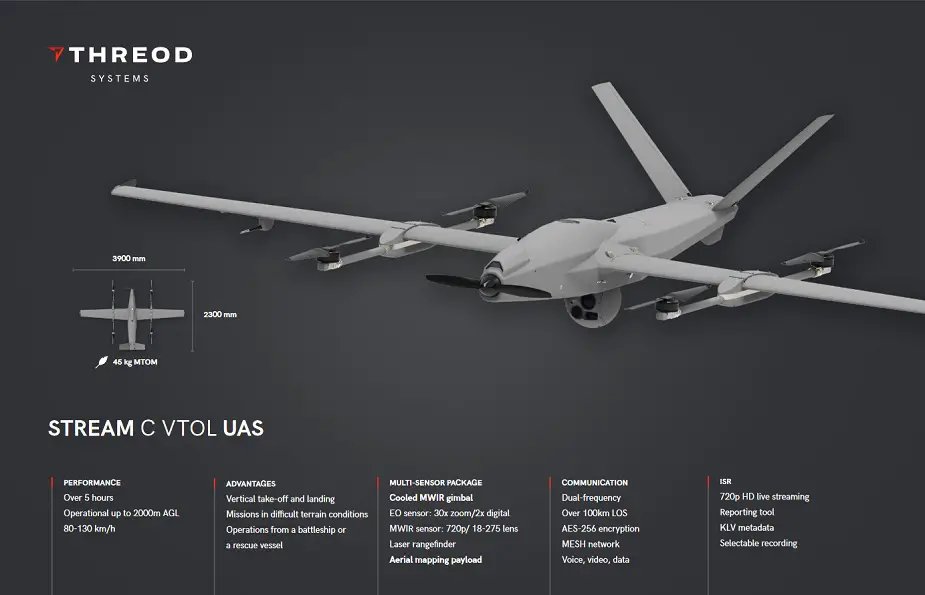
Photos: www.threod.com · www.youtube.com · www.armyrecognition.com
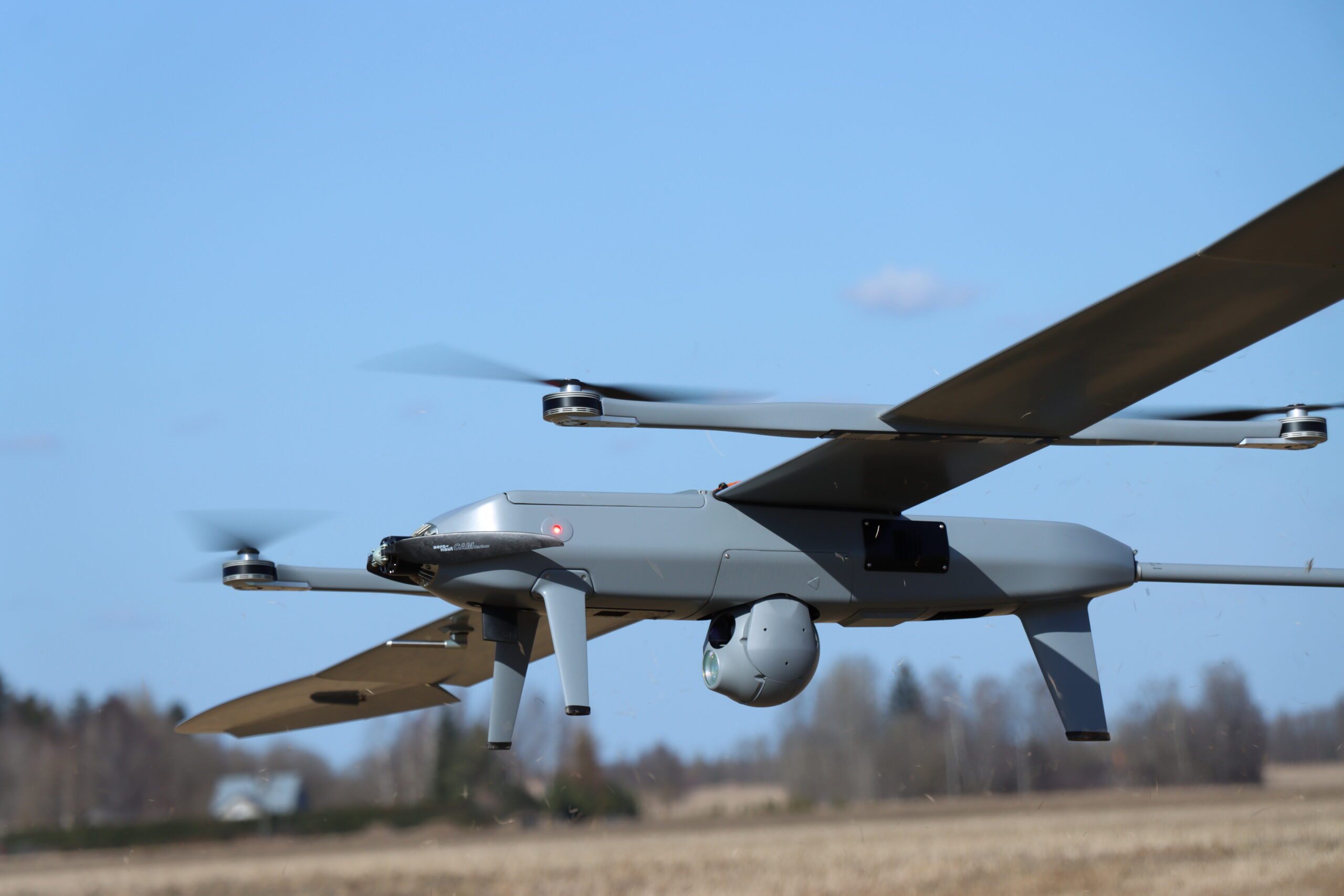
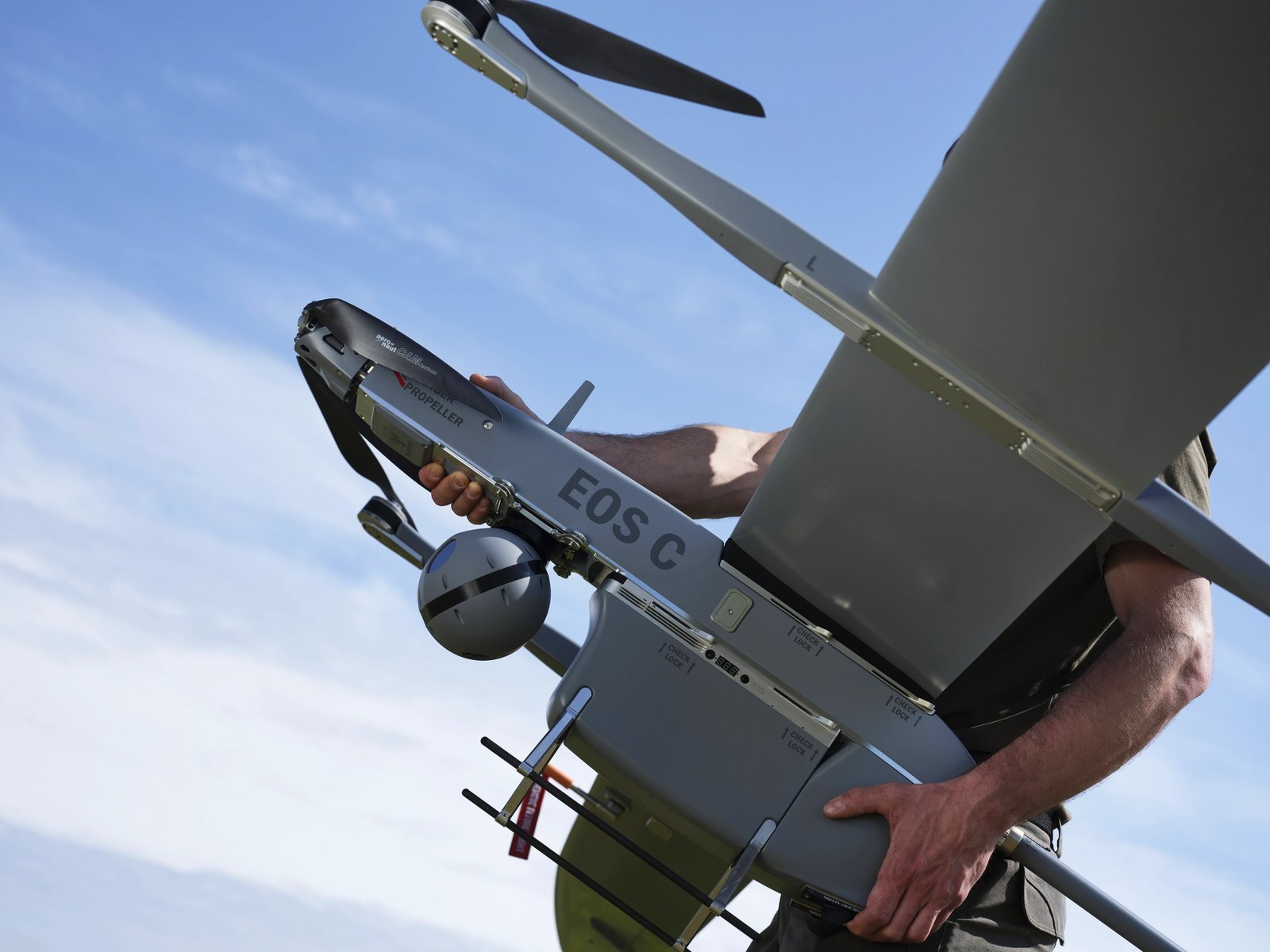
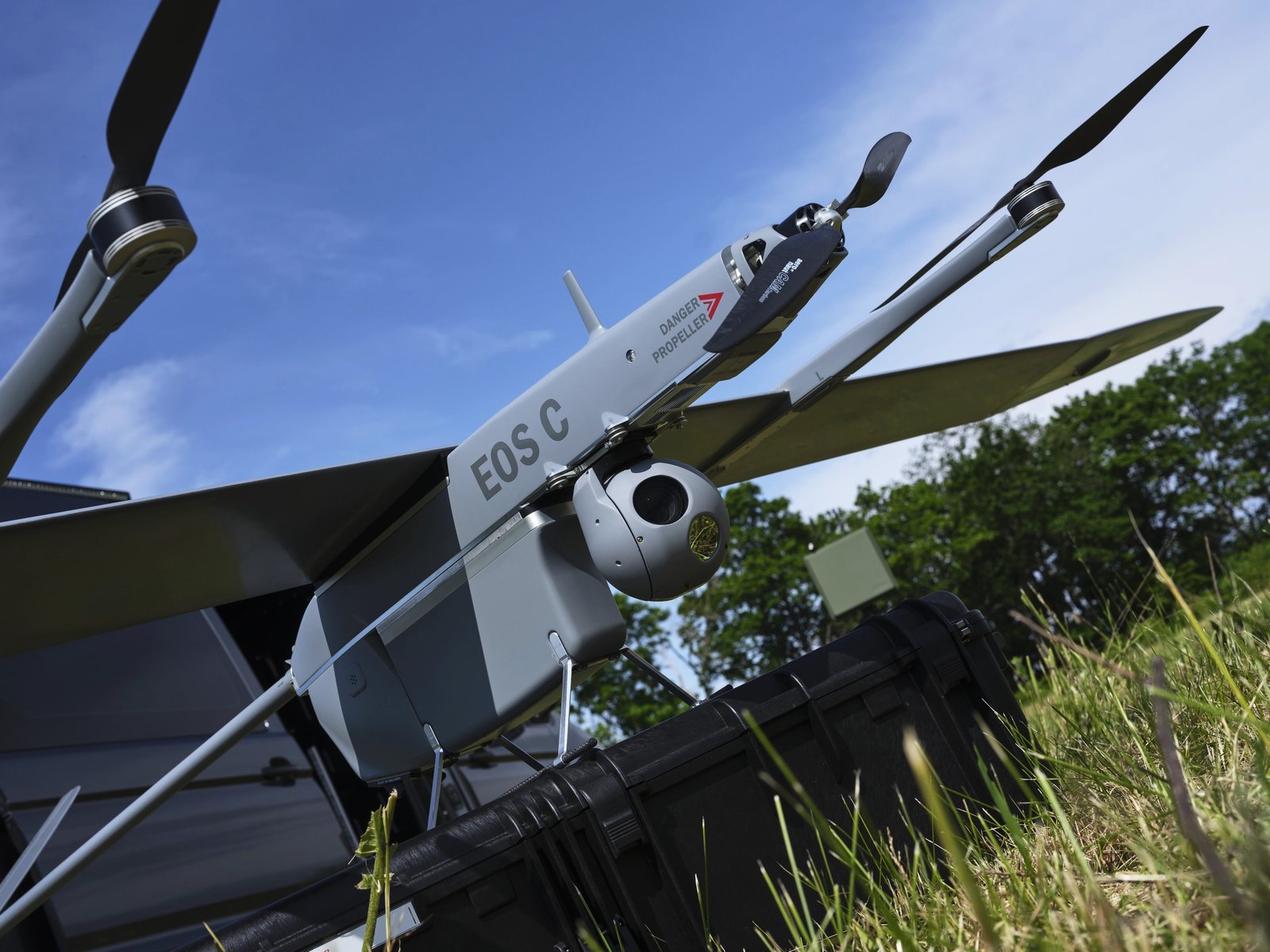
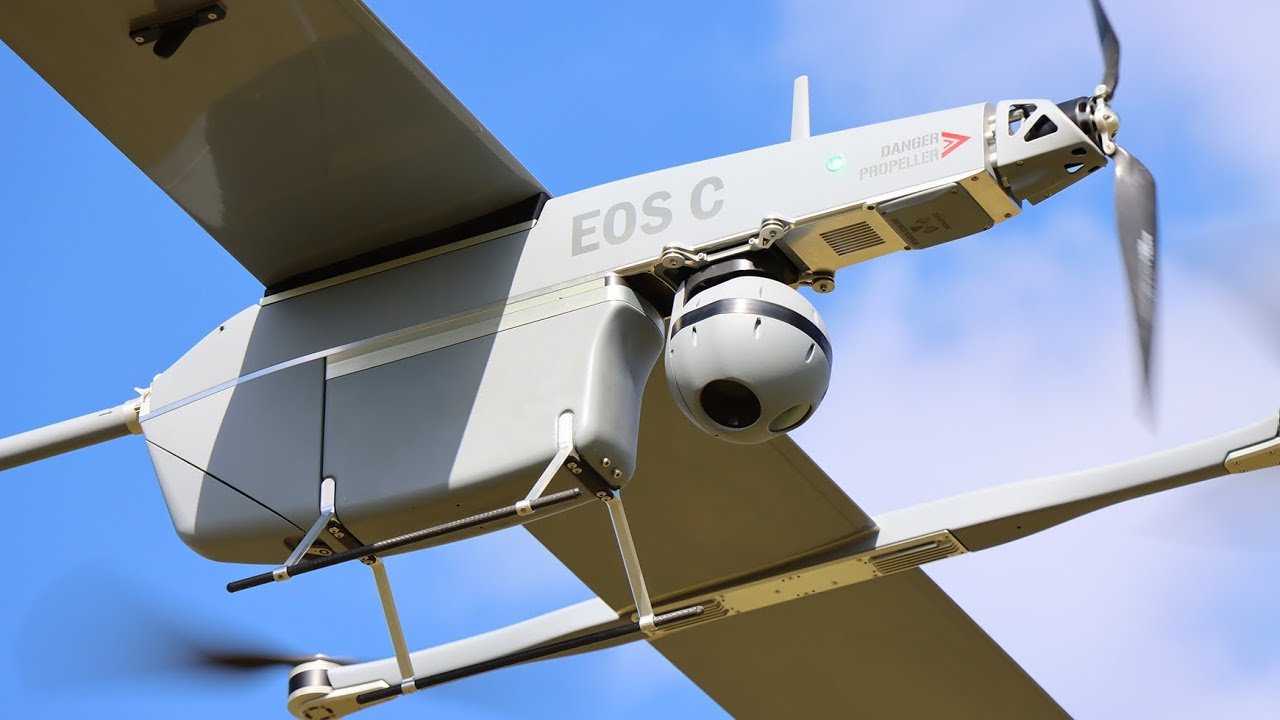
Eos D VTOL is a small vertical-takeoff reconnaissance drone built by Threod Systems, the Estonian manufacturer based in Viimsi. Introduced in 2025, it is the laser-designator variant of the company’s established Eos C airframe, a 5-metre-wingspan electric aircraft designed for low-signature intelligence, surveillance and reconnaissance work. The addition folds a precision-strike cueing capability — normally the preserve of larger, longer-endurance platforms — into a system two trained operators can transport, assemble and launch from a ten-by-ten-metre clearing.
According to Threod, the aircraft runs an in-house autopilot with fully autonomous waypoint navigation, fly-by-camera control and programmable geo-fencing, backed by servo and ESC telemetry and automated return-to-home routes. Communications go through a choice of Silvus, Kongsberg or DTC radios, encrypted with AES-256 and operating in digital MIMO / MANET / MESH modes out to roughly 50 km of radio line-of-sight. The manufacturer specifies interference cancellation and avoidance in the baseline configuration, with an optional controlled-reception-pattern antenna for GNSS-denied operation; a conventional GPS / GLONASS / GALILEO stack is paired with barometric and radar altimeters and an inertial navigation system. For the ISR mission the aircraft carries Threod’s own eOpic-6 electro-optical turret, a sub-1.9 kg daylight-and-thermal payload; the laser designator is the distinguishing addition on the D model, enabling the drone to mark targets for third-party guided munitions. Threod publishes an endurance of up to three hours with a two-kilogram payload, a service ceiling of 4,500 m and a mission range of 190 km on a fully electric powertrain.
The parent Eos C platform has an operational history the D inherits. Threod states that the C airframe has accumulated thousands of hours in service with seven NATO member states and Ukraine, where small Estonian-built VTOLs have been fielded as part of the broader European contribution to reconnaissance capacity. Public figures on D-variant users, contract values or combat use are not available at time of writing — the system is new, and operators of this class of equipment are rarely disclosed until deliveries are reported.
Within the European small-UAS market, Eos D sits alongside systems like the Norwegian Black Hornet family and the German Luna NG at the heavier end, but its distinguishing move is adding laser designation at the tactical echelon rather than the brigade level — a response to the lessons Estonia and its neighbours draw from the war next door, where cueing precision fires quickly has mattered more than any single sensor.