Dzyga
High-speed multi-role Ukrainian surface drone capable of kamikaze strike or return-to-base logistics runs, with Starlink control and thermal imaging.
Droneby AquatechnikIntroduced 2024
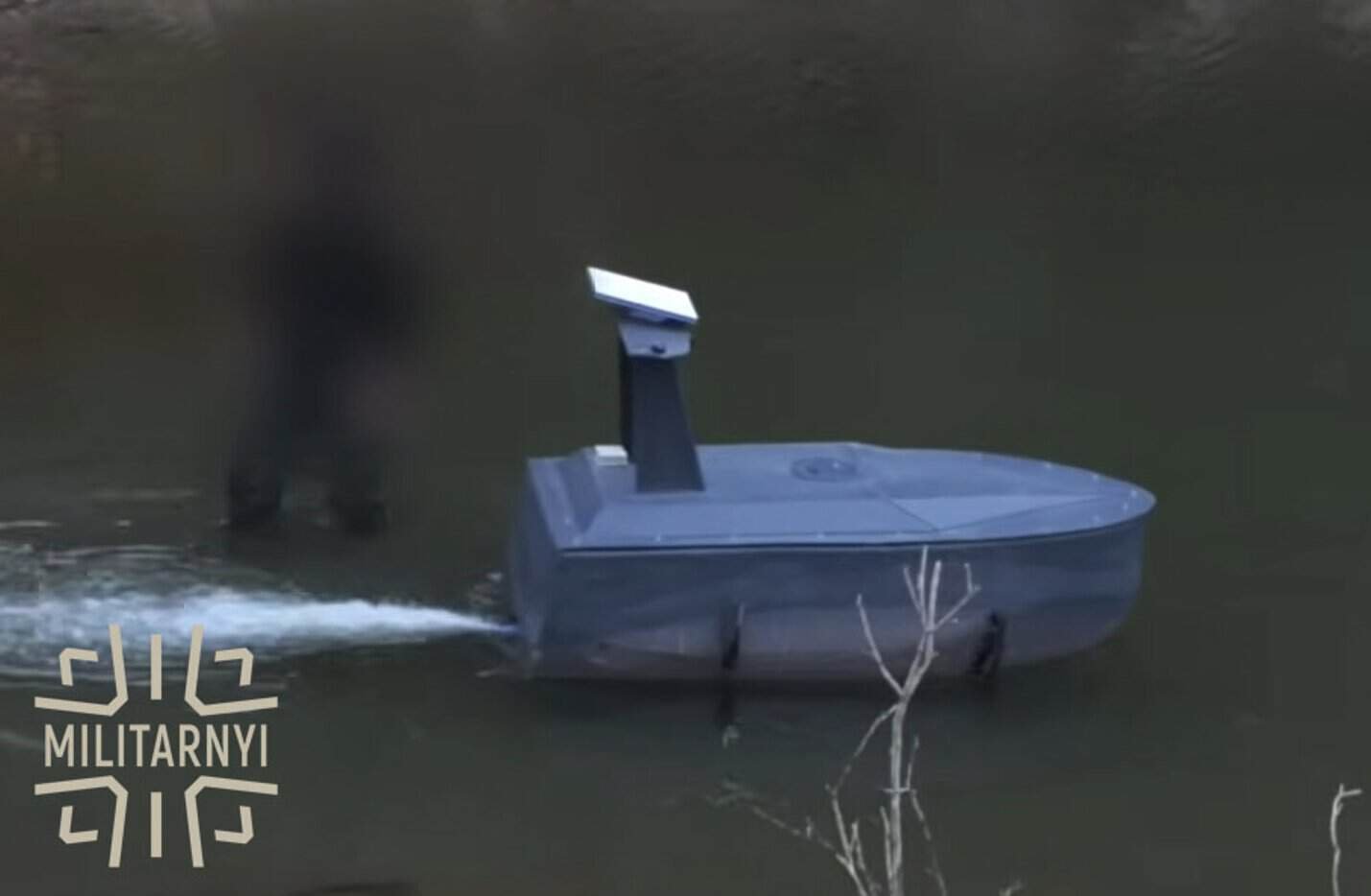
Photos: militarnyi.com · dzygaspaw.com · warbirds.com.ua
Dzyga is a Ukrainian unmanned surface vessel built by Aquatechnik, a developer that has produced a family of sea and river attack drones alongside the heavier Marichka underwater vehicle. It entered service in 2024. According to its maker, Dzyga is a multi-role platform capable of both one-way kamikaze strike missions and return-to-base logistics runs — a dual-use profile that sets it apart from the pure-strike USVs such as MAGURA V5 and Sea Baby that have driven the bulk of Russia’s Black Sea Fleet out of the western Black Sea.
Aquatechnik states that Dzyga carries up to 70 kilograms of payload, cruises at around 40 kilometres per hour and has an operational range of roughly 70 kilometres. Propulsion is by electric water-jet, which trades outright top speed for a quieter and cooler signature — useful for approaching a target without immediately alerting the sensors of picket ships or coastal radar. Command and control runs over Starlink, the satellite backhaul that has become the default beyond-line-of-sight link for Ukrainian maritime and land drones alike, and an onboard thermal imaging camera lets the operator prosecute targets in darkness. A single hull that can carry either an explosive charge on a one-way run or a repeatable cargo drop is unusual for a small USV and points to a bay-and-river tactical niche as much as an open-water raiding one.
Ukraine is the sole operator. Aquatechnik has not published fielded numbers, and open-source imagery of Dzyga in action is thin compared with the extensively documented MAGURA and Sea Baby strikes against Russian corvettes, patrol boats and landing ships. On the manufacturer’s own figures Dzyga sits at the lower end of Ukraine’s USV inventory on speed and payload — MAGURA V5 is credited with several times the warhead weight and roughly double the top speed — which suggests Dzyga is aimed at littoral, riverine and estuary tasks rather than the long, high-speed dashes across the north-western Black Sea that have sunk or damaged a growing list of Russian warships.
The company has said little publicly about upgrade paths or successor variants for Dzyga, and its own attention appears to sit with the Marichka underwater drone, a larger and more ambitious platform. Aquatechnik is one of a widening cluster of Ukrainian firms — alongside the state-backed developers of MAGURA and Sea Baby — using the war to prove out unmanned surface warfare at a pace no navy elsewhere has matched.